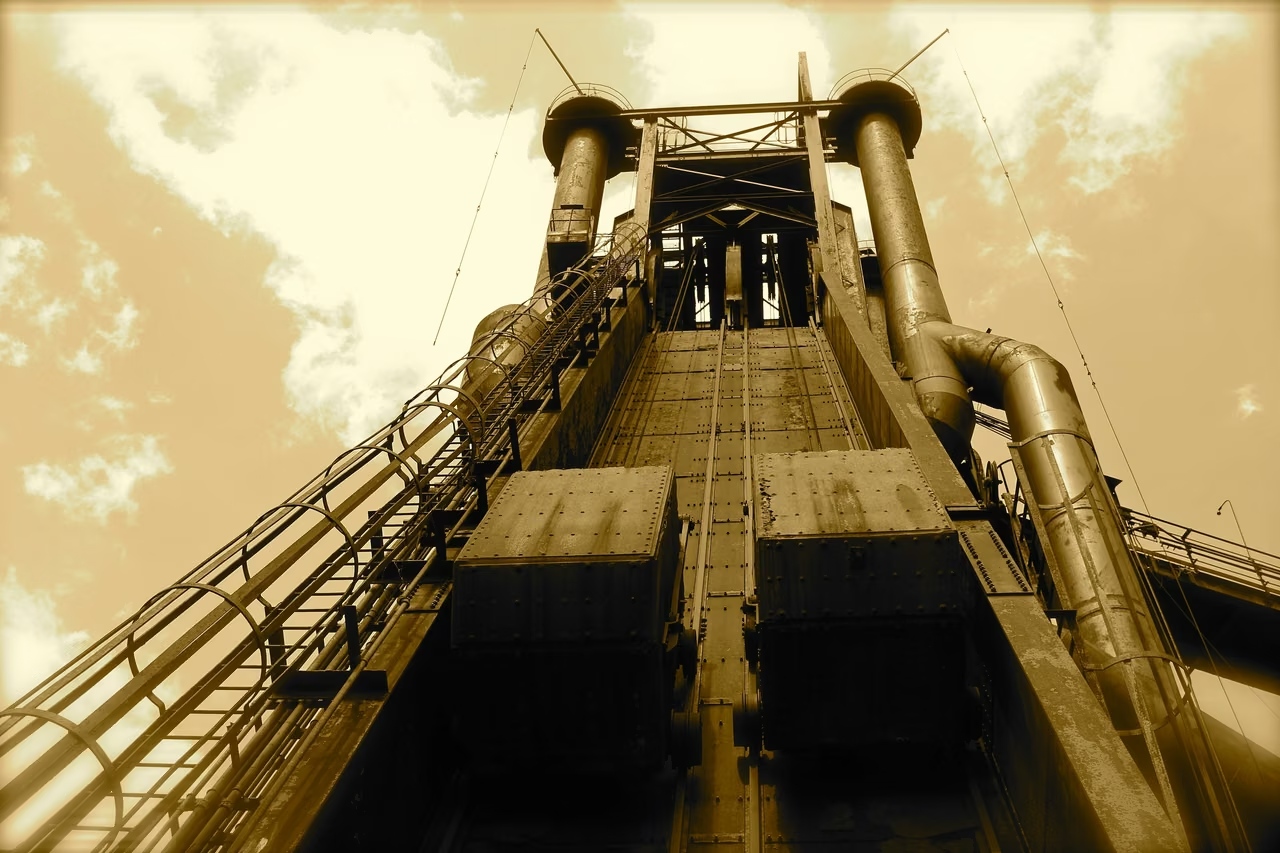
The legacy of steel can still be read.The blast furnaces make industry visible again.
The Carrie Blast Furnaces once supplied molten iron to the Homestead steelworks across the river. The furnaces, pipes and transport facilities preserve more than an industrial outline: they reveal how raw materials, energy, production stages and labor were organized.
The decline of steel production once profoundly affected valley towns. Today, heritage institutions reconnect people with this history through preservation, interpretation, and industrial arts activities, and also familiarize them with the changes in the experiences of workers and communities.
Look to industrial heritage, and don't limit it to just "glory" or "decline." How facilities operate, who works there, and how towns continue to live after a shutdown are more specific questions.
The other thread of contemporary timesFrom machinery to sensing and control.
CMU's Robotics Institute was established in 1979 to conduct fundamental and applied research on tasks for industry and society. Here, mechanics, perception, computation, and control come together to provide a specific entry point for understanding contemporary technological activities in Pittsburgh.
There are still stages such as product validation, personnel, equipment, and customer demand between research capabilities and business operations. For engineering services and manufacturing support, clearly addressing which specific problems can be solved is more meaningful than simply using the title of "technological city" broadly.