STATE.REPORT
Northern mountains, coastal communities

Alaska

Glaciers meet the sea. Communities take shape along mountains and shores. Distance is part of everyday life here.

Explore mountains and coast
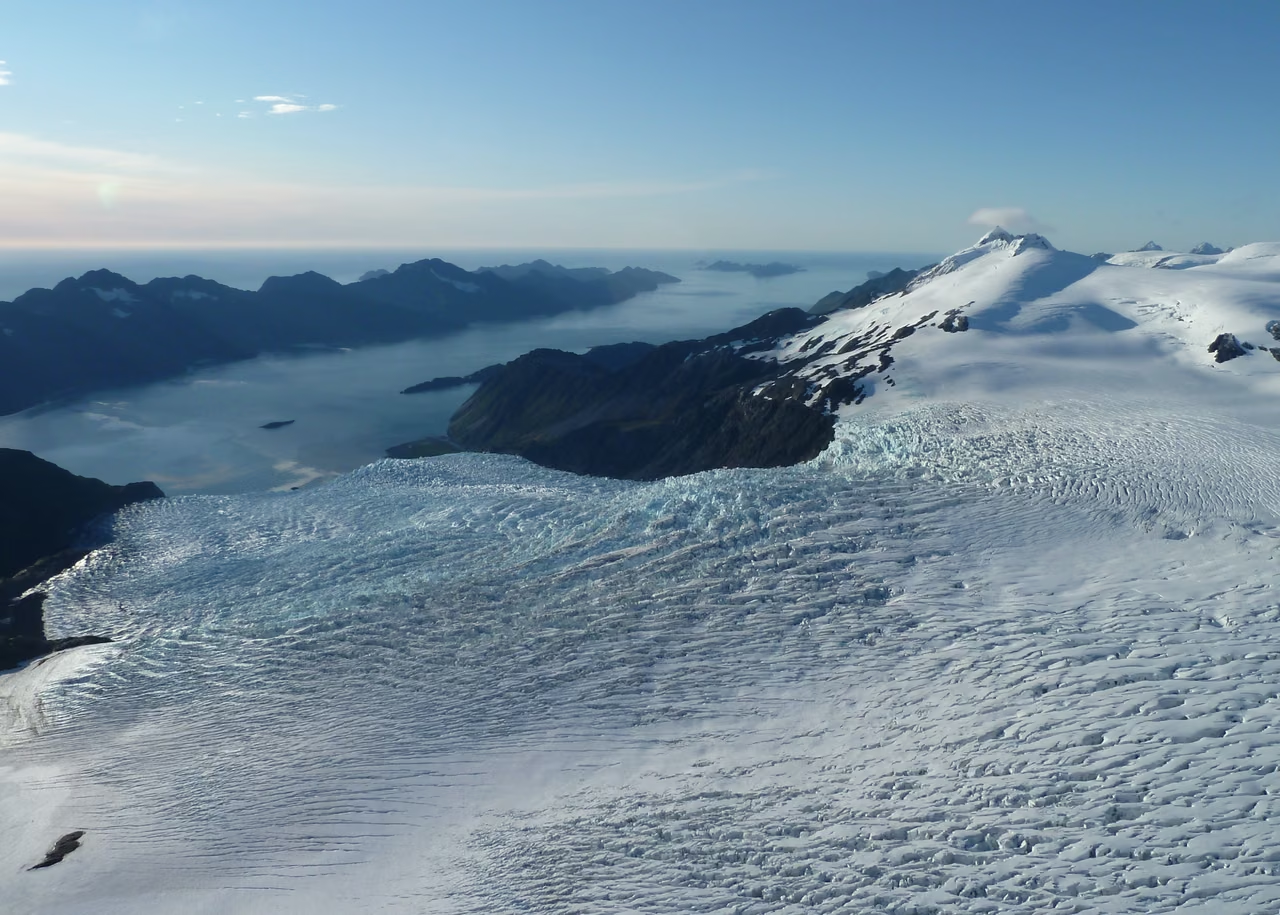
The bay below Aialik Glacier
State capitalJuneau
Population · 2025737,270 people
Below the snow peaks

A vast landscape, long inhabited.

In Alaska, distance is a part of everyday life. Between mountains, glaciers, and coastlines, towns maintain connections in different ways: some are connected by roads, while others rely more on ships and planes. Fishing ports, energy zones, and tourist destinations have distinct seasons, and cities like Anchorage serve a broader range of commercial and public services.

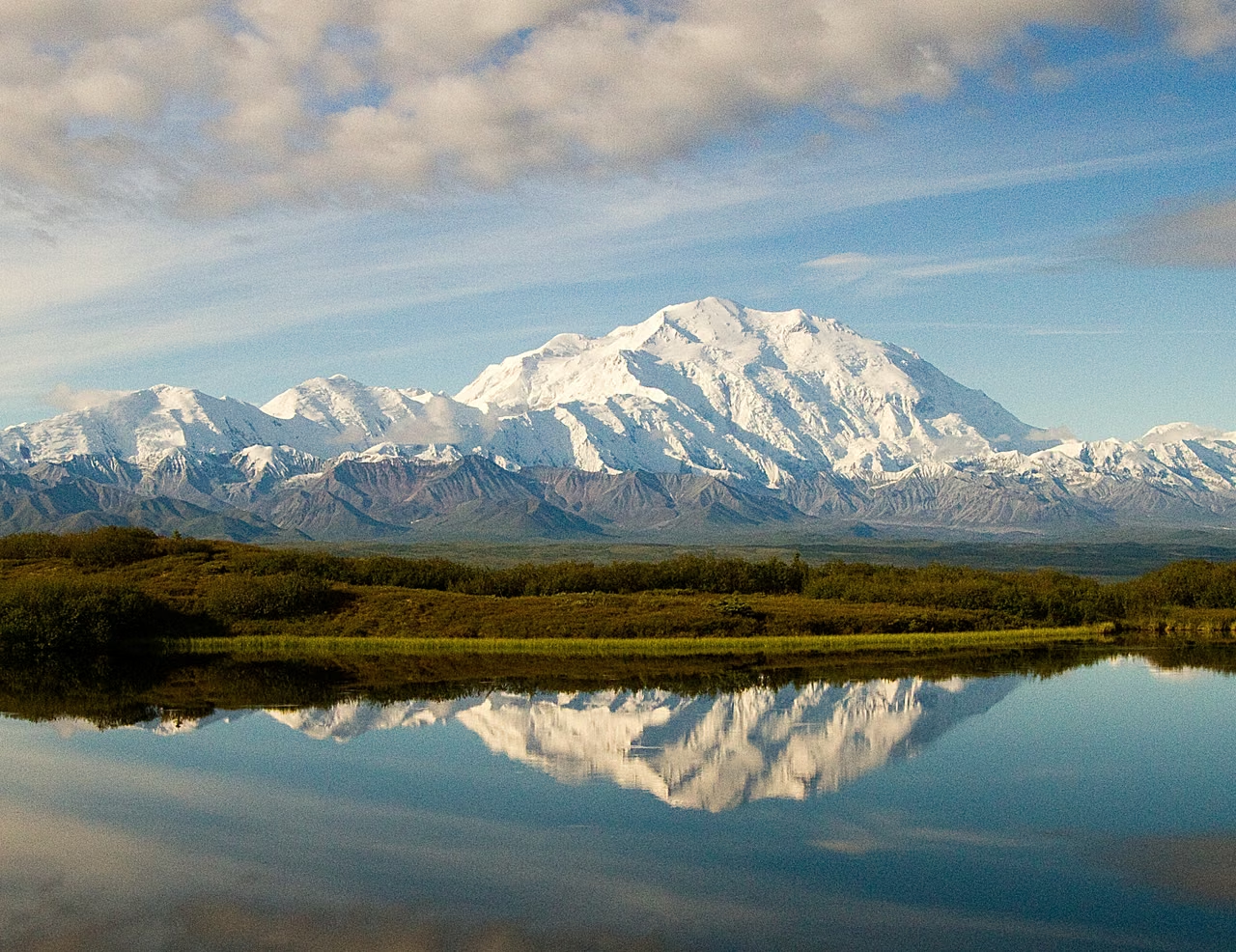
Wonder Lake and Denali

Alaska's national parks not only protect glaciers, coastlines, and tundra, but also record the history of indigenous peoples living in and interacting with the land for generations. The Denali region transitions from low-lying forests to tundra and snowy mountains, with animals migrating seasonally; the coastal areas have different marine resources and community traditions. Broad does not mean empty. Understanding this place also requires understanding those who have long lived here.

Connection between towns

By air, by sea, by road.

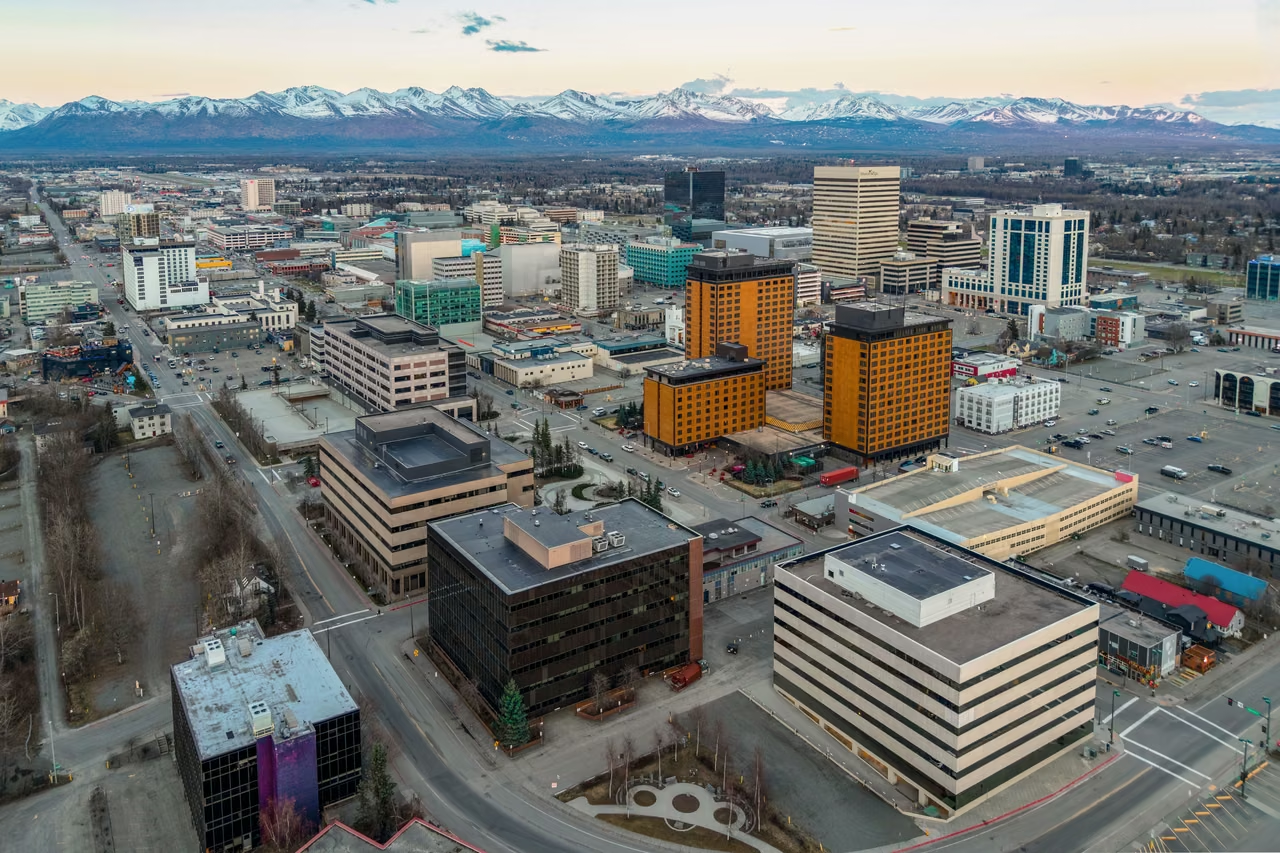
Cityscape of Anchorage
Southcentral Alaska · Aviation and regional services

Anchorage

Aviation and regional services

Aeronautical freight, medical, and commercial services converge here, and the city serves as a connector between the state's remote areas and the outside market.

Airlines aren't just for tourism. Many remote communities rely on planes to transport people, food, and medical supplies. Anchorage's freight and passenger services connect communities across the state and to external markets.
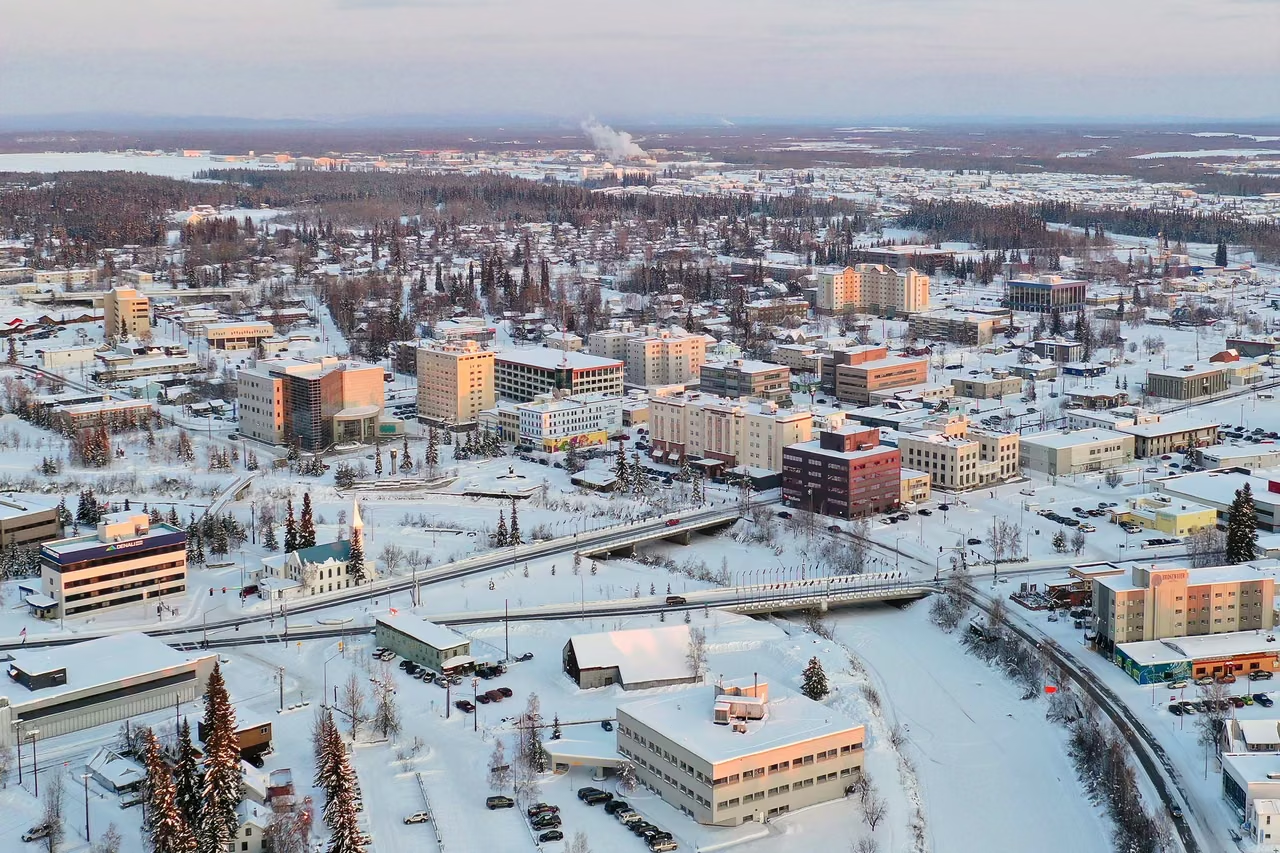
Fairbanks cityscape
Fairbanks cityscape
Interior Alaska · Roads and communities

Fairbanks

Interior transport and research

This interior city brings together road connections, university research and surrounding communities. Winter conditions and long transport distances shape facility maintenance and service planning.

Location affects more than just travel routes. Transport distances, winter conditions, and seasonal schedules also factor into the daily maintenance and provision of local services.

Southeast · Coast and Public Affairs

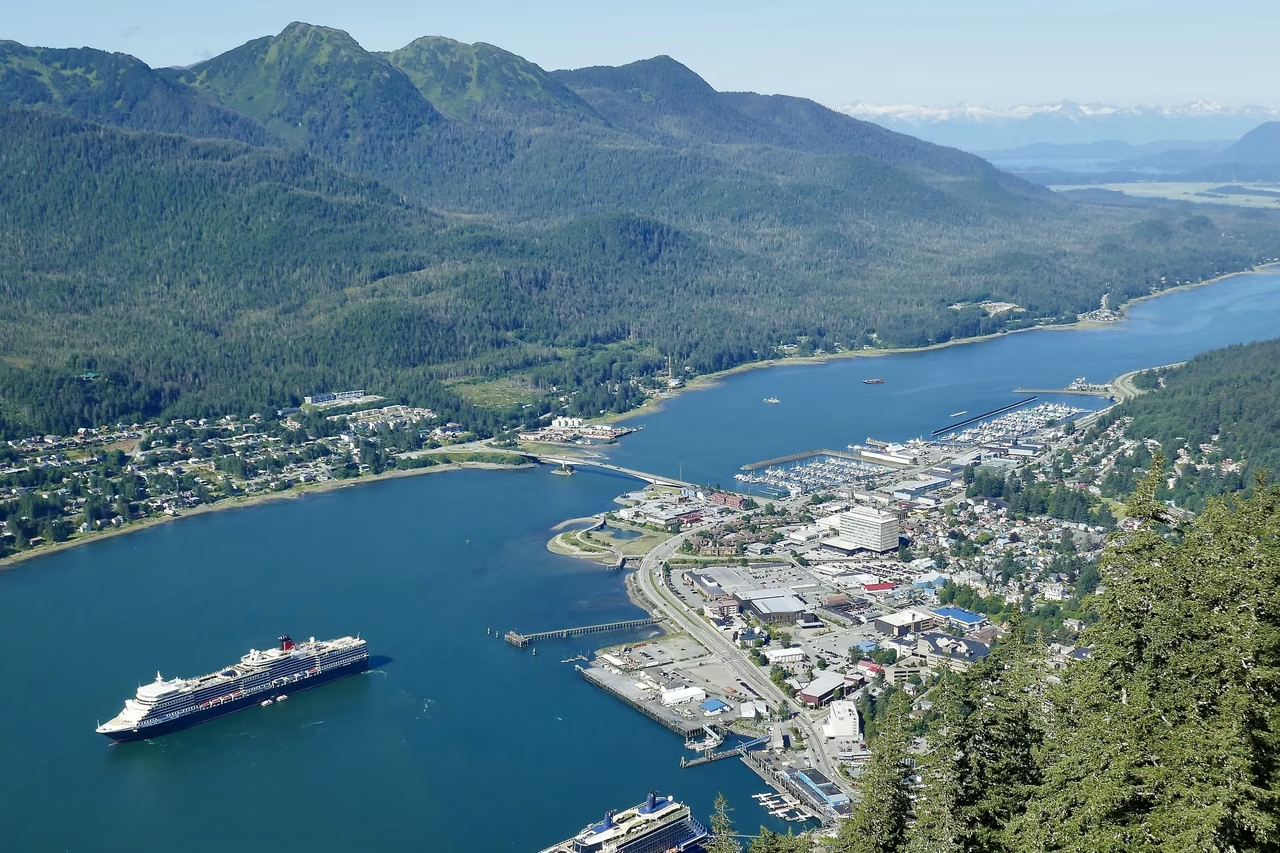
Juneau

The state capital and coastal tourism

State-level administration and coastal tourism shape the city, with maritime and air links being especially important and not easily replicable from other states' highway commuting models.

Juneau, Sitka, Ketchikan, and other southeastern communities are listed among the state ferry system’s destinations. The routes connect settlements around bays and islands, giving the sea a public transport role much like a highway. Ports and ferry routes help explain how these coastal communities connect.

Juneau’s harbor and cityscape
Public transport by sea

A harbor is a community’s lifeline.

Haines and Skagway connect sea routes with the mainland road network. A journey may begin aboard a ferry and continue by car. Lines that look separate on a map become one continuous route in practice.

A list of communities served shows where the system operates; it does not mean every pair of ports has a direct ferry connection. Routes, stops and available sailings must be checked separately. Long-standing transport patterns should also be distinguished from changing operating schedules.

Rivers, food, and community.

When salmon return, the whole river responds.

Seen through Katmai’s ecological records and the experiences of rural Alaskan communities.

One river, many forms of life

Katmai’s salmon return from the ocean to fresh water to spawn, feeding brown bears and other animals. As the fish decompose, nutrients pass into riverbank soils and vegetation, supporting a wider food web. The familiar sight of bears catching fish is only its most visible part.

Intact rivers, lakes and spawning grounds sustain this relationship. The National Park Service’s account of Katmai also makes an important distinction: an intact ecosystem is not a place without a human past. Indigenous peoples’ long relationship with these waters belongs to its history too.

Traditional foods, enduring community ties

In many rural communities of Alaska, fishing, hunting, and gathering provide food and embody seasonal knowledge, labor division, and intergenerational transmission. The experience of the elders, along with the processing and sharing of food, imbues these activities with meanings at the family and community levels.

Species, seasons and cultural traditions differ across Alaska. Katmai’s ecology and the records of subsistence life at Gates of the Arctic National Park describe particular places; neither can stand for the cultures of all Alaska Native peoples.

How do people continue to live?

Distance is part of the working day.

The unemployment rate for the entire state can indicate the overall state of the labor market, but it cannot explain whether a port is short of crew, how easy it is to hire in a remote community, or how seasonal businesses need to arrange employee housing and transportation.

For businesses operating in Alaska, one must consider recruitment locations, work seasons, and delivery methods together. Transport and warehousing connect dispersed communities, while healthcare and retail services revolve around residents' long-term needs. Not all positions can be filled in the same location.

Seafood harvesting, processing, and cold storage

Seafood must be transported continuously at low temperatures from fishing, landing, to processing. Coastal ports, processing facilities, and air freight are thus closely linked, and production schedules adjust according to the fishing seasons of different fish species.

Oil production and engineering services

Oil and gas development drive maintenance, construction engineering, and specialized transportation. Northern work sites are far from major cities, and stockpiling supplies, personnel rotation, and facility maintenance are part of daily operations.

Industries & establishments · 2023

This set of annual data serves to supplement the industry structure. The latest annual data released by the U.S. Census Bureau currently is for 2023, and the 2024 data has not yet been determined for its release date. For recent changes, please see the monthly data above. The scope and timing of the two sets of statistics differ.

Alaska business profile · 2023

Transportation is an industry of its own.

21,001Paid employees in transportation and warehousing

Approximately 8.0% of employment in this state dataset. Ships, aircraft, warehouses, and ground transport connect widely separated production sites and communities.

Other work that sustains communities

Health care & social assistance49,634 people

Retail trade34,008 people

Accommodation & food services28,571 people

Markets beyond the local community

Seafood, energy, and tourism businesses can target out-of-state customers; service stores, hospitals, and community enterprises are more affected by specific locations and transportation conditions. The total population of the state does not necessarily reflect the size of customer bases for each type of business.

Location needs a more precise answer

Operating in Alaska could mean entirely different delivery routes, seasons, and facilities. When cross-referencing the business data, separate confirmation of the registered address from the actual warehouse, office, or work locations helps understand how deliveries are completed.

A statistical view of local business

This table covers 22,178 establishments with 263,691 paid employees. It reflects local activities and should not be taken as the number of registered companies in Alaska.

The 2023 statistics mainly cover private nonfarm establishments with paid employees, excluding businesses without employees and most government agencies. Employment refers to the pay period that includes March 12. An establishment may be a shop, factory or office; it is not the same as a registered company.

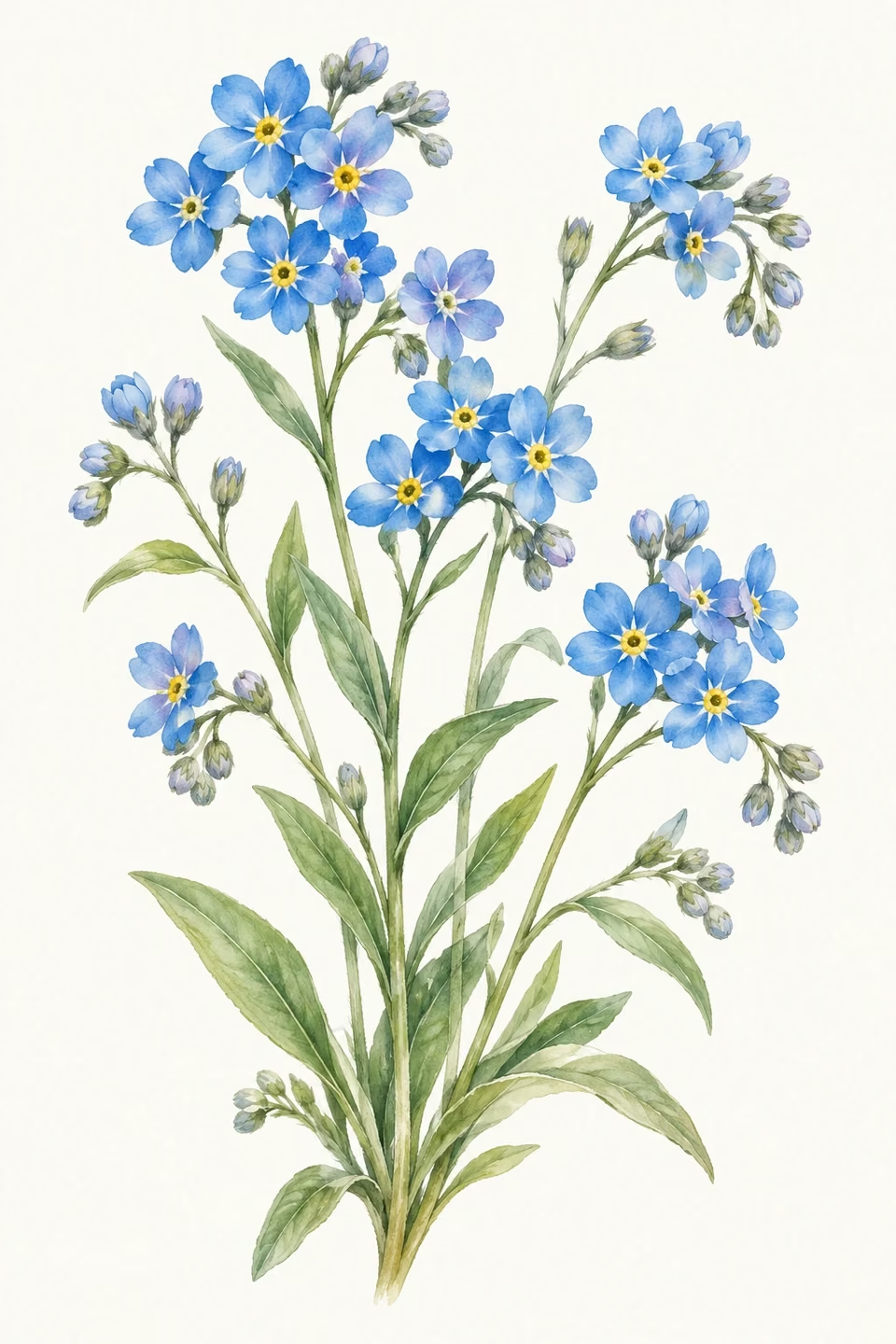
Alpine forget-me-not · Watercolor illustration
State flower

A little blue among the mountains.

The alpine forget-me-not is Alaska’s state flower. Its small blossoms offer an intimate counterpoint to the glaciers, bays and snowy peaks around them.

STATE.REPORT

An editorial feature by STATE.REPORT. Image creators and licenses are credited below.

Sources & further reading

U.S. Census Bureau · State Population Estimates ↗

Population figures on this page are estimates for July 1, 2025. Population change is measured against the 2020 estimates base from the same series.

Local history and culture · Original sources

Sources for the historic places, cultural background and geography discussed here. See alsoNational Park Service resources for this state。

State flower information and index of original sources

State flower names and an index of original references. The flower on this page is presented as an illustration.

Communities served by the state ferry system

Alaska Department of Transportation and Public Facilities: communities served in each region.

Interconnection of land and sea transportation

Alaska Department of Transportation and Public Facilities: 2021 Ferry Transportation Report, Historical Patterns of Transportation.

Salmon and Katmai Ecosystem

National Park Service: The Connection Between Salmon, Brown Bears, and Shoreline Nutrients.

Humans living within a complete ecosystem.

National Park Service: Katmai’s ecology and Indigenous relationships with the land.

Traditional livelihoods and communities

National Park Service: Traditional way of life and culture in Gates of the Arctic area.

Image credits & licenses

Aialik Glacier · NPS Photo · Public Domain.

Anchorage · Quintin Soloviev · CC BY 4.0.

Fairbanks · Quintin Soloviev · CC BY-SA 4.0.

Juneau · Ifly6 · CC BY-SA 4.0.

Denali and Wonder Lake · Denali National Park and Preserve · Public Domain.

Verify your email

We will email you a six-digit code to sign in.

By continuing, you agree to the Terms and acknowledge the Privacy Policy.

Search history

Your searches from the last 30 days. Viewing this list does not use searches. Full company reports are not saved here.