STATE.REPORT
New England · Pages and sails

Connecticut

Masts rise.

Sea breezes pass through old harbors and workshops making something new.

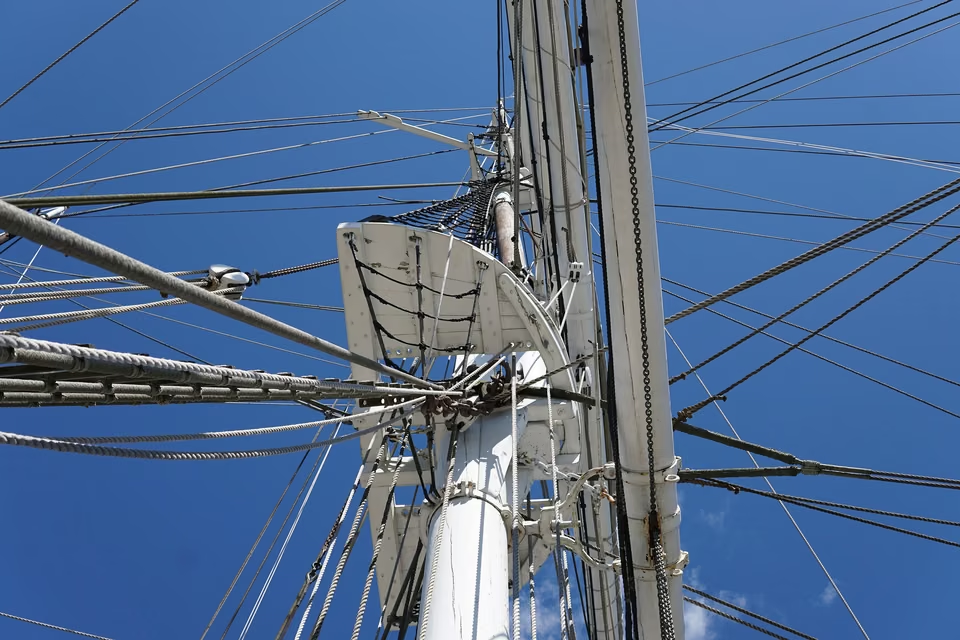
Mystic Seaport · Masts and rigging of the Charles W. Morgan
Stories travel.

From writers’ rooms to college greens, each town leaves its own mark.

State capitalHartford
Population · 2025 estimate3,688,496 people
Mystic · A ship’s long life

Timber, rope, and the craft of ocean voyages.

1841The Charles W. Morgan was built.

Mystic Seaport Museum preserves the Charles W. Morgan, a wooden whaling ship built in 1841. Its intricate rigging and tall masts reveal how sailors harnessed human effort and wind to cross the sea.

Between 1841 and 1921, the ship completed 37 whaling expeditions. The crew records preserved by the museum allow the maritime history to belong not only to the owners and captains but also to crew members from different places who performed various roles.
Old ships require ongoing maintenance. The preservation of wood, joints, and rigging depends on collaboration between professional craftsmen and researchers; repair is a long-term task, not something that ends once a ship is docked.

Whaling once was a business that also involved the long exploitation of marine animals. Museums today offer the opportunity to understand changes in maritime labor, trade, and environmental perspectives at the same time, rather than writing long voyages as romantic stories.

Hartford's Study

A house with room for many stories.

Mark Twain and His Family Life

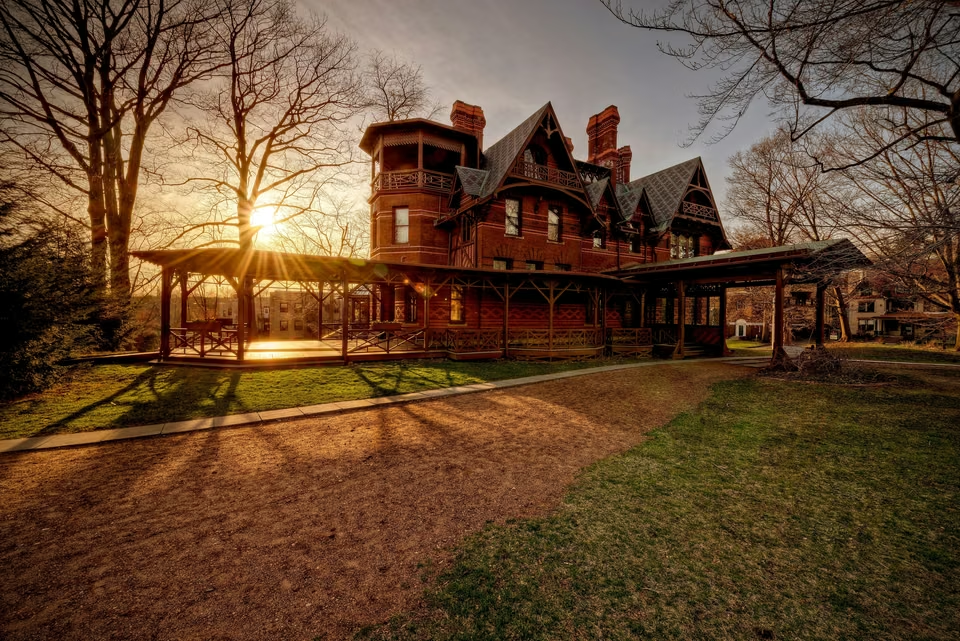
Hartford · Mark Twain's Home in the Evening Twilight

1874 — 1891

Live here and write here.

A writer’s world begins at home.

Mark Twain and his family moved into this house in 1874 and remained until 1891. Edward Tuckerman Porter designed its varied roofline, brick walls, and porches, creating a distinctive home around the family's private spaces.

The house brings literature into the setting of everyday life. Beyond the study, family, visitors, children and domestic work belong to its story. Understanding the world an author lived in can offer another way into the writing.

This city boasts a strictness in finance and administration alongside a sense of humor and observation left by literature. Hartford's dual nature coexists on the same map and deserves to be viewed through a broader lens than just "Insurance City."

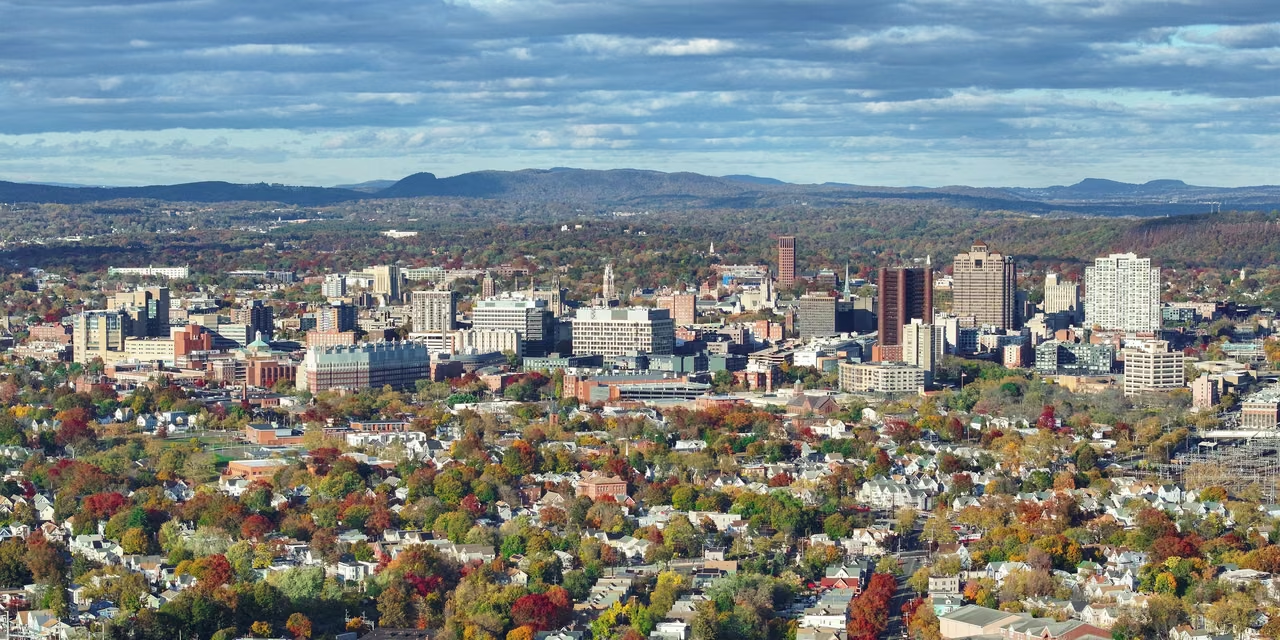
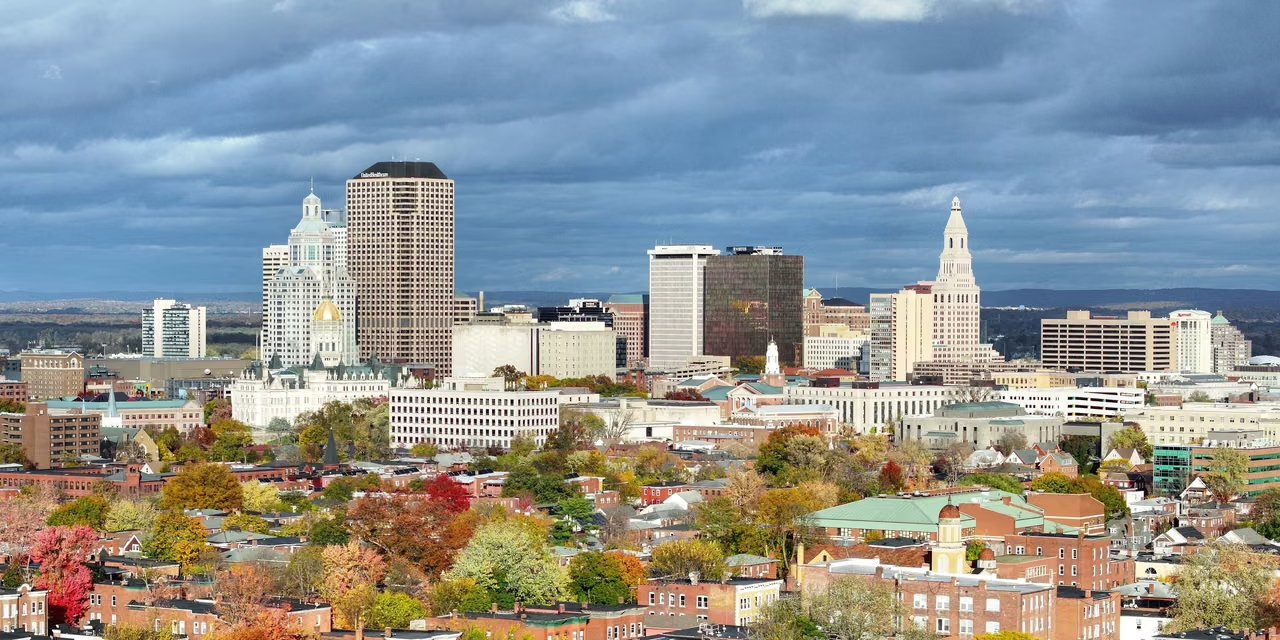
Hartford · Skyline of the State Capital City

An insurance city built on long-term commitments.

Insurance and related professional services are an important part of local businesses. Specialized fields include actuarial science, underwriting, claims handling, information systems, and customer service. Partnerships between companies often rest on a foundation of professional expertise and long-term commitment.

The state insurance department regulates practitioners and insurance companies and oversees consumer protection and the financial health of these institutions. To enter this field, one must understand the specific qualifications and responsibilities of the industry, and a general business registration cannot replace industry licensing.

New Haven · A city with a university.

Knowledge and city life, inside and beyond the courtyards.

A campus growing since 1701.

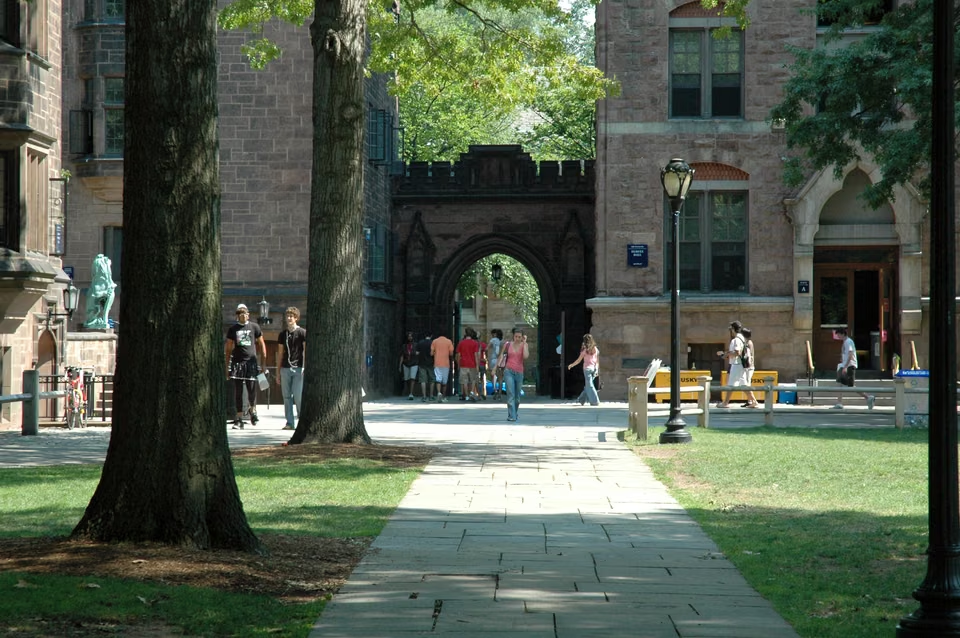
Yale's predecessor received a charter to establish in 1701 and later developed in New Haven. The courtyard, library, and teaching spaces document various understandings of learning and public life throughout different periods.

University life extends into nearby neighborhoods. Students, researchers, hospital staff, and residents share the city, connecting housing, food, cultural activities, and professional services with academic work.

Learning also means questioning the past.

Yale has researched the university's relationship with slavery. Archival evidence reveals inequalities in early donations, labor, and institutional life, giving campus history a depth beyond building dates and famous names.

Understanding a university city allows one to appreciate the gardens while also giving room for genuine historical presence. For a business, proximity to research resources and talent does not automatically translate into collaboration; specific teams and actual needs must be identified.

August 2026 · Current Local Work

Expertise is in the details.

5.1%

August 2026 unemployment rate

The state labor department's report, released on September 17, 2026, showed that August employment fell by 300 jobs from the previous month, while unemployment declined to 5.1%. The overall change was small, but industries moved in different directions.

Healthcare and construction added jobs. Manufacturing employment fell during the month but remained above its level a year earlier. Hiring and market assessments still need to consider particular occupations and places; one statewide percentage cannot describe every business.

Manufacturing

Specialized skills for aerospace and maritime industries.

Connecticut’s manufacturing tradition continues in complex equipment and precision production. Components, machining, testing and engineering support depend on one another. Joining a supply chain requires consistent quality records, production capacity and reliable delivery.

The 2025 Manufacturing Strategy for the state prioritizes talent development, technological application, and corporate collaboration. For small and medium suppliers, updating equipment and employee training need to be considered together; purchasing equipment alone does not guarantee a new order.

Service

Professional services depend on lasting trust.

Financial insurance, healthcare, and university-related jobs require different requirements for information processing, professional qualifications, and reliable services. Small teams should start from specific aspects but need to clarify service boundaries, contractual responsibilities, and customer usage methods.

Premises

After state registration, local requirements remain.

State business service guides list registration, taxation, and licensing separately. When conducting business, verify the requirements of the state and the municipality where you reside based on your actual activities; qualifications for a particular industry, the purpose of a property, and the sale of goods should not be assumed based solely on the company name.

Industries & establishments · 2023

The work that keeps communities running.

Connecticut's healthcare, universities, professional services, and manufacturing are spread across different cities. The establishment statistics show the employment structure, and readers should also consider the city locations and the actual businesses.

The state recorded 89,234 employer establishments and 1,536,698 paid employees. A single company may operate several stores, offices, or factories, so establishments are not a count of registered companies.

Health care & social assistance292,377 people

Retail trade181,494 people

Manufacturing158,521 people

Accommodation & food services141,070 people

Finance & insurance119,436 people

U.S. Census Bureau, 2023 County Business Patterns. The series primarily covers private, nonfarm establishments with paid employees. Employment is measured for the pay period that includes March 12. The 2023 release was the latest in this series available when checked; it is not a measure of current monthly employment.

Current employment figures: Connecticut Department of Labor's August report, released September 17, 2026. The discussion of industrial development draws on the state's 2025 manufacturing strategy; its goals are not presented as outcomes already achieved.

From Stamford to the eastern harbors

Coastal cities, each with its own rhythm.

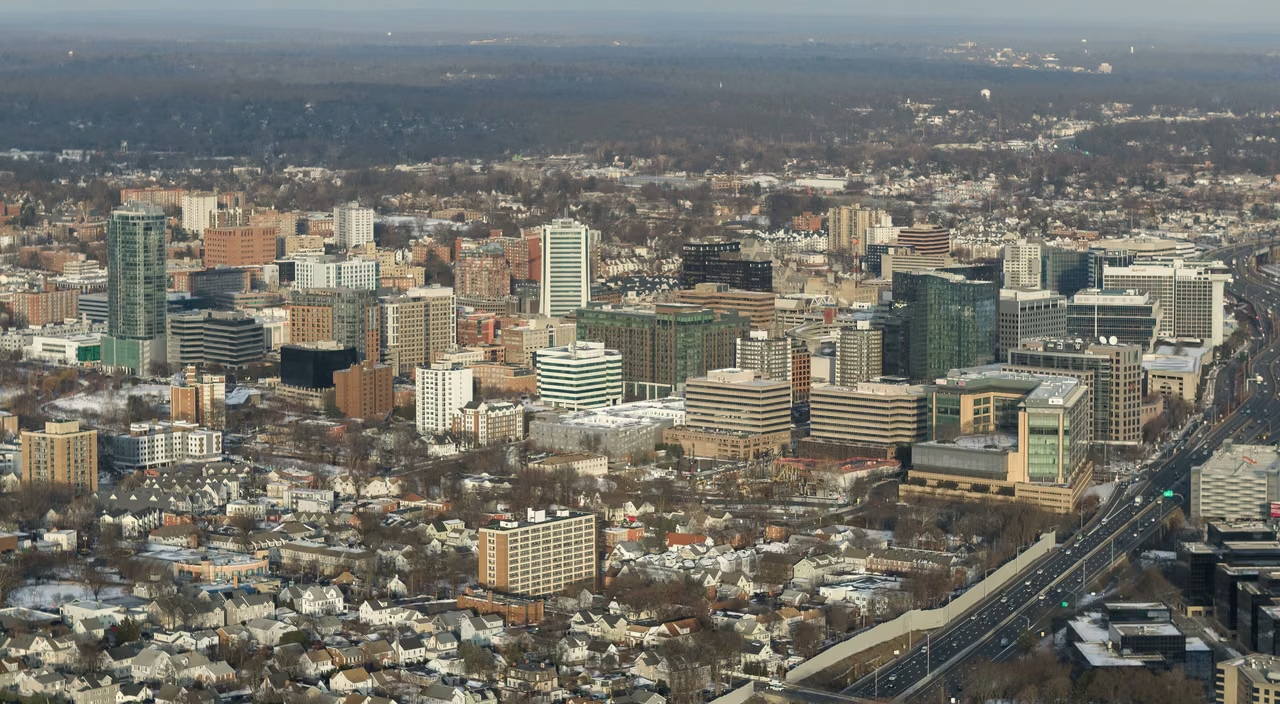
Stamford · Railways, roads and city streets
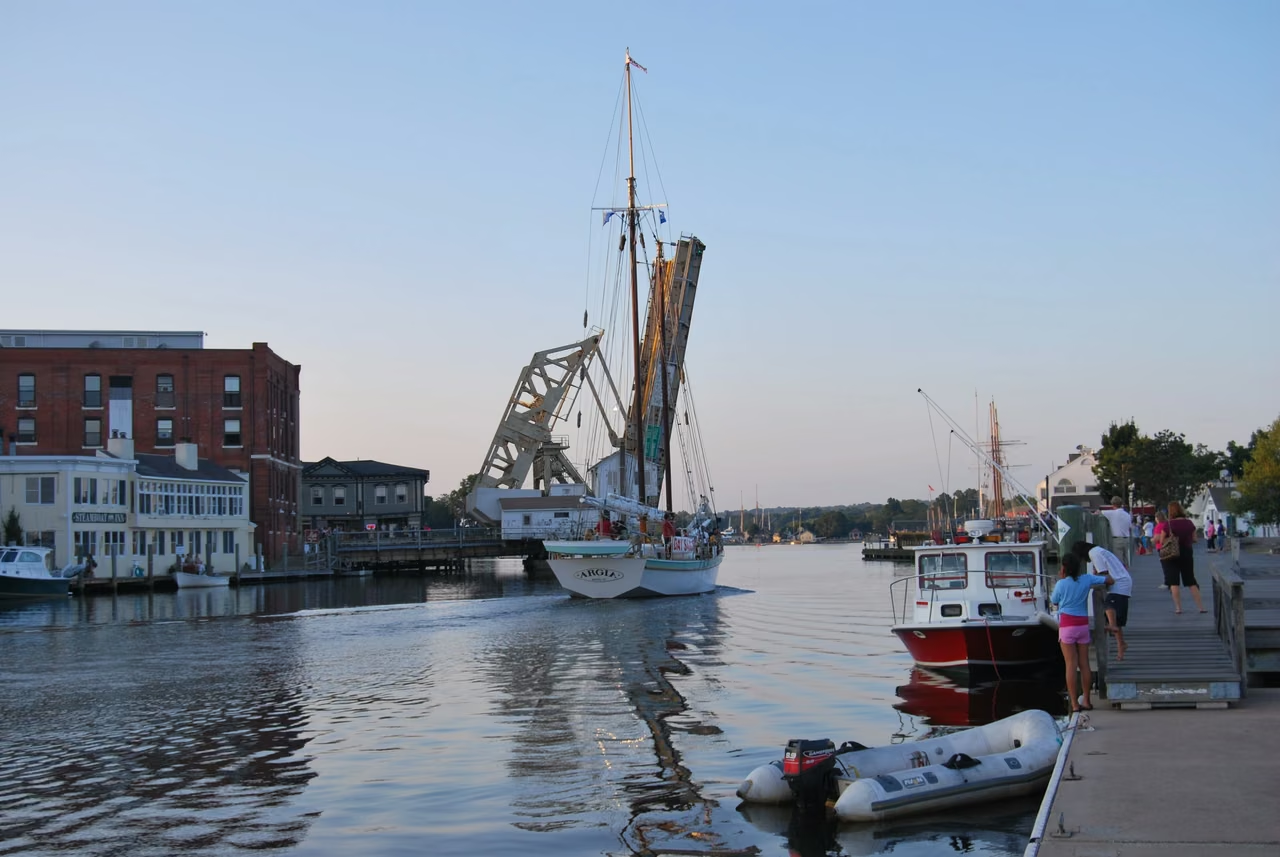
Mystic River · A sailboat passes through the open drawbridge

The southwest: part of a wider metropolitan network.

Stamford and the southwestern coast are closely connected to metropolitan New York. Railways, roads, offices and homes share a relatively compact area. Businesses choosing a location need to weigh customer access, employee commutes and occupancy costs together.

The east: harbor traditions and everyday life.

The maritime culture, ships, docks, and marine industry in Mystic create a distinct local environment. Each sector operates at its own pace: construction, maintenance, tourism, and services for residents all have different rhythms. Being coastal, however, does not mean that the economic structures of each city are the same.

Earlier Place History

The tribally owned and operated Mashantucket Pequot Museum presents the lives and history of the Pequot people and their ancestors. Connecticut's story begins well before European ports and settlement; Indigenous communities remain part of the state today.

Connecticut River · Where the river meets the Sound

The river valley unfolds.

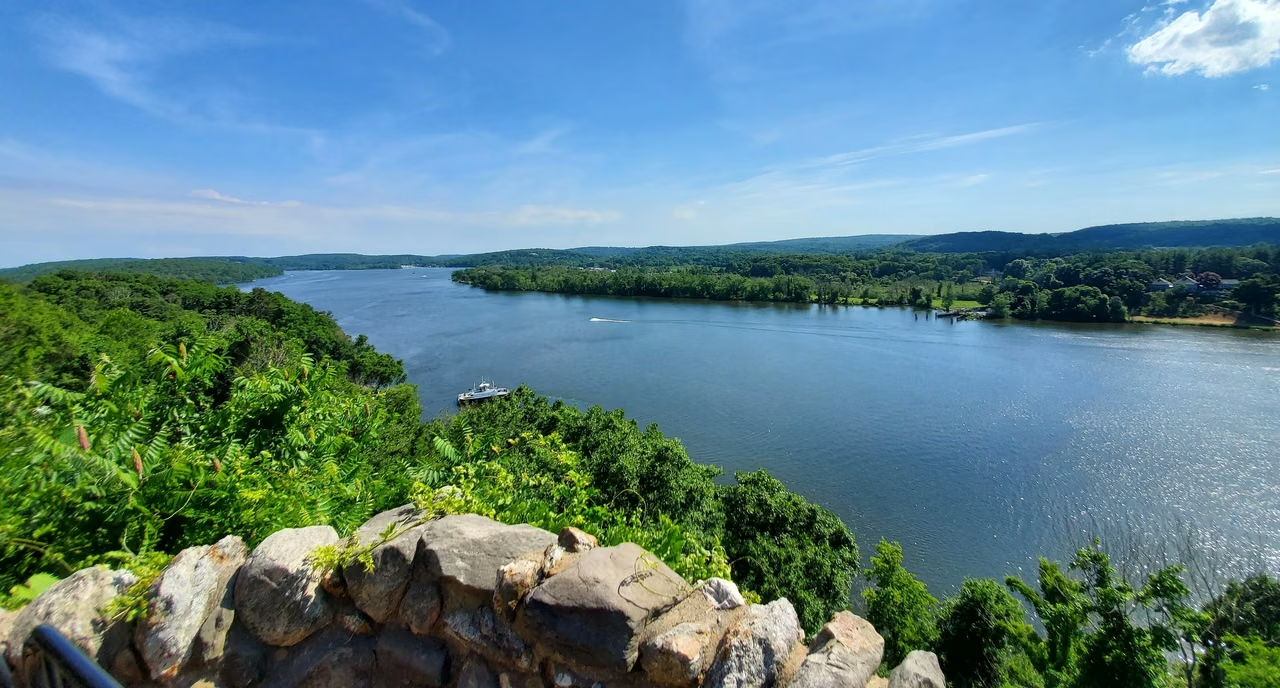
The Connecticut River viewed from near Gillette Castle

The lower Connecticut River connects freshwater, tidal, and coastal wetlands. The river eventually flows into Long Island Sound, where it mixes with saltwater from the Atlantic, creating a river estuary environment.

Tidal wetlands provide habitat for wildlife and also blur the boundary between land and water as water levels fluctuate. Activities in the upstream watershed are interconnected to coastal water quality, making coastal protection not just a seaside concern.

High above the river, Gillette Castle reflects a different imagination. Actor William Gillette helped design the house and its furniture. Built principally from 1914 to 1919, its local stone and steel frame give it a distinctive character tied to the surrounding valley.

State flower · Mountain laurel

One last page, in bloom.

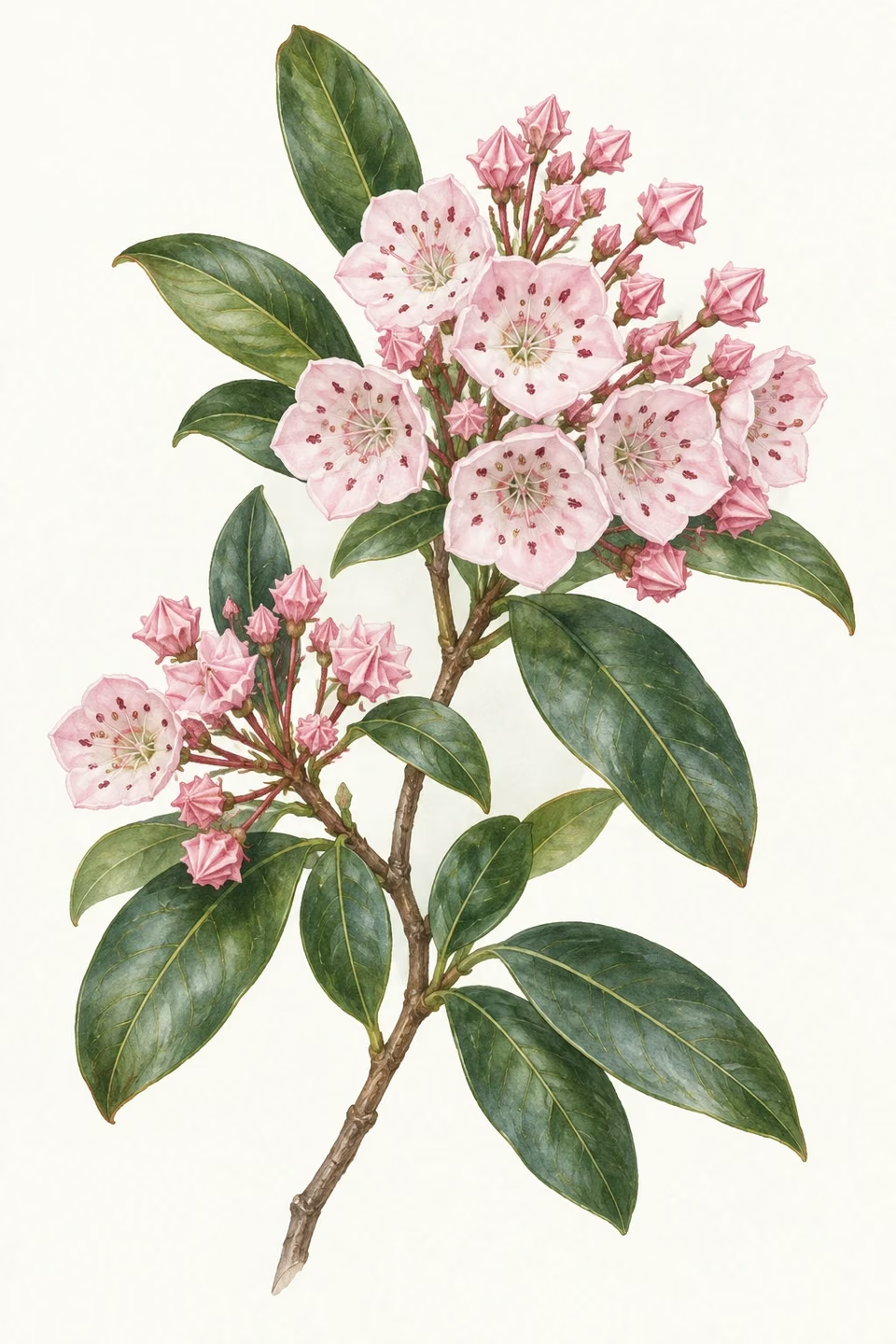
Mountain laurel · State flower illustration

Mountain laurel became the state flower in 1907. Clusters of pale flowers with evergreen leaves add a fine texture to the woods; it brings back topics of ships, study rooms, and crafts to New England's natural beauty.

This state is not large in size, but the character of its cities is very distinct. Valleys, straits, old residential areas, university quadrangles, and work sites are worth stopping at individually rather than being hurriedly absorbed into the same scenery.

STATE.REPORT

An editorial feature by STATE.REPORT. Image creators and licenses are credited below.

Sources & further reading

Population estimates ↗

U.S. Census Bureau: state population estimates for July 1, 2025.

Stamford’s rail connections

Connecticut Department of Transportation: Stamford’s transport hub and connections with New York and coastal cities.

The Morgan and maritime craftsmanship

Mystic Seaport Museum: A wooden whaling ship built in 1841 and preserved.

Seaman's Record

Mystic Seaport Museum: Voyages and Crew Archives.

Mark Twain's residence

Mark Twain House & Museum: House Design and Family Life.

The writer and Hartford.

Mark Twain Home Museum: Resided and wrote from 1874 to 1891.

Yale's History

Yale University: Founded and the development of the university in New Haven.

Research into the university’s history of slavery ↗

Yale University: Archival research and inequality in the university's history.

The natural environment of Long Island Sound.

Long Island Sound Study Program: The Intersection of Estuaries, Freshwater, and Seawater.

Downstream Wetlands

Long Island Sound Study: Tidal wetlands of the lower Connecticut River.

Gillette Castle and the river valley

State parks: the building, actor William Gillette and the river valley landscape.

The history of the Pequot people.

Mashantucket Pequot Museum: A tribally operated history and research institution.

State flower: Mountain laurel

State government: State flower established in 1907.

Image credits & licenses

Verify your email

We will email you a six-digit code to sign in.

By continuing, you agree to the Terms and acknowledge the Privacy Policy.

Search history

Your searches from the last 30 days. Viewing this list does not use searches. Full company reports are not saved here.