
STATE.REPORT

Illinois · Lakeshore, railroad, and prairie

The American Midwest

Illinois

Built toward the sky. Rooted in the land.

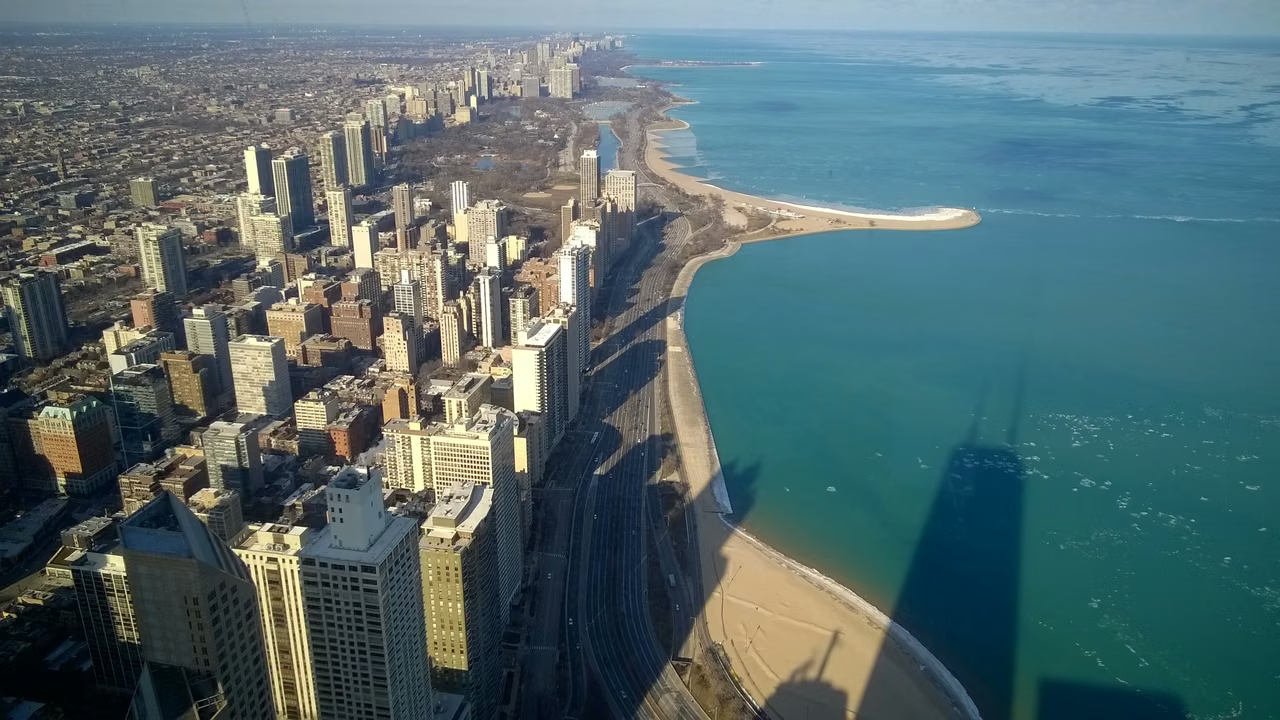
Chicago from North Michigan Avenue · A city beside Lake Michigan
Cities reach upward.
The land stretches beyond.
State capitalSpringfield
Population · 2025 estimate12,719,141 people

From lakeside towers to central farmland and southern rock formations, architecture, transportation, agriculture, and public life have shaped different parts of Illinois.

Chicago · The scale of architecture

How a city learned to rise.

Late 19th century saw Chicago become a significant testing ground for high-rise building technology. Metal frames gradually changed the way buildings supported their weight, allowing walls to be lighter and windows larger. Limited urban land could now accommodate more floors.

Such changes are not made by a single building. Issues of structure, materials, fire safety, lighting, and daily use are addressed in each design iteration. Looking along the river, one sees how these questions are answered at different times.

Building brings far more jobs than just construction sites: from engineering design to equipment maintenance, property services, office and commercial activities, these happen continuously within the buildings. Below the skyline, there's a delicate division of labor that keeps the city running every day.

Chicago River boat tours · Cruises from the water to observe city buildings.
1848

A canal connects the lakeshore to the interior.

Illinois – Michigan Canal was opened this year, connecting the waters of Lake Michigan with routes leading to the Mississippi River. Goods are easier to transport to the market and goods from other regions can enter Chicago.

City growth, therefore, cannot be solely about skyscrapers. Rivers, canals, and later railroads changed where goods passed through, and where warehouses, transactions, and services concentrated.
Pullman · Outside the Factory

Brick homes for the people who built the trains.

Industrial heritage is also a history of life.

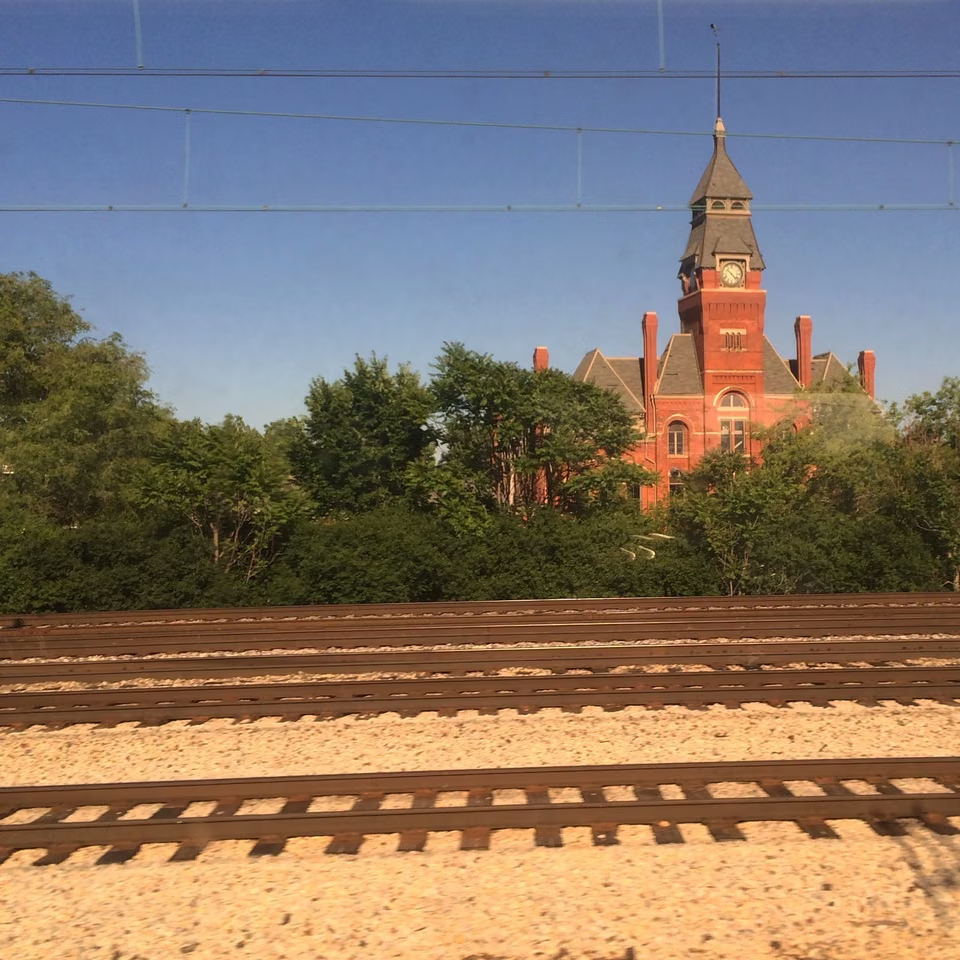
Pullman Clock Tower and tracks · Chicago’s railroad heritage

Railcars, housing, and a company’s vision.

Pullman was an industrial community built for the purpose of manufacturing railway cars. The factory, residences, and public facilities were all part of a planned system, and the orderly streets and brick buildings can still be recognized today.

However, beautiful planning did not eliminate the labor-management tensions. The strike and boycott movement of 1894 made it an important location in American labor history. Visiting industrial heritage sites also helps in understanding how wages, housing, and living conditions are interconnected.

1925 → 1937

The people who served travelers fought for their own rights.

In 1925, a black porter union organized and after years of struggle, signed an agreement with Pullman in 1937 that improved wages, job security, and grievance procedures. This history linked railway labor to broader claims of equality.

Work Update · August 2026

Employment totals—and the changes within them.

Released by the state employment security department on September 17, 2026. The monthly figures below are seasonally adjusted.

6.1756million

Nonfarm employment fell by 4,400 jobs from the previous month.

4.7%

The unemployment rate fell by 0.2 percentage points from the previous month.

Job reductions and a decrease in unemployment rates can occur simultaneously: the metrics come from different surveys and the labor force can change. A decrease in unemployment rates cannot be solely explained by a general increase in hiring.

Compared to the same period last year, the state's nonfarm jobs increased by approximately 15,000. Construction saw the largest increase while financial activities decreased. The direction of the industries is inconsistent in the same state-level report.

From industry statistics to individual businesses

When considering construction and building services, factors such as the location, trade, and delivery period must be taken into account. Manufacturing and logistics focus on equipment, sites, and transportation arrangements. Professional services rely more on the experience of the personnel and client relationships. When choosing a location for operations, infrastructure, workforce availability, and client distribution should be compared together.

Monthly job statistics describe employment changes, not company registrations or a single enterprise's performance. Annual establishments data are listed at the end for further understanding of the state's industry composition.

Leave the high-rise buildings and enter the central fields.

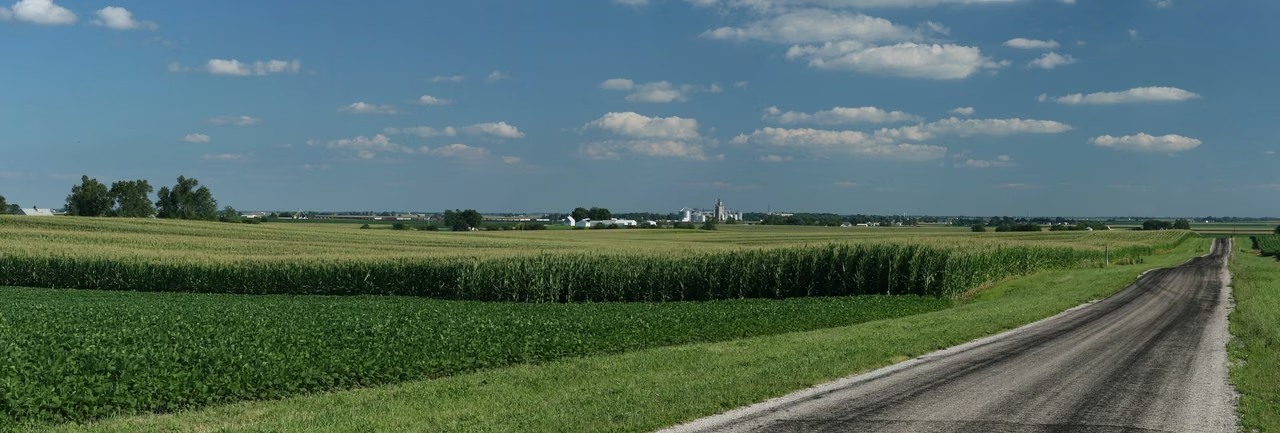
A year in the fields.

Cornfields near Royal · Central Illinois farmland

Before the farms, a different kind of prairie.

The state is called "The Prairie State" due to its extensive history of prairies. Prairies are not just one type of grass: soil moisture differs, leading to different types of communities such as wet, mesic, or dry.

Deep-rooted plants, seasonal growth, and fire all shape prairie ecology. Conservation managers use prescribed burns to limit shrubs and trees and help prairie plants persist.

Now farmland in neat rows and preserved natural prairies belong to different land uses and ecosystems. Recognizing agricultural landscapes also means preserving memories of an earlier natural appearance.

2025 Complete Harvest Year

Corn and soybeans support a vast production network.

Corn grain production
2.354billion bushels
Soybean production
639million bushels

USDA statistics show that the harvested area for corn was 11 million acres, and for soybeans, it was 10.23 million acres. A bushel is a common unit of measurement for agricultural products, and different crops have different standard weights.

Production is connected to seeds, farm machinery, grain storage, processing, and transportation. It does not equal sales revenue; price, input costs, and sales timing can affect the outcome.

SeedingGrowthHarvestStorage and Transportation

This data represents the completed harvest from 2025. The 2026 growing season is still ongoing, and forecast values are not presented as annual performance.

State capital · Springfield

Low roofs. A wider sense of home.

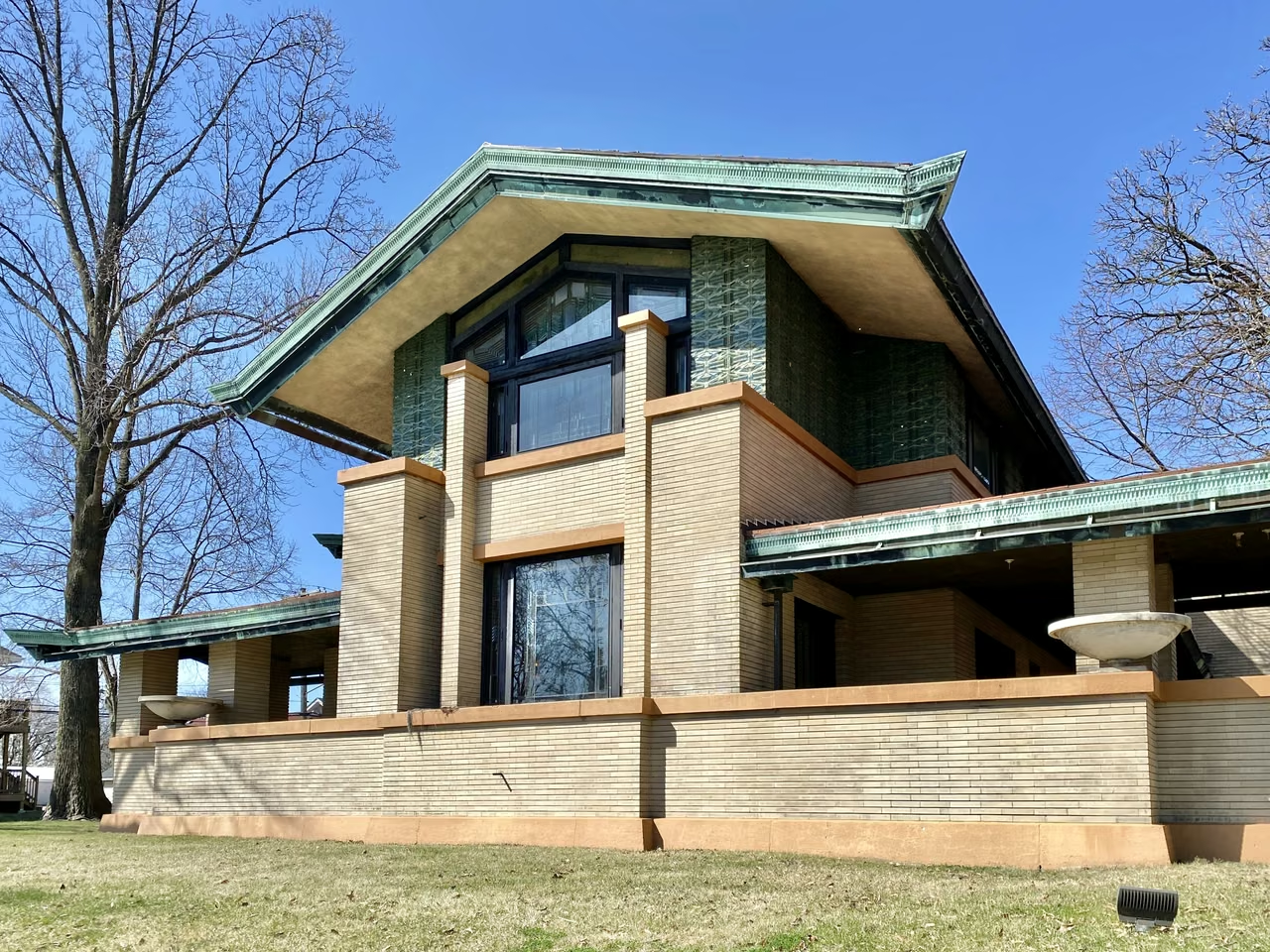
Dana-Thomas House – A Prairie-style design by Wright.

Eaves, ribbon windows, and a complete living space.

Dana-Thomas House views architecture, furniture, and stained glass as interconnected. Wide eaves, horizontal lines, and grouped windows are important language of the Prairie style.

It's not just a matter of appearance. How spaces connect, how light enters, and how furniture fits into the space are all parts of the design. The residence retains a large number of original pieces of furniture and art glass, providing specific physical examples of this holistic design.

A home that also welcomed public life.

Susan Lawrence Dana commissioned Wright to remodel the house and used it for gatherings, education, and artistic activities. The newly completed house in 1904 also reflected her desire to be involved in public affairs such as women's rights.

Thus, the history of architecture is not just about architects. The lives, aesthetics, and social participation of the clients also influence the shape and purpose of buildings.

Return to an Earlier City: Cahokia

Monumental building before the skyscraper.

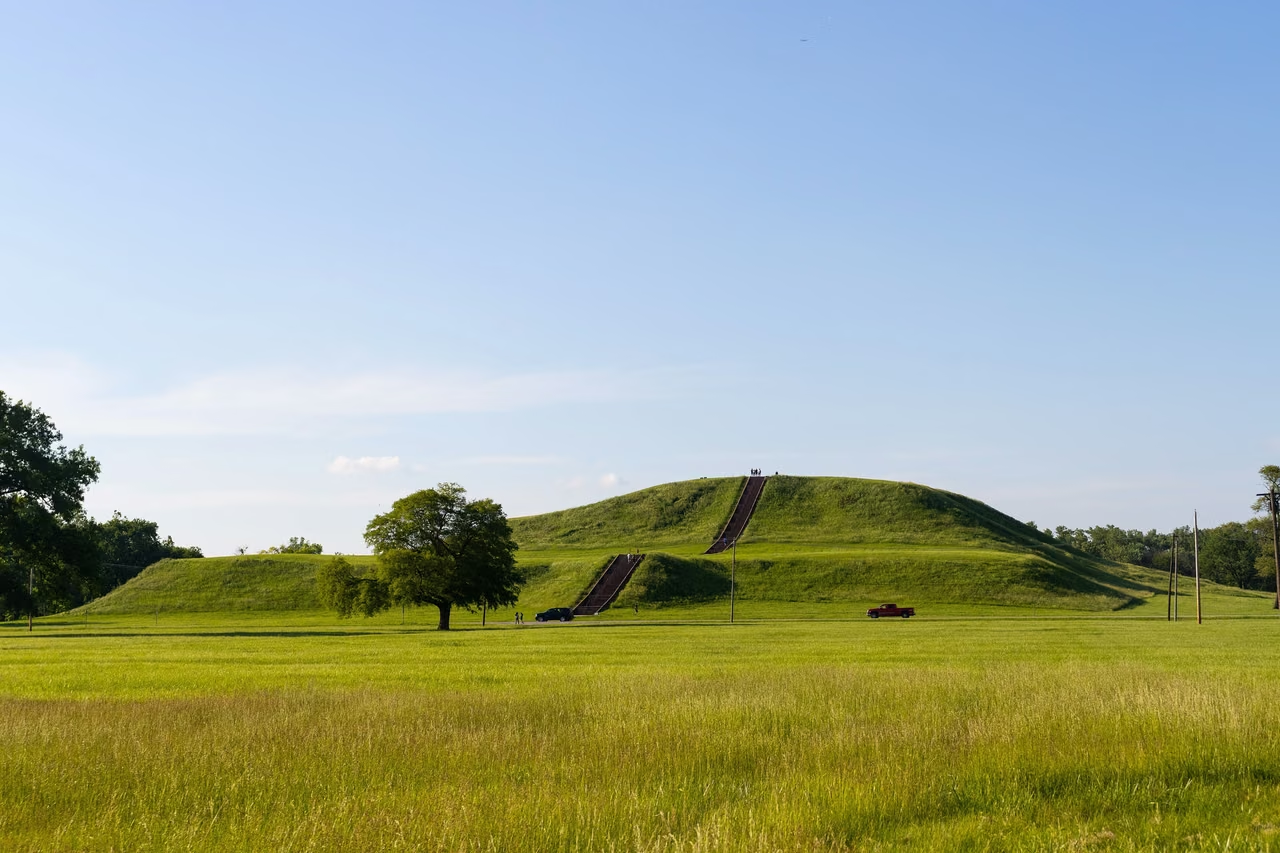
Monks Mound at Cahokia · Summer 2024

Mounds, plazas, homes, and cultivated fields once formed a complex settlement.

Located on the east side of the Mississippi River, Cahokia was an important center of the Mississippian culture and flourished between the years 1000 and 1350 CE. The mounds here are not natural hills but long-term, organized human constructions.

Monks Mound and other earthworks formed a settlement alongside public, residential and ceremonial spaces. The site’s social organization and economic connections long predate the rise of modern Chicago.

Today's grassland does not fully represent the living scene of years past. Archaeological research rebuilds understanding through layers, artifacts, and remains; preserving sites also preserves evidence that can continue to be studied.

Rivers and strata · Two different types of geological features

Beyond the plains, a changing landscape.

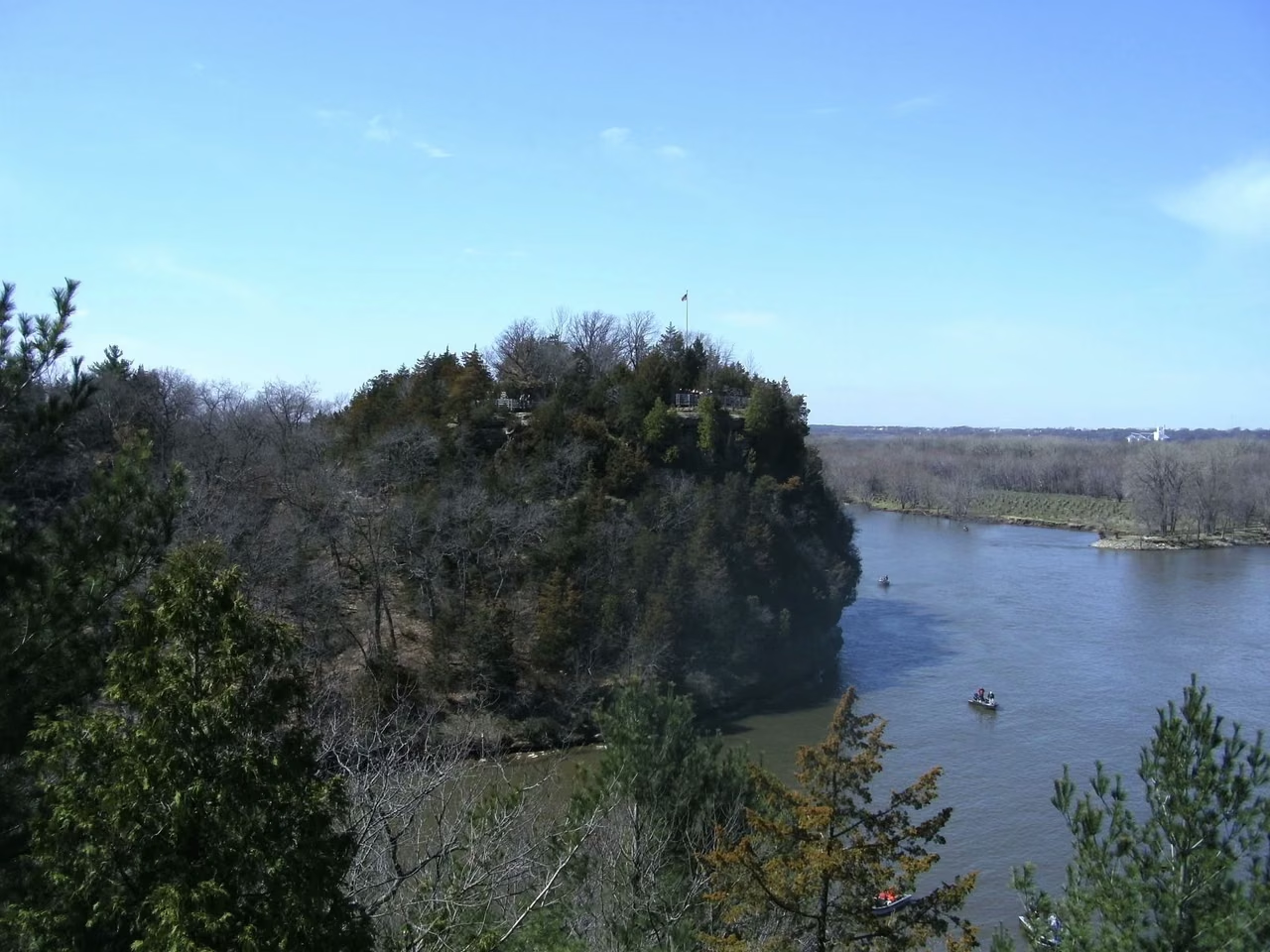
Starved Rock on the Illinois River · Wooded sandstone banks

Follow the river into the canyons.

Glacial meltwater and stream erosion shaped the canyons of Starved Rock State Park. Sandstone cliffs, trees, and flowing water create a striking contrast with the gentler surrounding terrain.

The same river, a part of natural processes, also enters the history of transportation and urban development. From afar, one sees a vast expanse of water, but up close, one can see details such as rock layers, tributaries, and slopes.

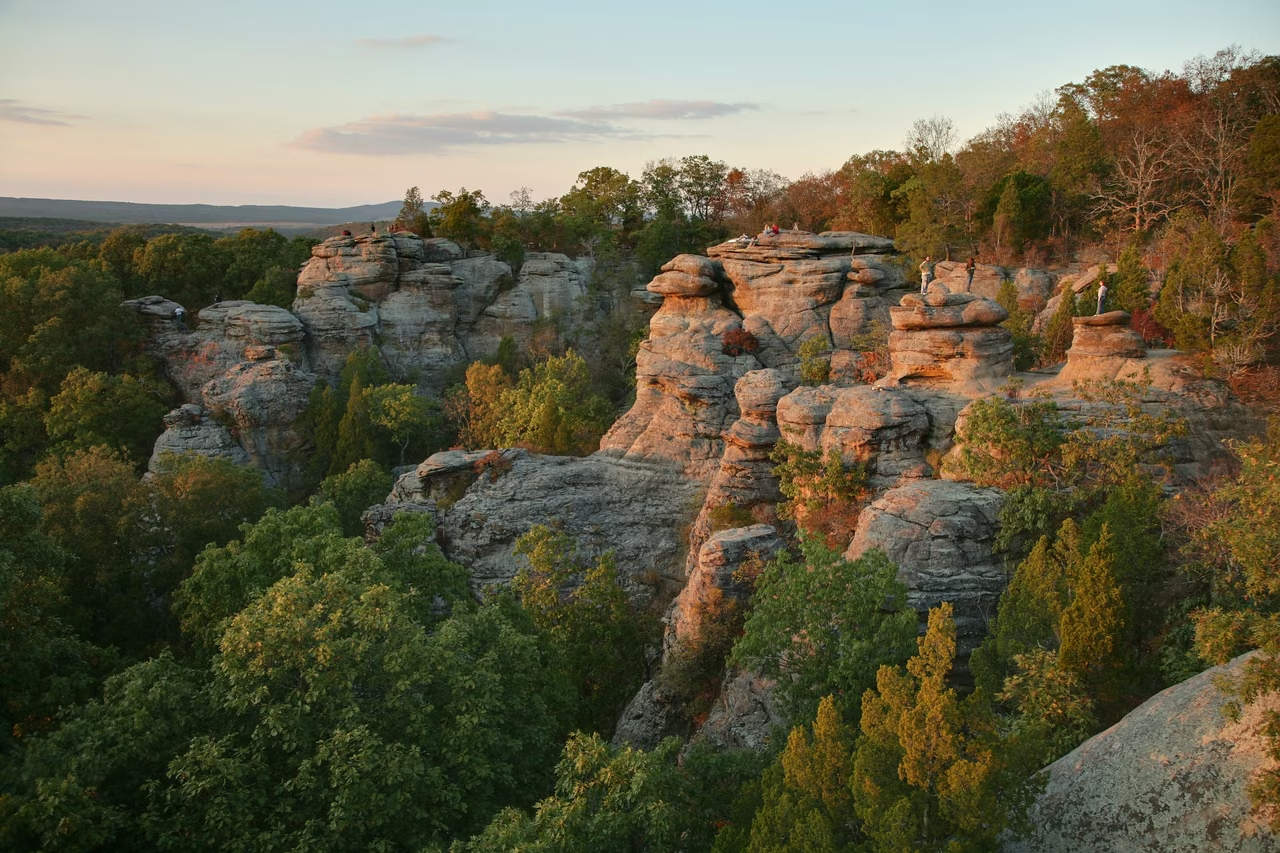
Garden of the Gods, southern Illinois · Rock and forest in the Shawnee Hills

In the south, forest meets exposed stone.

The sandstone landscape of the Shawnee Hills differs from the prairies farther north. Garden of the Gods, with its rock formations, woodland, and broad views, reveals another side of the Prairie State.

Streams, wetlands, and riverbanks are also part of Shawnee National Forest. Understanding southern Illinois means seeing its rocky terrain together with the surrounding forests and waterways, beyond any single striking formation.

State flower · Violet

Beyond the grand structures, a little spring at ground level.

The violet is Illinois’s state flower. Different violet species grow in prairies, woodlands, wetlands and lawns. Most bloom in spring, and their flowers come in colors beyond purple.

From towering city high-rises to railway neighborhoods and farmland and hills, this state's character comes from layers left behind by different eras. Tiny flowers remind people that beyond the city and industry, there are places worth slowly living in.

Violet · State flower illustration
Statewide industries · Annual figures

The work behind everyday life.

Industries & establishments · 2023

The work that keeps communities running.

Beyond agriculture, construction, and transportation, industries such as healthcare, retail, professional services, and manufacturing support the state's economy. The data covers the industry structure, beyond agricultural output and monthly non-farm employment, to include paid employees and establishments.

The state recorded 322,415 employer establishments and 5,661,761 paid employees. A single company may operate several stores, offices, or factories, so establishments are not a count of registered companies.

Health care & social assistance857,043 people

Retail trade571,091 people

Manufacturing544,438 people

Accommodation & food services523,877 people

Administrative & support services474,445 people

U.S. Census Bureau, 2023 County Business Patterns. The series primarily covers private, nonfarm establishments with paid employees. Employment is measured for the pay period that includes March 12. The 2023 release was the latest in this series available when checked; it is not a measure of current monthly employment.

STATE.REPORT

An editorial feature by STATE.REPORT. Image creators and licenses are credited below.

Sources & further reading

Population estimates ↗

U.S. Census Bureau: state population estimates for July 1, 2025.

Chicago's skeletal structure

Chicago Architecture Center: High-Rise Structures and Urban Spaces.

The canal connecting the lake to the river.

National Park Service: The Illinois–Michigan Canal, which was navigable in 1848.

Pullman Factory and Community

National Park Service: Industrial community, architecture, and labor history.

The history of sleeping car porters

National Park Service: The Development of African American Railroad Workers and Unions.

Illinois' Prairies

State Natural Resources Department: Types of grasslands, plant and ecological management.

2025 Year Agricultural Overview

U.S. Department of Agriculture National Agricultural Statistics Service: Planting, Harvesting, and Yield Data, read on September 2026.

2025 crop growth season

University of Illinois: an annual analysis of weather, corn and soybean yields.

Dana-Thomas House

State History Site Department: Architecture, Furniture, and Art Glass.

The Public Life of Homeowners

State historic sites program: Susan Lawrence Dana’s involvement in education, art and women’s rights.

Wright and the Prairie Style

State historic sites program: horizontal lines, overhanging eaves and the relationship between buildings and their surroundings.

Lincoln in Springfield

National Park Service: Lincoln's Family, Profession, and Public Life.

Lincoln Home

National Park Service: 1844 to 1861 Family Residence.

Cahokia Mounds ↗

National Park Service: Mississippi Culture Villages and World Heritage Sites.

Starved Rock's canyons and riverbanks

State Natural Resources Department: Sandstone, stream erosion, and the Illinois River.

Illinois's natural divisions

State Natural Resources Department: The Differences in Prairie and Shawnee Hills Landscapes.

Shawnee National Forest

US Forest Service: Records of Ridgetops, Streams, and Ecosystems.

State Flower and Natural Symbol ↗

Illinois Department of Natural Resources: violets, the state grass and the state tree.

Image credits & licenses

Verify your email

We will email you a six-digit code to sign in.

By continuing, you agree to the Terms and acknowledge the Privacy Policy.

Search history

Your searches from the last 30 days. Viewing this list does not use searches. Full company reports are not saved here.