STATE.REPORT
From the speedway to a city of design

Indiana

Beyond speed. Inside the craft.

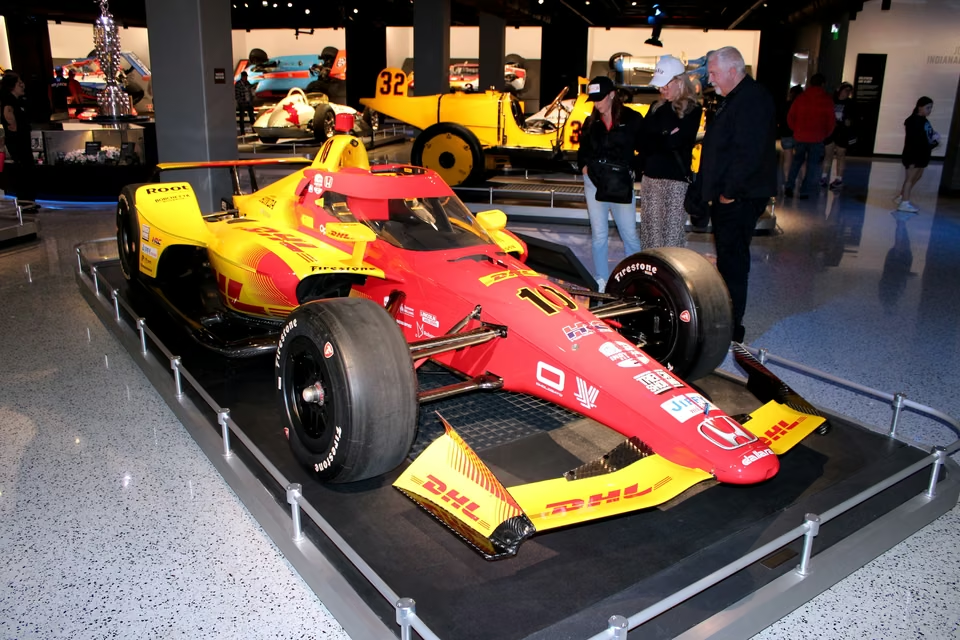
Speedway museum · Racing cars on display in 2026
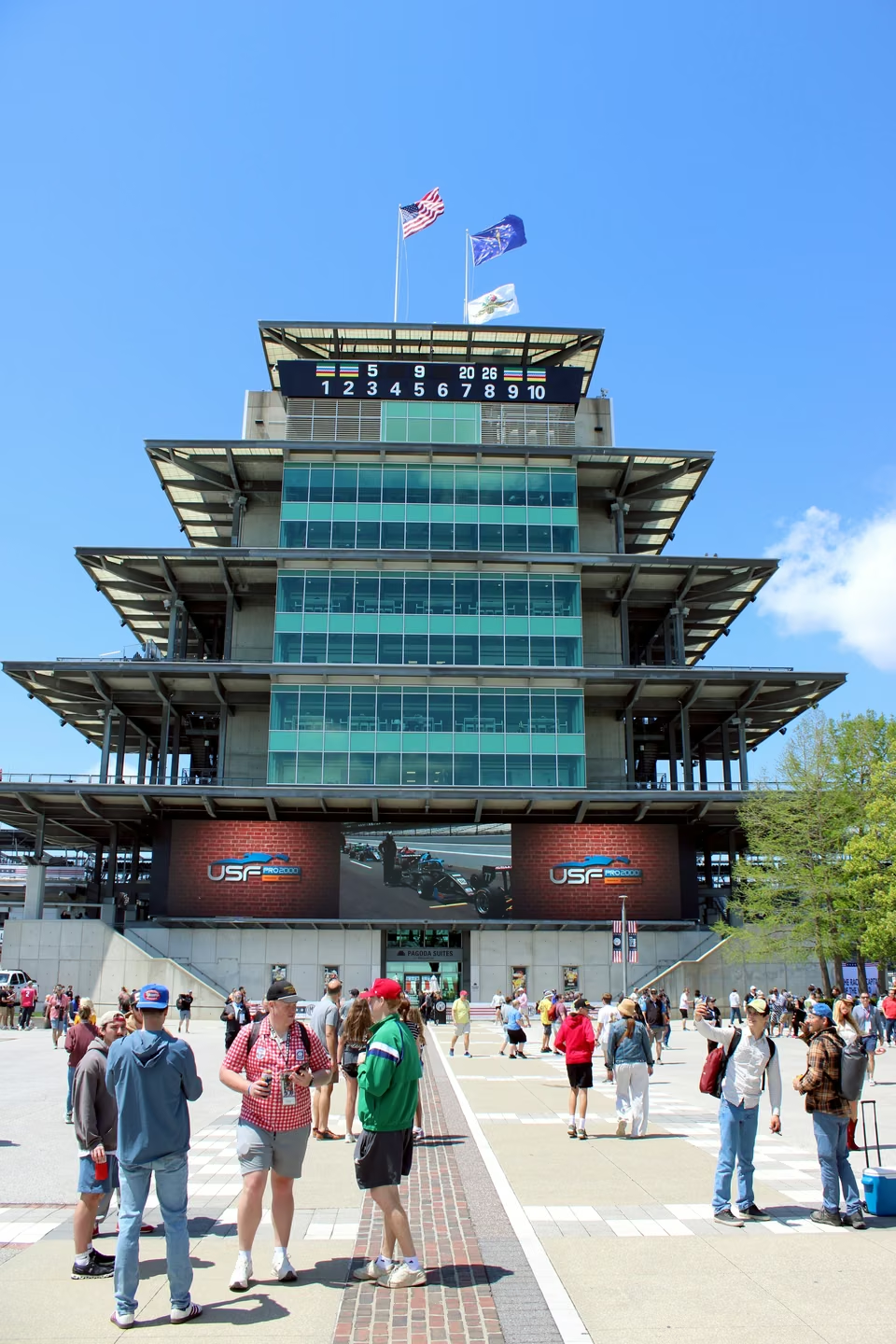
Speedway control tower · May 2026
A racing story that began in 1911Follow the design
Indiana · The Midwest

Speed, built with patience.

State capitalIndianapolis
Population · 2025 estimate6,973,333 people

Every time Indianapolis comes up, one always thinks of the sound of engines. The 500 Mile race ties the city to racing and provides a visible stage for design, materials, maintenance, and team collaboration.

The first race took place on May 30, 1911. More than a century later, it remains a defining local tradition. The Indianapolis Motor Speedway Museum preserves the story of racing and technological change; it reopened in 2025 after renovation.

Look beyond the racetrack to another Indiana: modern architecture in Columbus, industrial heritage in South Bend, northern lakeshore dunes and the southern countryside where Lincoln grew up. Alongside stories of speed are stories of scale, materials and time.

The city beyond the speedway.

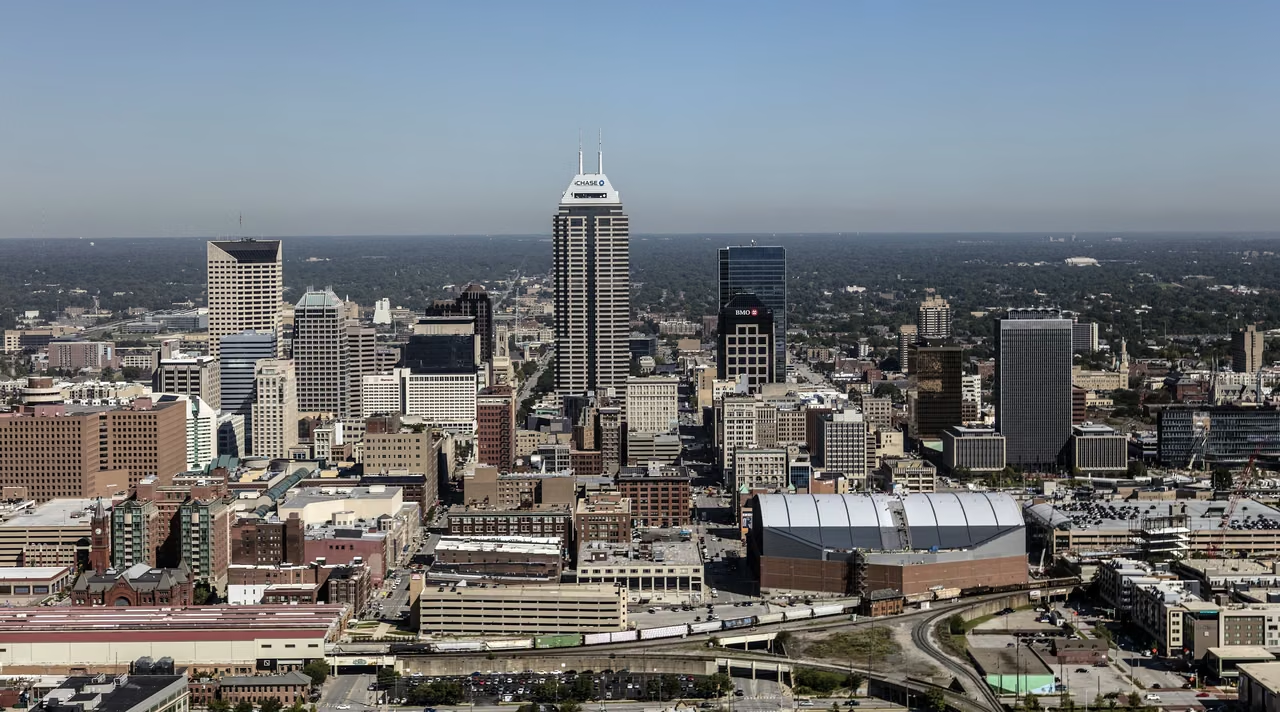
Indianapolis · State capital and regional service center

Indianapolis · A view over downtown

One race, many kinds of work.

On the day of the event, the drivers and the results are most closely watched. Supporting large-scale activities are also the venue operations, traffic organization, accommodation and catering, equipment maintenance, and professional services. Short-term visitors create opportunities for businesses, but they also test the reception capabilities and execution details.

Event-related business should differentiate between activity cycles and annual demands. The operations of hotels, restaurants, or suppliers cannot be solely based on the heat of a single event; customer structure, off-peak usage rates, and staffing arrangements are equally important.
The wider life of the state capital.

As the state capital, Indianapolis gathers public management and municipal services. Healthcare, education, commerce, and community life make up the demands, while sports are just a part of the city's economic landscape.

When researching a company, one can start with its specific products and services: does it offer short-term services for events, or long-term work for factories, hospitals, or residents? Even in the same city, clients and delivery methods can be vastly different.

Columbus · Architecture and Living

A small city with a big place in design.

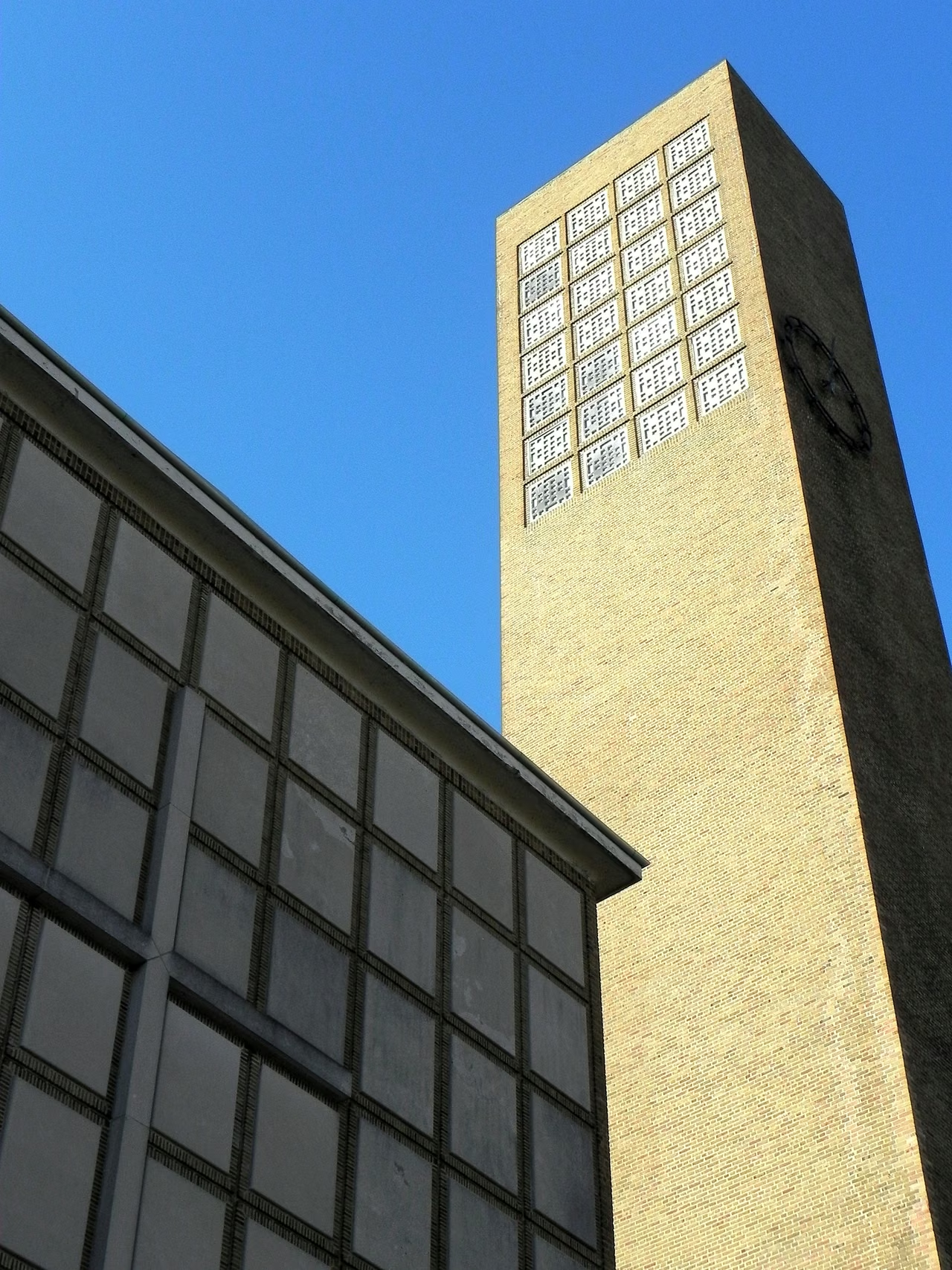
The vertical lines of the clock tower, the horizontal lines of the roof, the light in the courtyard.

Columbus · The bell tower and window grid of First Christian Church
01

Public architecture, carefully considered

Eliel and Eero Saarinen contributed to the design of First Christian Church. Tower, walls, and windows form a restrained geometric composition, achieving dignity without elaborate ornament.

Columbus's architectural features aren't just for exhibits. Churches, schools, and everyday public spaces bring modern design into the environment that residents use; the value of the buildings also lies in how people move through, linger, and encounter each other.

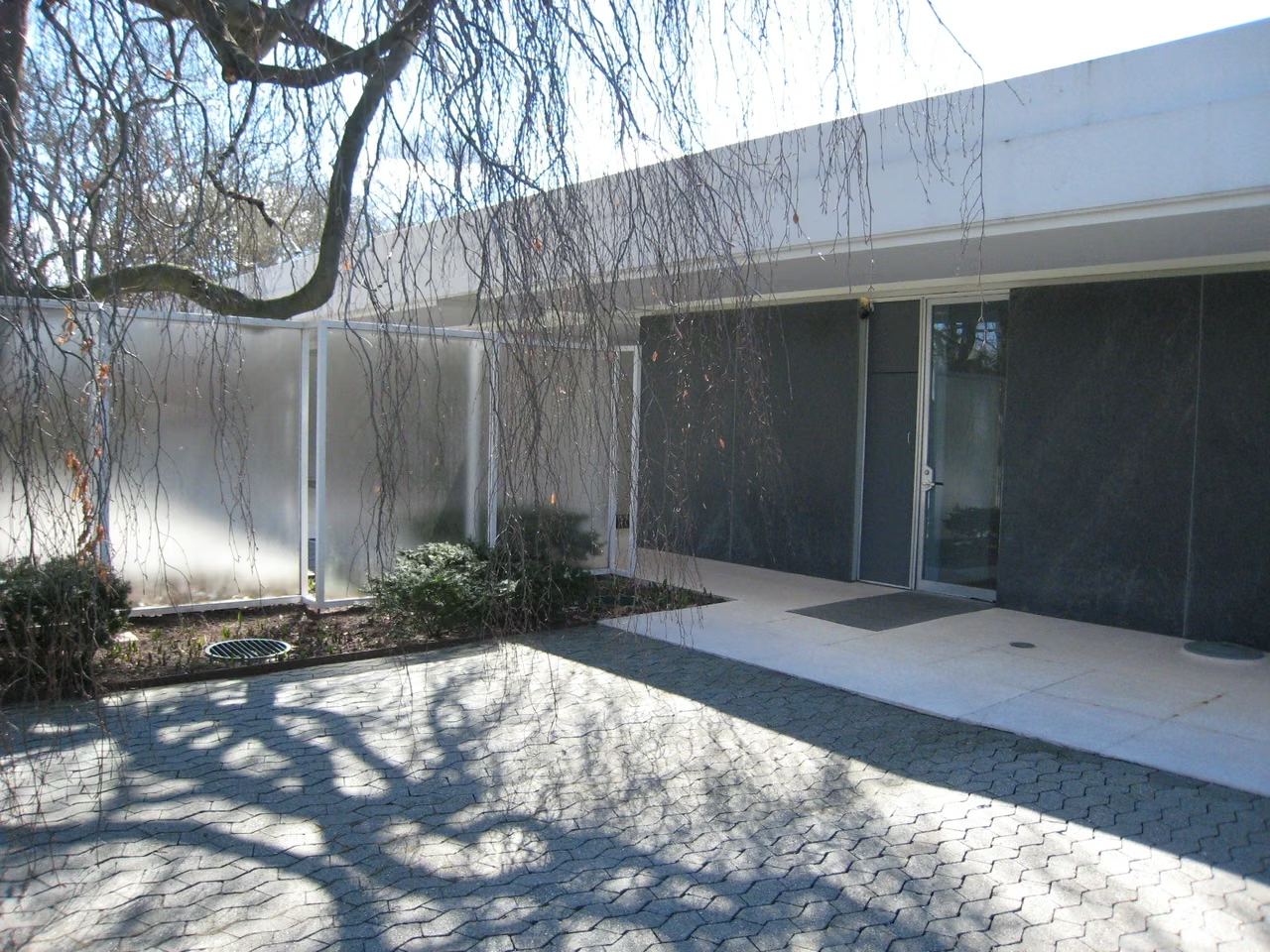
Miller House · Eaves, glass, and garden
02

House, interior, and garden as one.

Architect Eero Saarinen, interior designer Alexander Girard, and landscape architect Dan Kiley collaborated on Miller House and Garden. Building, furnishings, and landscape respond to one another as a complete living environment.

The gentle roof and glass facade extend the view towards the garden. Standing on one side of the courtyard allows for a more direct understanding of the building's horizontal scale, as well as the relationship between the trees, shadows, and materials.

August 2026 employment · September 18 release

The steady work behind manufacturing.

Private sector employment2.8438million people

Increase of 4,000 people from July

Monthly Change in Manufacturing Employment+3,500people

Change from the previous month, not the full year

Statewide unemployment rate3.3%

August 2026

Monthly changes, long-term foundations.

The latest monthly report from the state workforce development department shows that private sector employment increased in August compared to the previous month, with manufacturing being one of the industries that saw an increase. These figures provide changes in employment and do not represent progress in production, profits, or specific projects.

Manufacturers need dependable staff, equipment, and supplies. For their suppliers, meeting specific quality, delivery, and maintenance requirements matters more than a broad claim to serve manufacturing.

Entering a supply chain starts with capability.

Parts machining, facility maintenance, transportation and warehousing, and technical services all undertake different tasks. Before engaging in business, one should clarify product specifications, delivery location, inspection requirements, and after-sales responsibility. One must then assess whether their team and facilities are suitable.

State-level job growth cannot be directly translated into opportunity for orders. Specific opportunities still stem from customer procurement needs, service scope, and partnership conditions, which must be tied to individual enterprises and projects.

After registration, getting ready to operate.

The business guide for the states will detail registration, taxation, employment matters, and related permits separately. Enterprises that need employees, sell goods, or use production facilities should prepare the relevant procedures according to their activities.

The conditions of factories, stores, and offices can vary. Before selecting a location, verify the county's land use, building usage, and industry requirements to avoid assuming that "the company has been established" means "business can be conducted in any location."

Employment: Indiana Department of Workforce Development, August 2026 employment report, released September 18. Business requirements draw on the state government’s business guide.

Industries & establishments · 2023

The work that keeps communities running.

Manufacturing, healthcare, retail, and logistics industries support the state's workforce from various angles. Annual data are used to observe the structures of establishments and employment; the monthly report above, on the other hand, provides insight into recent changes, with different statistical points in time.

The state recorded 155,692 employer establishments and 2,924,989 paid employees. A single company may operate several stores, offices, or factories, so establishments are not a count of registered companies.

Manufacturing524,995 people

Health care & social assistance465,689 people

Retail trade335,879 people

Accommodation & food services291,843 people

Administrative & support services217,207 people

U.S. Census Bureau, 2023 County Business Patterns. The series primarily covers private, nonfarm establishments with paid employees. Employment is measured for the pay period that includes March 12. The 2023 release was the latest in this series available when checked; it is not a measure of current monthly employment.

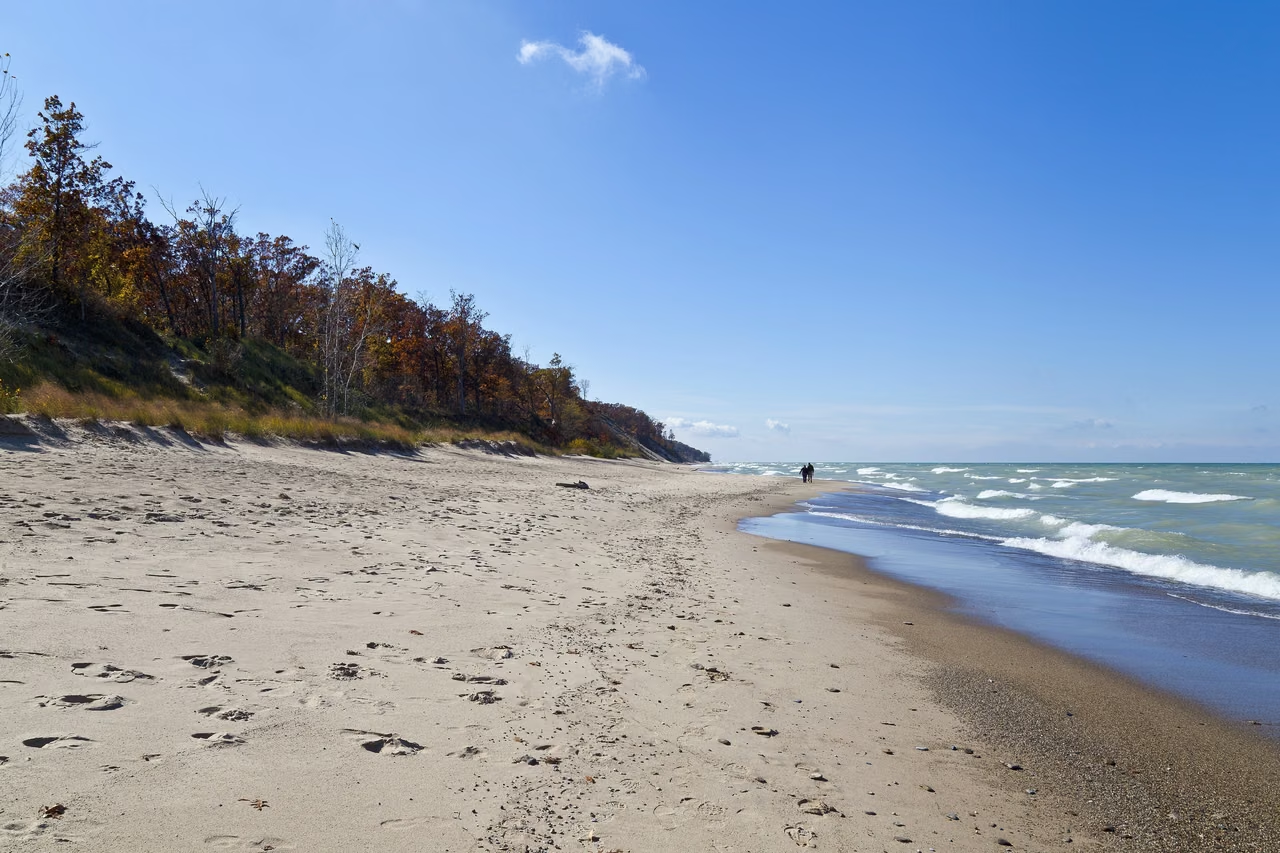
Lake Michigan’s southern shore · Indiana Dunes

Now, a quieter landscape.

Beyond the racetrack, wind draws its own patterns in the sand.

Indiana Dunes, Lake Michigan Shore, and Fall Woods
Lake Shore

National parks along the southern shore of Lake Michigan protect about 15 miles of lakefront. The expansive water meets sand, and inland areas feature forests, wetlands, and grasslands, with the environment changing in short distances.

Glaciers

The National Park Service traces the geologic story of this area back to about 14,000 years ago when the glaciers retreated. The shoreline and sand dunes have continued to change, and the current contours are not always fixed.

Habitat

Sand dunes are not just sand. A mix of savanna, wetlands, bogs, and forests provide diverse habitats, with over 1,100 species of flowering plants and ferns documented within.

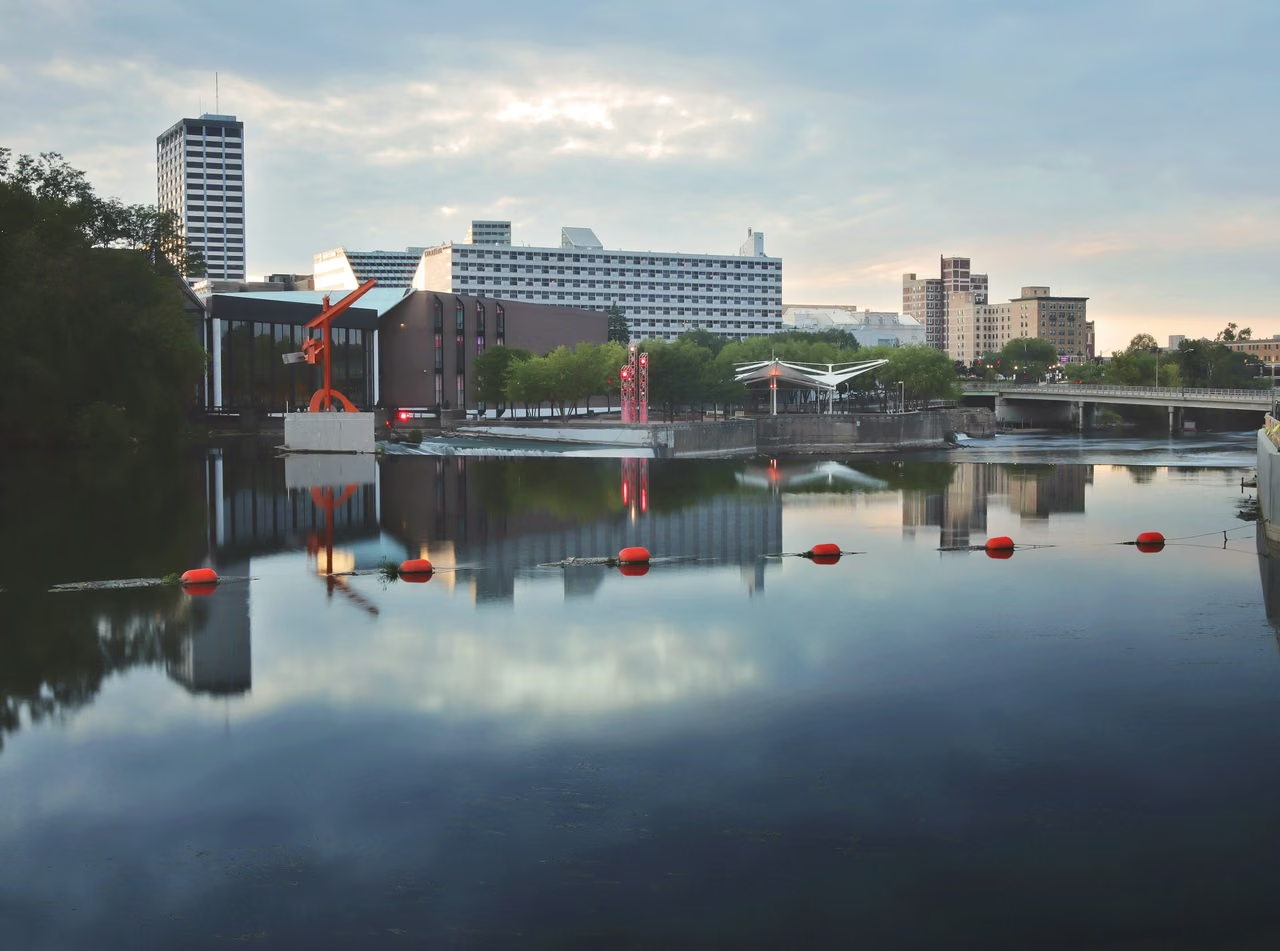
South Bend · Along the St. Joseph River

A city’s craft finds a new form.

South Bend · St. Joseph River and city streets
1852

Studebaker opens a blacksmith business in South Bend

1902

Studebaker produces its first electric car

1963

South Bend automobile plant closes

Studebaker’s story stretches from horse-drawn wagons to automobiles. Museum collections and archives show how vehicles, manufacturing methods and consumer demand changed, while recording the relationship between the factory and the city.

In 1963, the South Bend factory closed, marking an important turning point in the local industrial history; the company's last car was produced in Hamilton, Canada, in 1966. Today, recognizing South Bend involves seeing its industrial heritage, education, services, and contemporary community, without viewing the past factory size as indicative of current operations.

Wood, land, and experiences of people.

A slower pace. A closer look at the past.

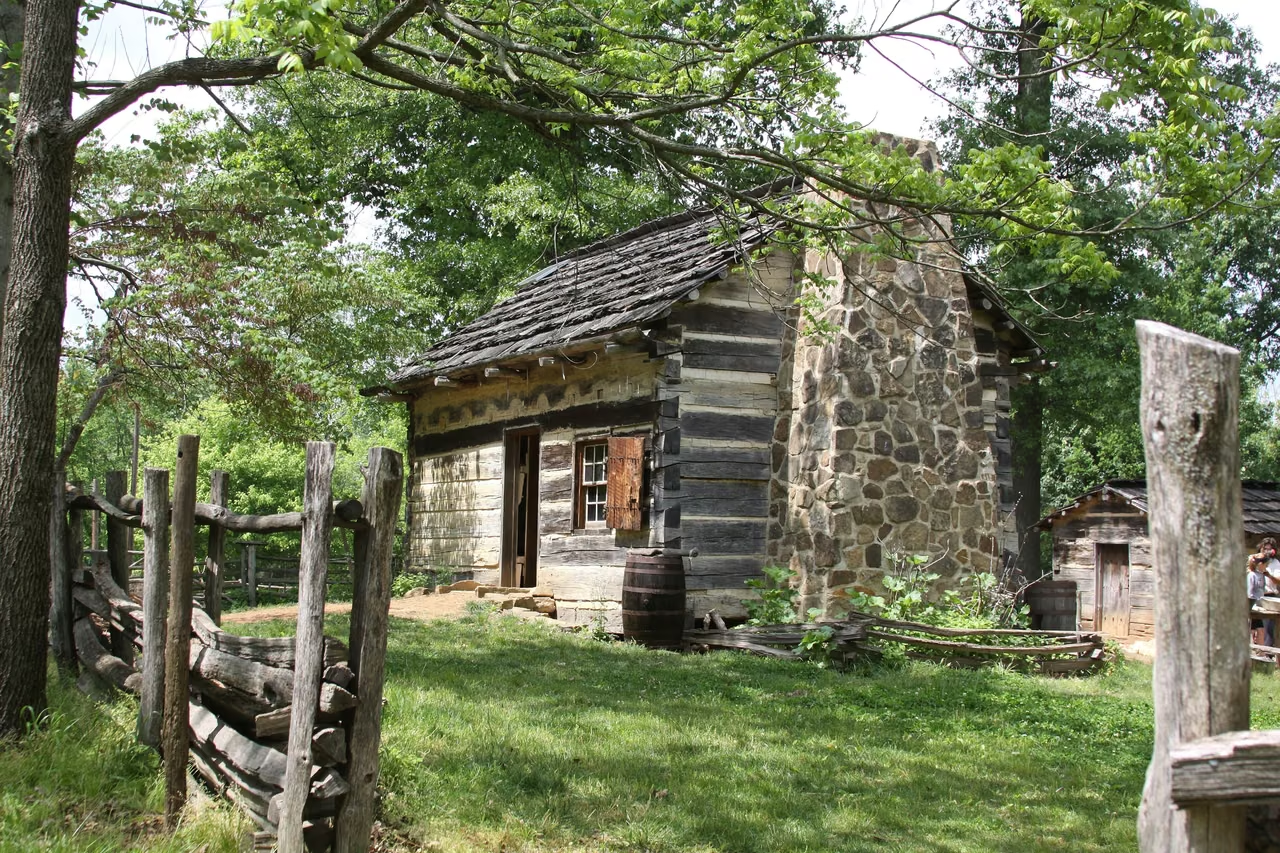
Lincoln Boyhood National Memorial · The Living Historical Farm

Lincoln’s boyhood countryside

The Lincoln family moved to Indiana in 1816 and left for Illinois in 1830. Records preserve the story of his boyhood, while the Living Historical Farm demonstrates the work of the period.

The log cabin in the photo is not the original structure from Lincoln's time. The reconstructed farm demonstrates activities such as chopping wood, farming, weaving, and caring for livestock to understand how food and clothing depend on land, seasons, and the labor of a family.

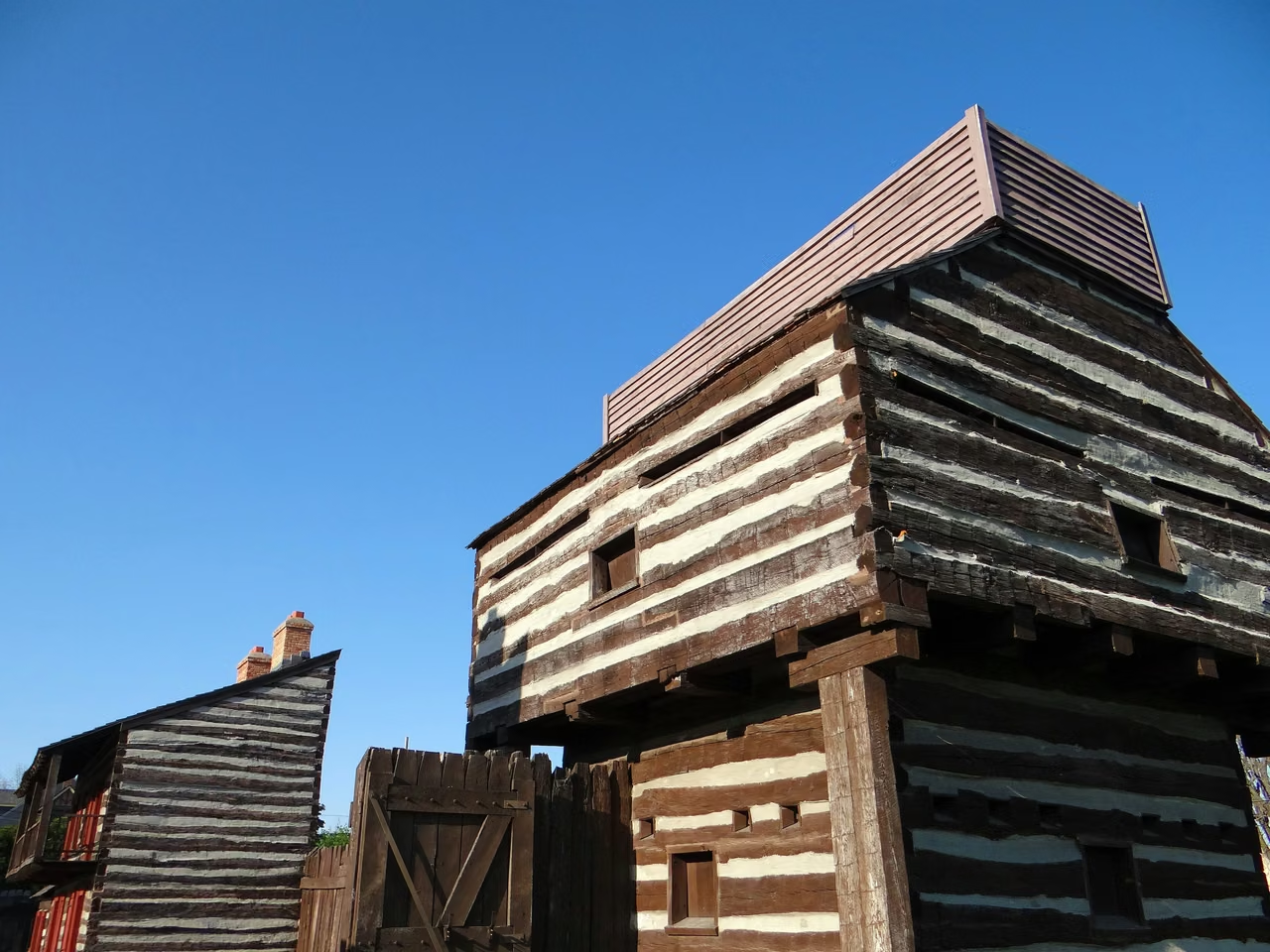
Fort Wayne · A modern reconstruction of the historic wooden fort

A wooden fort at the meeting of three rivers

Fort Wayne stands where three rivers meet. According to the city, the last historic U.S. Army wooden fort here was built in 1815–1816. Today's visitor site is a modern reconstruction near the original location.

Reconstruction makes both defensive structures and everyday spaces easier to understand and reminds visitors to distinguish historical relics from contemporary displays. To view a place, one should look at its appearance but also read the records of its era.

Indiana Avenue - Another Beat of the City

A neighborhood with a jazz history.

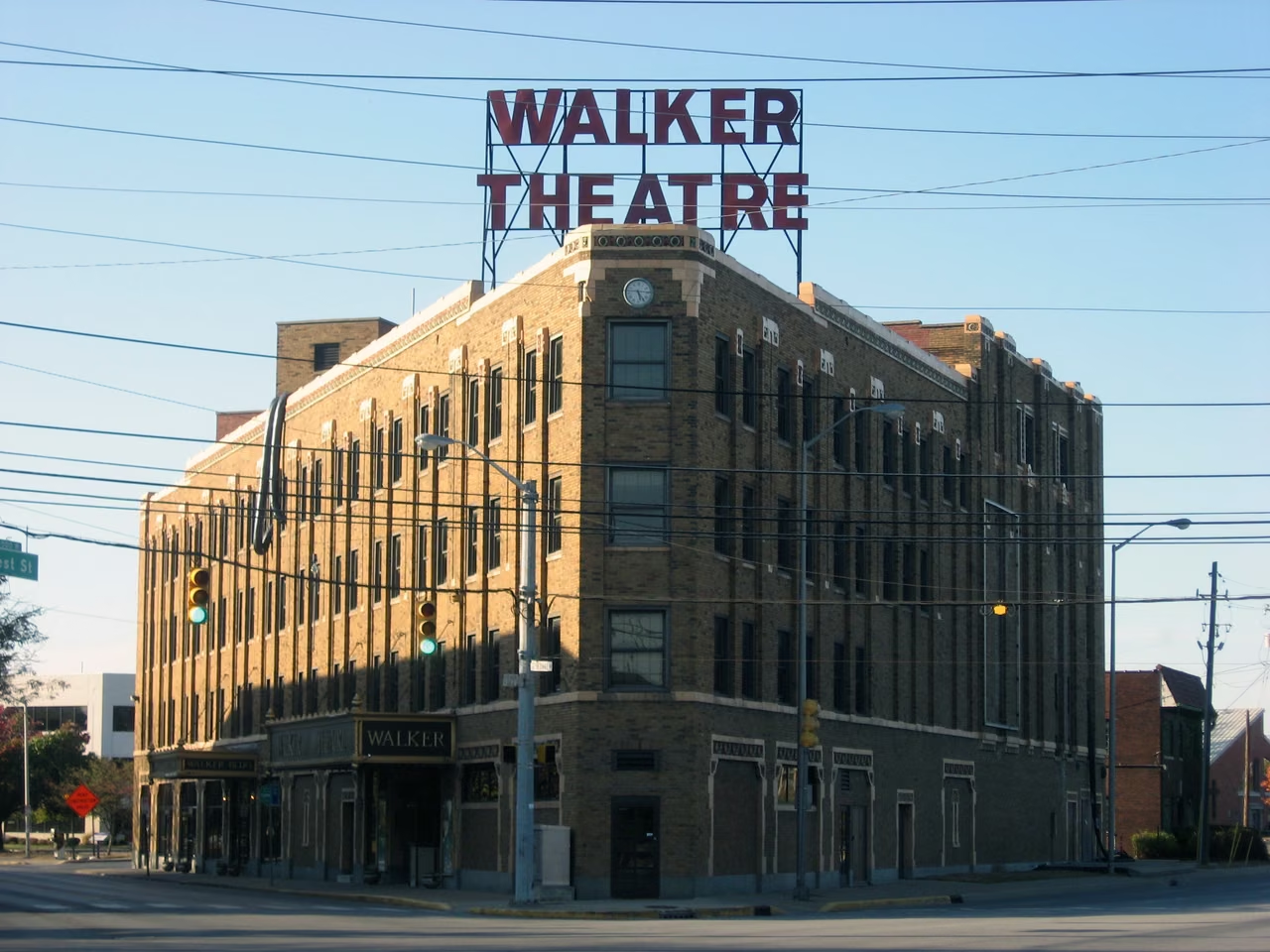
Indianapolis – Walker Theatre

Indiana Avenue was once a major center of Black life and business in the state capital. Newspapers, shops, theaters, and clubs stood close together. Music grew from this community, not simply from individual performances on a stage.

Wes Montgomery, Freddie Hubbard, and other musicians have deep ties to this neighborhood. Its jazz history also includes Black publishing, entrepreneurship, and cultural organizations. The Walker Theatre's sign preserves part of that urban memory.

Bloomington and West Lafayette

University life reaches beyond the campus.

Original documents in Bloomington.

The Lilly Library at Indiana University preserves books, manuscripts, correspondence, photographs, and audio-visual materials and makes the collections accessible through exhibitions and courses. Reading a letter from the past, an old map, or an early printed book reveals details beyond the ordinary narrative.

This broadens the university town's cultural life beyond the classroom. Research, exhibitions, and public events provide different entry points for students and visitors alike; one can also get to know the town from a library.

Research at work in West Lafayette.

Purdue Extension serves all 92 Indiana counties through agriculture and natural resources, health and family life, community development and youth education. Training, advice and local projects bring university research into everyday work.

For farms and communities, the issues may be specific: how to manage crops, protect land, improve nutrition, or provide practical opportunities for youth. The relationship between universities and their communities is also reflected in these ongoing services.

Table of Indiana

Something crisp. Something sweet.

The pork tenderloin sandwich

The breaded pork tenderloin is typically pounded thin, fried, and served extending well beyond its bun. This recognizable local dish varies from restaurant to restaurant in thickness, crust, and toppings.

Sugar cream pie and persimmon pudding

Sugar cream pie has a simple, rich cream filling, often finished with cinnamon or nutmeg. In southern Indiana, persimmon pudding follows the autumn fruit harvest, offering another local flavor.

Local cuisine features both restaurant specialties and dishes passed down through families. These everyday foods make the difference between city and countryside seem endearing.

Sugar cream pie at an Indianapolis restaurant · 2023
State flower · Peony

A generous bloom among the precise lines.

Indiana adopted the peony as its state flower in 1957. Layered petals and soft contours offer a gentler note in a feature shaped by speed and design.

Collaboration in racing, scale in architecture, wind and dunes, and rural daily life do not replace each other. They together form a more richly textured Indiana than a single industrial impression.

Peony · State flower illustration
STATE.REPORT

An editorial feature by STATE.REPORT. Image creators and licenses are credited below.

Sources & further reading

Population estimates ↗

U.S. Census Bureau: state population estimates for July 1, 2025.

The first Indianapolis 500

Indianapolis Motor Speedway: First race in 1911 with a history of racing.

New galleries at the Speedway Museum

Indianapolis Motor Speedway Museum: Renovated and reopened in 2025.

Miller Residence and Garden

Newfields Museum: Architecture, Interior Design, and Landscape Architecture.

Columbus First Christian Church

Columbus’s official tourism organization: the architectural work of Eliel and Eero Saarinen.

The natural environment of the dunes.

National Park Service: shoreline, dunes, wetlands, and plant diversity.

Lincoln spent his teenage years in Indiana.

National Park Service: Family Life 1816-1830

Daily work on a reconstructed farm ↗

National Park Service: The farm is a display of historical living conditions, not original buildings from Lincoln's time.

Fort Wayne's wooden fort

City of Fort Wayne: The historic fort and its modern reconstruction.

Studebaker’s industrial history

Studebaker National Museum: wagons, electric cars and the South Bend plant.

State Flower: Peony

Indiana state government: the peony’s designation as state flower in 1957.

Indiana Avenue and jazz

The Indiana Historical Society: African American community, publishing, commerce, and music.

A local table’s classic dish ↗

Indiana’s official tourism organization: breaded pork tenderloin sandwiches, sugar cream pie and persimmon pudding.

The Lilly Library's collections and teaching

Indiana University: Books, manuscripts, historical photos, and public exhibitions.

University programs extend into county communities.

Purdue Extension: agriculture, families, youth and community education.

Image credits & licenses

Verify your email

We will email you a six-digit code to sign in.

By continuing, you agree to the Terms and acknowledge the Privacy Policy.

Search history

Your searches from the last 30 days. Viewing this list does not use searches. Full company reports are not saved here.