STATE.REPORT
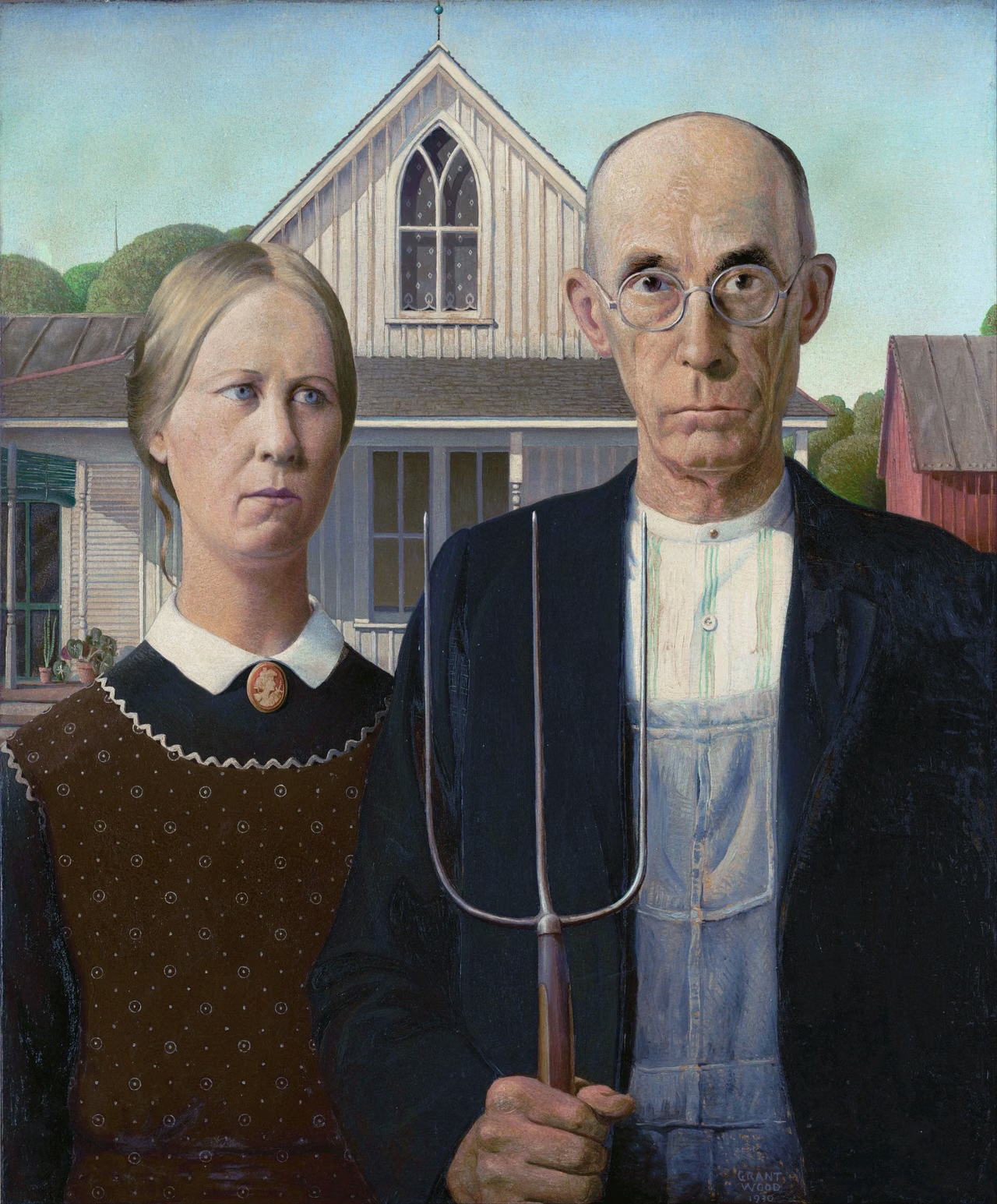
1930A painting that made rural faces known around the world.

The house in the painting stands in Eldon, southern Iowa. Wood’s sister and his dentist modeled for the figures; the work is not a portrait of an actual farming family.

Life beyond the picture frame.

American Gothic gave many viewers a memorable image of the Midwest: a wooden house, a pointed window, a farm tool and two solemn figures. Yet a painting cannot stand for an entire place, and Iowa is more than its fields.

Des Moines’s offices and riverfront, Iowa City’s bookstores and university, Cedar Rapids’s immigrant cultures and the rolling Loess Hills in the west all belong to everyday Iowa. Agriculture matters, alongside literature, manufacturing, healthcare and financial services.

State capitalDes Moines
Population · 2025 estimate3,238,387 people
Pages

A city that makes writing part of daily life.

Iowa City became the Literary City in 2008.

Beyond the classroom, a community of readers.

The University of Iowa's Writers' Workshop and other writing programs have long drawn authors to Iowa City. International writing, translation, nonfiction, and playwriting bring different languages and literary forms into conversation.

UNESCO named Iowa City a City of Literature in 2008. The distinction extends beyond the university: independent bookshops, public libraries, publishers, and literary festivals bring writing to readers throughout the city.
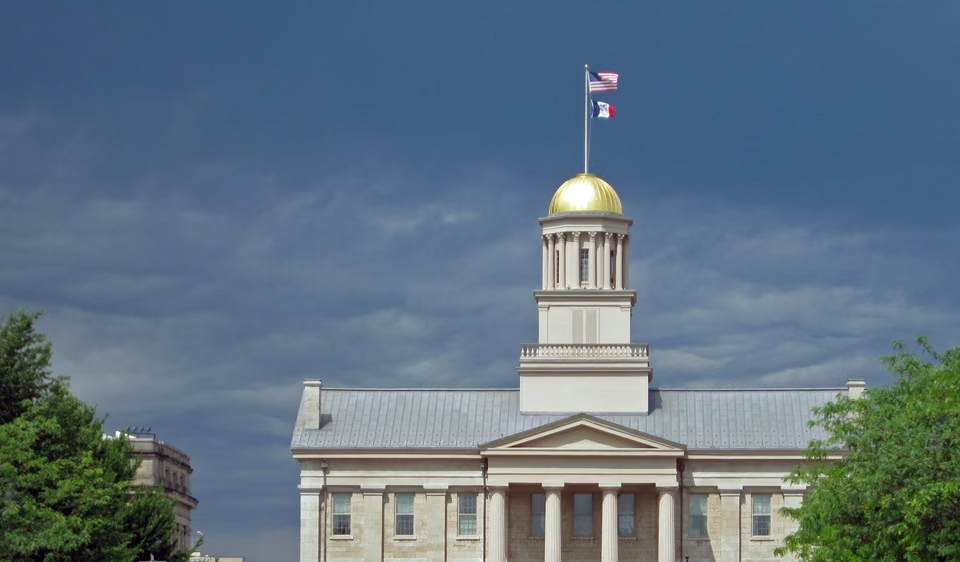
Iowa City · Old State Capitol of the University of Iowa
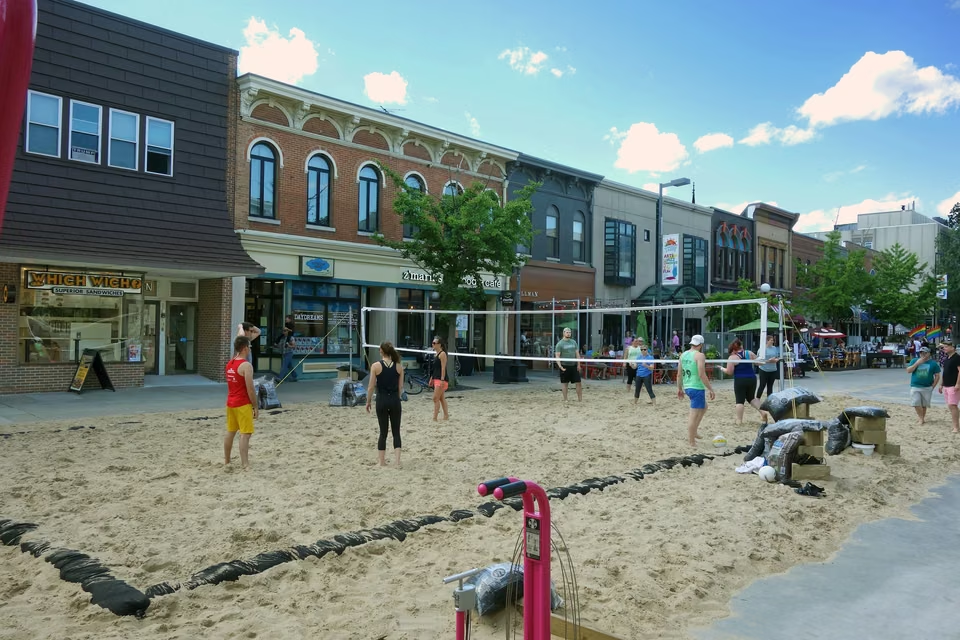
Iowa City Block Festival · Temporary sand activities and community events

Words written into the streets.

The Literary Walk through the city center connects writers to their places within public spaces. As readers walk through the streets, they can recognize a name from a piece of text and continue reading through bookstores, libraries, or events.

University city life is made up of semesters, daily resident activities, and public events. The street celebrations in the photo show how people use city spaces; it is both a place for studying and a community where people live for a long time.

Loess Hills · The western landscape

Gentle hills, shaped over time.

Western Loess Hills Soil Conservation in Iowa

The main material of these hills consists of fine-grained sediments carried by wind. During the retreat of glaciers, sediments exposed in the valleys were picked up by the wind and deposited on the east side of the valleys; later, stream erosion then shaped ridges and valleys.

Loess is not a hard rock; its stability and erosion issues are worth noting when it comes to water. The terrain, soil, and vegetation interact, determining how roads, agricultural use, and conservation should be arranged.

Iowa's surface is not a flat plane. The western hills, the northeastern valleys, and different-age plains create varying natural environments and local lifestyles.

Land output also requires care of the land.

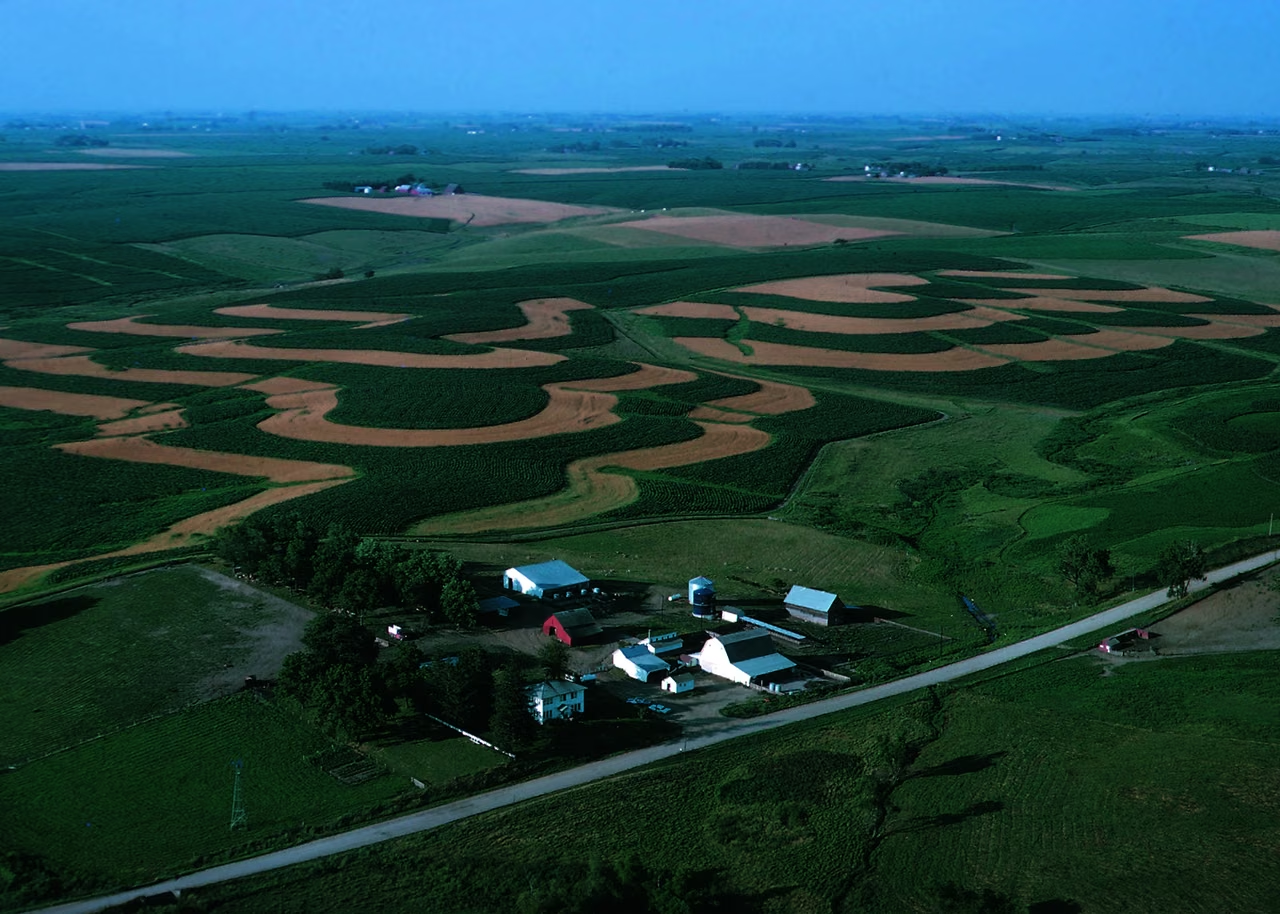
The field’s contours reveal how it is farmed.

In an agricultural archive photo of Jasper County, alfalfa, oats, and corn alternate along contour lines. The curving strips are not only visually pleasing but also help reduce soil erosion.

Jasper County · Contour strip cropping, USDA archival photograph

Protecting the soil for another harvest.

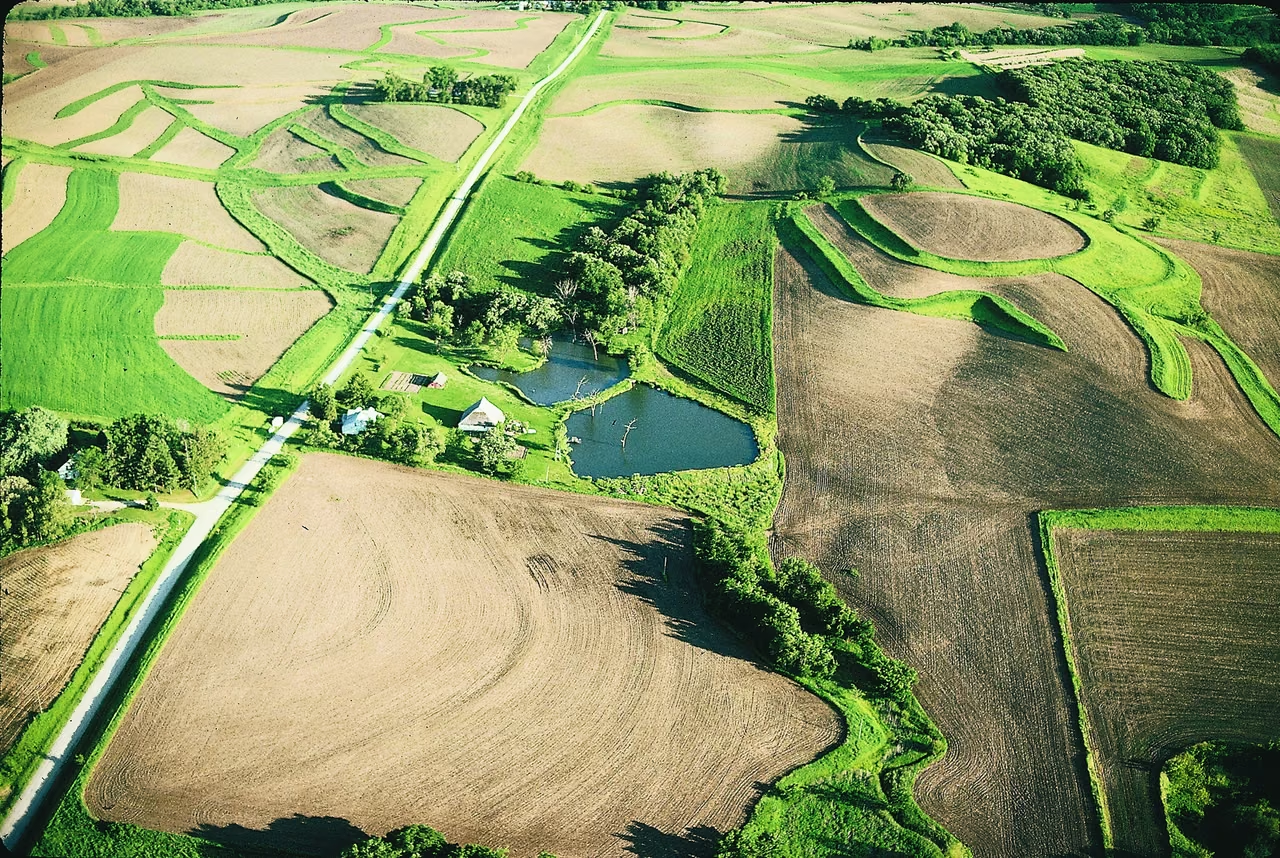
Water flowing downhill can carry away soil and nutrients. Strip cropping, ground cover, and other conservation measures must suit each field's slope, crops, and management conditions, rather than simply reproduce a pattern seen in a photograph.

Iowa State University continues to research the placement of grassland vegetation strips in farmland to protect soil and water, and provide habitat for wildlife. Production and protection are not two unrelated entities; they occur on the same piece of land.

2025 Year Agricultural Cash Income$39.957billion

U.S. Department of Agriculture · September 2026 Update Estimates

103.90Hogs · $100 million
100.29Corn · $100 million
58.24Soybeans · × $100 million

Crops and livestock, closely connected.

Estimated 2025 agricultural cash receipts included approximately $16.265 billion from crops and $23.692 billion from livestock and livestock products. Corn, soybeans, hogs and cattle connect farms with feed suppliers, storage, transport, equipment and processing.

To service agriculture, one must understand the production seasons and customer types. The transportation and warehousing needs during harvest differ from the rhythm of routine equipment maintenance, animal husbandry management, or food processing work.

Farm sales are not farm profit.

These figures record cash receipts from agricultural sales before production costs. They are not profit or agricultural value added. Both prices and quantities sold can change the total.

The three listed products only constitute a portion and should not be added to the total state figure again. The numbers are meant to understand the agricultural structure, and specific operations still depend on costs, contracts, output, and delivery conditions.

The U.S. Department of Agriculture Economic Research Service released the 2025 State-Level Agricultural Cash Income Estimates on September 3, 2026. Calculated in current dollars, the original units were in thousands of dollars.

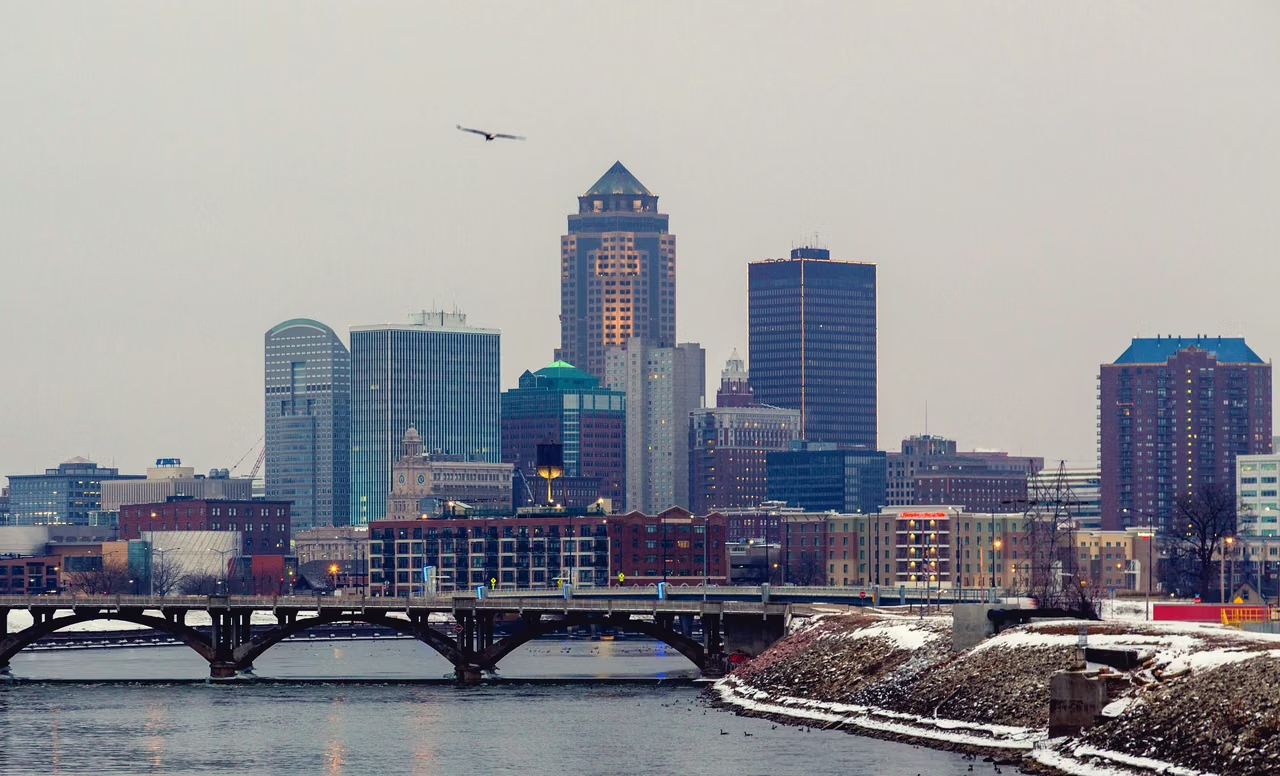
Des Moines · Winter Riverfront and Downtown
Des Moines and Iowa’s urban economy

Offices reach beyond the fields.

Des Moines area is home to insurance and financial services firms. While their work may target customers outside the state, they rely on local teams, systems, professional services, and long-term operations. This is one side of Iowa often overshadowed by agricultural imagery.

Urban services such as healthcare, retail, education, and professional services also meet residents' and businesses' daily needs. The structure of work differs by region and cannot be represented by the total sales of a single agricultural product for the entire state.

August 2026 · After seasonal adjustment

Recent employment trends

Nonfarm Employment Jobs
1,585,800
Increase from last month.
2,400
Unemployment Rate
3.2%

In August, manufacturing jobs increased by 1,300 from the previous month but decreased by 600 from a year ago. Healthcare and social assistance jobs increased by 5,700 year-over-year. Such monthly rebounds and annual changes can coexist; industry observation requires separating these perspectives.

Source: Iowa Workforce Development, August employment report released September 17, 2026. Nonfarm jobs are counted by workplace and are not the same as the number of employed residents.

Registration, permits, and operating requirements.

The Office of the Secretary of State handles business registrations but does not oversee all licenses. Separate tax and industry requirements apply when dealing with taxable goods or services, employing staff, or using facilities such as food processing.

Business structure also determines filing schedules. Under the Secretary of State’s biennial reporting system, for-profit corporations and LLCs file in different years. Each entity should maintain a calendar appropriate to its own type.

Registration and operating information draws on Iowa Secretary of State business forms and the state revenue department's business guide, checked in September 2026. Company searches are available on this site.

Industries & establishments · 2023

The work that keeps communities running.

Annual establishment data provides a long-term foundation for industries such as healthcare, manufacturing, and retail, but it does not fully cover agricultural labor. The latest monthly report and the previous agricultural sales data address questions about recent employment and income from agricultural products.

The state recorded 83,321 employer establishments and 1,415,652 paid employees. A single company may operate several stores, offices, or factories, so establishments are not a count of registered companies.

Manufacturing224,293 people

Health care & social assistance220,971 people

Retail trade187,097 people

Accommodation & food services123,699 people

Finance & insurance101,557 people

U.S. Census Bureau, 2023 County Business Patterns. The series primarily covers private, nonfarm establishments with paid employees. Employment is measured for the pay period that includes March 12. The 2023 release was the latest in this series available when checked; it is not a measure of current monthly employment.

Cedar Rapids and Pella · Traditions carried from afar

Familiar flavors in a new neighborhood.

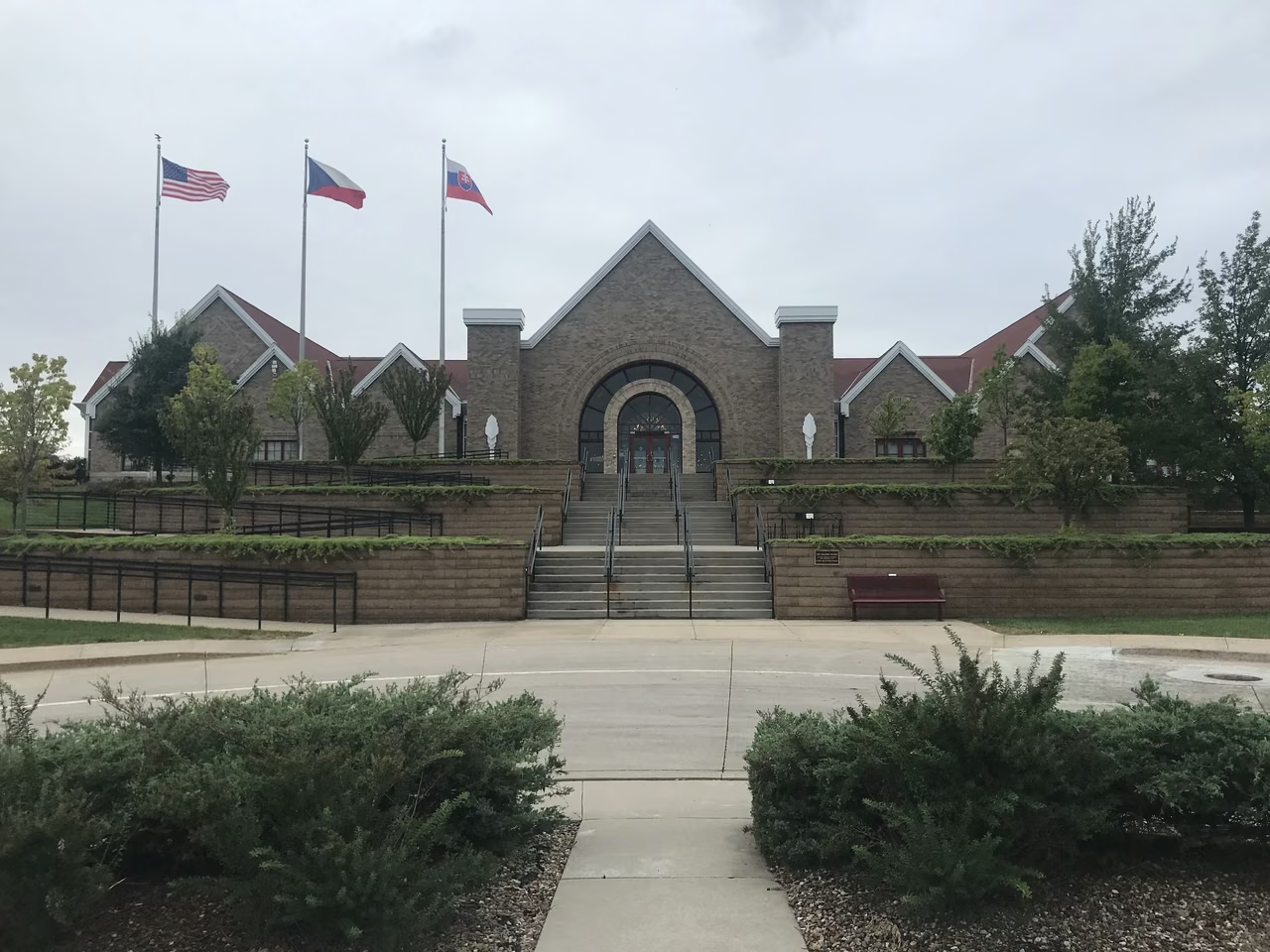
Cedar Rapids · The Czech and Slovak Museum and Library

A museum that began with a community’s collections.

In 1974, descendants of Czech immigrants founded a cultural organization in Cedar Rapids to collect objects and share traditions. The museum and library that followed bring together stories of migration, freedom and culture from Czech, Slovak and American life.

In 2008, floods caused significant damage. The museum was subsequently relocated and raised, reopening in 2012. Preserving culture is not just about collecting old objects; it also involves how communities work and come together after disasters.

Pella · Dutch traditions today

A working windmill. A lasting baking tradition.

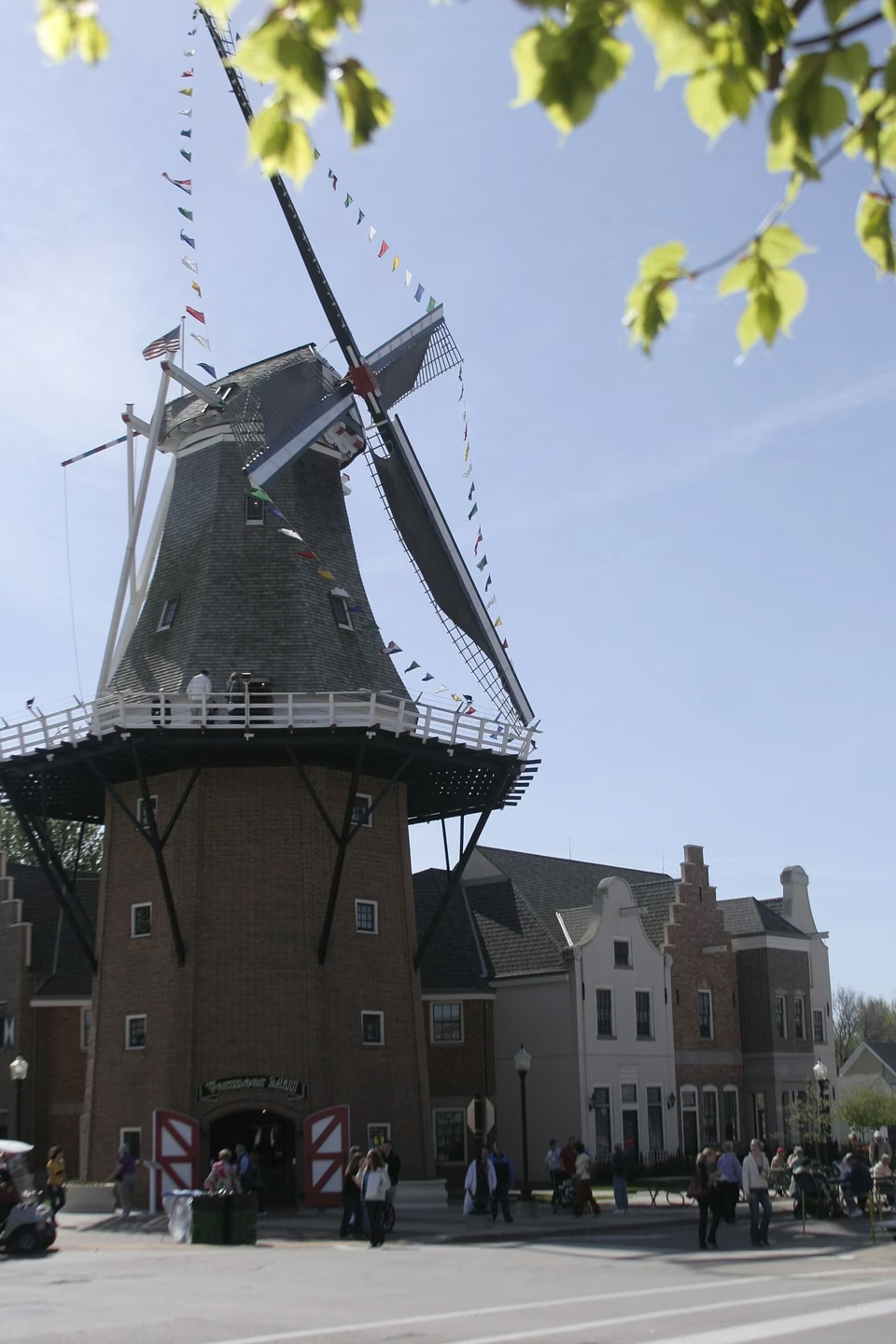
Pella’s Vermeer Windmill was designed and built in the Netherlands, then shipped here and reassembled in 2002. It is a working grain mill that carries on a traditional technology, rather than a nineteenth-century structure preserved on its original site.

Pella’s Dutch letters are distinctive almond-filled pastries shaped as letters. Windmills, baking, community events and family traditions bring immigrant history into everyday life, rather than confining it to a commemorative plaque.

Different communities of immigrants preserve their traditions in different ways. Some do so through food, others through language, objects, and exhibitions. These differences also make Iowa's local culture more diverse.

Pella · Vermeer Windmill
Country Treasures: Wooden Structures and Family Memories

A bridge and a cottage, keeping history close.

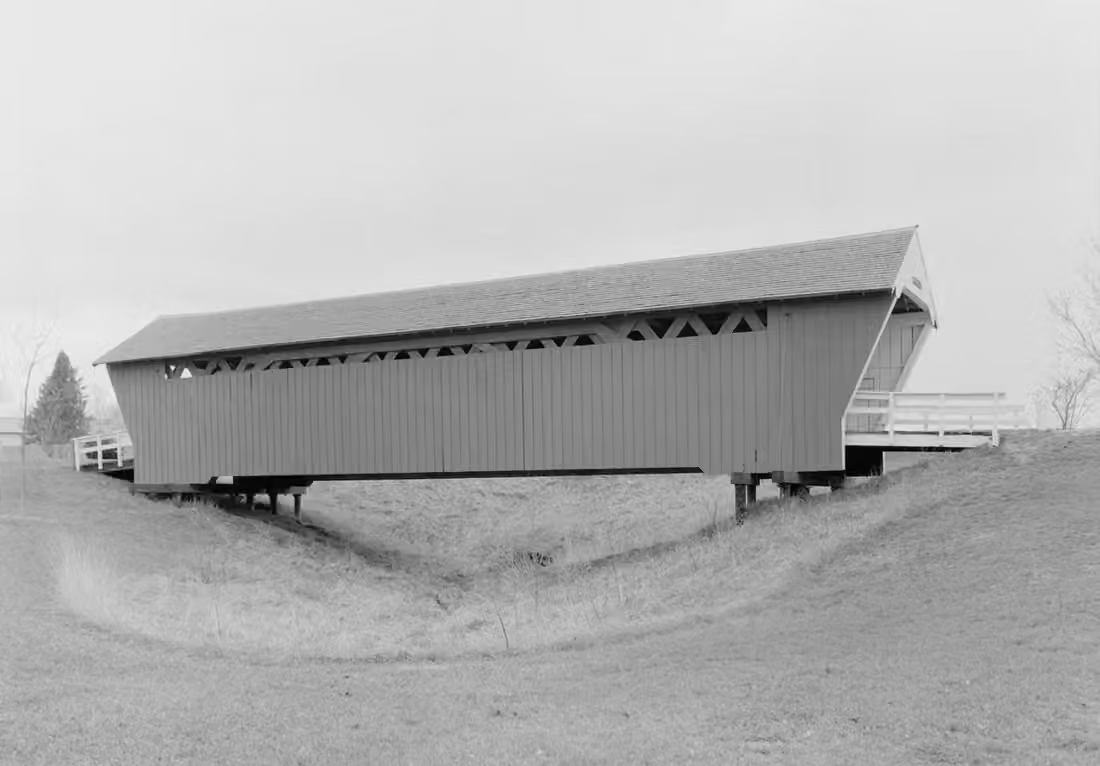
Imes Covered Bridge · Historic building survey photograph by Jet Lowe
1870

Before it was scenery, a bridge had a job to do.

Madison County's Imes Covered Bridge was built in 1870 and moved several times. Relocated to St. Charles in 1977, it now stands in a small park rather than at its original river crossing.

Roofs and enclosures protect wooden structures, while bridges served rural transportation. Black-and-white archival photos record the structure and environment, while films or travel impressions offer a different viewing angle.

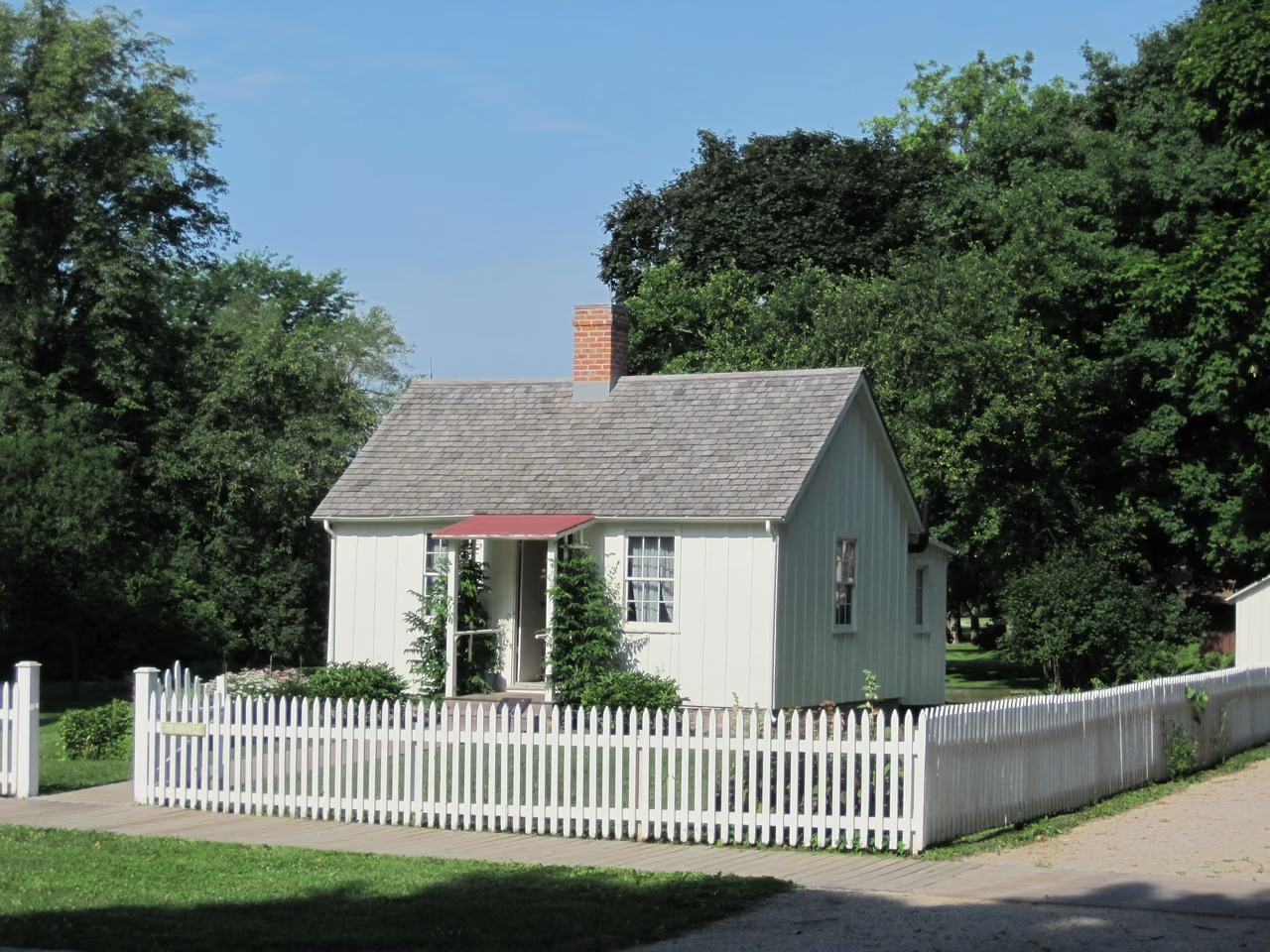
West Branch

Two rooms. A family of five.

Hoover was born here in 1874. A small room served as his bedroom, while another served as living area, dining area and kitchen during colder seasons; during warmer months, the stove would be moved to the porch to serve as a summer kitchen.

The furnishings today are displayed to show the simplicity of life in a rural household from the 19th century. These details speak more to how a family lived than just remembering the names of presidents.

West Branch · Hoover's birthplace cottage
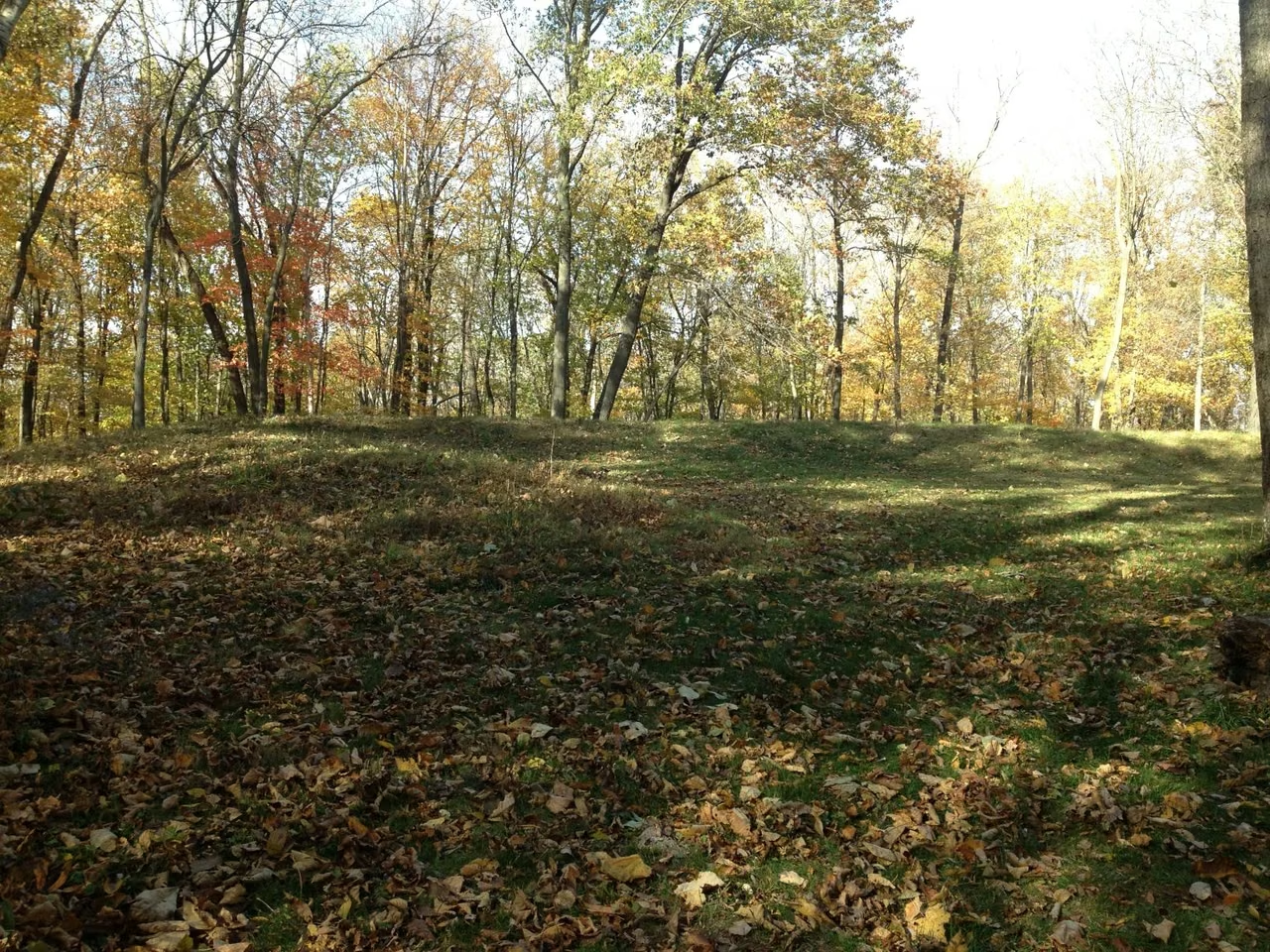
Effigy Mounds National Monument · A bear-shaped mound in woodland
The memories in the land are still connected to today.

Some histories lie beneath the surface.

Mounds are sacred places, too.

The effigy mounds of northeastern Iowa are connected to Indigenous cultures of the Upper Mississippi Valley. Bears and birds are common forms. These places hold ceremonial and spiritual significance for associated tribes.

For specific purposes, archaeological evidence cannot answer all questions. The National Park Service also emphasizes connections with contemporary tribes; when viewing mounds, respect their cultural significance as places of culture, rather than just as topographical features.

The continuing life of the Meskwaki community.

The Meskwaki tribe recorded their experience of forced relocation, as well as their continued stay in Iowa following the purchase of land in 1857. Today's community and cultural life are part of this historical legacy.

Native American history did not end with the establishment of the state. Incorporating contemporary tribes' own records allows for a fuller understanding beyond just archaeological sites and past maps.

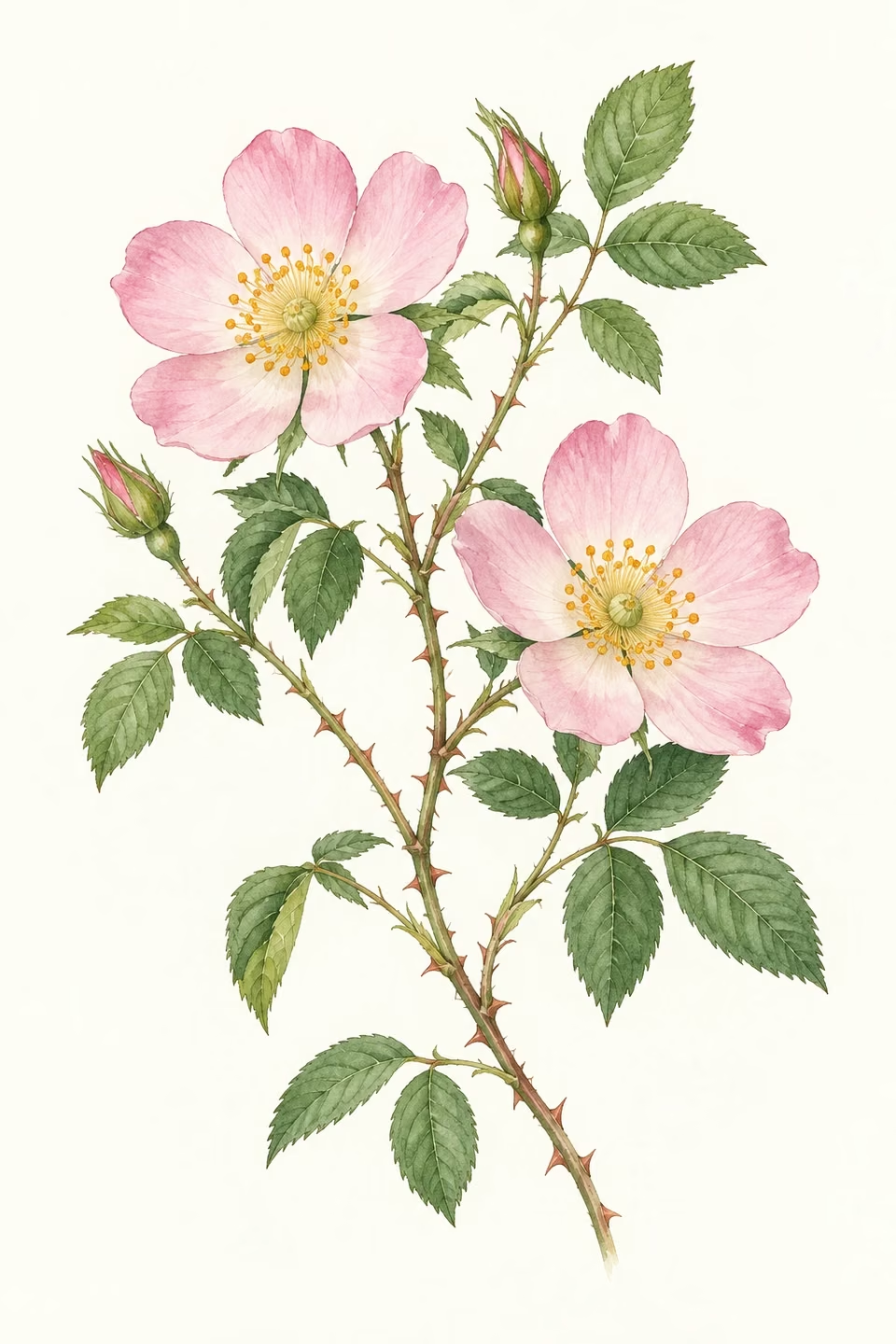
State flower · Wild rose

Flowers that need no harvest.

Wild rose · State flower illustration

In 1897, Iowa designated wild rose as the state flower. The state university explained that the legislation did not specify a single species; several similar wild roses in the area are associated with this symbol.

From the framed countryside to bookstores, neighborhoods, and actual farms, Iowa's face needs to be slowly unfolded. The land provides the backdrop for the story, and the people who live here continually write new content.

STATE.REPORT

An editorial feature by STATE.REPORT. Image creators and licenses are credited below.

Sources & further reading

Population estimates ↗

U.S. Census Bureau: state population estimates for July 1, 2025.

The background of "The American Gothic" creation

Grant Wood, Eldon Residence and Figures from the Painting in the Chicago Art Museum.

Iowa City: City of Literature

UNESCO: Joined Creative Cities Network and local literature institution in 2008.

Street Walks in Literature

Iowa City Literary City Institute: Writers and Public Spaces of the City.

Hilly terrain with loess geological composition.

Iowa State Department of Natural Resources: Wind-blown sediments, hilly terrain, and ecology.

Prairie strips in cropland

Iowa State University: Habitat Protection for Soil, Water, and Wildlife.

The Museum of Immigration History has a history.

National Czech & Slovak Museum & Library: community collections, flooding and rebuilding.

Pella’s windmill

Pella Historical Society: Windmill manufactured in Holland and reassembled locally in 2002.

Imes Covered Bridge

Madison County Tourism: Bridge construction in 1870 and subsequent relocation.

Hoover's birthplace cottage

National Park Service: A two-room home and family life in West Branch.

Effigy mounds and associated tribes

National Park Service: Indigenous mounds, cultural significance, and contemporary tribal connections.

Meskwaki People's Land and Continuity

Meskwaki Tribe: Forced Migration, 1857 Purchase of Land, and Community History.

Which type of rose is the state flower?

Iowa State University: designated as "Wild Rose" in 1897, legislation did not specify a single species.

Pella's local cuisine

Iowa tourism resources: Almond-filled Dutch letters and local traditions.

Image credits & licenses

NRCSIA99623 - Iowa (3881)(NRCS Photo Gallery).jpg · Photo by Tim McCabe, USDA Natural Resources Conservation Service. · Public domain。

Morning Skyline - Des Moines, Iowa - Winter on the Des Moines River (24805016620) (cropped).jpg · Tony Webster from Minneapolis, Minnesota, United States · CC BY 2.0。

National Czech & Slovak Museum & Library.jpg · WeaponizingArchitecture · CC BY-SA 4.0。

Iowa City Downtown Block Party (35145695420).jpg · Alan Light · CC BY 2.0。

Herbert Hoover birthplace.jpg · Billwhittaker · CC BY-SA 3.0。

NRCSIA99360 - Iowa (3413)(NRCS Photo Gallery).jpg · Photo by Erwin Cole, USDA Natural Resources Conservation Service. · Public domain。

Vermeer Mill in Pella, Iowa.jpg · Paul VanDerWerf · CC BY 2.0。

Imes Covered Bridge.jpg · Jet Lowe · Public domain。

Iowa City Old Capitol (9052924947).jpg · Alan Light · CC BY 2.0。

Big bear mound at Effigy Mounds State Park.jpg · Archbob · CC0。

Grant Wood - American Gothic - Google Art ProjectFXD.jpg · Grant Wood · Public domain。

Verify your email

We will email you a six-digit code to sign in.

By continuing, you agree to the Terms and acknowledge the Privacy Policy.

Search history

Your searches from the last 30 days. Viewing this list does not use searches. Full company reports are not saved here.