STATE.REPORT
A local history still being written

Massachusetts

Public life on old brick streets. New questions in the laboratory.

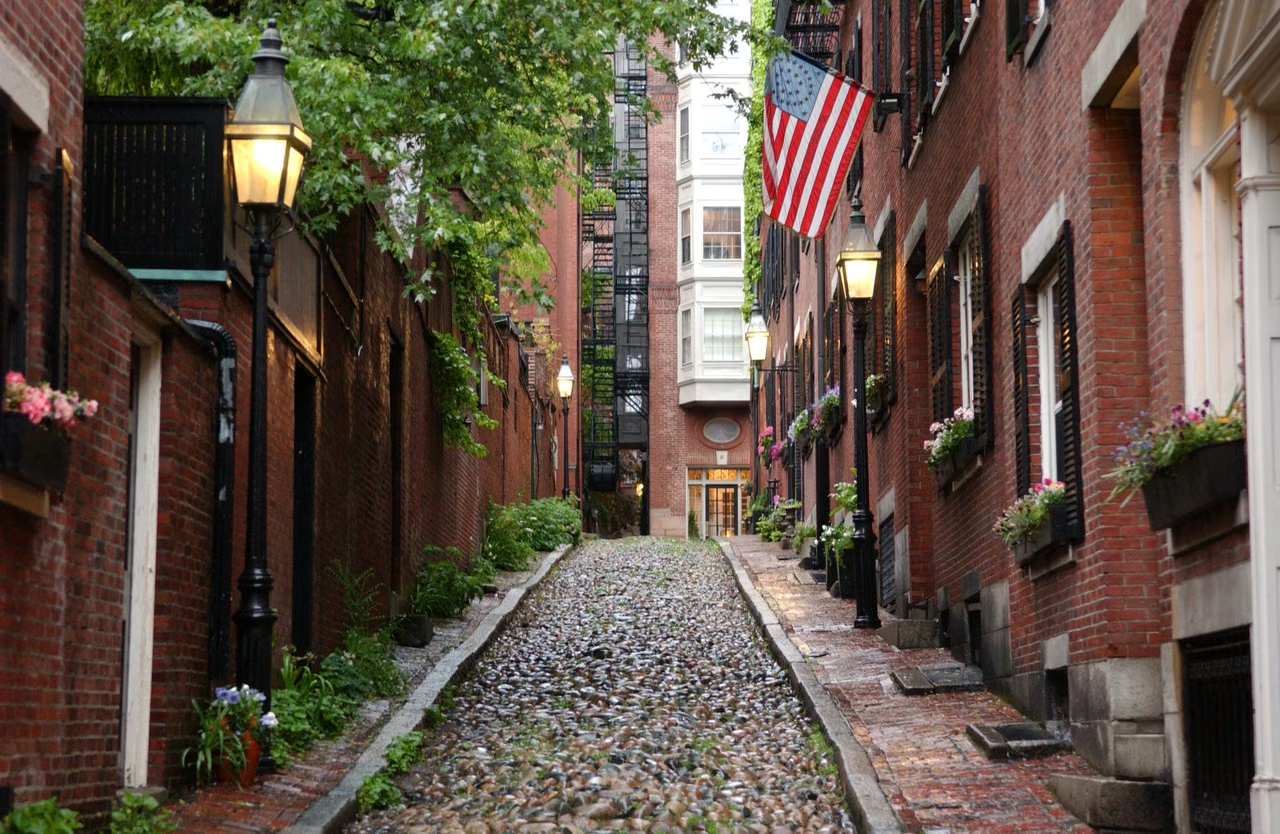
Beacon Hill, Boston · Brickwork and neighborhood streets

From Boston’s streets to Lowell’s canals, from Cambridge research to Cape Cod dunes, old and new stand side by side. The richness of Massachusetts lies in the different questions its communities ask.

State capitalBoston
Population · 2025 estimate7,154,084 people
Chapter one

History beyond the monuments.

Boston: A gathering place.

Places to learn, gather, and work for change.

The African Meeting House on Beacon Hill opened in 1806, built by the local free Black community. It served as church, school, and gathering place, bringing religion, education, culture, and political activity under one roof.

In the 19th century, speakers for abolition, women's rights, and civil rights movements came here. Community organizations held meetings to exchange opinions, seek support, and assist those escaping slavery. The building's meaning comes from the people who continue to use it.

Boston's history, therefore, contains many different voices. Exploring these sites along the streets better helps one understand the city: who can speak, who fights for the opportunity to be educated, and who transforms community relations into public action.
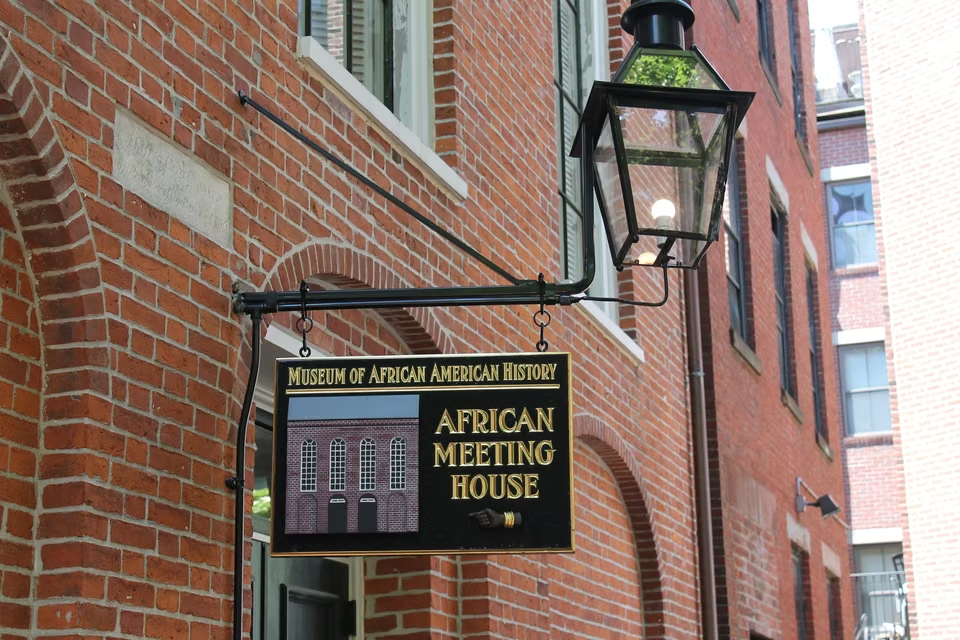
Boston African American Meeting House · A Place of Community History and Public Life
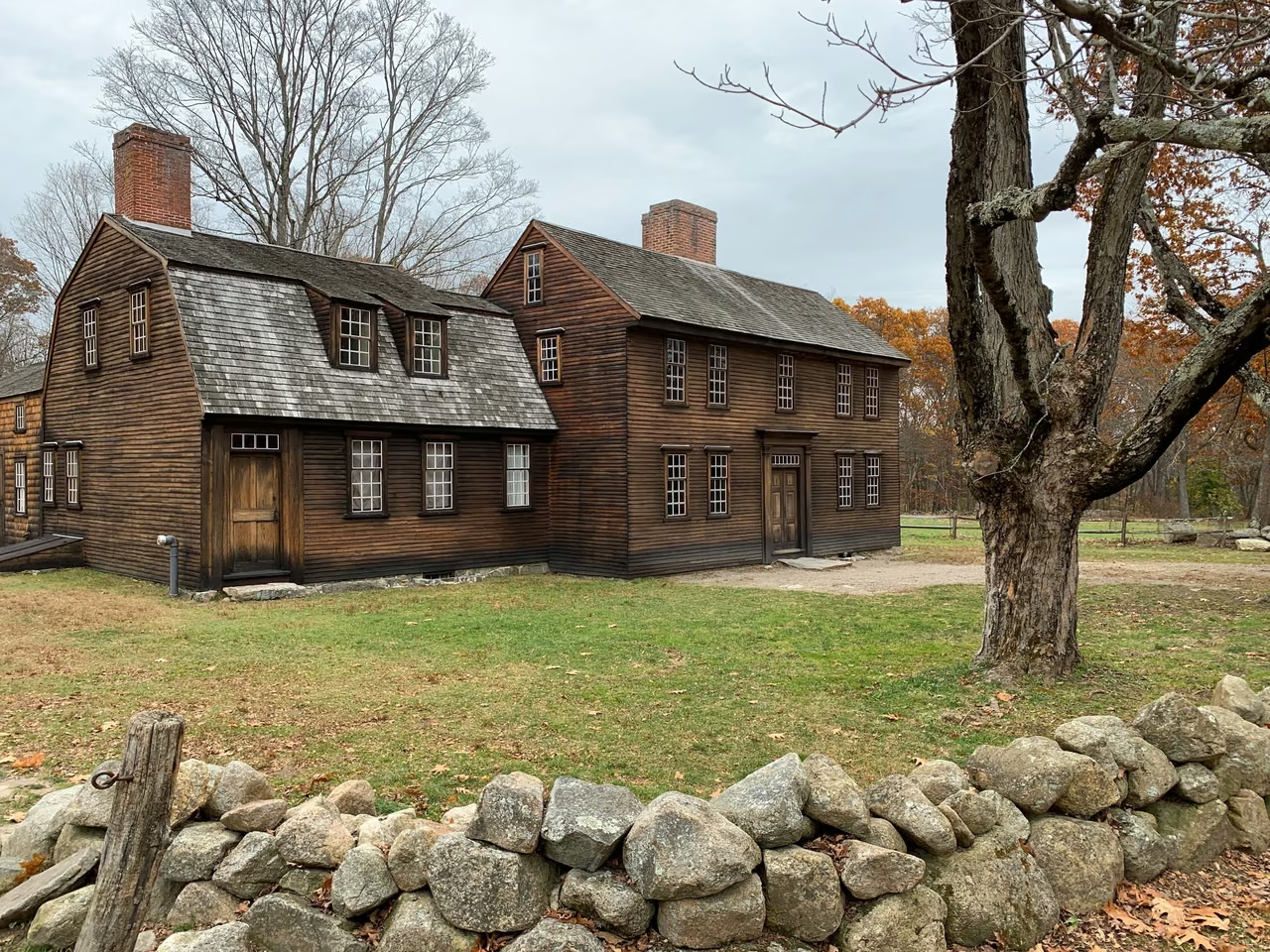
Hartwell Tavern · A historic building in Lincoln
Lincoln - A Road to Boston

Family life within the historic landscape.

The Hartwell residence was built between 1732 and 1733, with part of it later serving as a tavern to provide lodging and meals for farmers and merchants traveling between Boston. Trade, rest stops, and the passing of news were all conducted through this place.

The restored building presents its appearance around 1775 while retaining some later additions. It recalls a Revolution that unfolded not only on battlefields but also in homes, taverns, and along country roads.

Chapter Two

Water powered the machines. Workers shaped the city.

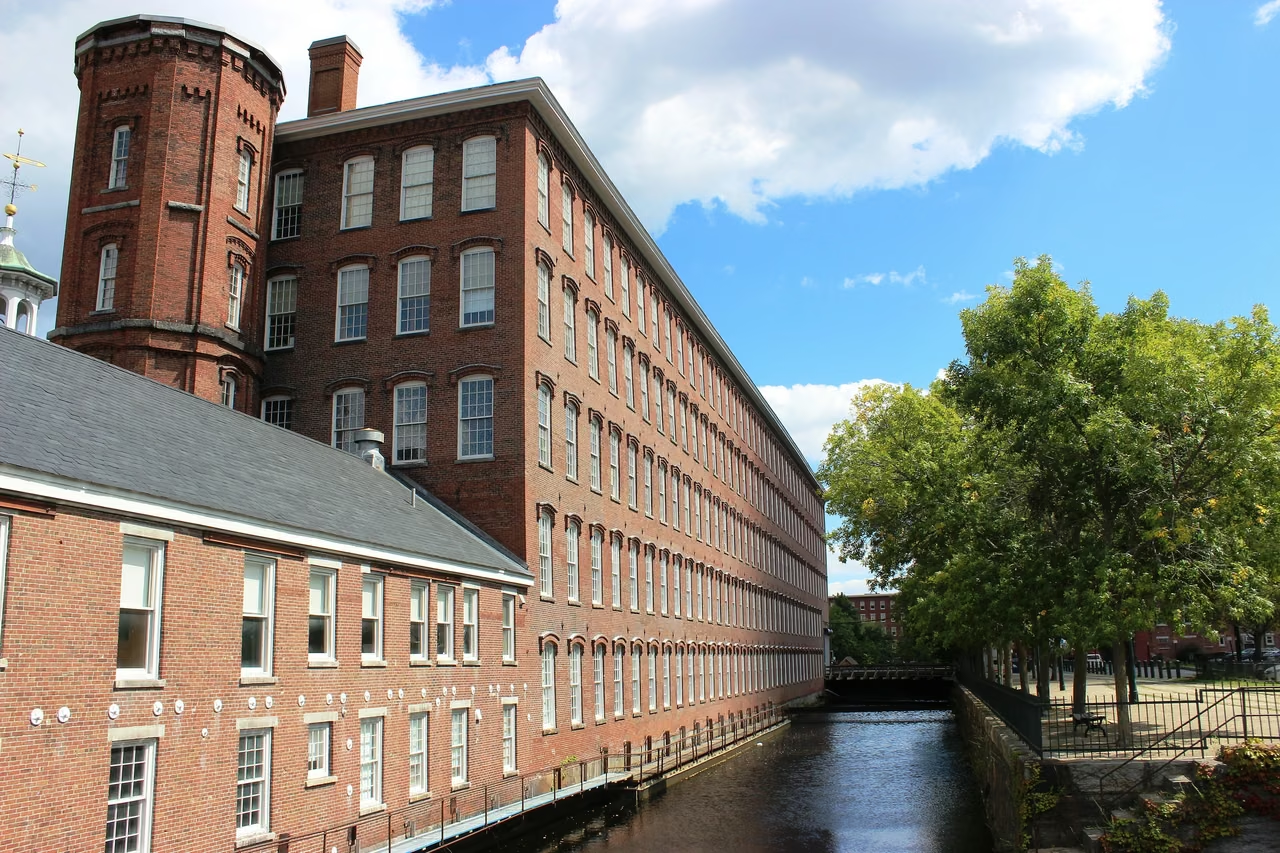
Lowell · Canal and textile mills

Boott Cotton Mills Museum, Lowell · Preserved industrial buildings

A change in elevation becomes a source of power.

The drop in the Merrimack River supplied power for Lowell's mills. Canals built in the early nineteenth century carried water into the mill complexes, where waterwheels and later turbines drove machinery through transmission systems.

Belts, pulleys, and shafts distribute power to different equipment. Later, steam and electricity entered factories, changing the power methods; canals and factories left traces of how production was organized.

Factory history is workers’ history.

In 1834, a wage cut sparked a female worker strike. In 1836, a rise in lodging fees led to further protests. Work income, lodging arrangements, and independent living were closely intertwined, and the workers' struggles were not just abstract tales of industrial development.

Experience from organizing, petitioning, and collective action also informed later social movements. Viewing Lowell's cotton mills requires seeing the women and immigrants who once worked there.

Chapter III

Ideas grow where people work close together.

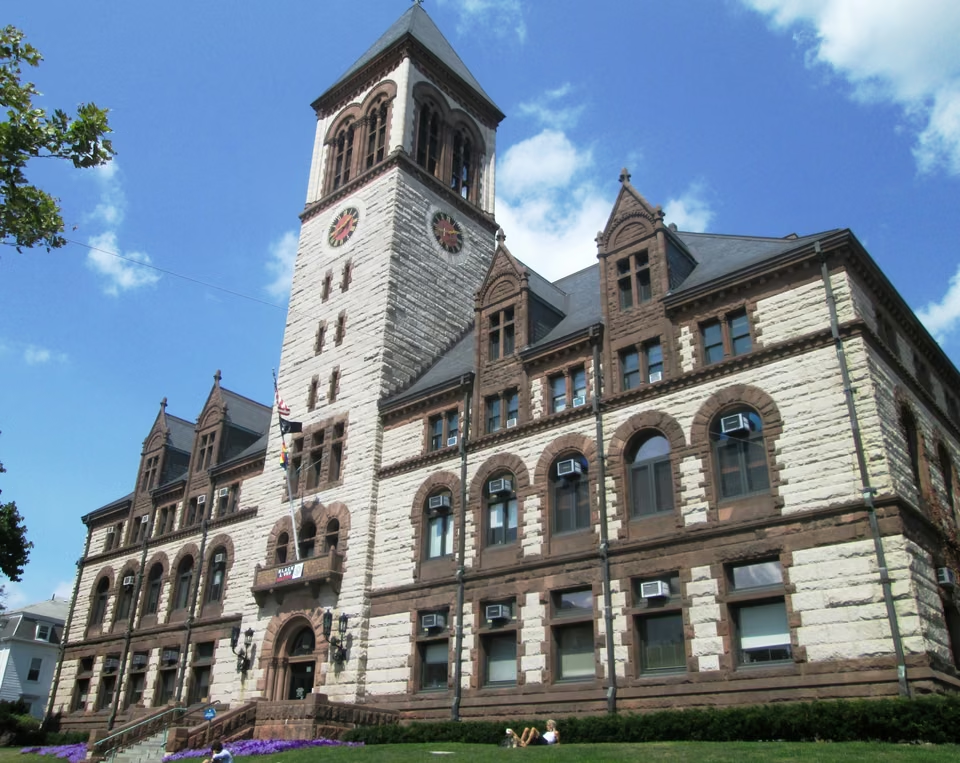
Cambridge City Hall · City life beyond universities and research
Cambridge - Research and Neighborhood

Laboratories—and streets people call home.

Kendall Square evolved from an industrial area into a center for biotechnology research and innovation. Proximity between universities, research institutions, and businesses fostered collaboration; however, Cambridge also has city halls, residences, stores, and communities that have long called the area home.

Research isn't just about office space. Staff, equipment, experimental conditions, and professional services need to work together, and the city needs to accommodate commutes, housing, and public spaces. Understanding the industry means putting research activities alongside actual urban life.

Businesses arriving from elsewhere may value proximity to specialists and partner institutions, but the right location still depends on the work. Research, production and customer service do not necessarily need the same kind of premises.

Industry Update: 2026 Report

Investment can recover while employment contracts.

$3.45 billionVenture capital investment in the first half of 2026
Biopharmaceutical companies headquartered in the state

The Massachusetts Biotechnology Council recorded in its 2026 industry report that the state's headquarters enterprises received approximately $3.45 billion in risk investment in the first half of the year, a 25% increase from the same period last year. This is a statistical record of financing activities, not the total revenue of the companies, nor the total investment in all life science-related activities.

The same report shows that biopharmaceutical employment was 113,503 people in 2025, a decrease of 3.1% from the previous year; biomanufacturing positions increased by 238. Changes in financing, research and manufacturing do not always align.

There are more useful distinctions than just calling it "industry prosperity." When searching for jobs, providing services, or assessing partnerships, continued differentiation between business stages, professional areas, and the actual needs of the companies will be necessary. Just because the industry as a whole is getting funded does not mean every company is expanding.

Massachusetts Biotechnology Industry Organization's "2026 Industry Overview." Funding for the first half of 2026, employment for the full year of 2025.

Worcester · Into the state’s interior

A manufacturing tradition still at work.

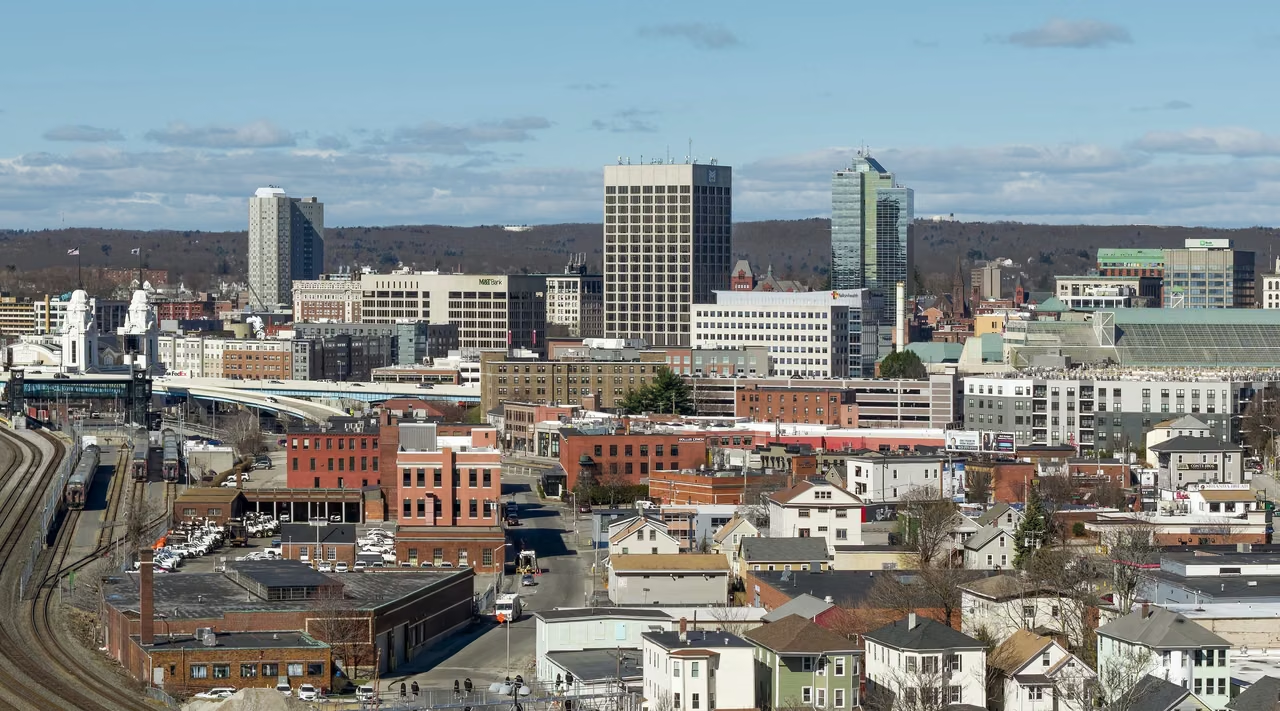
Worcester skyline · Central Massachusetts city

Worcester's industrial history is tied to transportation, power, and various manufacturing activities. Steam, railroads, and factories developed together, with products such as metal wire, looms, tools, and others being sent to a wider market from here.

With multiple products coexisting, the city's industrial memory has different layers. Today, educational, medical, and technology-related activities connect with these traditions, and Worcester also provides the services needed for residents in the mid-region.

Consider it together with Boston and Cambridge, and the state's divisions become clearer: research collaborations, production facilities, and service provision all require different spatial, personnel, and transportation conditions, with each city offering distinct conditions.

Chapter IV

At the coast, a much longer view of time.

Cape Cod dunes, coastal and glacial lakes left by ice.

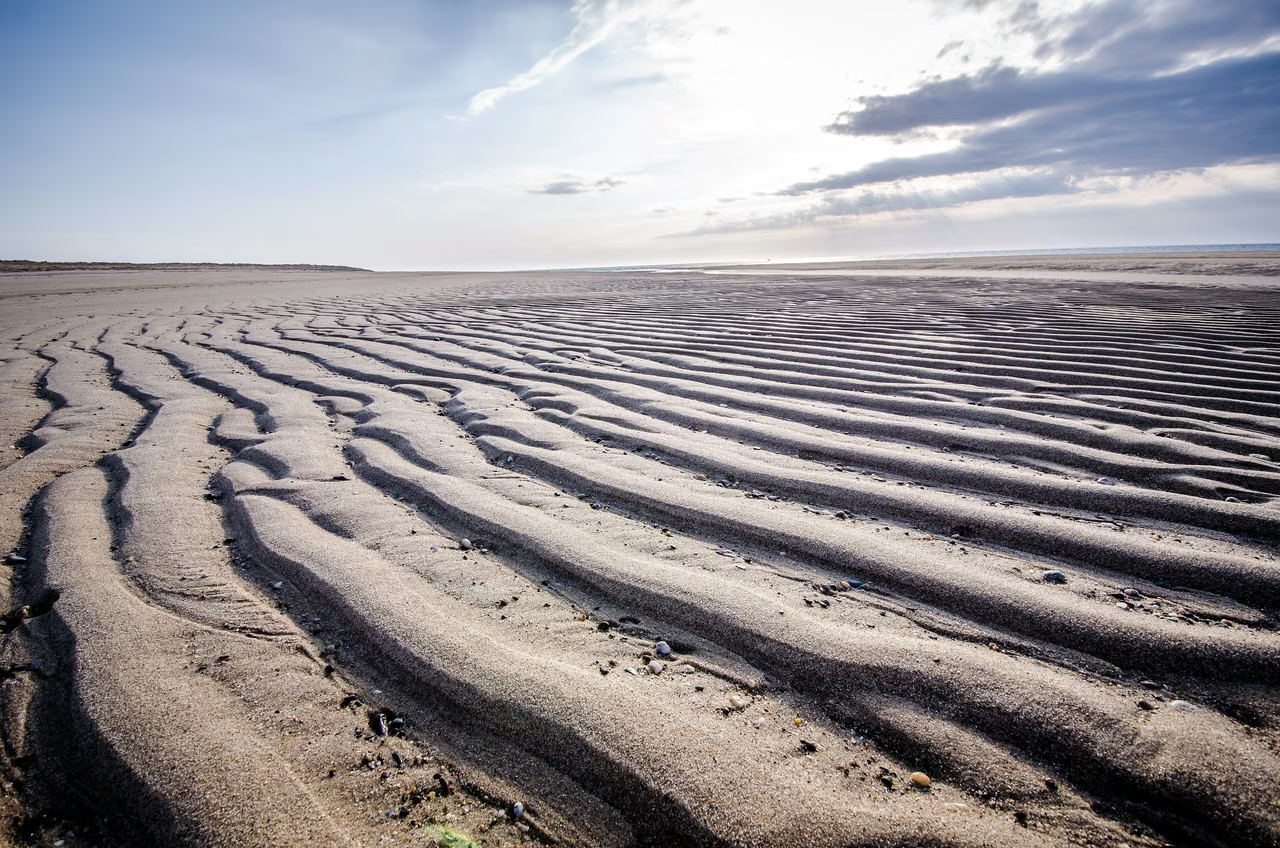
Cape Cod National Seashore · Race Point Beach

A shoreline still changing.

The shape of Cape Cod is a result of glacial deposition, sea waves, and wind. The beach, dunes, and coastal topography are not static; erosion and deposition constantly alter the edges, and thus coastal protection requires long-term observation.

A visit here moves beyond the city into a landscape shaped long before it. Beneath the apparent stillness, sand, water, and wind remain in motion.

Ponds left behind by retreating ice.

Retreating glaciers left buried blocks of ice. After melting, these formed depressions that became lakes when the water deep enough to reach groundwater.

These glacial kettle lakes typically have little surface water inflow, primarily fed by groundwater and precipitation. They may look different from beaches, but they are part of the geological story of Cape Cod.

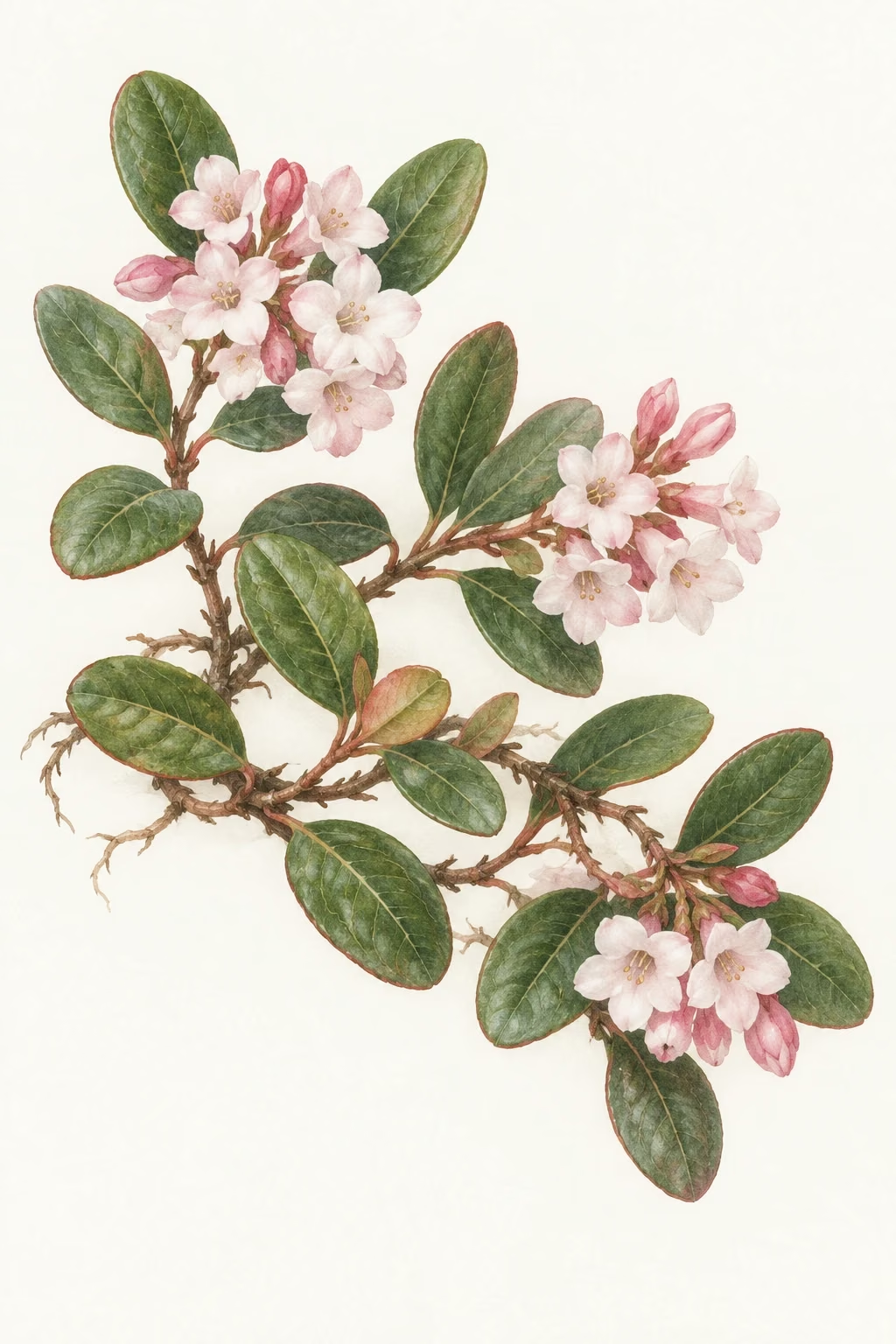
Plantae · Mayflower

The soft colors of spring, close to the ground.

Mayflower is the state flower of Massachusetts, officially established in 1918. Its low branches and small clusters of flowers give the state symbol a scale different from grand architectural representations.

Coast, forests, blocks, and labs come together to form the state. Step away from the city walls and look down; even small flowers can remind you of spring in New England.

Mayflower · State flower illustration
The other page of local economics.

The daily work beyond the research laboratories.

Massachusetts is known for its strong research image, but the healthcare, retail, dining, and educational and professional services sectors also form part of the local economy. Business in the vicinity of research institutions, community daily services, and coastal seasonal consumption need to be separately observed.

Industries & establishments · 2023

The work that keeps communities running.

Paid employees data expands upon the city life story beyond the research and finance narrative. The coverage of industries and employee ranges differ across different series, so they cannot be directly subtracted or added together with the biopharmaceutical industry report.

The state recorded 183,767 employer establishments and 3,487,228 paid employees. A single company may operate several stores, offices, or factories, so establishments are not a count of registered companies.

Health care & social assistance618,482 people

Professional & technical services369,685 people

Retail trade357,807 people

Accommodation & food services307,708 people

Manufacturing234,190 people

U.S. Census Bureau, 2023 County Business Patterns. The series primarily covers private, nonfarm establishments with paid employees. Employment is measured for the pay period that includes March 12. The 2023 release was the latest in this series available when checked; it is not a measure of current monthly employment.

STATE.REPORT

An editorial feature by STATE.REPORT. Image creators and licenses are credited below.

Sources & further reading

Population estimates ↗

U.S. Census Bureau: state population estimates for July 1, 2025.

Boston's gathering place for the black community

National Park Service: The 1806 building, its community, education, and the abolition movement.

The Hartwell Tavern

National Park Service: residences, roads, and sites with 1775 history.

Lowell's hydraulic system

National Park Service: Canal, Factory, and Power Technology.

The early strike in Lowell.

National Park Service: Organizational and protest efforts by female workers in 1834 and 1836.

Cambridge and Kendall Square

Cambridge City Government: Transformation of Industrial District to Research Area.

Worcester City History

Worcester City Government: Railways, Manufacturing, and Urban Development.

Cape Cod's glacial lakes

National Park Service: Ice melt, groundwater, and lake formation.

Cape Cod Geology

US Geological Survey: Glaciated landscapes and coastal change.

Mayflower and state symbols ↗

Secretary of the Commonwealth: the Mayflower became the state flower in 1918.

Image credits & licenses

Verify your email

We will email you a six-digit code to sign in.

By continuing, you agree to the Terms and acknowledge the Privacy Policy.

Search history

Your searches from the last 30 days. Viewing this list does not use searches. Full company reports are not saved here.