STATE.REPORT
Michigan · Between the Great Lakes

Michigan

Two peninsulas framed by lakes. Many hands shaping their future.

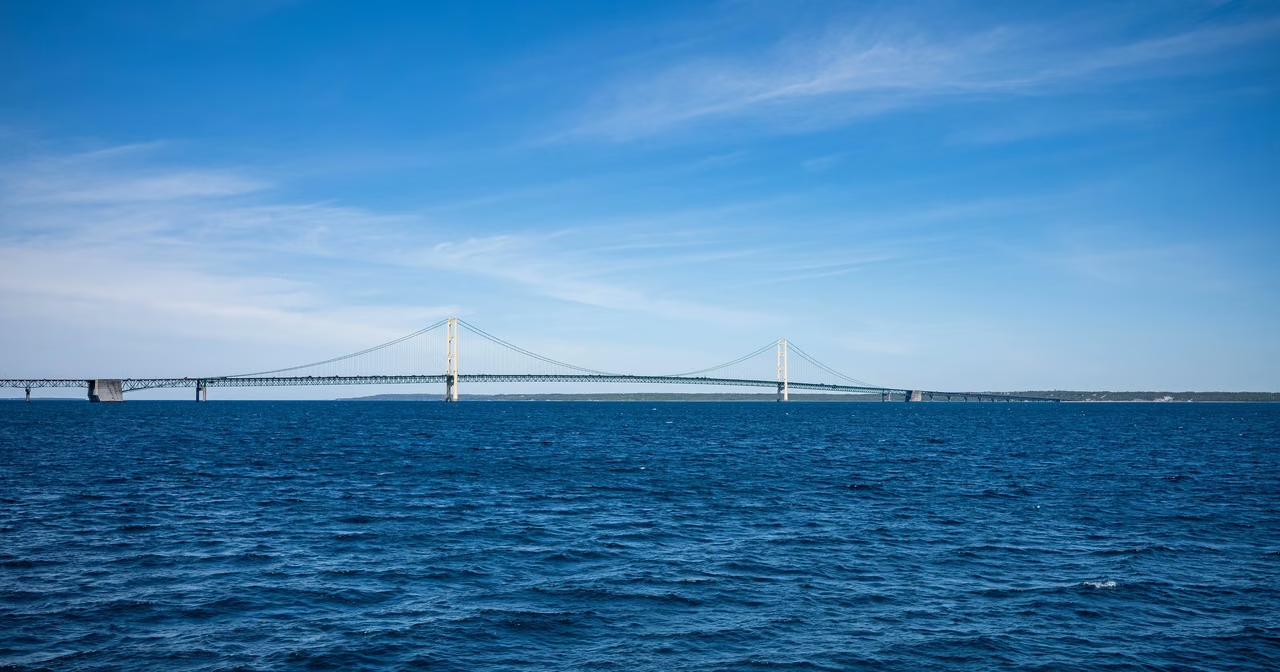
Mackinac Bridge · Connecting Michigan’s Upper and Lower Peninsulas
State capitalLansing
Population · 2025 estimate10,127,884 people
Upper PeninsulaLower Peninsula

Lakes as neighbors. Bridges as connections.

Begin with the shape of the land

A bridge between two great expanses.

Michigan consists of two peninsulas, upper and lower. The lower peninsula has Detroit, Grand Rapids, Ann Arbor, and Lansing, the state capital; the upper peninsula extends south of Lake Superior, presenting another landscape of forests, rocky shores, and mining towns.

The Mackinac Bridge opened on November 1, 1957, spanning the Mackinac Strait. The full bridge, including the approach roads, is approximately 8 kilometers long, connecting Mackinac City with Saint Ignace and providing a continuous route between the two peninsulas.

Bridges connect the roads, but different regions have their own pace of life. Lakefront tourism, city services, and industrial production depend differently on traffic, population, and seasons.

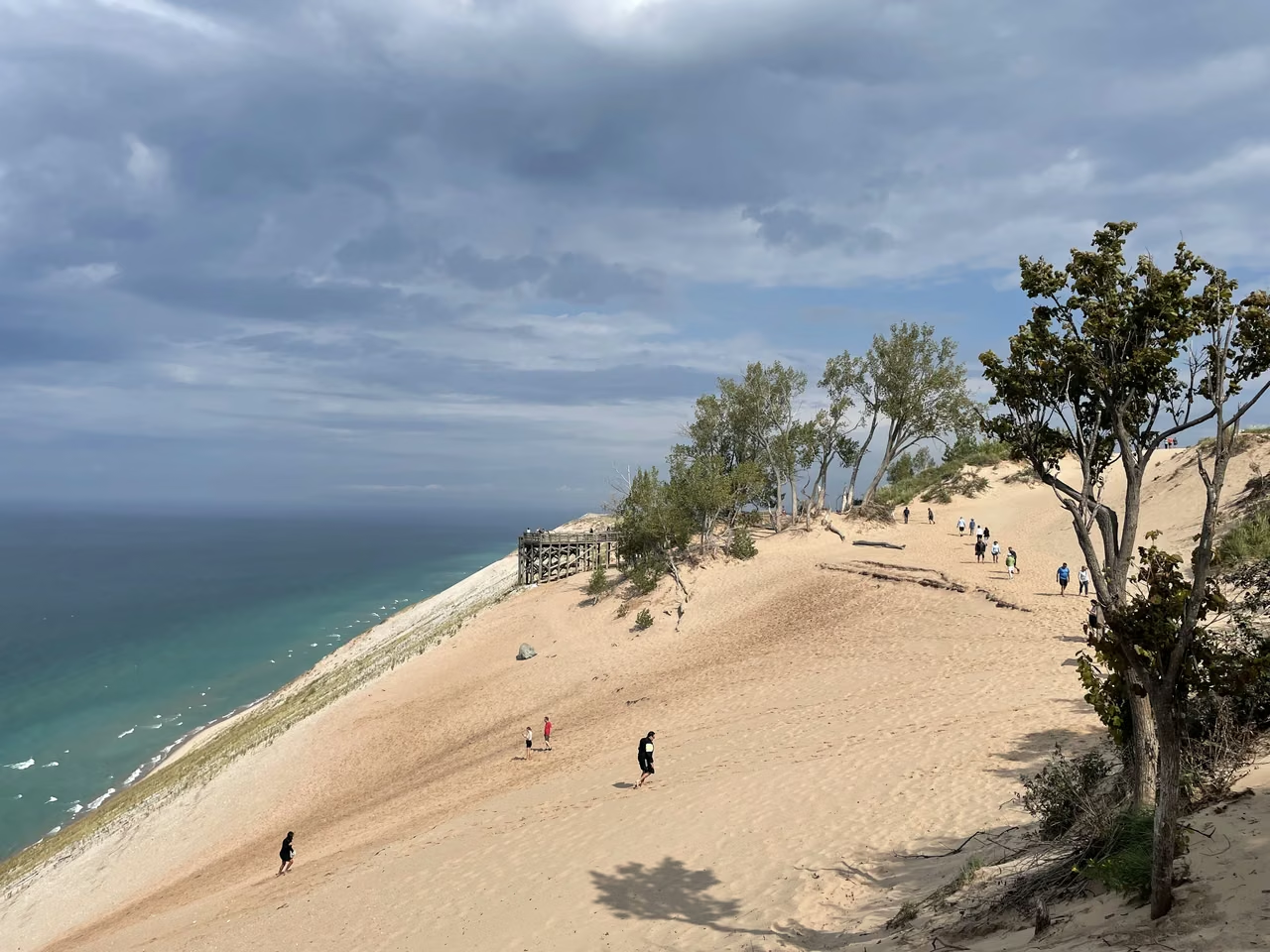
Sleeping Bear Dunes overlook · Lake Michigan and the high sandy shore
Western shore of the Lower Peninsula · Sleeping Bear Dunes

Wind keeps reshaping the sandy shore.

The dunes at higher elevations are built on a sedimentary terrain left by glaciers. Lake waves cut into the slopes, wind then picks up the sand; lighter sand is blown to higher elevations, while heavier stones remain below. Over time, this produces the landscape of today.

The lakeshore is more than bare sand. Woodland, streams, and inland lakes adjoin the dunes, forming a varied landscape shaped by glaciers and later by wind and water.

Place names carry human memories.

The name Sleeping Bear is connected with Anishinaabe oral tradition; the dunes served as a landmark along the lakeshore. Geology and cultural memory describe different layers of the same place.
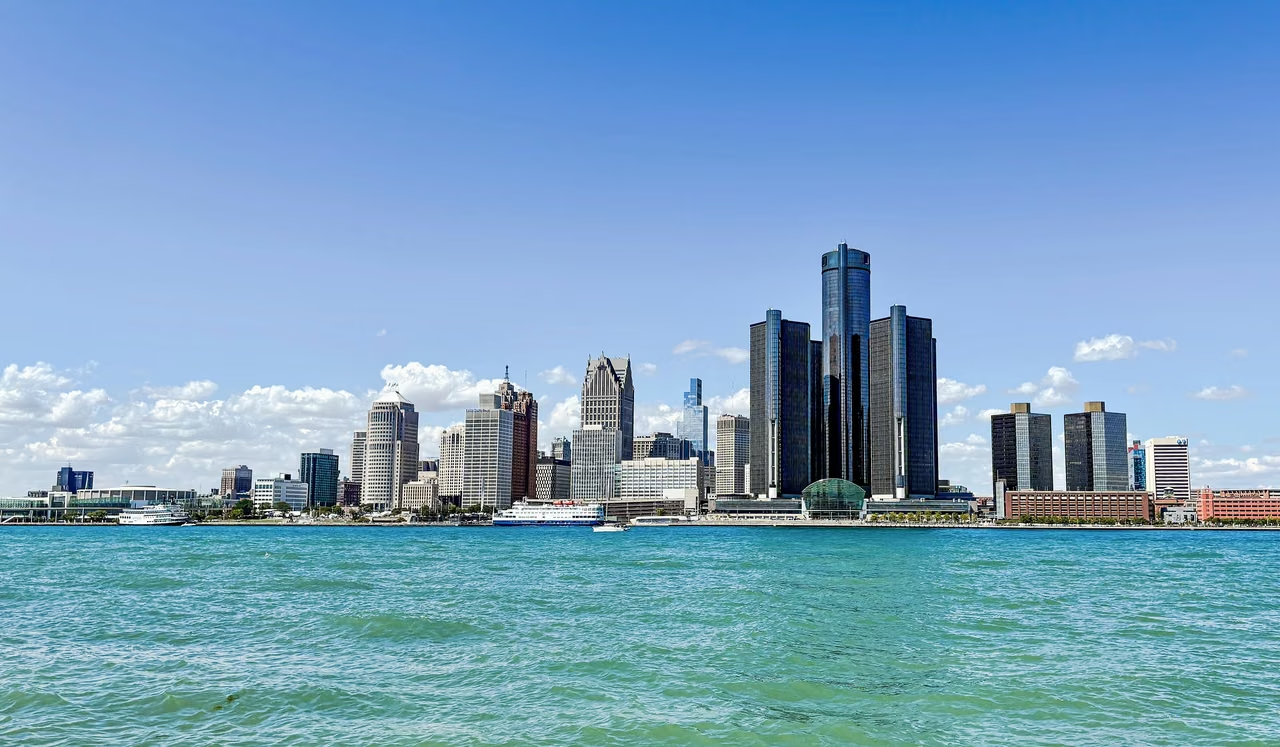
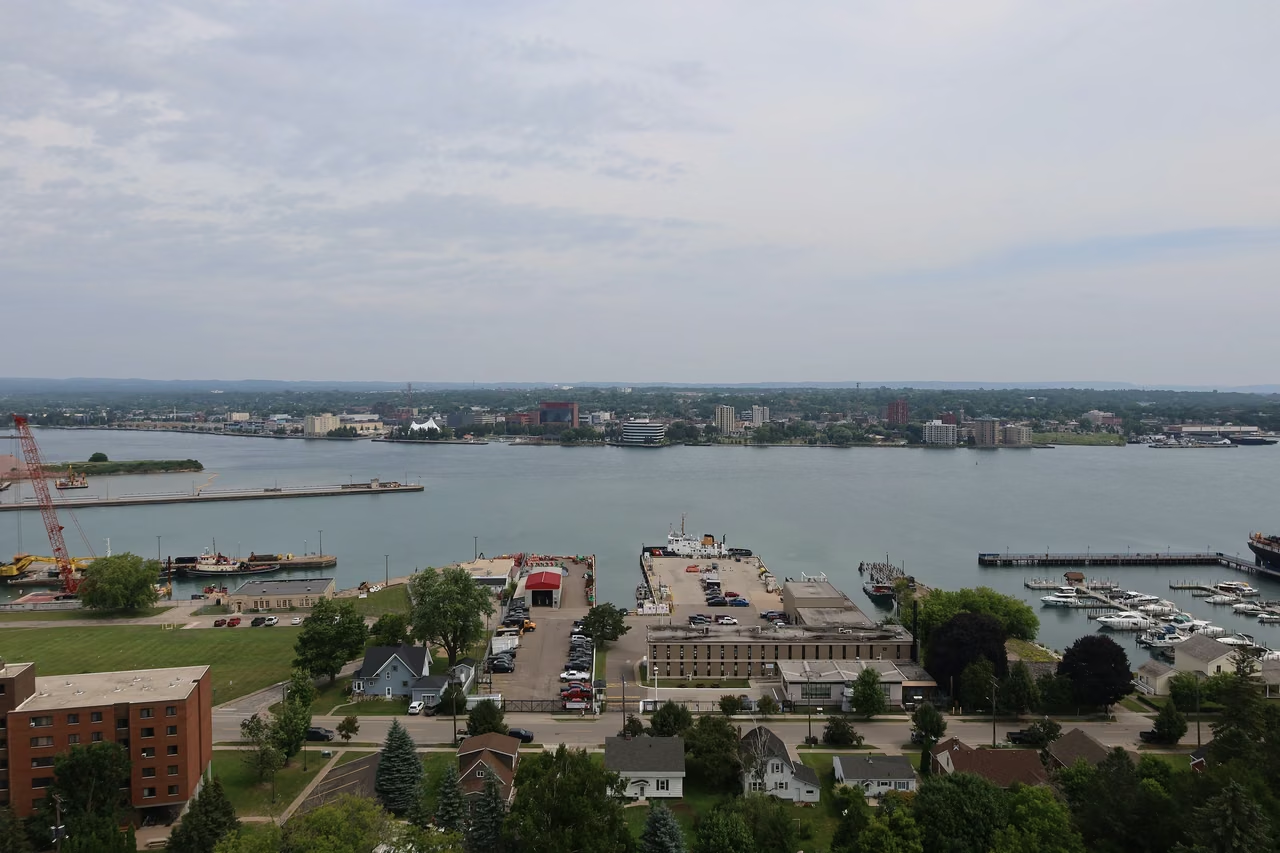
Detroit · Riverbank and Manufacturing

A city’s skill lives in many hands.

View the city skyline through Detroit River; September 2025

From parts to finished cars, from drawings to daily use.

Detroit can be understood by looking at how work is organized. After materials enter the factory, they go through processing, assembly, and inspection; outside the workshop, there's also engineering design, logistics, equipment maintenance, and management.

Brand alone is just the easiest layer to identify. Suppliers, technicians, and service providers all contribute to the product formation, and the industrial experience of the city is accumulated through these specific tasks.

The Detroit River separates the city from Windsor, Ontario, Canada, linking the city with both local and cross-border scales through waterway, border, and metropolitan areas.

Factory Records · Dearborn

Materials, production, and transport in one system.

The Rouge complex records a major experiment in large-scale production.

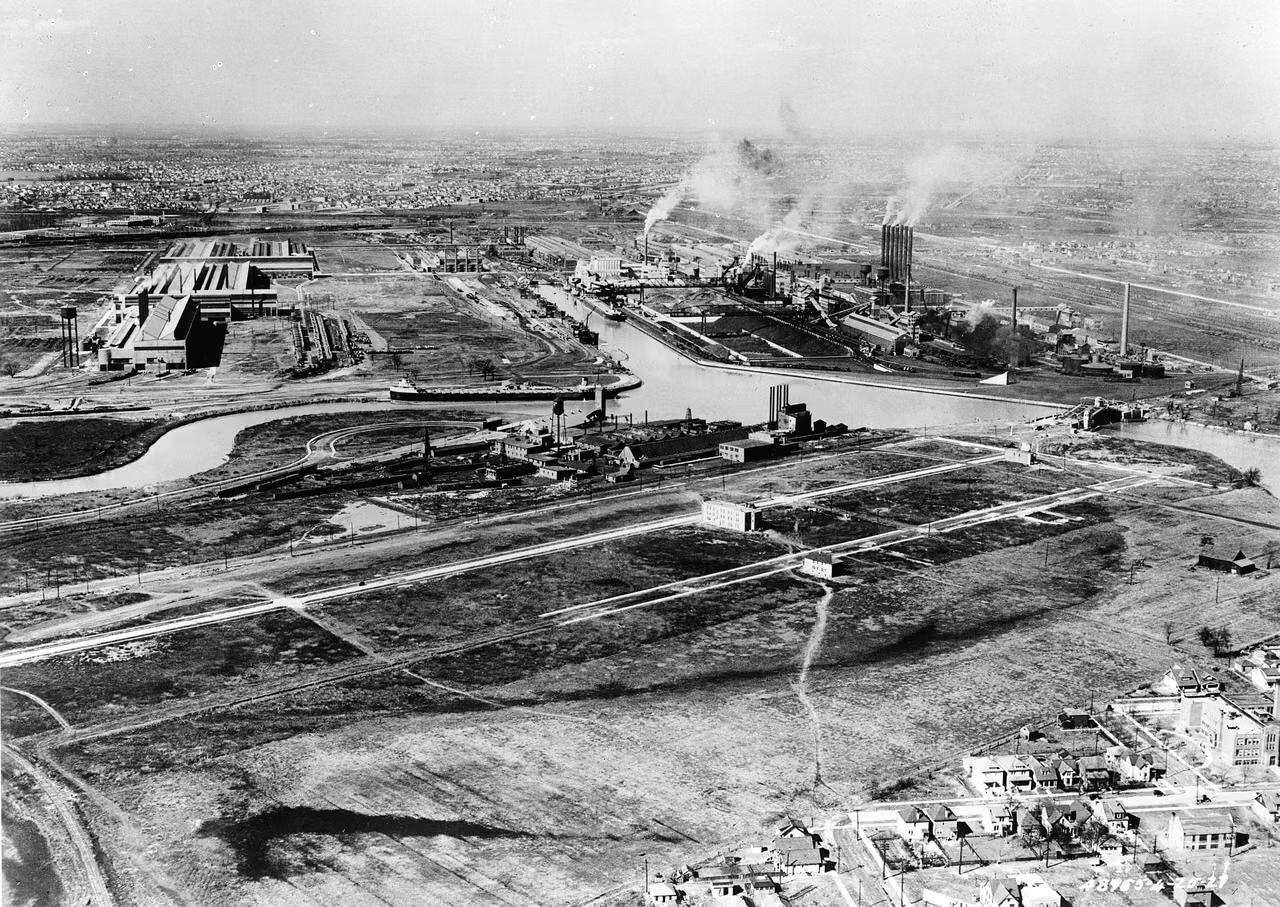
Ford Rouge Factory Aerial Photo · Historical Archive from Around 1927

An industrial landscape beyond the assembly line.

The Rouge complex developed between 1917 and 1928. Ford sought to link raw-material processing, component manufacturing, and final assembly in a continuous system. Alongside assembly halls were steelmaking, foundry, power, and transport facilities.

The factory railway connects the dock, production stages, and external lines, making material flow a part of the manufacturing process. This historical photo shows a past factory layout and cannot be used to judge the current use and operation of each facility.

Industrial heritage reveals the space, machinery and coordinated labor required for production at scale. Understanding a manufacturer today likewise means knowing which stages it performs and how those stages connect with suppliers and customers.

Materials

Before production, specifications and supply must be clear.

Process

Processing, assembly, and inspection each have their own technical requirements.

Delivery

Packaging, transportation, and delivery arrangements connect customers.

Job Market Update · August 2026

A deep industrial foundation—and a changing present.

4.496million jobs

Statewide nonfarm employment fell by 2,000 jobs from the previous month.

5.0%

The statewide unemployment rate rose by 0.1 percentage points from the previous month.

Michigan's seasonally adjusted figures, released on September 17, showed a monthly loss of 2,000 manufacturing jobs, the largest decline of any industry. Total nonfarm employment was still 8,000 higher than a year earlier: the monthly and annual measures pointed in different directions.

Unemployment rates come from surveys of residents, while job numbers come from employer surveys. Industry job numbers, labor participation rates, and regional conditions should be observed separately and cannot be summarized into a single figure to represent the overall business environment.

From manufacturing strength to a specific business.

Automotive parts suppliers need to clearly define product specifications, quality verification, and delivery arrangements; whereas equipment and engineering services rely more on personnel experience, on-site responsiveness, and long-term maintenance. The accommodation, dining, and leisure services in the lakefront area are affected by seasonal variations and customer sources, making direct application of industrial business judgments impractical.

The manufacturing tradition in the state provides an industrial background, and the actual location selection still requires comparison of customer distance, site conditions, labor availability, and transportation. The annual industry data mentioned at the end is used to supplement observations on the daily service and other employment base.

Another Detroit creation · Motown

From one recording studio to audiences far beyond.

Berry Gordy founded his record label in 1959 and established his office and recording space in a residence in Detroit. It was from there that the famous Motown music would later emerge.

Songs depend on more than the singers out front. Songwriters, arrangers, instrumentalists, recording engineers, and concert organizers work together to bring music to records and stages. Touring connects those musicians with listeners in other cities.

This history makes the "automobile capital" image more complete: industrial collaboration and musical creation have formed lasting professional traditions within the same city, each having a significant impact.

Two cities. Two detailed works.

Designing a space shapes a way of life.

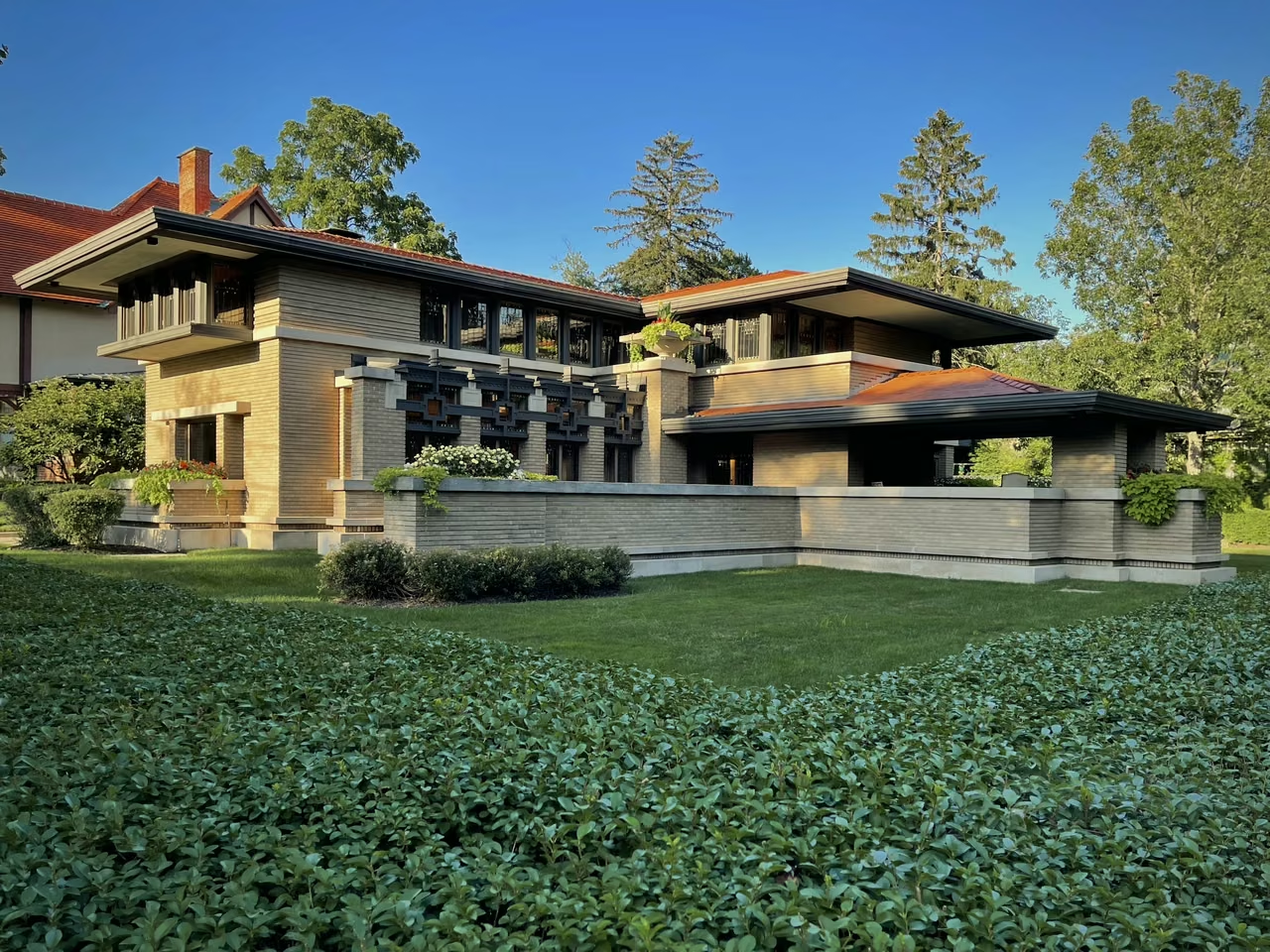
Grand Rapids

A house restored through careful research.

The Meyer May House was designed by Wright in 1908. The management acquired it in 1985 and conducted meticulous research and restoration. It opened to the public in 1987, featuring original furniture alongside reproductions based on the original design to present the interior environment.

Preserving buildings goes beyond just patching the exterior walls. The relationship between materials, furniture, and glass must be understood through both documentation and physical evidence.

Meyer May House, Grand Rapids · Prairie-style architecture
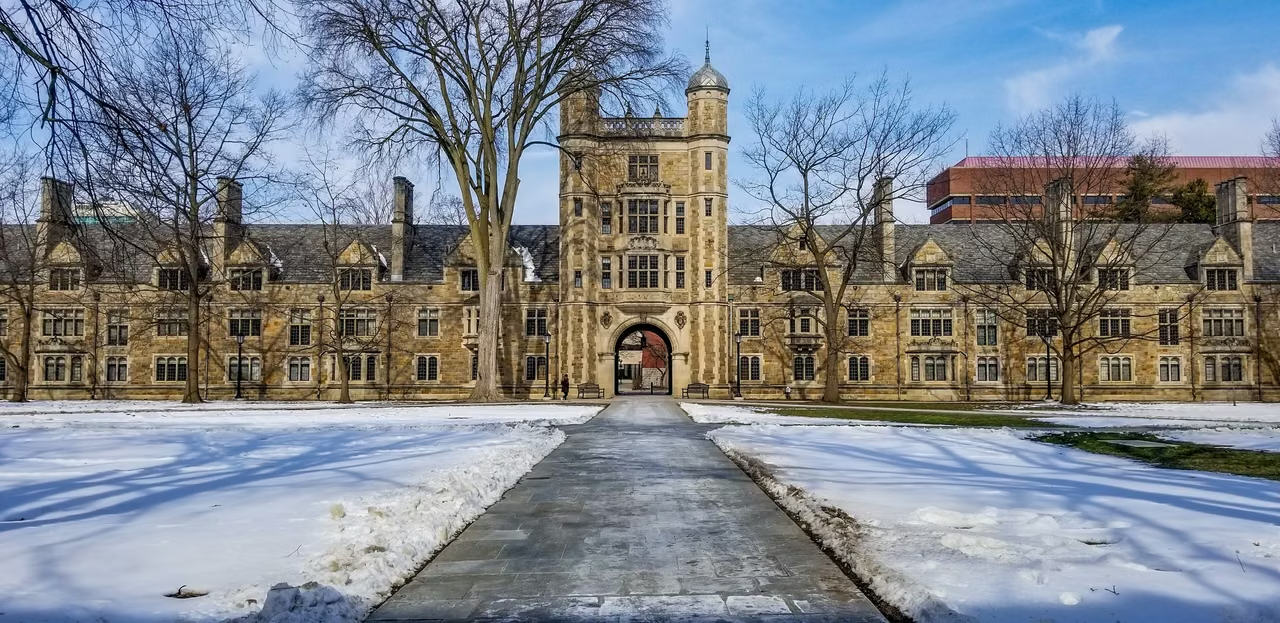
Ann Arbor · University of Michigan Law School, Building and Garden
Ann Arbor

Courtyards, reading rooms, and a life of learning.

The principal buildings of the University of Michigan Law Quadrangle took shape during the 1920s and 1930s. Teaching, research and residential spaces surround the courtyard, whose Gothic architecture gives this part of campus a distinctive character.

University town life isn't just about classes. Libraries, public spaces, bookstores, and surrounding services all cater to daily needs. Buildings also enter the city's life through human use.

State capital · Lansing

The everyday center of public affairs.

Lansing became the state capital in 1847, and its present capitol opened in 1879. State government, the legislature, and public services give it a role distinct from industrial metropolitan Detroit and the university city of Ann Arbor.

Enter Upper Peninsula · Lake Superior Shore

Color across the cliffs. Time beside the lake.

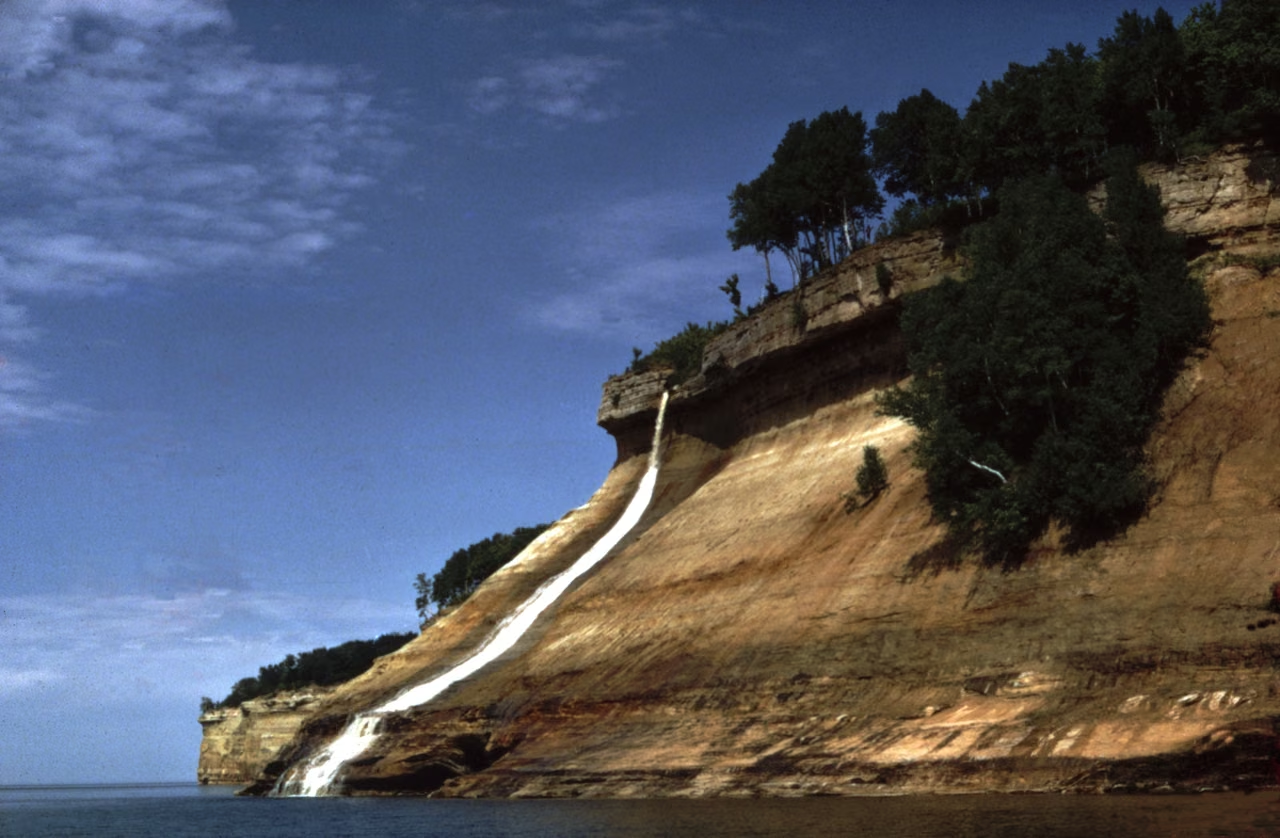
Bridalveil Falls at Pictured Rocks National Lakeshore · Lake Superior

Water paints the Pictured Rocks.

Groundwater seeps out of sandstone fractures and flows along the rock surface, leaving traces of different minerals. Iron and other components form red-orange bands, while other minerals contribute to the color changes of the rock wall.

Lake waves and wind continue to shape cliffs, caves, and coastal rock formations. The "scenes" here are the result of natural processes, not artificial rock paintings.

Another peninsula, with a long history of metalworking.

Indigenous peoples of the Keweenaw Peninsula mined and used native copper long ago, making tools, ornaments and objects for exchange. The large-scale mining that developed in the nineteenth century belongs to a much longer history of land and culture.

Mine pits, industrial facilities, and towns leave traces of different eras. Understanding the copper region also requires recognizing the enduring connection between the Ojibwe people and land and resources.

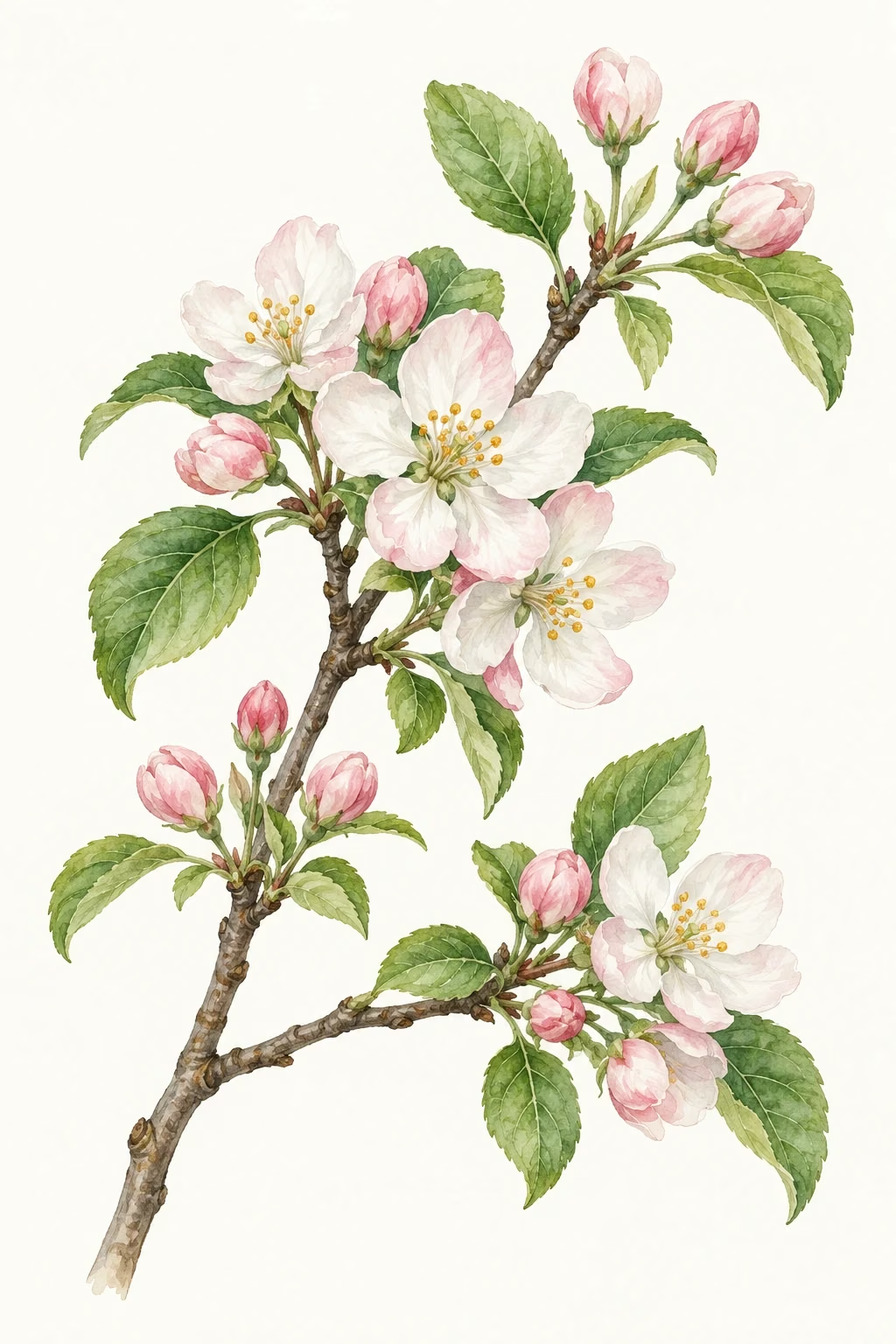
Apple blossom · State flower illustration
State Flower · Apple Blossom

After the lake winds, a gentler message on the branches.

Michigan designated apple blossom as the state flower in 1897. The official state symbol includes a depiction of a local wild apple tree. The illustration is in the style of art, evoking the natural impression of spring and orchards.

Between two peninsulas, there are bridges connecting them, as well as countless lives intertwined. The beauty of the lake shore, the experiences of factories, the sounds of cities, and local designs collectively shape Michigan's distinct appearance.

Industry sectors · Annual Data

Many kinds of work sustain a community.

Industries & establishments · 2023

The work that keeps communities running.

Beyond manufacturing, healthcare, retail, accommodations and food services, and professional services are also important sectors of daily life. For a comprehensive understanding of the state's industry structure, one can refer to the annual establishments statistics alongside the monthly non-farm employment figures mentioned in the previous text.

The state recorded 229,564 employer establishments and 4,041,074 paid employees. A single company may operate several stores, offices, or factories, so establishments are not a count of registered companies.

Health care & social assistance645,129 people

Manufacturing604,978 people

Retail trade464,027 people

Accommodation & food services394,668 people

Administrative & support services361,181 people

U.S. Census Bureau, 2023 County Business Patterns. The series primarily covers private, nonfarm establishments with paid employees. Employment is measured for the pay period that includes March 12. The 2023 release was the latest in this series available when checked; it is not a measure of current monthly employment.

STATE.REPORT

An editorial feature by STATE.REPORT. Image creators and licenses are credited below.

Sources & further reading

Population estimates ↗

U.S. Census Bureau: state population estimates for July 1, 2025.

Mackinac Bridge ↗

Bridge Authority: Opening Date, Length, and Engineering Details.

The Sleeping Bear Dunes geological formation.

National Park Service: Moraines, windblown sand, and lakebed topography.

The story behind Sleeping Bear

National Park Service: Anishinaabe Oral Traditions and Local Connections.

The colors of Pictured Rocks

National Park Service: Sandstone cliffs and groundwater mineral deposits.

The Soo Locks

US Army Corps of Engineers: Lock Operation and Navigation on the Great Lakes.

The history of the Rouge complex

Henry Ford Museum: Evolution of the Factory and Manufacturing Methods.

Railroad within the factory.

Henry Ford Museum: Raw Materials, Production Processes, and Rail Organization.

The history of Motown Records

Motown Museum: Founded in 1959 and Detroit Recording Studio.

Musicians and Tour Dates

Motown Museum: songwriting, performance and collaboration behind the scenes.

Meyer May House

The house’s custodians: architectural design, restoration and furniture.

Residential Repair Research

The house’s custodians: research used to restore the original design.

The architecture of the Law School of the University of Michigan.

University of Michigan: the quadrangle, reading room and teaching buildings.

The formation of the law school courtyard.

Bentley Historical Library, University of Michigan: architectural development in the 1920s and 1930s.

Lansing and State Capitol Building

Michigan State Capitol: State Capital and Historic Building.

Indigenous copper mining on the Keweenaw Peninsula

National Park Service: Indigenous metalworking and subsequent mining developments.

Copper mining industrial landscape

National Park Service: Mining, Community, and Cultural Connections.

State flower & symbols ↗

Michigan government: Apple blossom and other official symbols.

Image credits & licenses

Mackinac Bridge, Michigan1.jpg · rboed* · CC BY 2.0。

Detroit Skyline from Windsor 2025-09-01.jpg · TheWxResearcher · CC0。

Meyer May House.jpg · WMrapids · CC0。

University of Michigan Law School.jpg · Flavinista · CC BY-SA 4.0。

Pictured Rocks Bridalveil Falls.jpg · National Park Service · Public domain。

Sleeping Bear Dunes Overlook.jpg · Bcgood1973 · CC BY-SA 4.0。

River Rouge aerial 4a25915r.jpg · Detroit Publishing Co. · Public domain。

Soo Locks 2025c.jpg · Antony-22 · CC BY-SA 4.0。

Verify your email

We will email you a six-digit code to sign in.

By continuing, you agree to the Terms and acknowledge the Privacy Policy.

Search history

Your searches from the last 30 days. Viewing this list does not use searches. Full company reports are not saved here.