
People who leave the countryside bring music to the city, changing the way performances happen with new instruments, amplification equipment, and audiences. Mississippi was an important starting point, but it's not where music stops changing.
Mississippi · Local voicesMusic / Literature / Memory / Daily life
Mississippi
Listen to the land, and the people who call it home.
The blues traveled far from here, while writers carried local life into their books. Along the streets, historic trails and coast, there are many more voices worth pausing to hear.
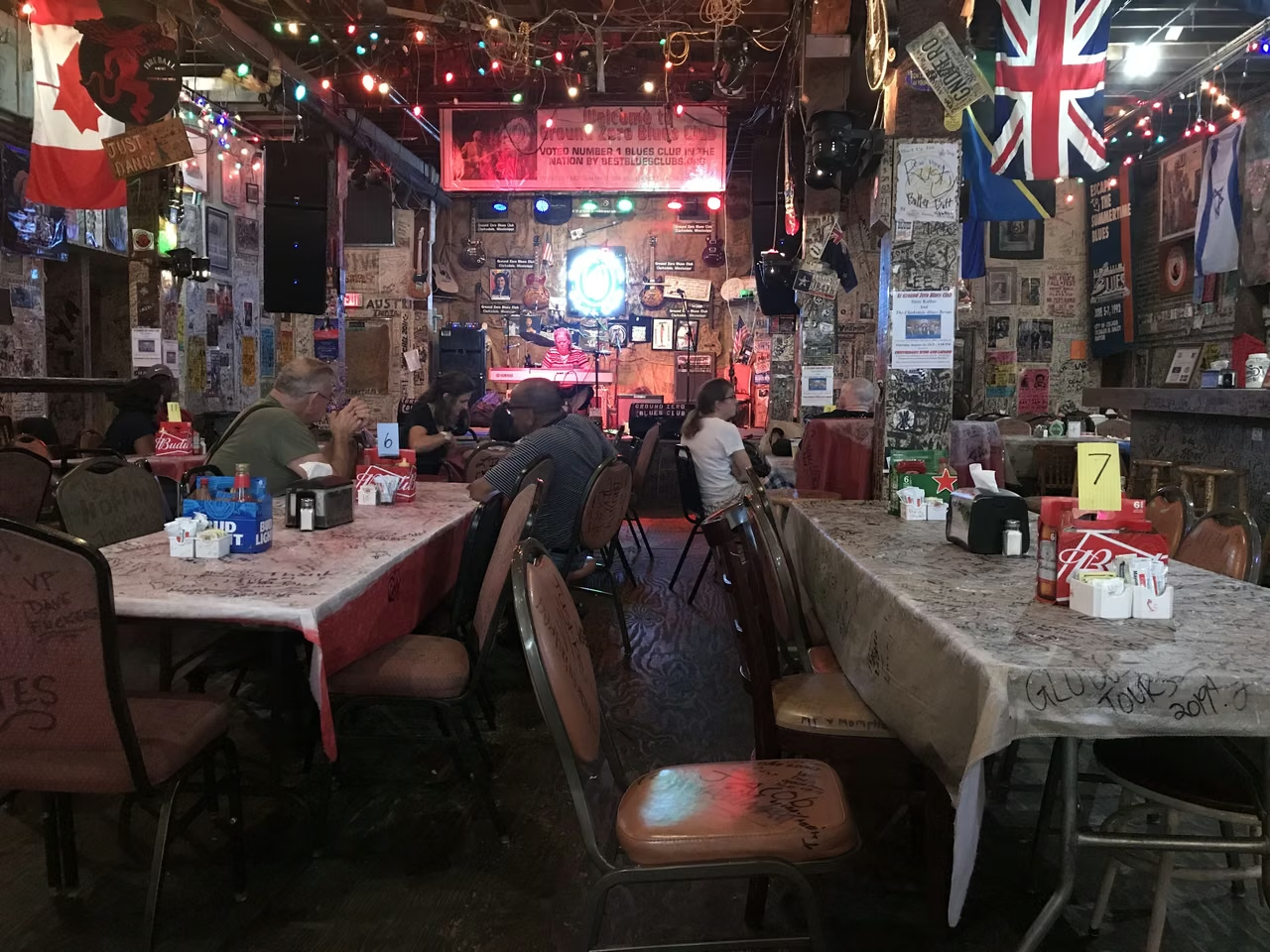
Clarksdale · The Delta
Music came from life—and changed it.
The Mississippi Delta is the alluvial plain between the Mississippi and Yazoo rivers in western Mississippi, not the river's mouth. Its farms, towns and histories of migration left a lasting local imprint on the blues.
Blues developed from African American life and musical traditions. Labor, emotion, faith, and experiences of uprooting entered the songs; records, radio, and city performances then brought these voices to new audiences.
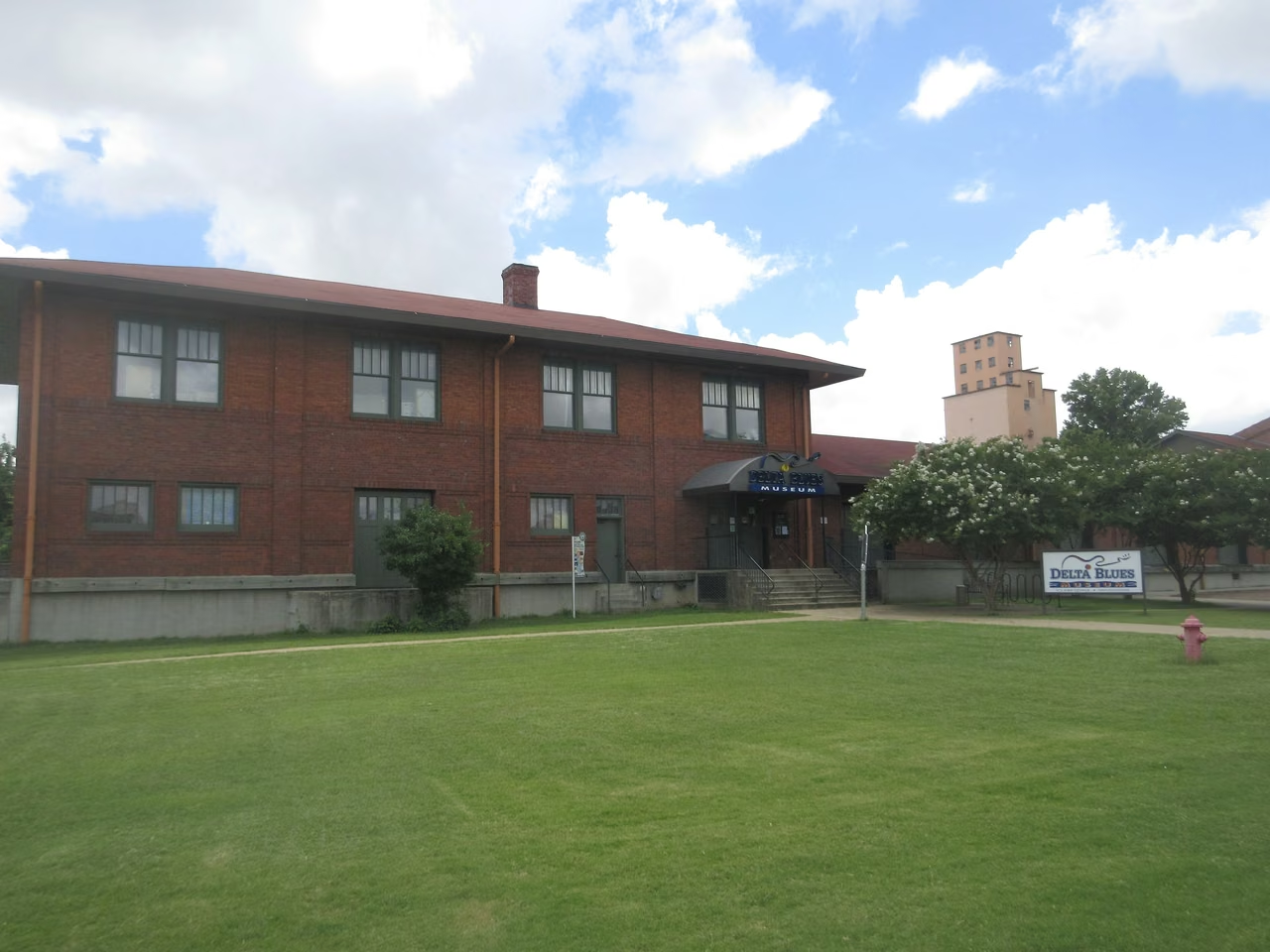
A freight depot holds more than railroad memories.
Founded in 1979, the museum has occupied a former freight depot since 1999. The depot itself dates to 1918. Instruments, images, and personal stories reconnect the music with the society that produced it.
Arts education continues here. The blues lives beyond museum cases when young people learn to play and work together, making the music part of contemporary life.
Mississippi Blues Trail markers recognize more than famous musicians. They also identify clubs, churches, stations and streets, revealing the wider communities behind the music.
Museums, educational programs, and local performances each play a role. Collections preserve records, classrooms transmit skills, and live shows allow people of all ages to continue meeting.
Oxford - Literature and University
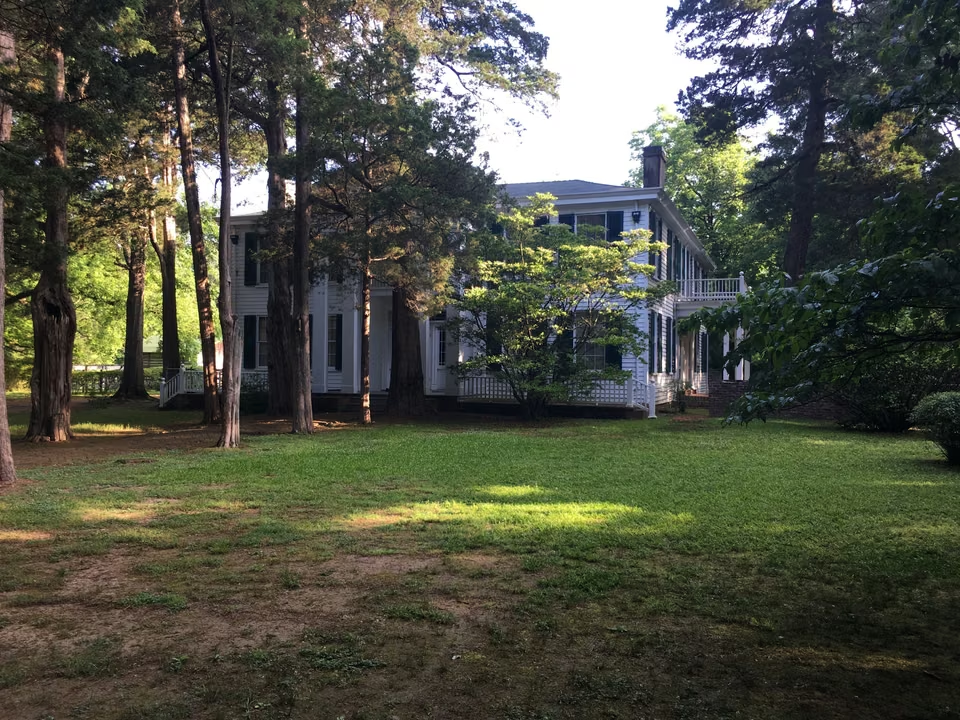
One house opens onto many lives.
Faulkner's home is now part of the University of Mississippi museum system. Woodland, house, and writing spaces offer a tangible setting for the sense of place in his work.
Beyond the home, the university museum also houses Southern folk art, ancient artifacts, scientific instruments, and American paintings. Literature, art, and teaching converge in the same university town, broadening how people understand local culture.
Mississippi literature has many voices.
Coastal writers Natasha Trethewey and Jesmyn Ward also write about the South through family, race, and local experience. Different generations and circumstances produce different understandings of the same land.
Treating literature as an entry point to understand a place allows one to hear personal experiences that statistical data cannot capture; novels and poems have their own modes of expression and should not be read as fact lists.
History must be seen. Change has names.
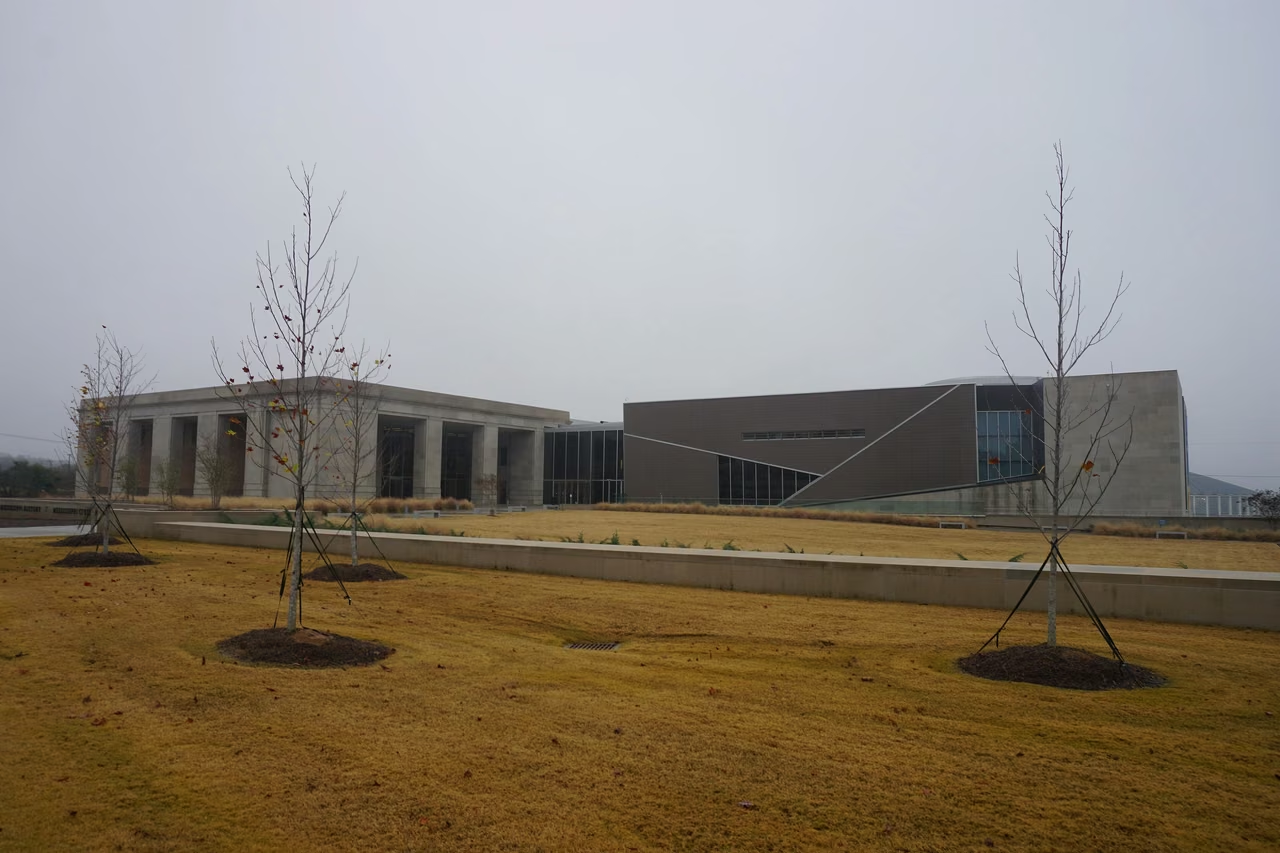
Equal rights were hard won.
The museum records the movements against racial segregation after slavery, disenfranchisement, and for equality. Experiences of Medgar Evers, Fannie Lou Hamer, among others, bring abstract institutional issues back to individual choices and community organization.
Youth activists, local residents, and supporters from outside come together to change things. They face violence and obstruction but also strive for more space through education, organization, and public action.
Preserving a complicated past in full.
Exhibitions are not just about showcasing success moments but also depict the struggles and sacrifices. To understand Mississippi, one must see both its cultural creativity and social inequality, as well as the individuals who have long been pushing for change.
These histories are part of today's public life. Museums preserve materials, provide learning spaces, and also offer opportunities for different generations to engage in dialogue about the same past.
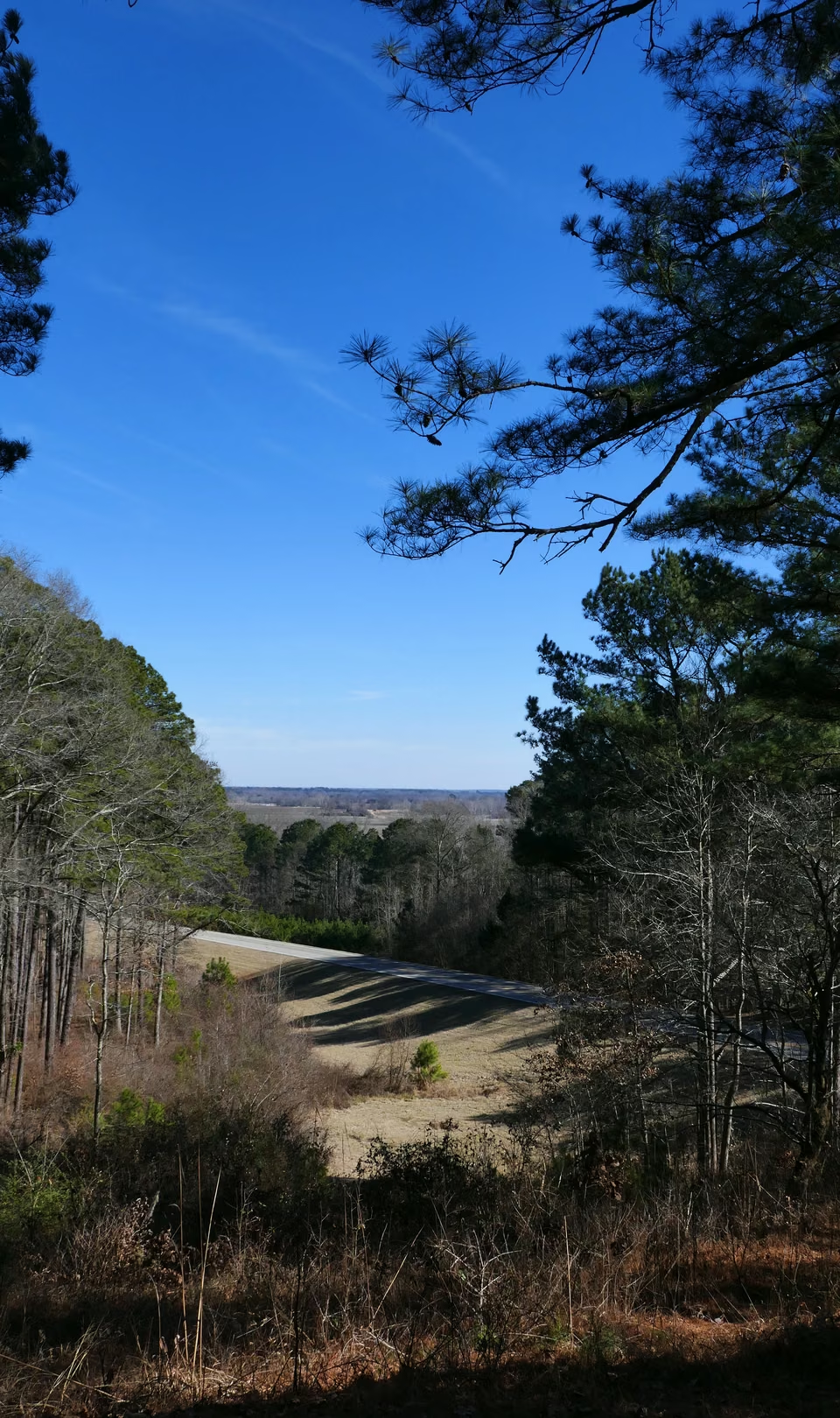
Home had already been here before the road.
An ancient route and the Choctaw present.
The Natchez Trace cuts through traditional lands of the Choctaw and Chickasaw. Its history predates later trade routes; the expansion of the path is also connected to the history of land loss and forced relocation.
The Choctaw tribe of Mississippi continues its language, music, crafts, and community life. Native American culture isn't confined to old trail markers but is carried on by today's people.
Stickball: skill, strength, and teamwork.
Choctaw stickball players use a pair of handmade sticks to catch and carry the ball, aiming at the opposing team’s goal post. Making the sticks, learning the rhythm of play and bringing communities together are all part of a tradition that has continued for centuries.
Modern competitions have clear rules and different categories. It is both a competitive activity and a place where families, languages, and regional identities meet.
Vicksburg · Rivers and War
Beyond the monuments, the history of a siege.
In 1863, Confederate forces at Vicksburg surrendered after a 47-day siege. The river city’s strategic position made it an important battleground in the American Civil War.
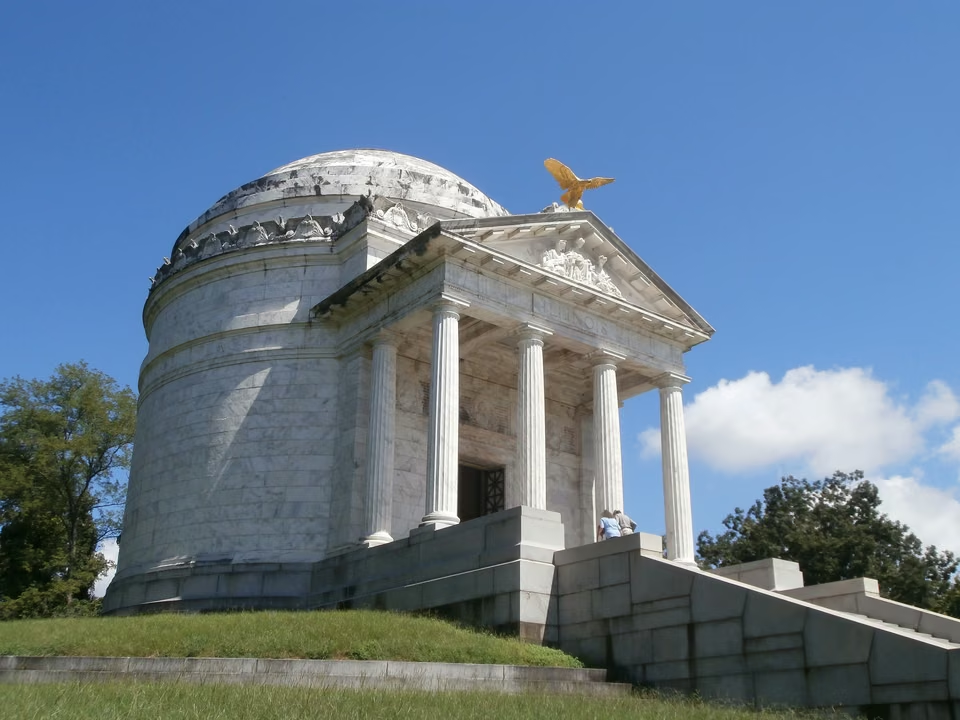
Today's military park preserves the battlefield, terrain, and memorials. The Illinois monument in the photo is a later memorial structure, not a wartime fortification; visitors can read about the era of the battle separately from the post-war memorials.
A quieter view of the coast.
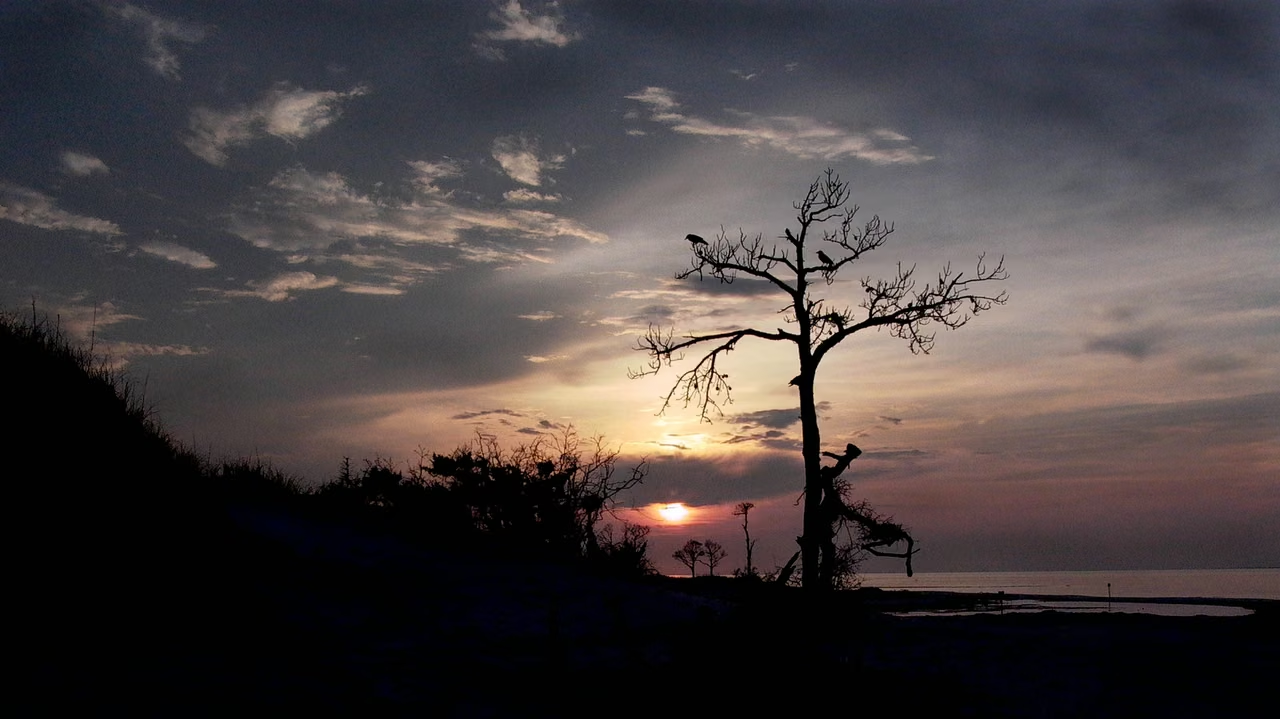
Islands in constant change.
Barrier islands absorb offshore waves, sheltering the wetlands and seagrass beds behind them. Wind, waves and currents continually move sand, causing islands to erode, shift and build up again.
Horn Island and Ship Island have different natural and historical features. The coastline is not a static boundary; both protection and use require understanding this change.
Nature observed, and transformed into art.
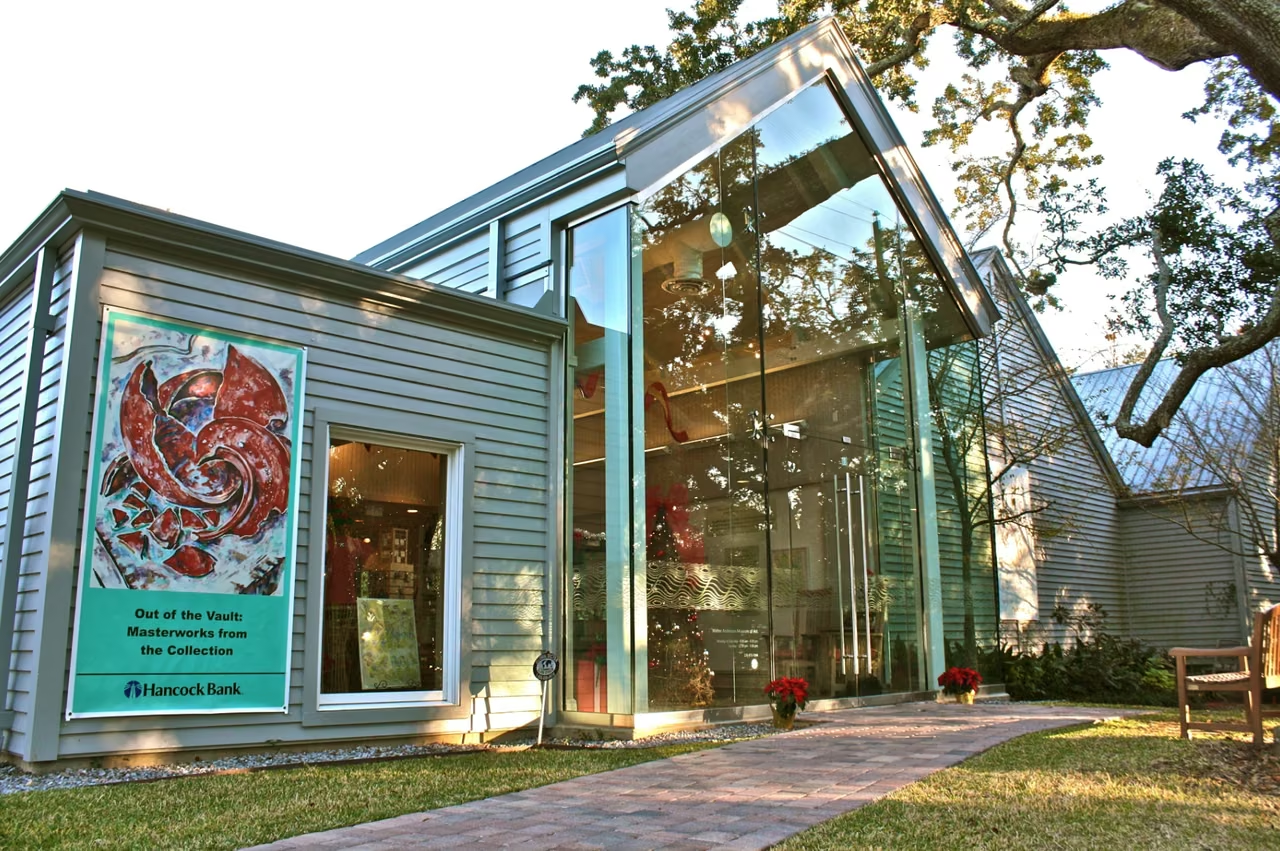
Walter Anderson lived and created in the Mississippi coast for a long time. He observed birds, fish, plants, and weather on Horn Island, expressing the surrounding world through lines, colors, and rhythms.
The art museum in Ocean Springs connects the work with its surroundings, while bringing in literature, history, and community perspectives that reveal many meanings in the same coast.
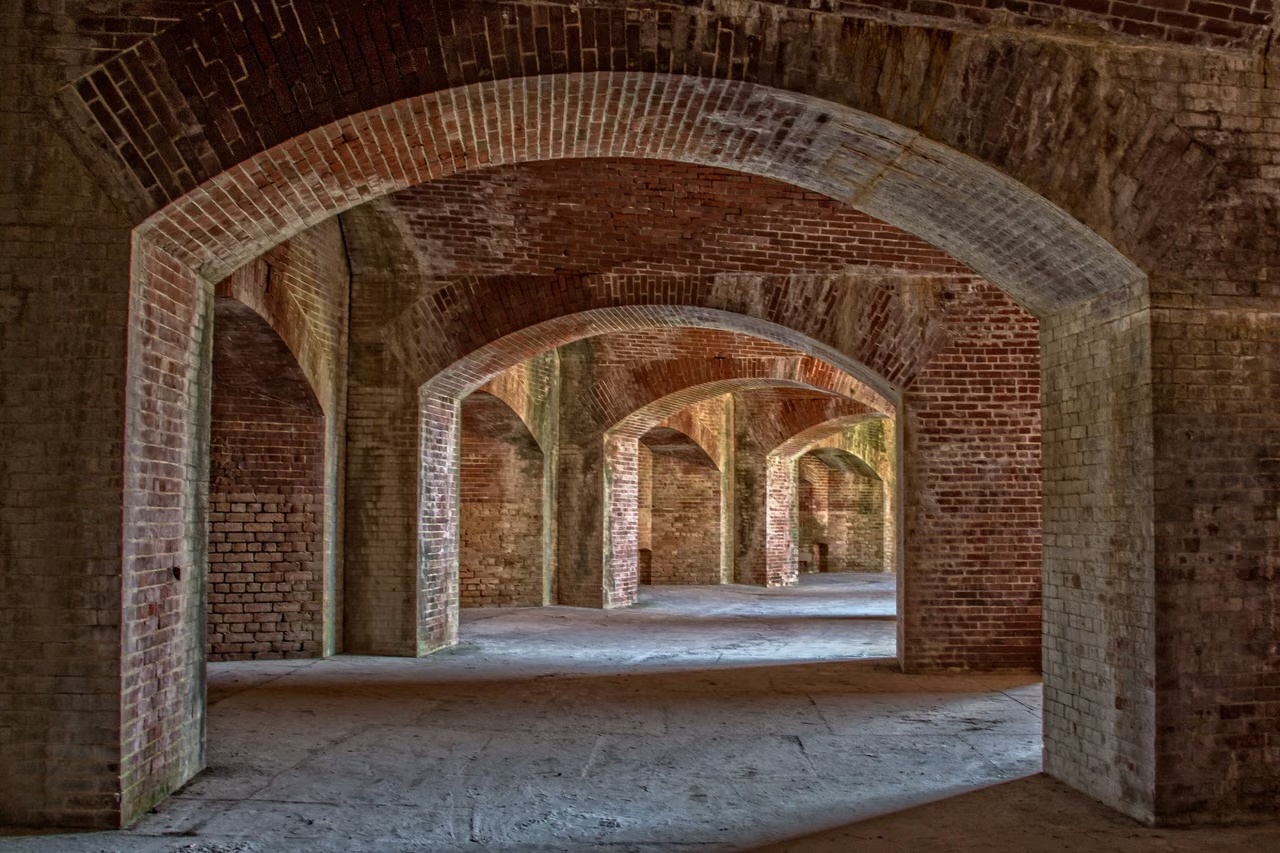
Fortresses were originally built to protect coastal shipping and anchorages. Arch-brick structures, gun positions, and military facilities preserved another chapter of coastal defense history.
Stennis Space Center · Ground testing
Before the journey to space, the test on Earth.
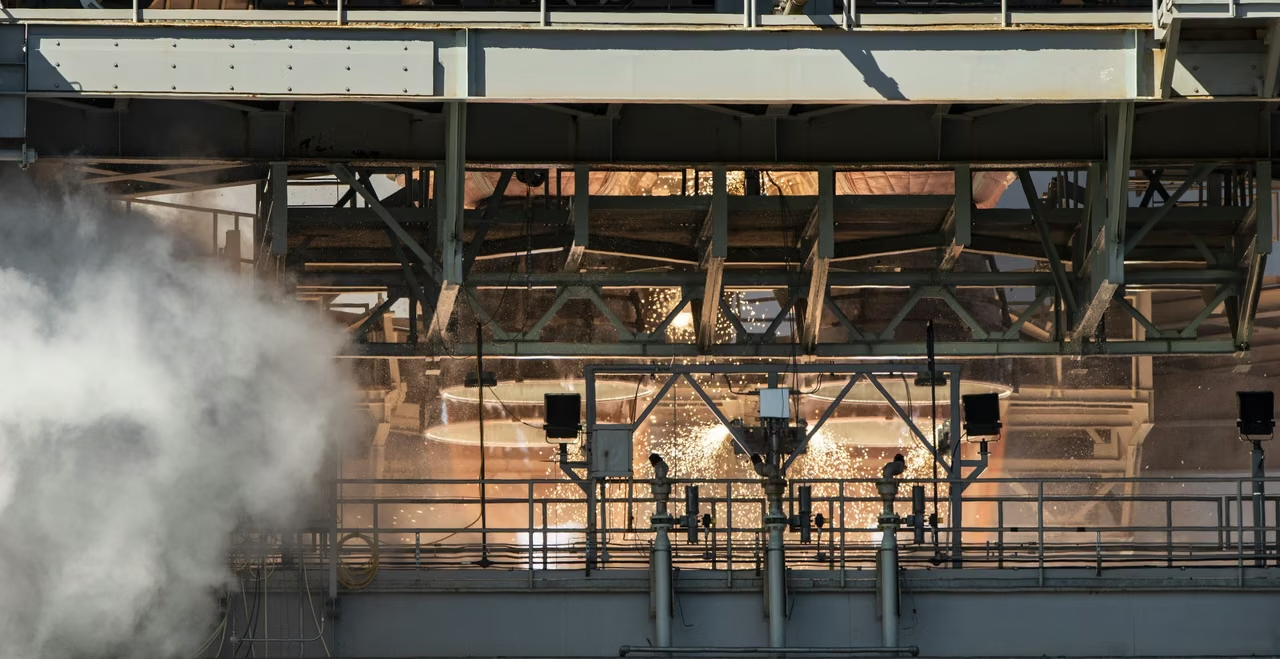
Stennis is a major NASA center for rocket propulsion testing. Engines and systems are tested on the ground while engineering teams monitor thrust, temperature, pressure and performance, using the results to guide subsequent work.
NASA continues to release hot fire test records for engine firings in January 2026. The image shown is from the 2021 core stage test, which are at different stages. The photo records ground tests, not rocket launches.
Testing capabilities depend on facilities, instruments, operators, and safety management. It transforms Mississippi's industrial landscape beyond the traditional agricultural image, and it also illustrates that professional skills require long-term accumulation.
Dining Tables · Farm Ponds and Corner Kitchens
A home-cooked dish can tell a story of migration.
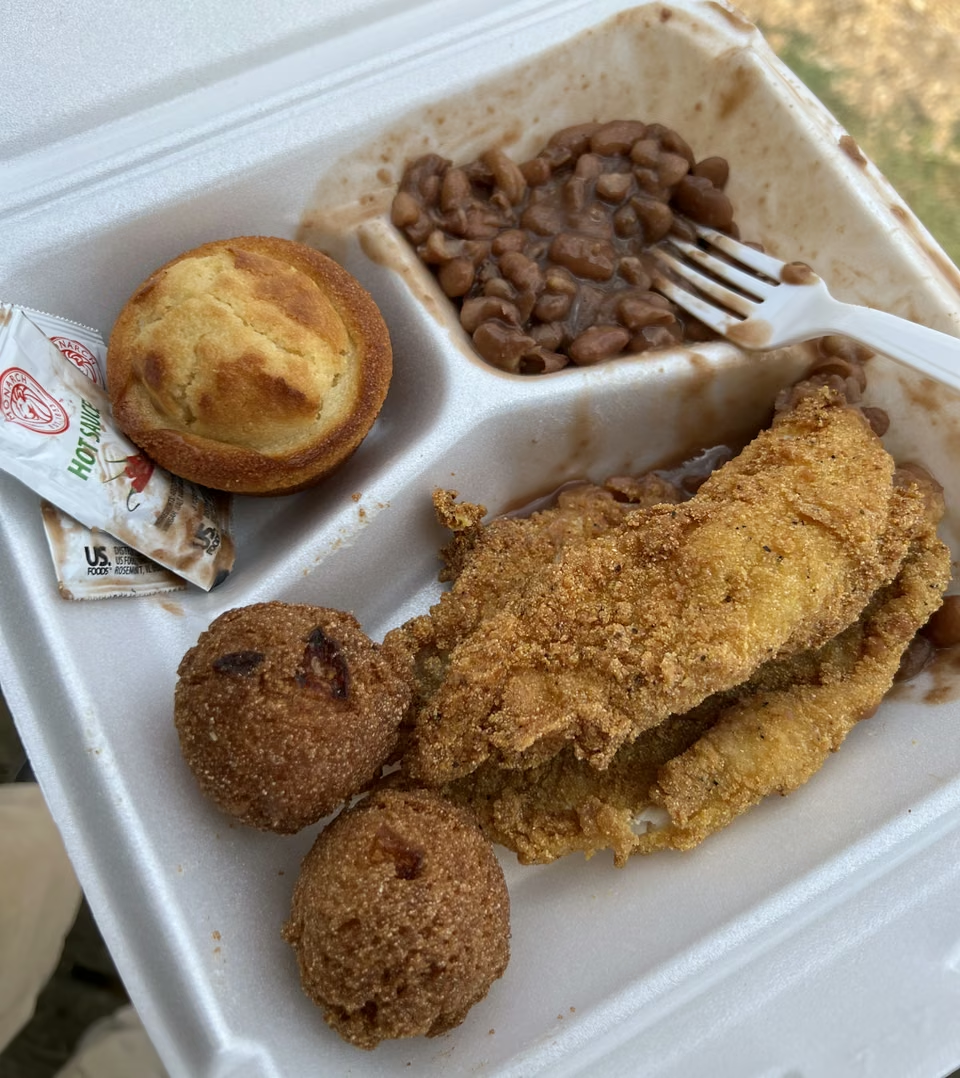
Fried catfish: from pond to kitchen.
Catfish farming is a characteristic Mississippi industry, connecting hatcheries, feed, pond management, processing, and restaurants. Many kinds of work lie behind a plate of crisp fried fish.
Hot tamales: more than one origin story.
Delta hot tamales have a history shared by immigrant and African American communities. Southern Foodways Alliance oral histories record several accounts of their origins; no single explanation represents every family and business.
Food comes from people and is changed in the local kitchen. Rather than attributing it to a single origin, it is better to recognize those who preserve the craft, make, and sell it.
Beyond cotton: poultry, forests, and factories.
Poultry and eggs
Estimated production value for 2025. Each stage – farming, feed, processing, and cold chain – performs a different role.
Forestry
Estimated production value for 2025. Timberland management and subsequent wood processing should not be considered the same indicator.
Catfish
Estimated production value for 2025. Price, output, and farming costs jointly impact the outcome.
Sources: Mississippi State University Extension and the Mississippi Department of Agriculture and Commerce, 2025 agricultural production value estimates released in late 2025 and early 2026. Production value is not farm profit or retail market size.
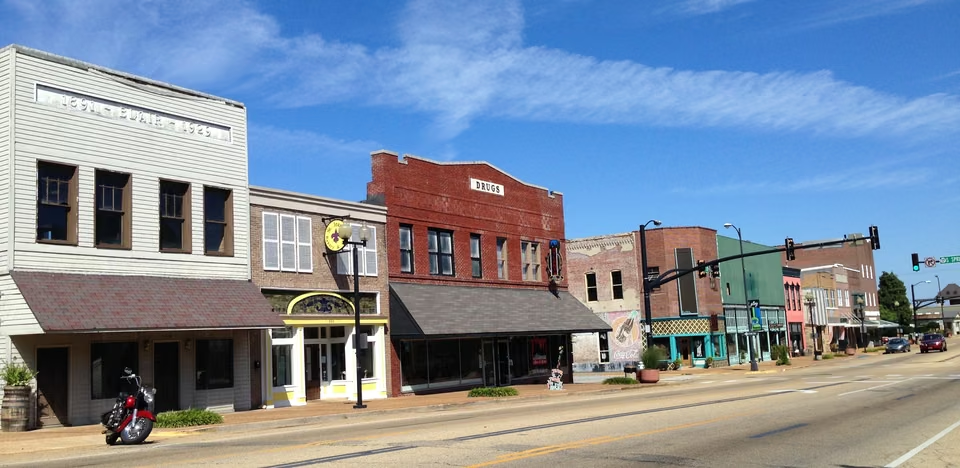
Factories and communities need one another.
Outside of industrial production, retail, healthcare, dining, repair, and transportation are also important. Cities like Tupelo have industries and services, alongside small businesses that cater to residents' daily needs.
Supplying equipment or logistics to a manufacturer calls for different customer relationships and location choices from running a neighborhood shop. A region’s industries offer useful clues, but a specific business still depends on its customers and premises.
1,199,800In August 2026, non-agricultural jobs.
Up 3,200 jobs from July. Manufacturing employed about 137,700, down 500 from July. Industry trends do not always move with the statewide total.
U.S. Bureau of Labor Statistics, released September 18, 2026; seasonally adjusted, with preliminary August figures.
Industries & establishments · 2023
The work that keeps communities running.
Healthcare, retail, manufacturing, and hospitality are distributed across regions and towns. An industry profile should include both large production facilities and the establishments providing everyday services.
The state recorded 60,465 employer establishments and 956,079 paid employees. A single company may operate several stores, offices, or factories, so establishments are not a count of registered companies.
U.S. Census Bureau, 2023 County Business Patterns. The series primarily covers private, nonfarm establishments with paid employees. Employment is measured for the pay period that includes March 12. The 2023 release was the latest in this series available when checked; it is not a measure of current monthly employment.
Jackson · State government and public life
Everyday work in the state capital.
State capitalJackson
Population · 2025 estimate2,954,160 people
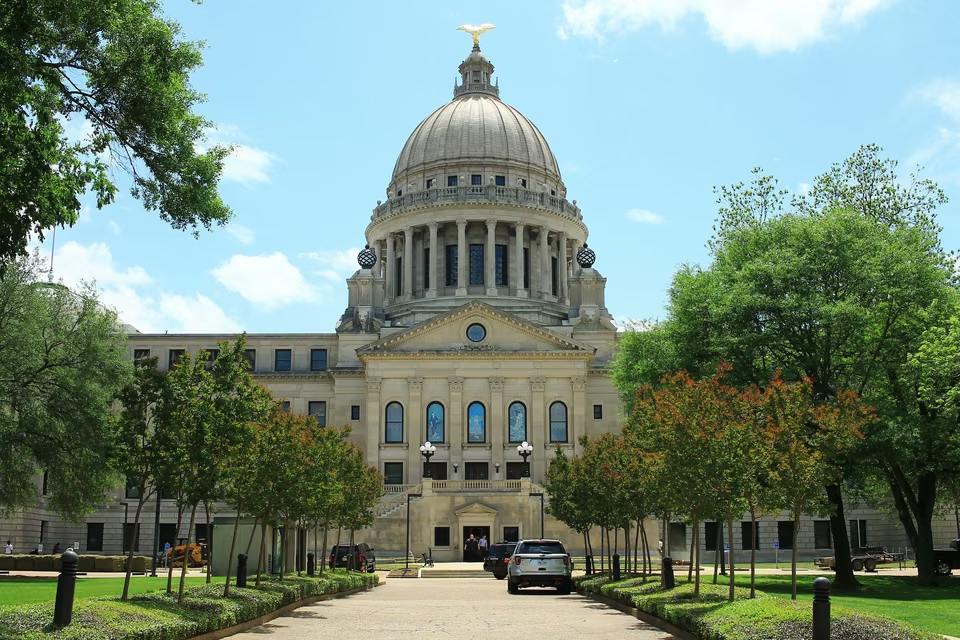
The state government, public institutions, and services form an important aspect of Jackson. Living, working, receiving medical care, and engaging in community activities demonstrate that the city's needs are far richer than what a single state capitol building photo can show.
Planning the business year.
Applicable for-profit corporations and limited liability companies in Mississippi must file annual reports on time, generally by April 15. Taxes, industry licenses, employment obligations and requirements for operating premises are handled separately.
Annual maintenance information, as per the Mississippi Secretary of State's annual report, was last checked in September 2026. Enterprise queries can be made on this site.
Magnolia State · A Place Remembered by a Flower
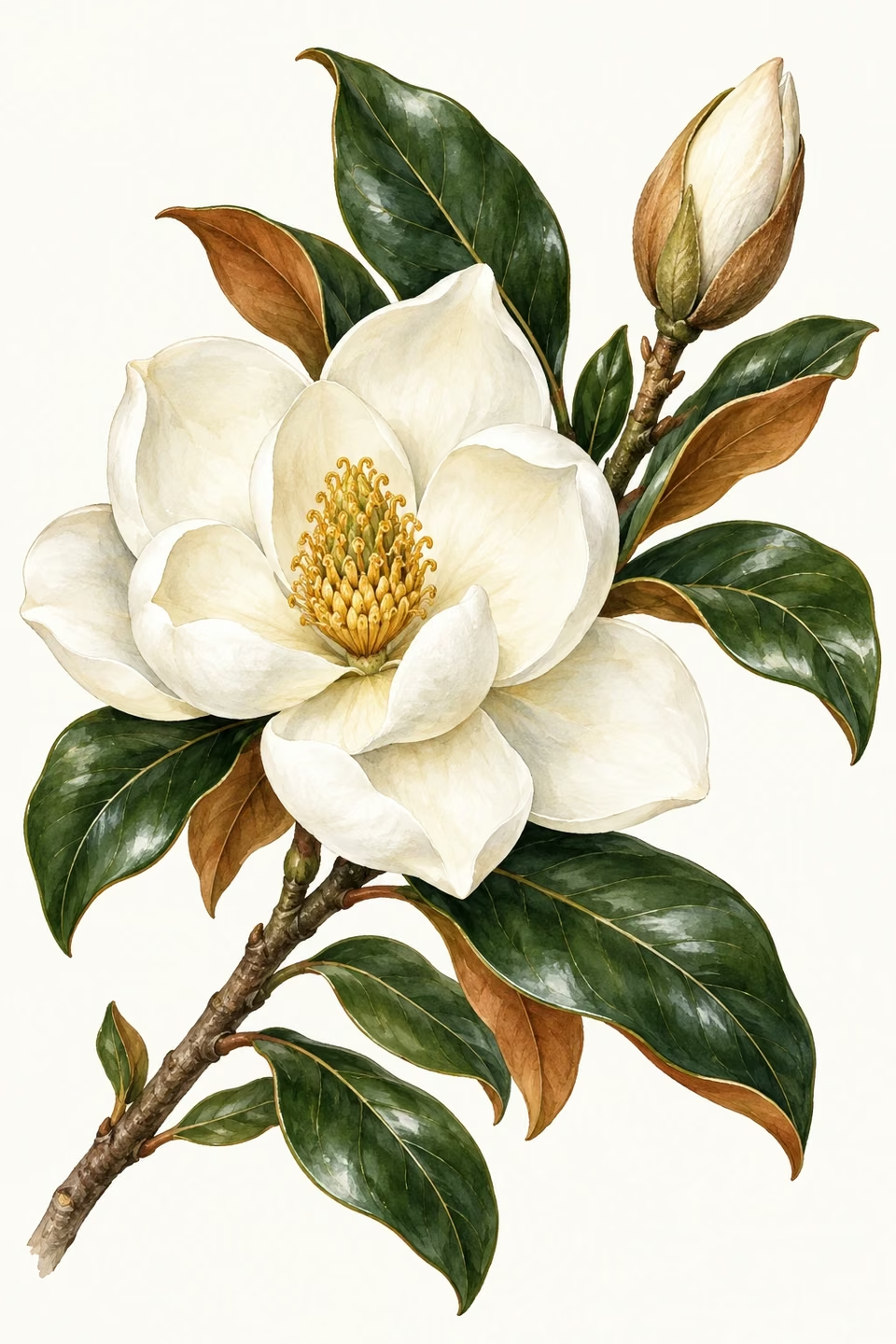
After the songs and stories, a magnolia bloom.
Magnolia was officially designated as the state flower of Mississippi in 1952. Its large white petals and deep green leaves create its distinctive natural image.
Here, the beauty lies not only in the woods and the coast but also in the creations, labors, and persistences of the people. Music, pages of books, public memories, and current lives come together to form a more complete Mississippi.
STATE.REPORT
An editorial feature by STATE.REPORT. Image creators and licenses are credited below.
Sources & further reading
Population estimates ↗
U.S. Census Bureau: state population estimates for July 1, 2025.
The blues and local life
Mississippi Department of Archives and History: the social, musical and migration history of the blues.
Delta Blues Museum
Museum: Founded in 1979, located in an old freight station with an educational mission.
Mississippi Blues Trail
Mississippi Blues Commission: Musicians, communities, roads, and performance venues.
Faulkner House & Museum
University of Mississippi: Rowan Oak and the university museum.
Record of the Civil Rights Movement
Mississippi Civil Rights Museum: A Journey Through People, Organizations, and the Struggle for Equality.
Choctaw culture
Mississippi Choctaw: Music, crafts, and stickball tradition.
Natchez Trace and Choctaw History
National Park Service: History of Indigenous Land and Trails.
Vicksburg Siege
National Park Service: The 1863 campaign and its history.
Coast Art and Literature
Walter Anderson Museum of Art: Horn Island, Place Landscape, and Different Creators.
Barrier Island ↗
National Park Service: Island Change, Wetlands, and Ecosystems.
The fort on Ship Island
National Park Service: The construction and defensive role of Fort Massachusetts.
Engine testing at Stennis
NASA: Propulsion System Testing and Engineering Capability.
Engine hot-fire testing in 2026
NASA: Engine test records released in January 2026.
Delta hot tamales
Southern Foodways Alliance: oral histories and differing accounts of origins.
State flower: Magnolia ↗
Mississippi State University Library: State tree and state flower, officially determined in 1952.
Image credits & licenses
Natchez Trace Parkway seen from Twentymile Bottom Overlook.jpg · Calstanhope · CC BY-SA 4.0。
Mississippi State Capitol Building (26815684617).jpg · formulanone from Huntsville, United States · CC BY-SA 2.0。
Fort Massachusetts, Ship Island, MS (1 of 1).jpg · Reweaver33 · CC BY-SA 4.0。
Downtown Tupelo 1.JPG · Fredlyfish4 · CC BY-SA 3.0。
Illinois Monument.jpg · KaitlinRatliff · CC BY-SA 4.0。
Delta Blues Museum 2.jpg · VitaleBaby at English Wikipedia · Public domain。
Jackson December 2018 61 (Museum of Mississippi History and Mississippi Civil Rights Museum).jpg · Michael Barera · CC BY-SA 4.0。
Rowan Oak 2018 1.jpg · Fredlyfish4 · CC BY-SA 4.0。
Walter Anderson Museum of Art.png · Georgianotthestate · CC BY-SA 4.0。
Second Hot Fire Test of SLS Rocket Core Stage (NHQ202103180025).jpg · Robert Markowitz · Public domain。
Mississippi Fried Catfish.jpg · Tallahatchie · CC BY-SA 4.0。
Interior of Ground Zero Blues Club.jpg · Deisenbe · CC BY-SA 4.0。
Horn Island Sunset.jpg · Willy Bearden · CC BY-SA 4.0。