New Jersey · The Garden StateNeighborhood voices. Echoes from the shore.
Follow the sounds of everyday life
New Jersey
From city streets to the shore, every stop has its own rhythm.
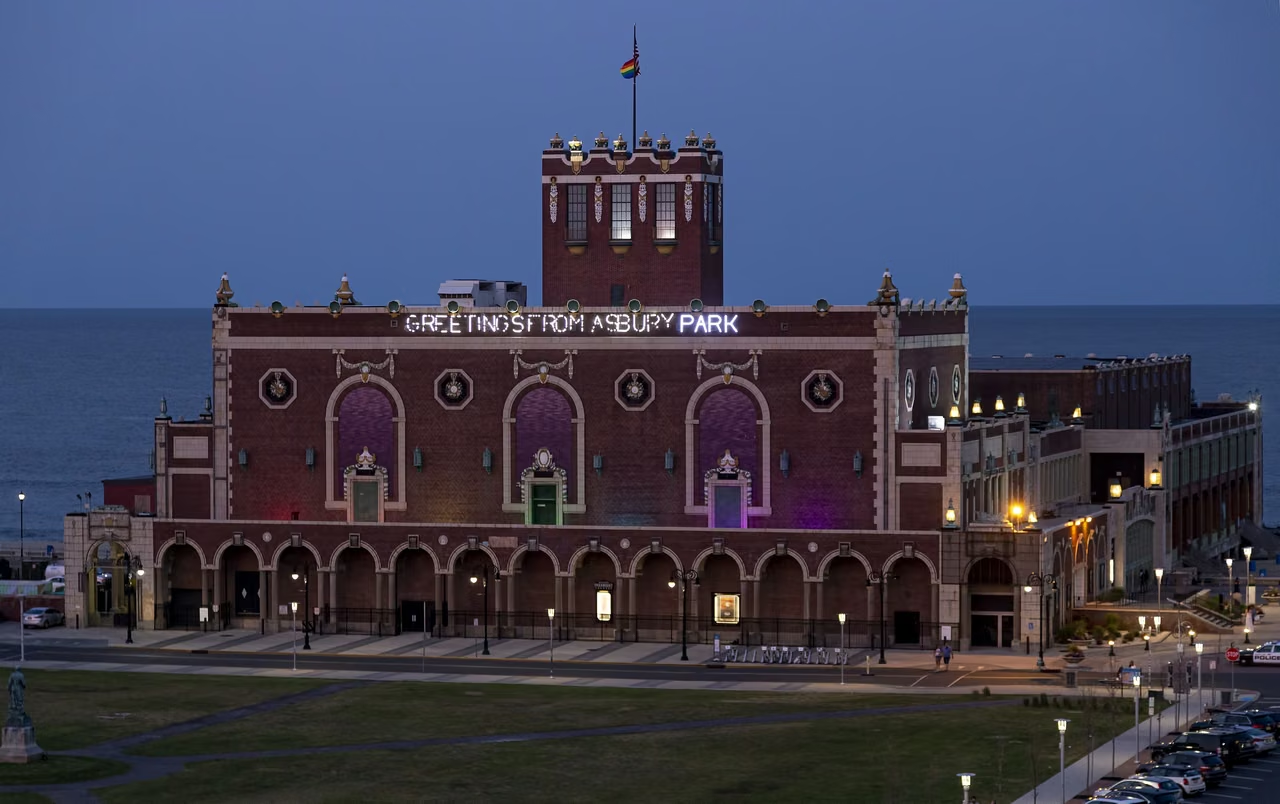
Asbury Park · Convention Hall on the shore
Boardwalk performances, factory machinery, and water moving through the woods tell different New Jersey stories. The state connects New York and Philadelphia, but has a life of its own: neighborhoods, workshops, universities, farms, and bays.
State capitalTrenton
Population · 2025 estimate9,548,215 people
Asbury Park · Long Branch
Begin with a song. Discover the shore.
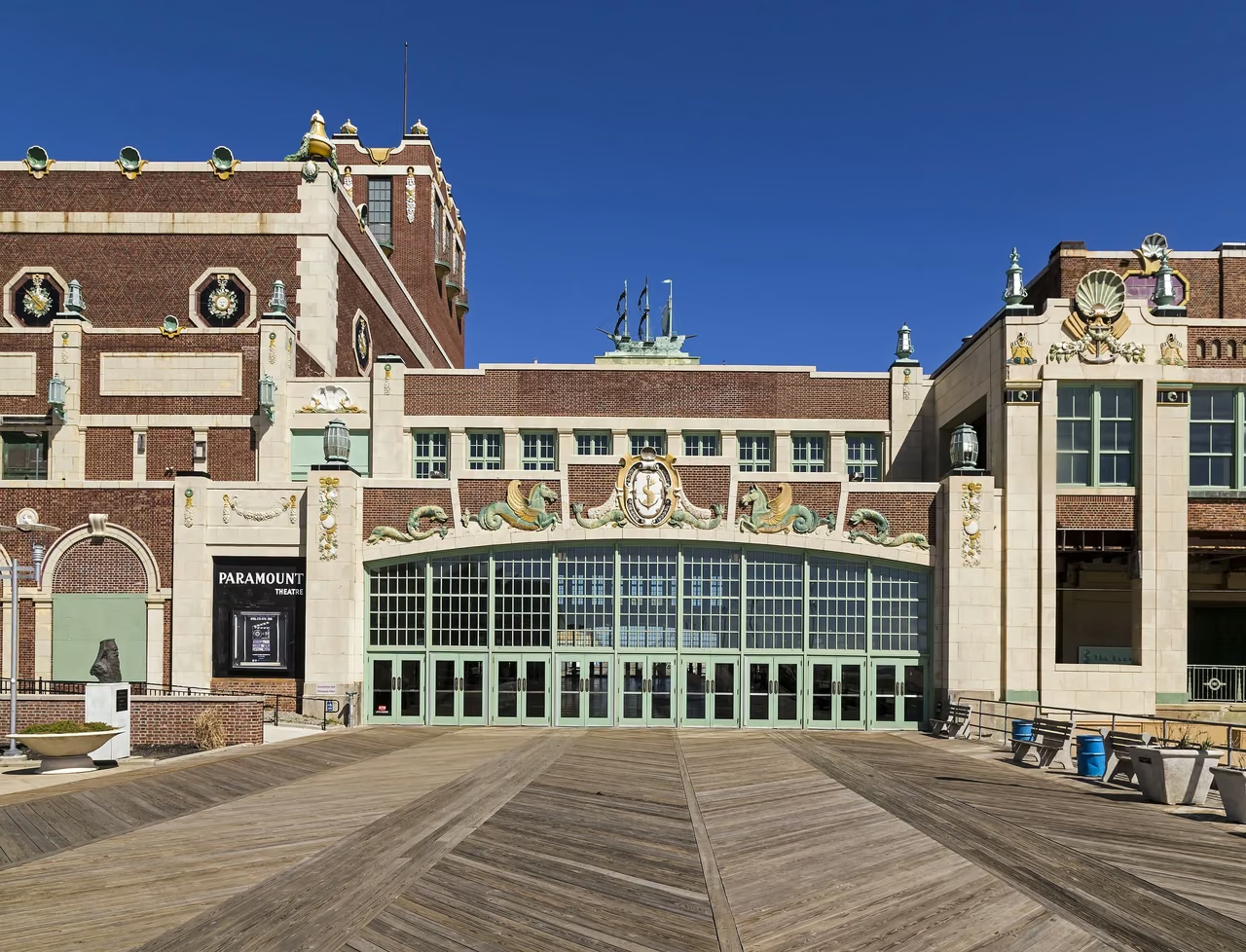
Asbury Park Paramount Theatre and Convention Building
The coast as a place to create.
Springsteen recalls that an postcard from Asbury Park's boardwalk gave him inspiration for the title and cover of his first album. The record takes the seaside city's name to new heights, while also leaving a connection to his hometown.
Offstage, music relies on rehearsals, venues, audiences, and long-standing colleagues. The archives of Monmouth University preserve these materials and use them for teaching and research in American music; programs, letters, and recordings become readable windows into a place's history.
Northeastern city living
Close-knit cities, many ways of life.
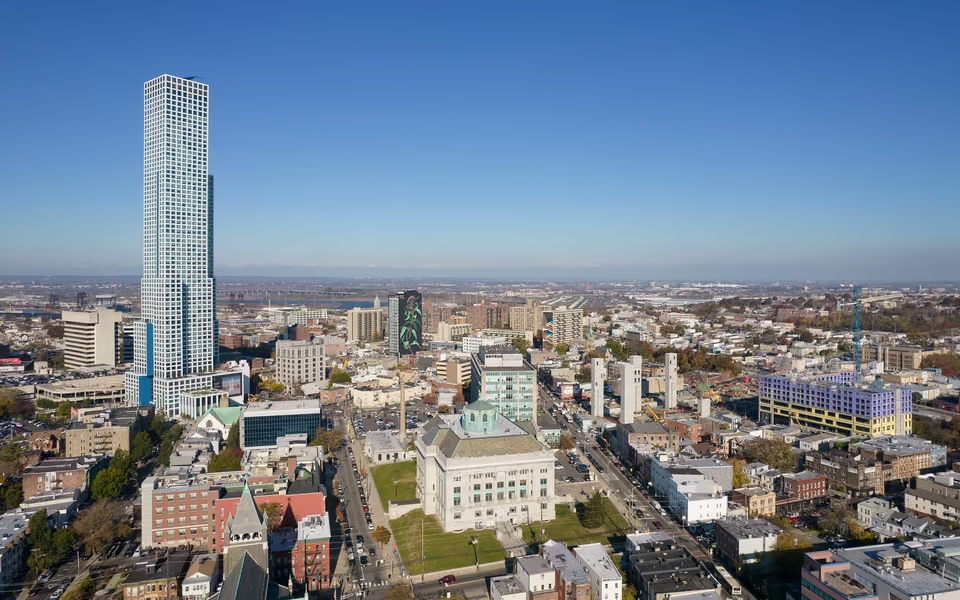
Jersey City · Journal Square and the surrounding city
Jersey City: neighborhoods and a commute across the river.
Subways, office buildings, and storefronts intertwine. To understand it, one must look both to the connections to New York and to the main streets used by residents, along with residential areas and everyday services.
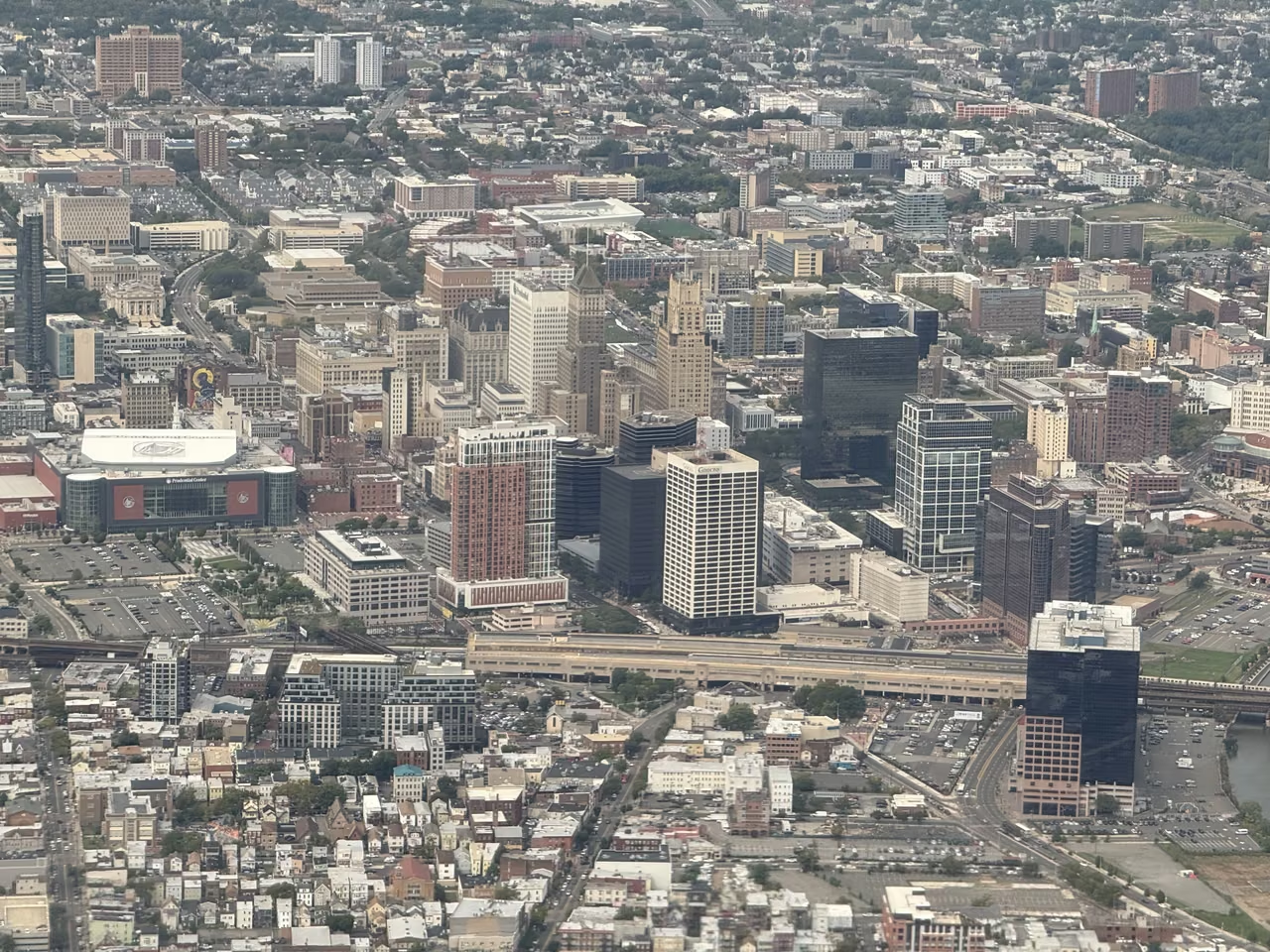
Newark · 2025 City Aerial Photography
Newark: a city beyond the transport hub.
Airports, railroads, and ports keep Newark prominent on travel maps. The city's workplaces, educational institutions, cultural venues, and community activities require closer observation.
Convert distance to actual travel.
New Jersey's markets cannot be understood solely by the mileage on a map. Commuting directions, river crossings, freight routes, and service times can alter the actual population served by a store or a business.
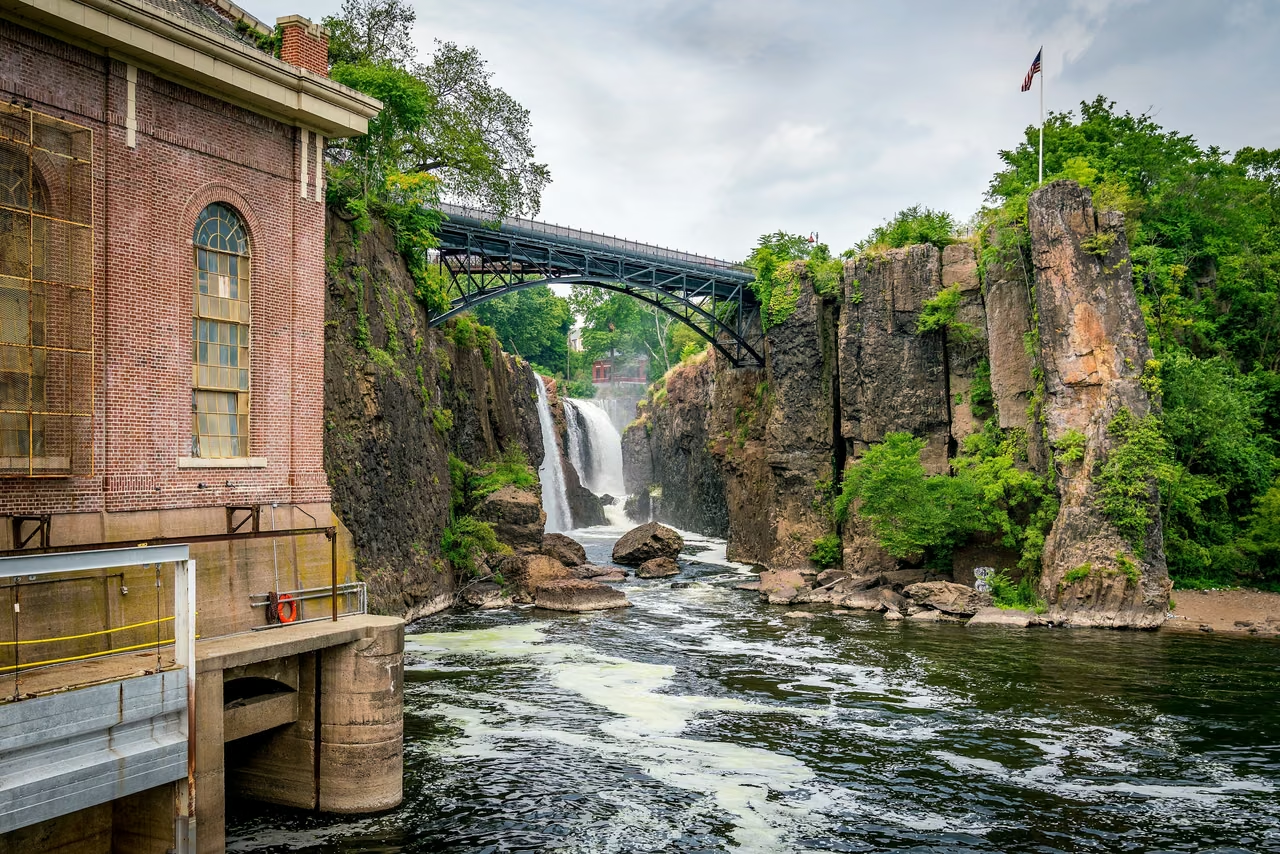
Paterson · Great Falls
A river bend at the beginning of an industrial city.
Paterson Great Falls · Water power in the city
From waterfall to power system.
Paterson’s industrial plan centered on the Great Falls of the Passaic River. Canals and water-power works turned the natural drop into power for production. Textile mills, machinery works and locomotive manufacturing gathered around it, linking the growth of factories and the city.
The river is both a landscape and part of an engineered system. Reading the history of the works means considering water, buildings, transport, and workers together, to see how production entered everyday city life.
The people of the Silk City.
Industrial expansion brought in technology, capital, and migration, but also disputes over hours, wages, and working conditions. The output of machines does not fully explain urban life, and the experiences of worker families and neighborhoods are equally part of Paterson's history.
Today's preserved waterfalls and industrial ruins still provide visible evidence of the spatial relationships. Standing by the water, one sees not just the forces of nature, but a city that once operated on them.
West Orange · Edison's laboratory
Invention takes place in working rooms.
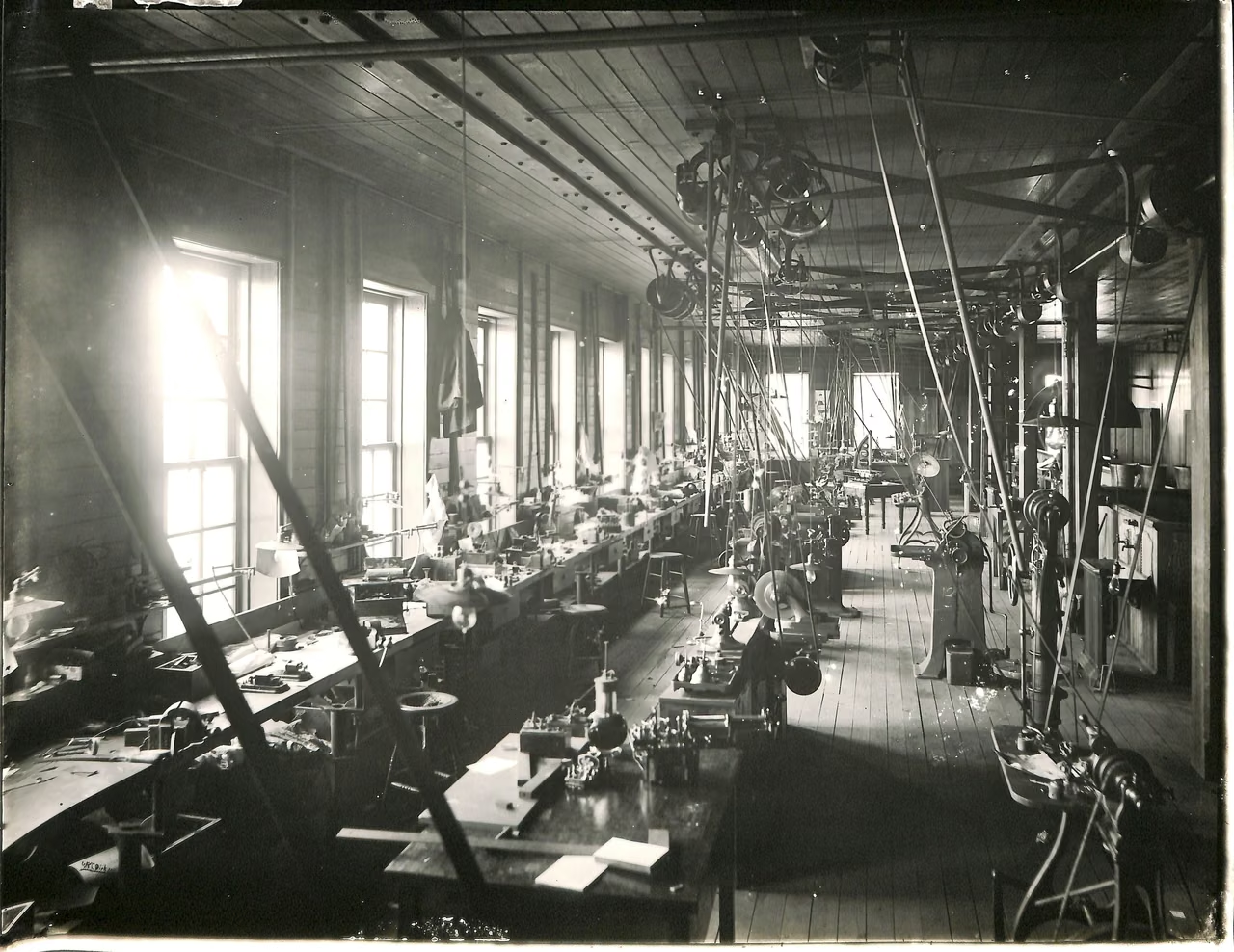
Edison's West Orange laboratory · Historical photograph of the machine shop
Tools, experiments, and the people working together.
The lab preserves more than Edison's personal story. Machines, models, documents, and sound archives also record the processes of research and production, involving assistants, craftsmen, and business partners.
From concept to manufactured product, there is a need for repeated trials, material handling, and collaboration. The development of recording and imaging technologies has also brought laboratory techniques into homes and public entertainment.
This red brick building complex brings "innovation" back to specific work: how a blueprint is modified, a prototype is processed, and a trial is documented.
The work of today · August 2026
Beyond the total, changes in each industry.
4.3596million nonfarm jobs
Preliminary estimates released by the state labor department on September 17 showed that August employment fell by 1,700 jobs from July. The seasonally adjusted unemployment rate was 4.3%. The small overall decline included industries moving in different directions.
+3,400Monthly change in leisure and hospitality jobs
+1,000Building construction monthly job changes
-3,500Monthly change in professional and business services jobs
For hiring, office services, or restaurant operations, the industry of the customer is more explanatory. Job increases do not necessarily mean that every business is expanding; this needs to be considered in conjunction with specific cities and business arrangements.
New Jersey Department of Labor and Workforce Development, September 17, 2026 Employment Report; the August data is preliminary, while the July data has been revised. Job statistics and resident unemployment rates come from different surveys.
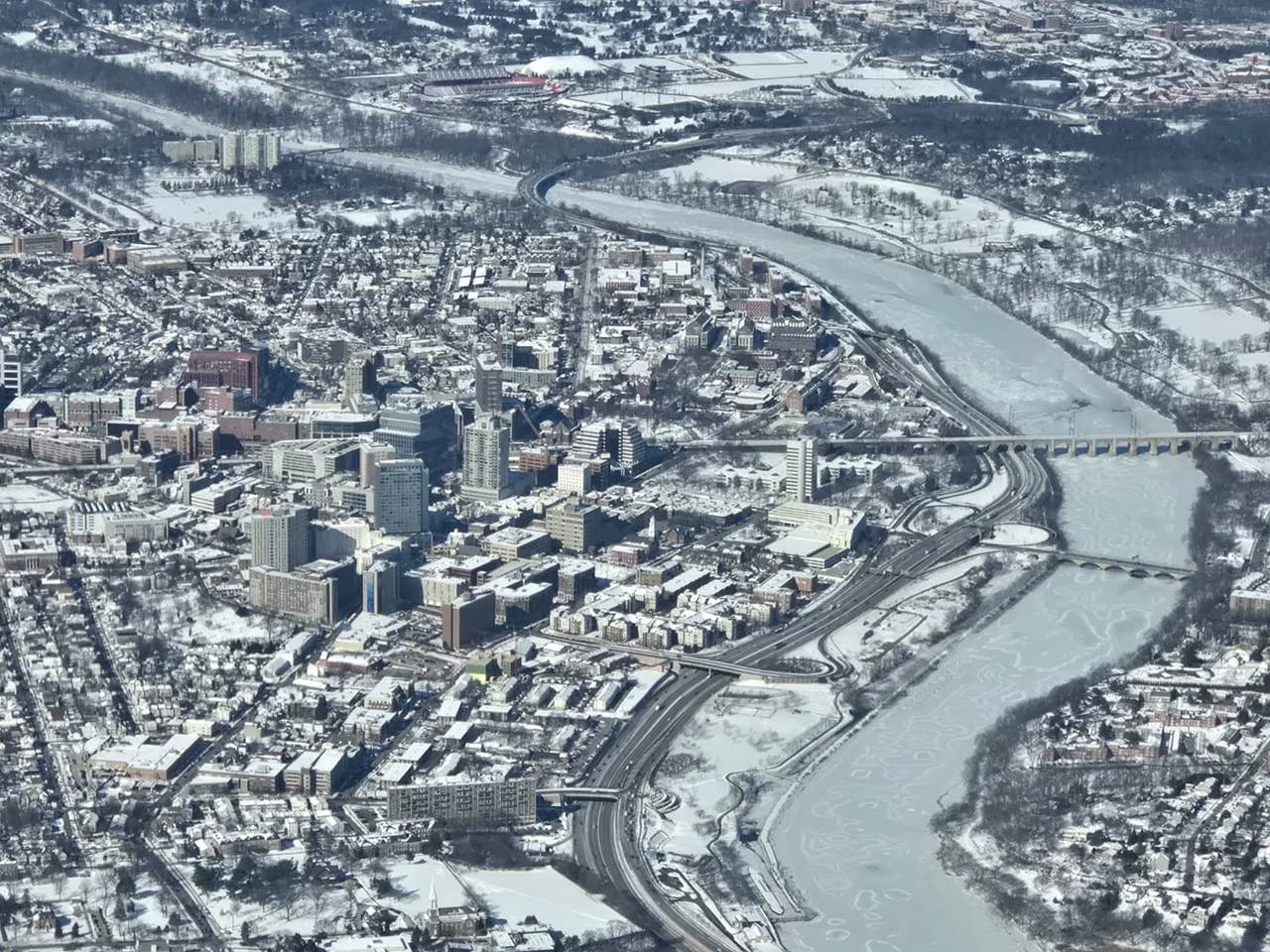
New Brunswick · February 2026 Aerial City Photography
Universities and healthcare sustain city jobs.
New Brunswick's universities, medical facilities, and surrounding services bring education, research, and residents together in one city. State reports show a 22,900 job increase in private education and healthcare compared to the previous year, though there was a decrease of 1,400 jobs in August compared to July; trends and month-to-month changes need to be read separately.
For this clientele, the conditions of the facilities, specialized personnel, and long-term procurement and service qualifications often matter more than just office space. The conditions and operational arrangements for different types of businesses cannot be handled with a one-size-fits-all assumption.
Industries & establishments · 2023
The work that keeps communities running.
Urban commutes, healthcare education, coastal recreation, and transportation warehousing create different employment needs. The following more complete establishment data can be used to understand industry structures and read current monthly job changes alongside.
The state recorded 237,968 employer establishments and 3,945,019 paid employees. A single company may operate several stores, offices, or factories, so establishments are not a count of registered companies.
Health care & social assistance635,422 people
Retail trade465,759 people
Administrative & support services395,891 people
Professional & technical services342,794 people
Accommodation & food services339,307 people
U.S. Census Bureau, 2023 County Business Patterns. The series primarily covers private, nonfarm establishments with paid employees. Employment is measured for the pay period that includes March 12. The 2023 release was the latest in this series available when checked; it is not a measure of current monthly employment.
The Pinelands · Water and land
A quiet forest between the cities.
The Pinelands contain forests, rivers, wetlands, and farms. This has long been an inhabited landscape: Indigenous communities, bog iron works, glassmaking, and later berry cultivation all left their mark.
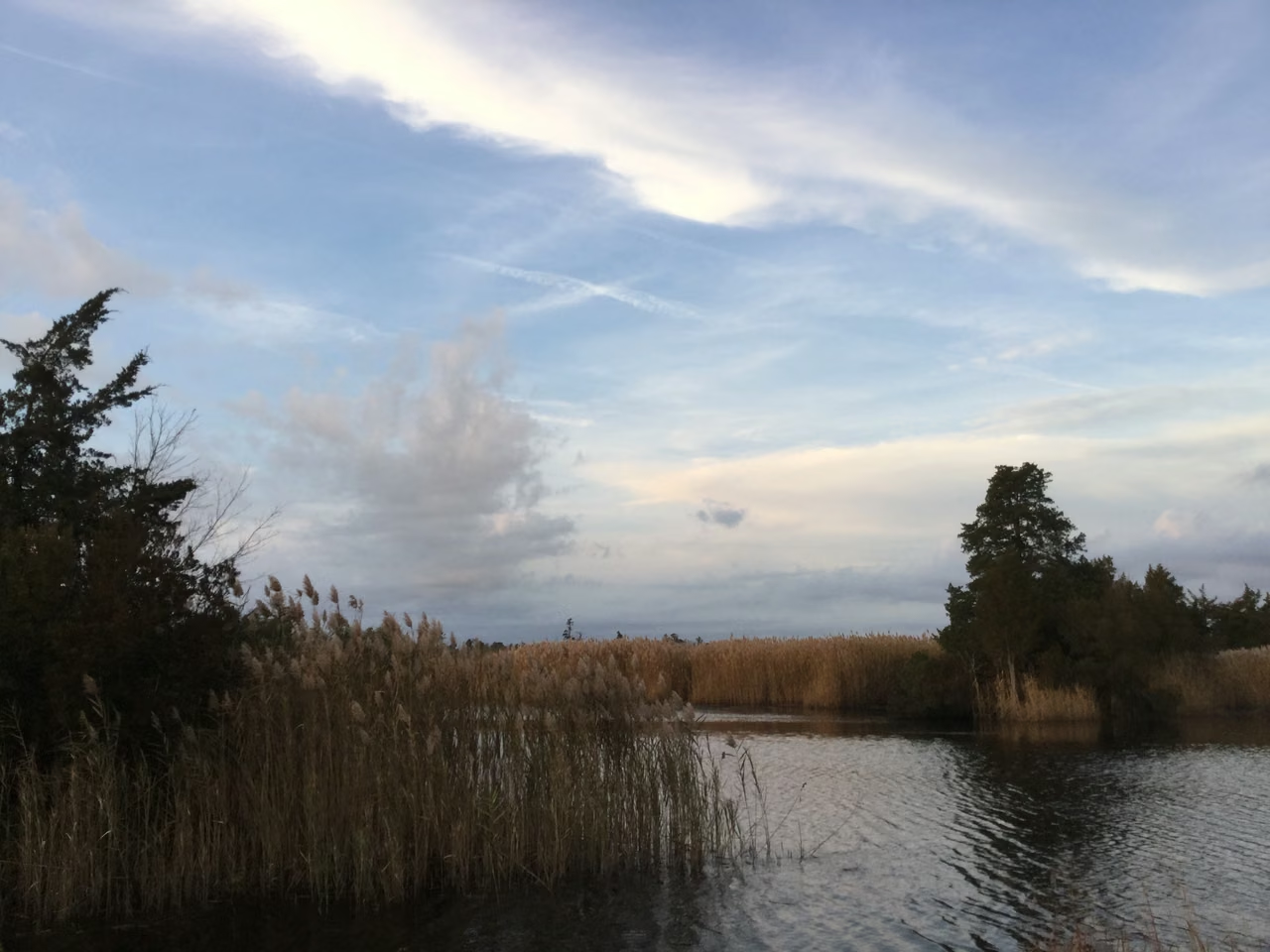
Southern New Jersey · Landing Creek near Gloucester Landing
Water beneath the sand shapes life above it.
Forests, wetlands, and rivers are interconnected. Development, agriculture, and community living all need to consider where water goes, and thus conservation efforts are not just about faraway scenic views but also about everyday land and water resources.
Raw materials become local industries.
Iron mines, wood, and sand suitable for glass-making once supported the region's industry. Railways later changed transportation and settlement patterns, and helped spur the development of berry farming and seaside vacations. Today's forested landscape includes both natural processes and long-term human activities.
Whitesbog · The story of cultivated blueberries
A berry connects farming and science.
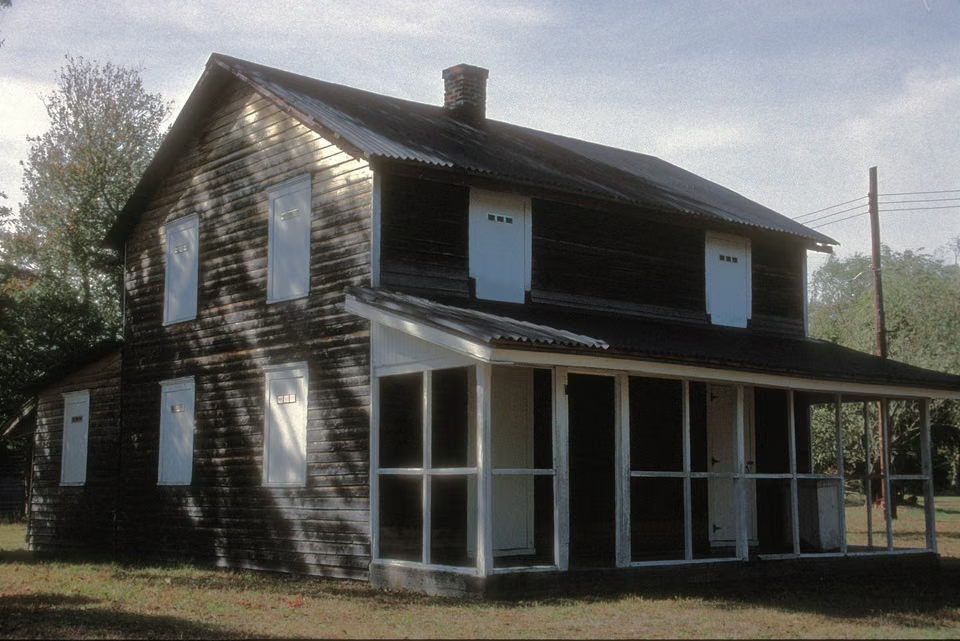
Whitesbog Historic Village · Buildings from an agricultural community
Elizabeth White worked with Frederick Coville of the U.S. Department of Agriculture to select and develop cultivable varieties from wild highbush blueberries. The first commercial crop reached the market in 1916.
The text from Rutgers University specifically mentions that local residents helped in the search for wild plants with excellent shape and flavor. Researchers, growers, and those familiar with the woods were all involved in this process.
Blueberries later became the state fruit of New Jersey, not just for summer tables but also through breeding, soil, harvesting, and sales. Rural architecture and agricultural remnants give this agricultural history identifiable places.
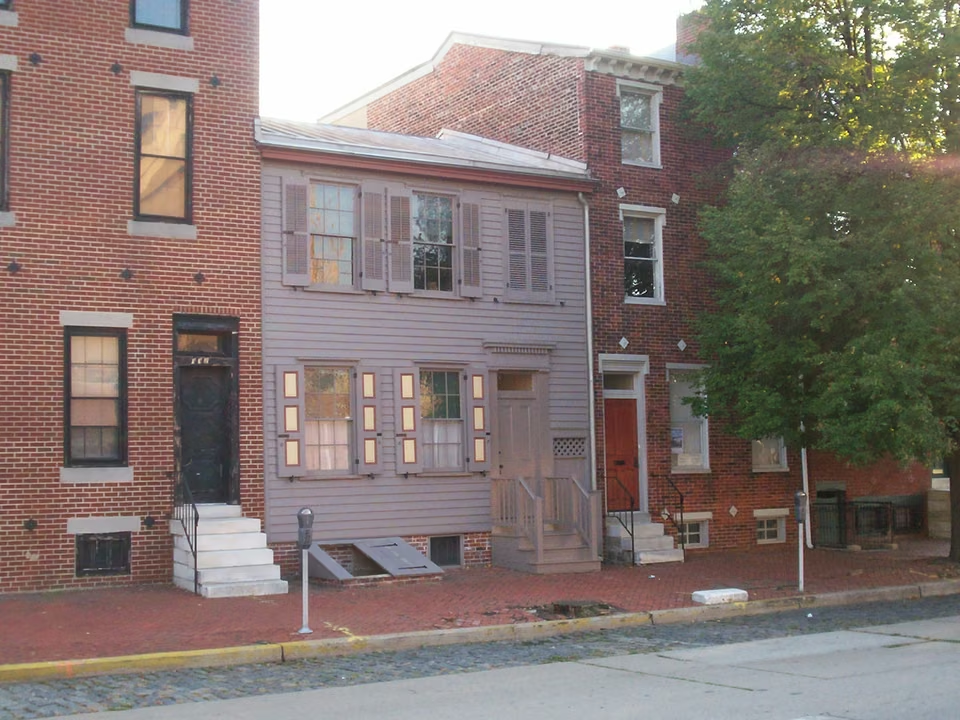
Camden · Walt Whitman House
Along the Delaware River · Literature and home
A poet on an ordinary city street.
Whitman purchased the modest residence of Camden in 1884 and lived there until his death in 1892. There, he continued to revise "Leaves of Grass" and left behind other manuscripts and personal records.
A house consisting of six rooms allows literature to return from book titles to the living environment of its subjects. Restorers restore the architectural and interior details based on historical materials, preserving the scale of life beyond the works.
New Jersey's culture is not just in grand theaters and large institutions, but also in a single house, a street, and a city connected to a river.
Delaware Bay · Migration stopover site
Each spring, the bay welcomes migrating birds.
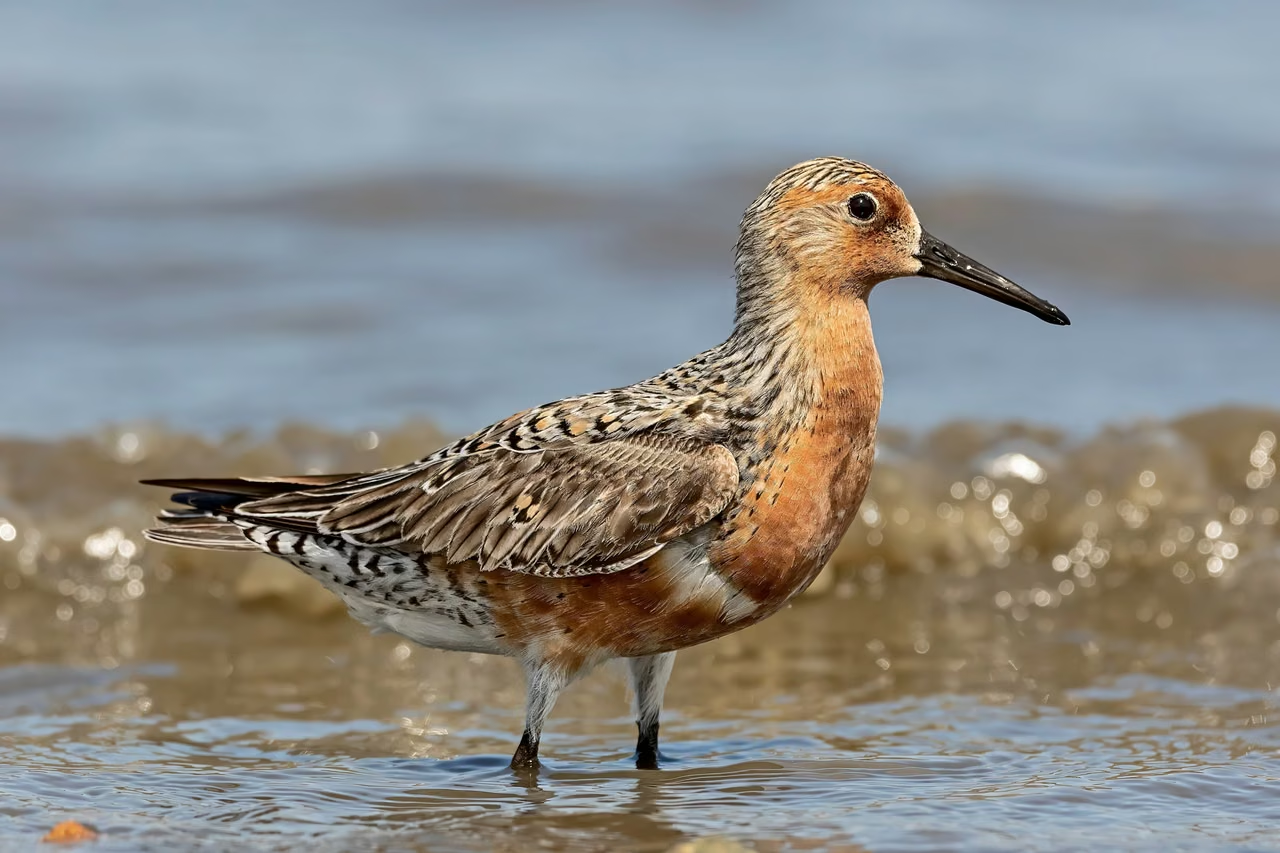
Delaware Bay New Jersey Shore · Red Knot
Tides, horseshoe crab eggs, and long flights.
Red knot stops at Delaware Bay during their northward migration to refuel on horseshoe crab eggs before continuing on to their breeding grounds in the Arctic. Their journey connects the coasts of South America, North America, and the Arctic.
Horseshoe crabs mainly spawn from mid-May to mid-June, with activity influenced by moon phase, high tides, and nighttime conditions. Egg density and beach conditions also affect whether eggs reach the surface where shorebirds can feed.
The state environmental department notes that food supply and habitat disturbance affect the birds' stopovers. Protecting this bay requires an understanding of the marine life, the sandy shores, and human activities.
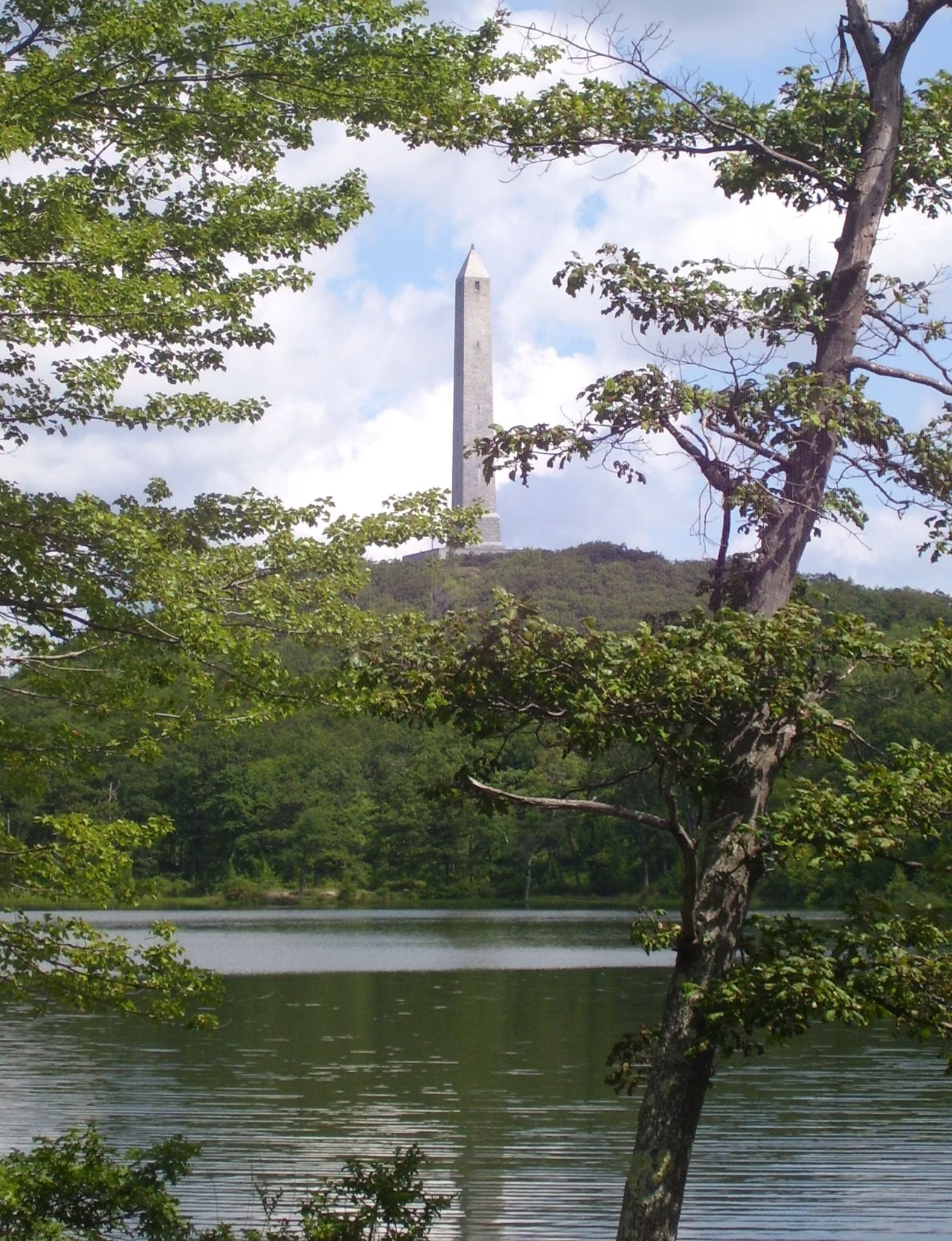
High Point State Park · Lake Marcia and the monument
Northwest, the landscape changes again.
Lake, forest, and ridge add another silhouette to this densely urban state. The variations between coastal areas, pine forests, and northern highlands keep New Jersey's local life in a world of multiple scales.
Business registration and daily operations
Annual reports follow each company’s calendar.
Annual reports for applicable New Jersey businesses are generally due on the last day of the anniversary month of formation or registration. They update information such as the registered agent and address and are separate from income or sales tax filings.
The annual report fee is listed at $75 in the state business guide. Separate permits and registrations for premises, dining, professional services, and other regulated businesses are also required, as completing these does not necessarily mean all operational conditions have been met.
Based on New Jersey’s official business guide, checked in September 2026. Company names, registration status and public documents can be searched within this website.
Violet · State flower illustration
State flower · Violet
Between the streets and the woods, a violet spring.
Violets grow in fields, grassy places and sunny spring corners. They bring the Garden State’s identity close to the ground, joining blueberries, woodlands and the coast in New Jersey’s natural landscape.
STATE.REPORT
An editorial feature by STATE.REPORT. Image creators and licenses are credited below.