


STATE.REPORT
North Carolina feature

From one first flight to countless new ideas

North Carolina

Ideas,
made real.
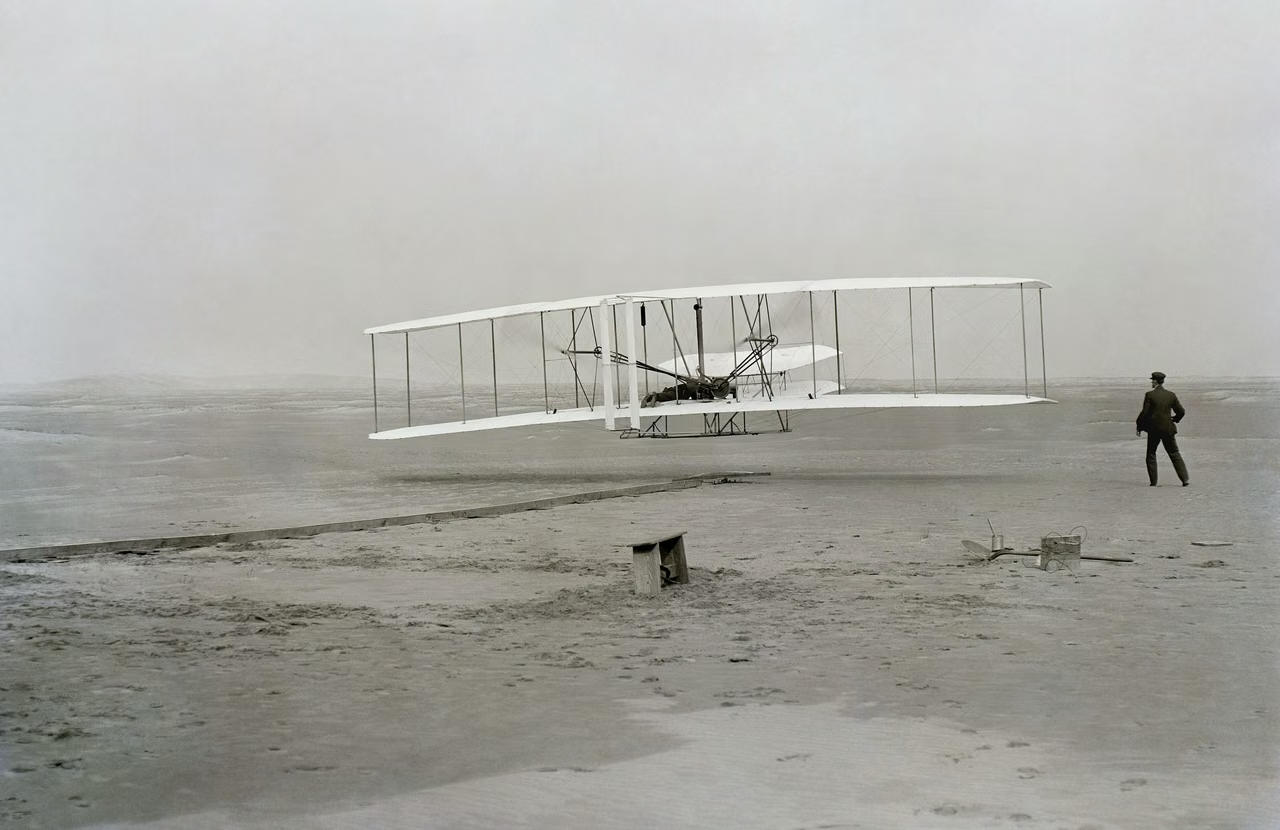
December 17, 1903 · The Wright brothers’ first successful powered flight
1903December 17
Near Kill Devil Hills
State capitalRaleigh
Population · 2025 estimate11,197,968 people

Coastal winds / Urban experiments / Skilled hands

Progress through repeated experiment

Before flight, break the problem down.

The Wright brothers came from Ohio and chose the northern coast of North Carolina for their flight tests. Stable winds, open ground, and a relatively isolated environment provided conditions for gliding and control research.

The success on December 17, 1903 was built upon years of prior trials. All three elements of lift, power, and control needed to be solved; the photograph captures the moment just after lift-off, but it represents a process of calculation, correction, and creation that came before.

The first flight lasted 12 seconds and covered about 120 feet, or 36.6 meters. Unable to buy a suitable lightweight engine, the brothers built one with Charlie Taylor. Wooden propellers and chain drives also adapted existing technologies to a new purpose.

North Carolina deserves a closer look: from the labs of research parks to the workshops where furniture is crafted, and from the hands of potters shaping clay, different techniques and labor are involved. They belong to different industries but all require transforming ideas into usable products.

Observation→Trial→Make.→Improved
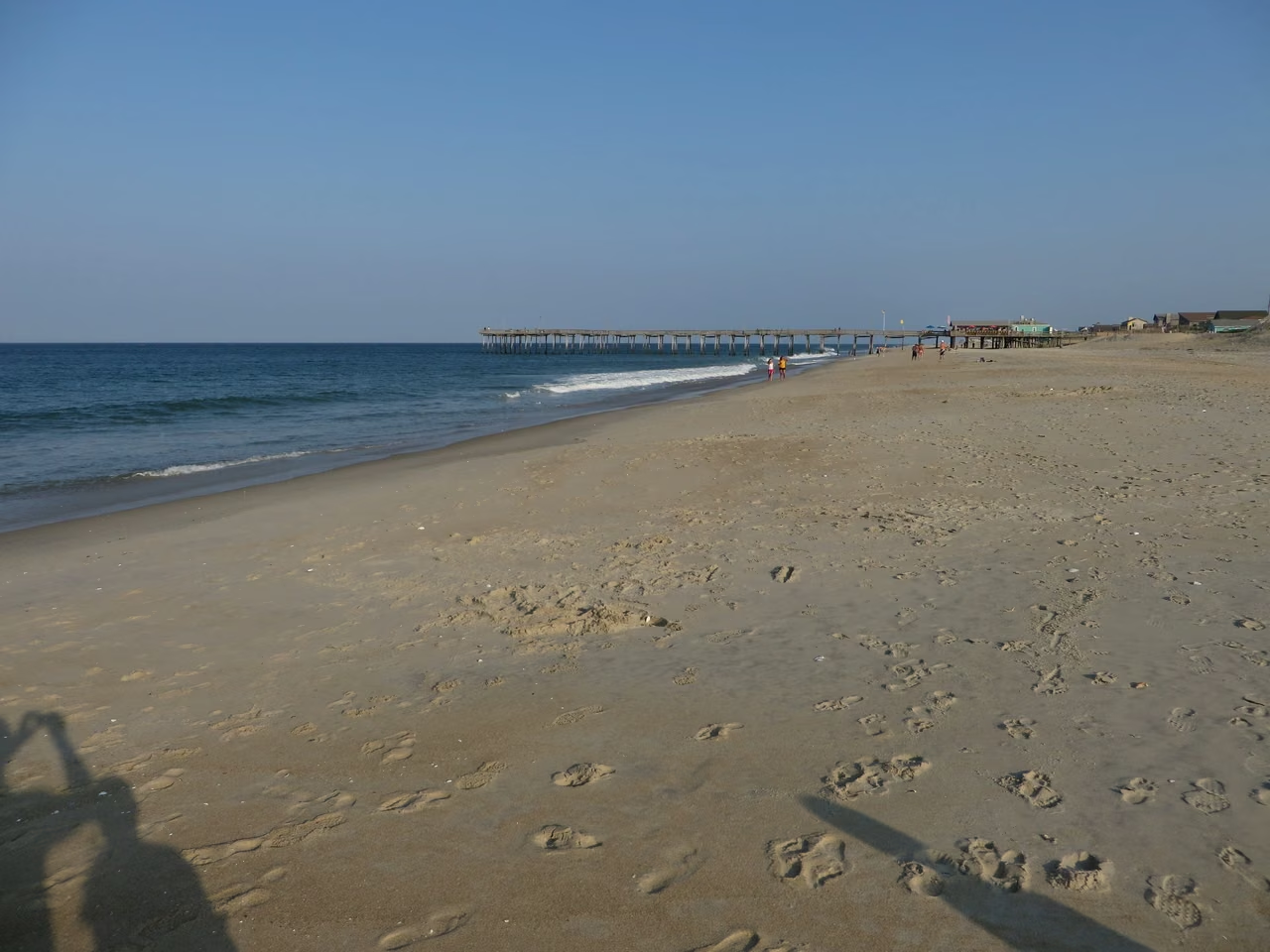
Outer Banks · Atlantic Ocean

A coastline always on the move.

Nags Head Outer Banks Atlantic Coast
Cape Hatteras National Seashore · Lighthouse

The Outer Banks are a chain of narrow barrier islands. Wind, waves and currents move sand, reshaping dunes, beaches and the islands themselves. The coast is not a permanently fixed line on a map.

Lighthouses, roads, and communities are all undergoing this change. Beach accommodations and outdoor services need to consider seasons, traffic, and weather, and also understand the arrangements for managing the protected areas.

From flight tests to coastal living, wind is never just in the background. The beauty of the sea also includes understanding its power.

Blue Ridge Parkway, Green Knob Overlook · North Carolina mountains
West: Appalachian Mountains

The horizon rises, layer by layer.

North Carolina rises westward from the coastal plain through the Piedmont into the Appalachians. Mount Mitchell reaches 6,684 feet, about 2,037 meters, making it the highest peak east of the Mississippi River. Its state park was established in 1915.

Western forests, clouds, and climate create living conditions different from those along the coast. Mountain roads, towns, and outdoor destinations connect each other. Arrangements for operations must be tailored to actual accessibility and seasonal changes.

The views along Blue Ridge Parkway offer a continuous vista of the mountains; however, the overlooks are just the entrance. The surrounding communities, crafts, and everyday services are also parts of mountain life.

Raleigh, Durham, and Chapel Hill

The space between universities becomes a place to collaborate.

North Carolina State UniversityRaleigh
Duke UniversityDurham
University of North Carolina at Chapel HillChapel Hill
Research
With Industry

Founded in 1959 through cooperation among government, industry and universities, Research Triangle Park brought research capacity, skilled people and business development together within one region. It became an important part of North Carolina’s economic transformation.

The park initially attracted research facilities operated by major companies. Contract research and clinical-trial businesses later expanded, bringing university expertise in statistics and analysis into more corporate partnerships. Research reaches practical use through professional services and long-term collaboration as well as new companies.

The universities, the research park and the three cities are distinct places. Businesses may operate inside the park or in surrounding cities. Research, production, clinical services and everyday commerce each require different premises and staffing.

On June 29, 2026, the park announced approval of new development standards allowing more mixed-use development and limited residential options. This change to the land-use framework opens possibilities for combining work and everyday life; it does not mean that construction has been completed.

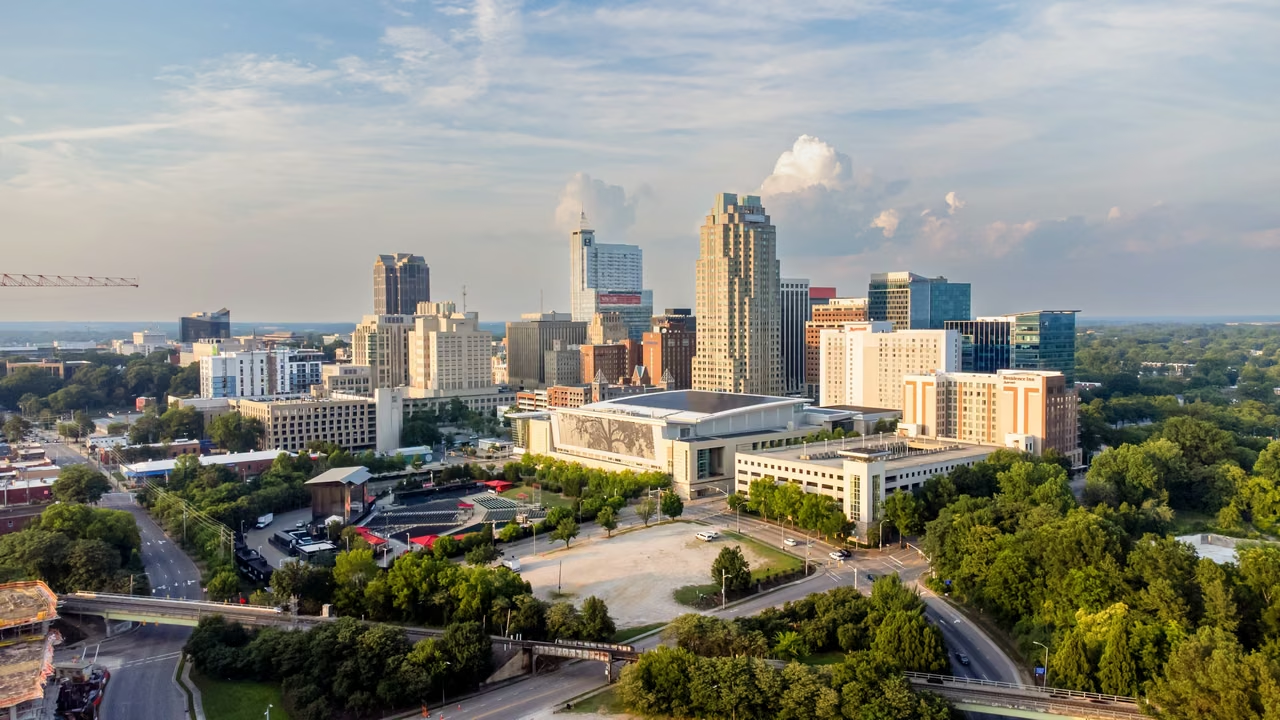
Raleigh skyline · North Carolina state capital

Raleigh: a capital within a wider region.

Government, universities, and professional services bring different daily needs. The connections between commutes, residences, schools, and commercial areas determine how research talent interacts with how local residents use the city.

Charlotte
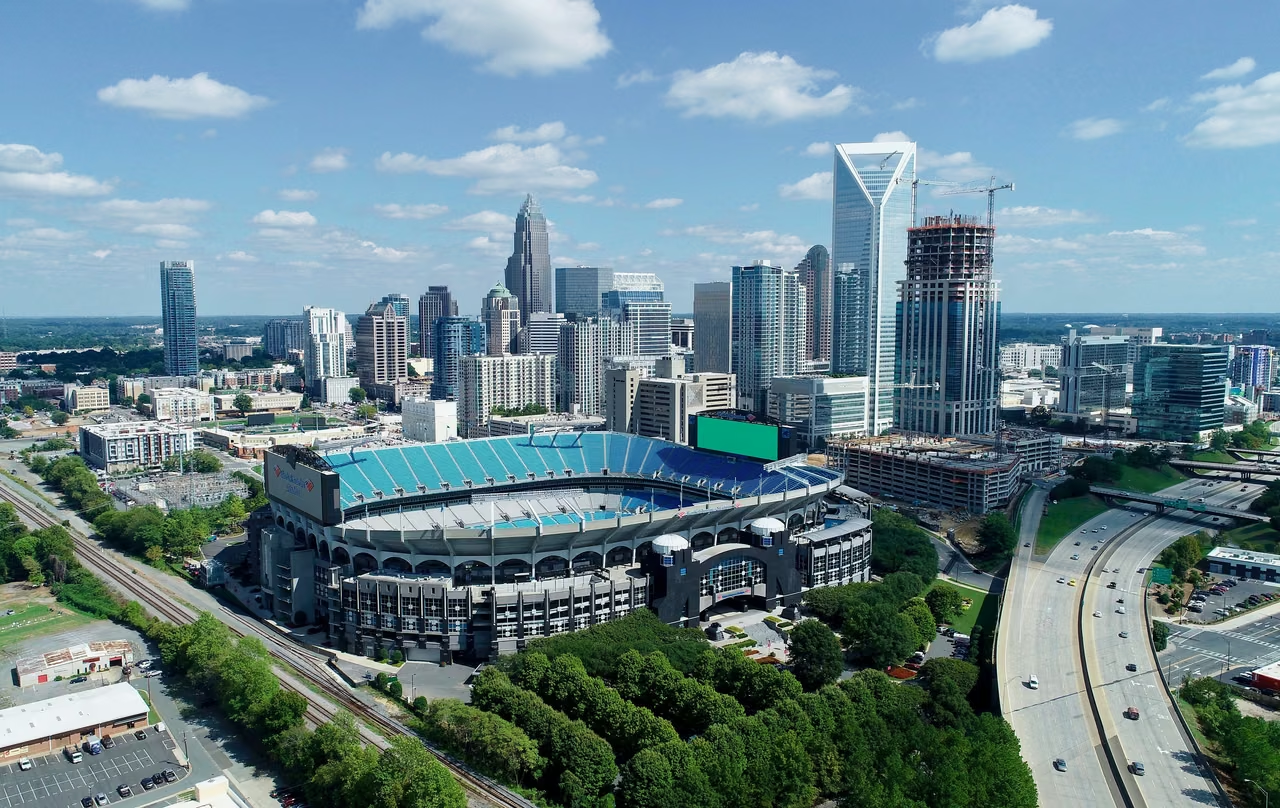
Charlotte City Center · Aerial Shot in 2018

Different kinds of work beneath the skyline.

Charlotte and Research Triangle Park have different urban centers. A dense network of financial and professional services, corporate offices, and urban businesses coalesce.

High-rises can show the scale of the central city area, but they cannot replace an assessment of the actual market. Service companies should look at their clients' location and team commutes, while retailers and restaurants need to further compare specific neighborhoods, traffic times, and surrounding living areas.

The city center brings together offices, sports and leisure. Demand on a weekday differs from demand during a major event. Local businesses plan their services around neighboring buildings, public transport and the hours when customers actually arrive.

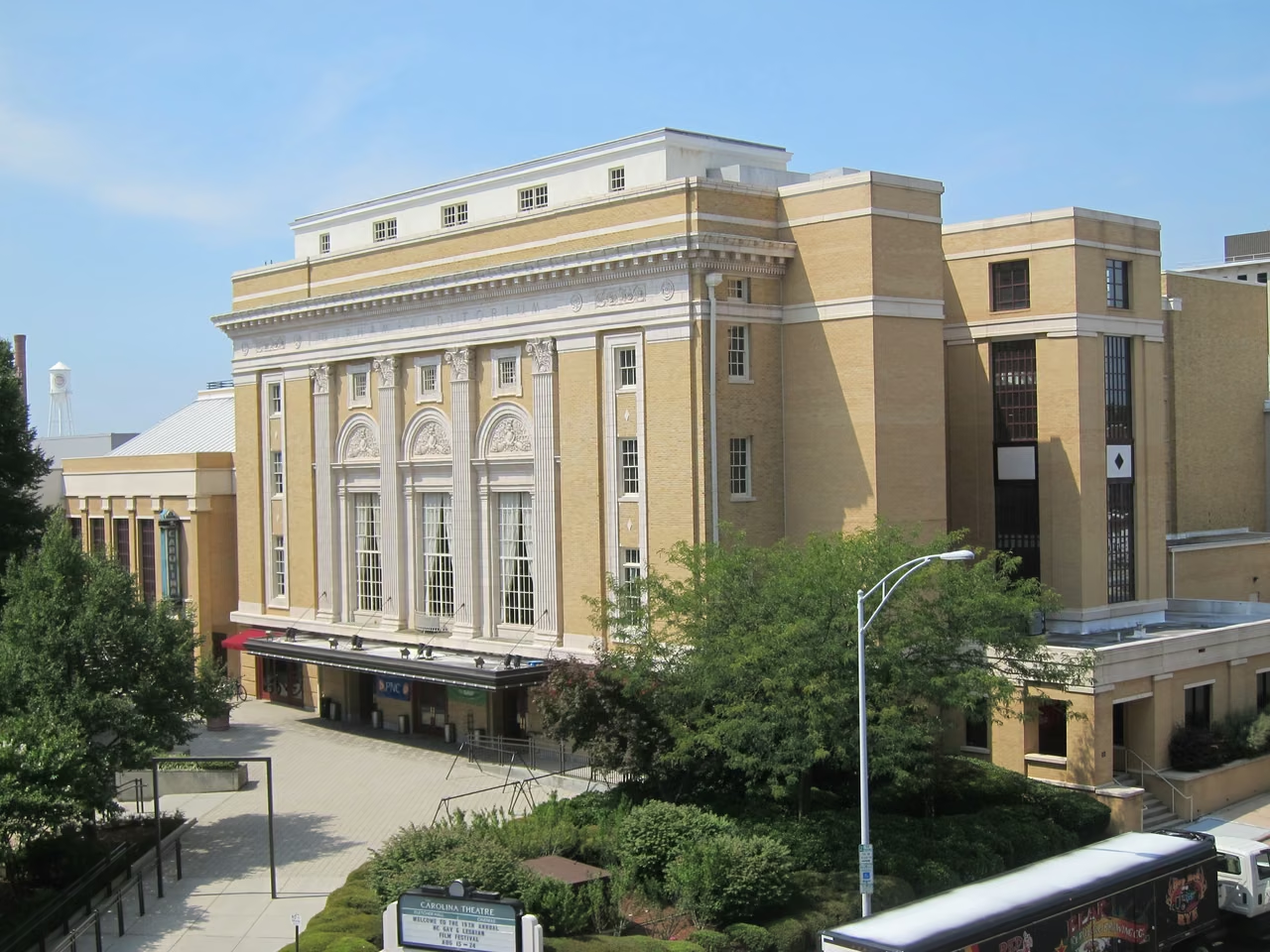
Durham · Carolina Theatre

A theater preserves more than applause.

Durham · Carolina Theatre Building

The theater opened in 1926 and has long been a part of Durham's cultural life. Films and performances brought crowds to the downtown area at different times, making the building a shared memory.

Its history also includes racial segregation: black audiences were once restricted to designated sections. Protests surrounding the theater and calls for change remind us that public cultural spaces are not inherently open to everyone equally.

Today's theater actively displays this history. To understand city culture, one can appreciate both the stage and architecture, and also recognize who was excluded and who drove change.

Hand and Material | North Carolina Traditions

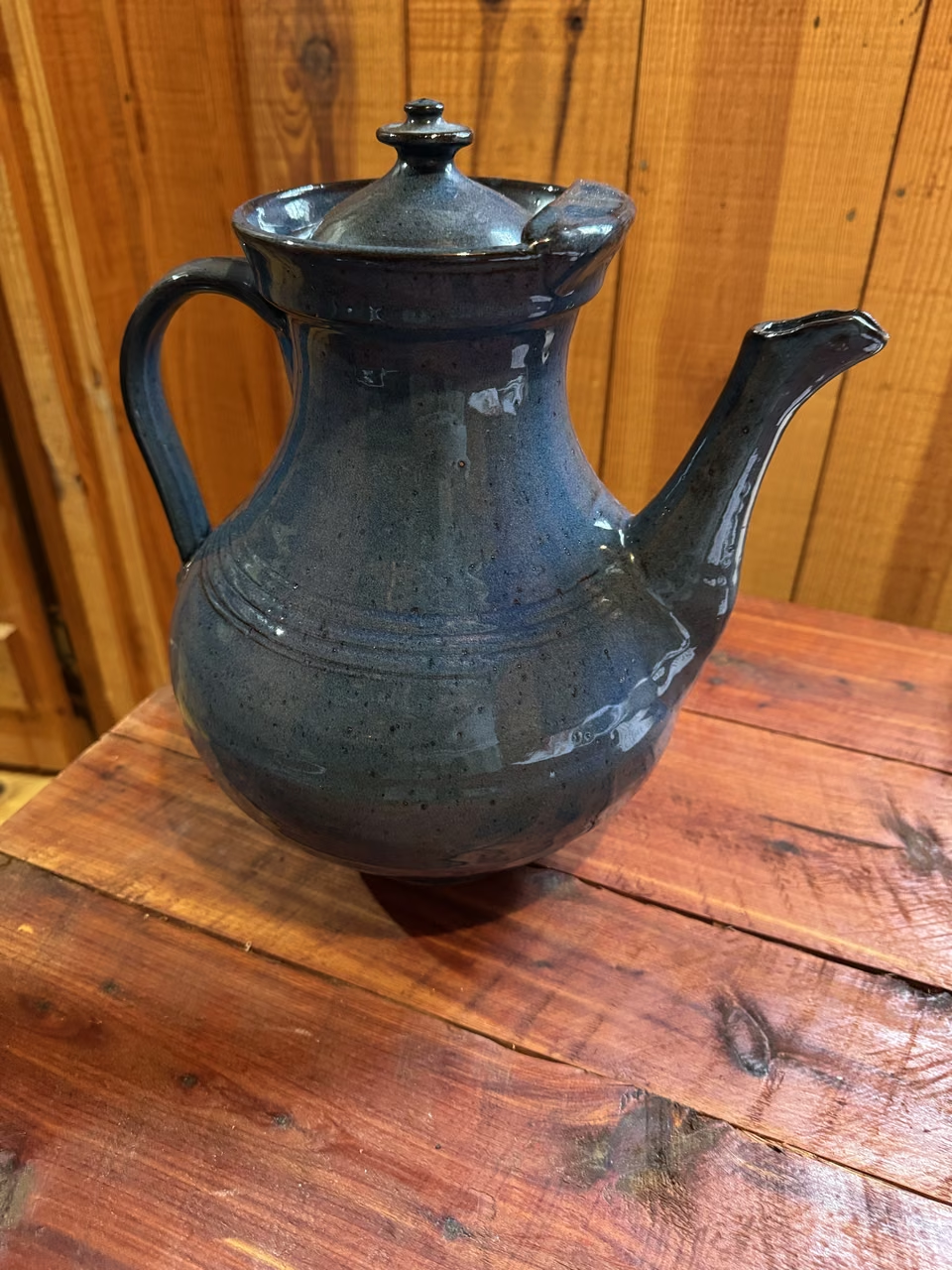
A chair and a teapot can tell a local history.

Seagrove Pottery · Owens Teapot
From Materials to Everyday ItemsClay
Firing
Texture

Seagrove: keeping a craft alive

The local pottery tradition is connected to soil, family workshops, and learning networks. The North Carolina Pottery Center brings making experiences to new audiences through exhibitions and education, and also helps local students recognize their home's craft.

Since 2005, the center has been involved in traditional arts education, connecting Seagrove Elementary School students and families with the soil beneath their feet. Passing down skills is not just about collecting old works; it also requires giving a new generation the opportunity to engage with materials, understand the creators, and try it themselves.

Pottery can be an everyday object, an artwork, or the basis of a small business. Its value lies in materials, design, and making, beyond the label of souvenir.
High Point: the work behind the furniture

The city's museum showcases the historical relationship between the furniture industry and its residents, highlighting the various labor and collaboration required from design through production, exhibition, and sales. Furniture production and sales create specialized occupational and commercial connections tied to the product.

For manufacturing companies, the factory, equipment, suppliers, and logistics are important; for branding and showcasing the business, samples, channels, and buyer relationships are equally crucial. Behind the same product, different business approaches can exist.

Current Employment · August 2026

Beyond research, a substantial manufacturing economy.

5.1284million nonfarm jobs statewide
450thousand manufacturing jobs
3.5%Statewide unemployment rate

The Bureau of Labor Statistics reported preliminary data with seasonal adjustment on September 18, showing a 65,600 increase in nonfarm jobs statewide compared to the same period last year. Manufacturing jobs are a part of this, but they cannot be added to the total for the entire state.

Research, production, and services all operate simultaneously provide an important backdrop to understanding the North Carolina business environment. When choosing a location to actually operate in, one should consider professional talent, production facilities, transportation, and specific clients separately, rather than relying solely on a city's reputation to make industry-based judgments.

Industries & establishments · 2023

The work that keeps communities running.

The annual establishments data supplement showcases the distribution of healthcare, retail, manufacturing, and professional services. Research parks, furniture industries, and beach tourism economies each have their own characteristics, and full-state data needs to be read in conjunction with specific local conditions.

The state recorded 258,169 employer establishments and 4,279,425 paid employees. A single company may operate several stores, offices, or factories, so establishments are not a count of registered companies.

Health care & social assistance641,503 people

Retail trade535,341 people

Accommodation & food services477,208 people

Manufacturing472,162 people

Professional & technical services316,460 people

U.S. Census Bureau, 2023 County Business Patterns. The series primarily covers private, nonfarm establishments with paid employees. Employment is measured for the pay period that includes March 12. The 2023 release was the latest in this series available when checked; it is not a measure of current monthly employment.

Business report: Bureau of Labor Statistics September 18, 2026 state employment report; Research Triangle Foundation June 29, 2026 standard development announcement. Monthly employment figures are preliminary estimates that may be revised.

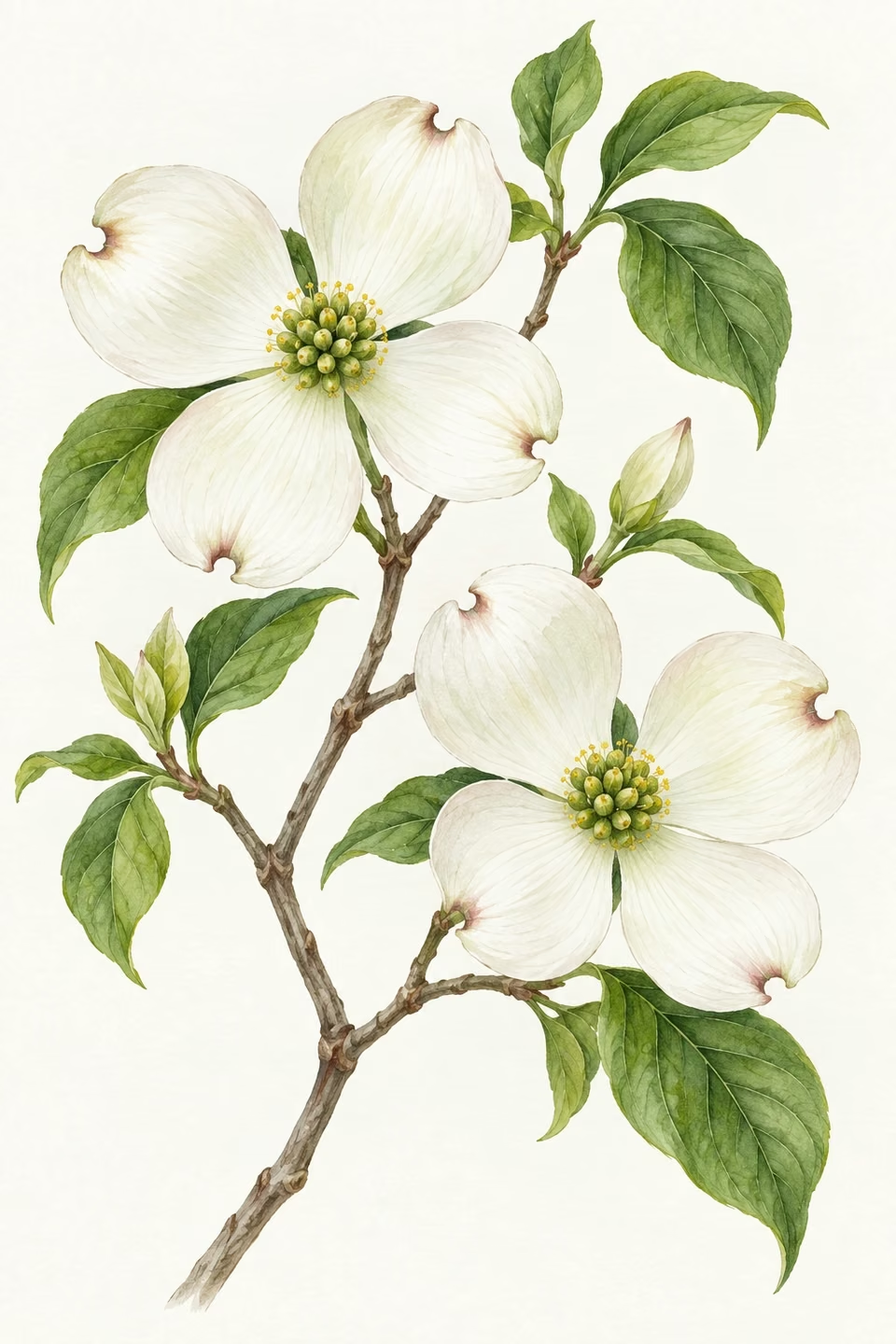
State flower · Flowering dogwood

A page of spring.

Flowering dogwood · State flower illustration

In 1941, North Carolina chose the dogwood as the state flower. Its sprawling branches and bright flower clusters make for a fine plant illustration. The sea breeze, mountain views, city life, and workshop techniques coexist here; each worth exploring.

STATE.REPORT

An editorial feature by STATE.REPORT. Image creators and licenses are credited below.

Sources & further reading

Population estimates ↗

U.S. Census Bureau: state population estimates for July 1, 2025.

Flight in 1903

National Park Service: Wright Flyer, Test Site, and First Flight Site.

The path to the first flight.

National Park Service: Gliding tests, wind tunnels, and control research.

Changing barrier islands

National Park Service: Wind Waves, Sand Migration, and Coastal Topography.

Mitchell Mountain

North Carolina State Parks: Elevation, Mountain Forests, and Park History.

The origins of Research Triangle Park

Research Triangle Foundation: The history of cooperation among universities, industry, and the park.

Furniture and High Point ↗

High Point Museum: The furniture industry and local residents.

Seagrove Pottery Heritage

North Carolina Pottery Center: Regional Pottery and Youth Education.

The art of ceramics in contemporary life

Smithsonian Center for Folklife and Cultural Heritage: pottery practice and tradition in Seagrove.

Durham Theater History

Carolina Theatre: Opened in 1926 and a reflection of the city's culture.

Theaters and Equal Rights ↗

Carolina Theatre: segregation, protest and change.

Selection of State Flowers

North Carolina Department of Natural and Cultural Resources: the flowering dogwood’s selection in 1941.

Image credits & licenses

Verify your email

We will email you a six-digit code to sign in.

By continuing, you agree to the Terms and acknowledge the Privacy Policy.

Search history

Your searches from the last 30 days. Viewing this list does not use searches. Full company reports are not saved here.