From a red barn to tallgrass prairie, from contemporary Native voices to Tulsa’s urban memories, the road connects places. What makes them worth a stop is how people live in them, preserve them, and come to see them anew.
2026 · Route 66 centennial
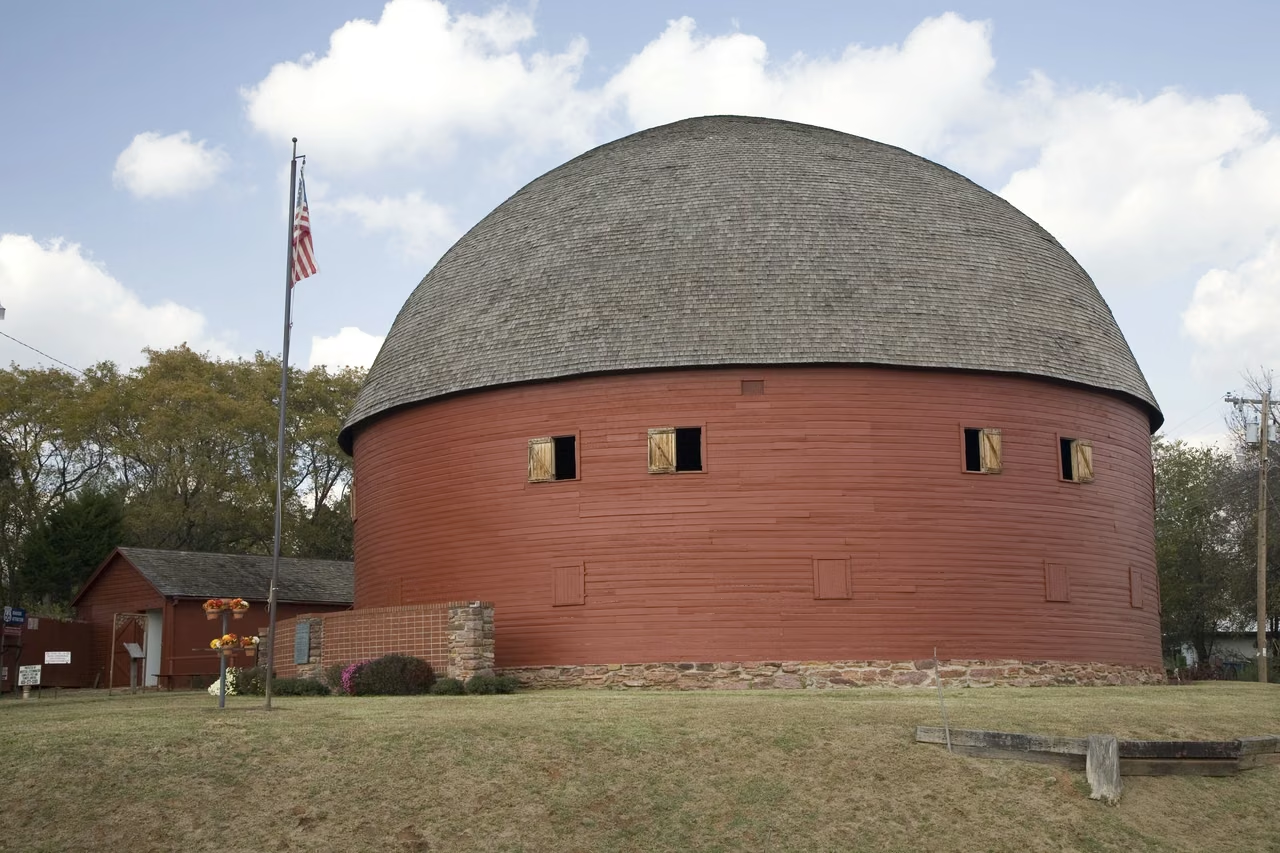
Stop for a moment. Listen to a barn’s story.
Arcadia's Round Barn was built in 1898. Soaked and bent oak formed its unusual structure. It sheltered grain, hay, and livestock and soon became a place for neighbors to dance and gather.
In the 1920s, Highway 66 passed through here, and the barn became a landmark for travelers. Later, the building fell into disrepair and the roof collapsed. Volunteers then restored it, and it reopened to the public in 1992.
A roadside attraction can survive beyond its reputation thanks to community organizing, repair skills, and people willing to invest their time.
Indigenous cultures · In their own voices
A history still written in the present tense.
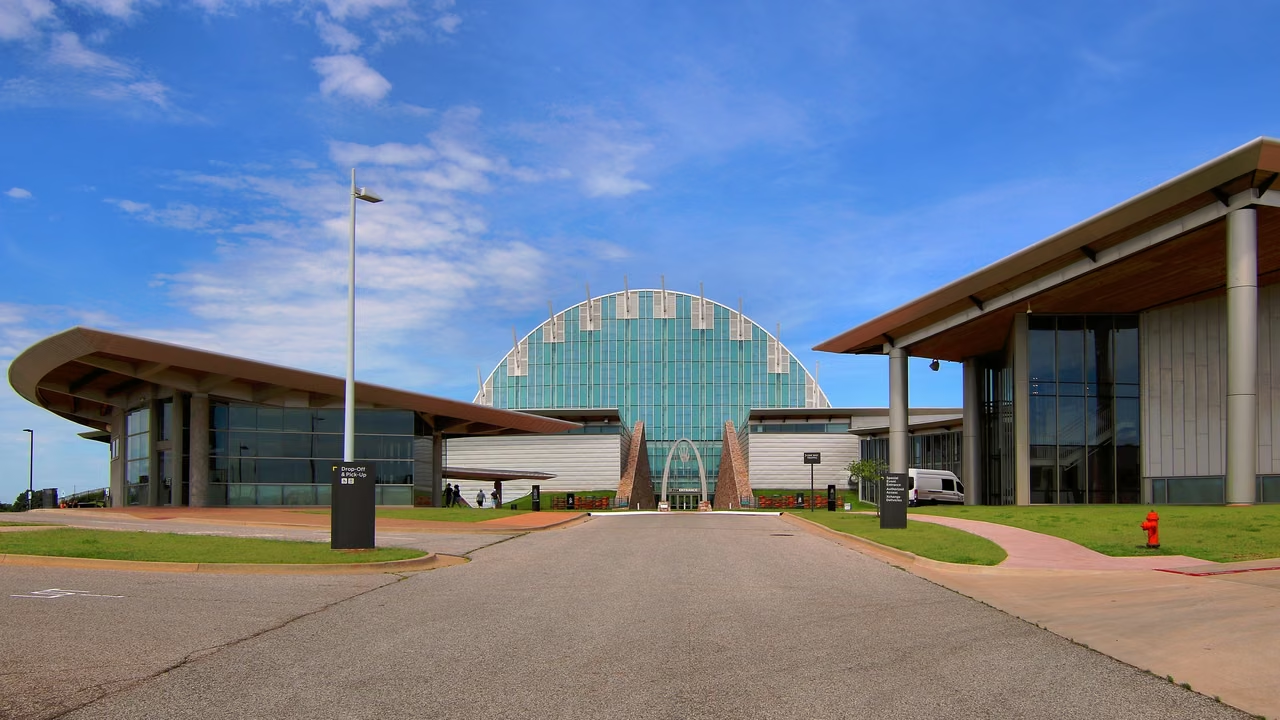
Oklahoma City · First Americans Museum grounds
39
Different nations. Different stories.
The First Americans Museum’s exhibitions and educational programs focus on the 39 tribal nations in Oklahoma today. Their languages, cultures and migration histories differ; no single image can represent every community.
Objects and the people who hold them.
Clothing, tools, and art are not just appearances. The materials, methods of creation, and contexts of use need to be considered in conjunction with the knowledge of the cultural community. Museums link historical objects with the knowledge of their cultural custodians.
Contemporary artists, athletes, and community members are equally represented. Indigenous cultures are not chapters that have already ended.
Another way of listening along the road.
Understanding a place also means listening to the communities who call it home. Tribal institutions, museums and cultural practitioners offer accounts of the connections between land, family and contemporary life.
This recognition also makes the plains and cities no longer just background along the way.
Grasslands · Where the wind blows
A vast prairie, sustained by intricate lives.
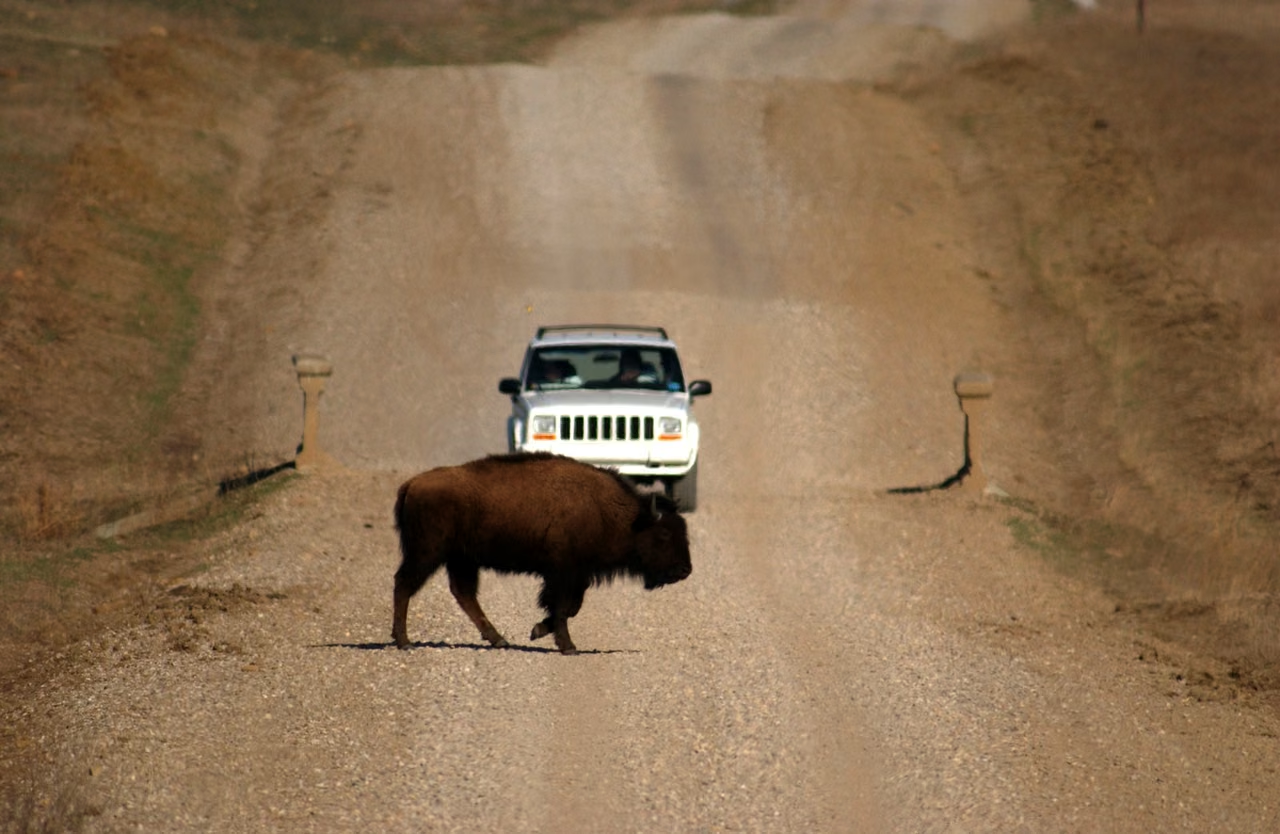
Tallgrass Prairie Preserve · Bison on the road
Near Pawhuska, The Nature Conservancy restores and manages the Tallgrass Prairie Preserve. Bison grazing and prescribed fire shape the grassland, creating a changing mosaic of habitats across the same landscape.
Pasture is not solely maintained by being "treeless." The relationships between soil, fire, precipitation, and large herbivores determine how plant communities and other wildlife can live.
Seen from a passing car, the rolling grasslands may look still and quiet. Conservation, however, requires sustained observation and management. Bison remain wild animals: keep your distance, and never treat a roadside encounter as an invitation to approach.
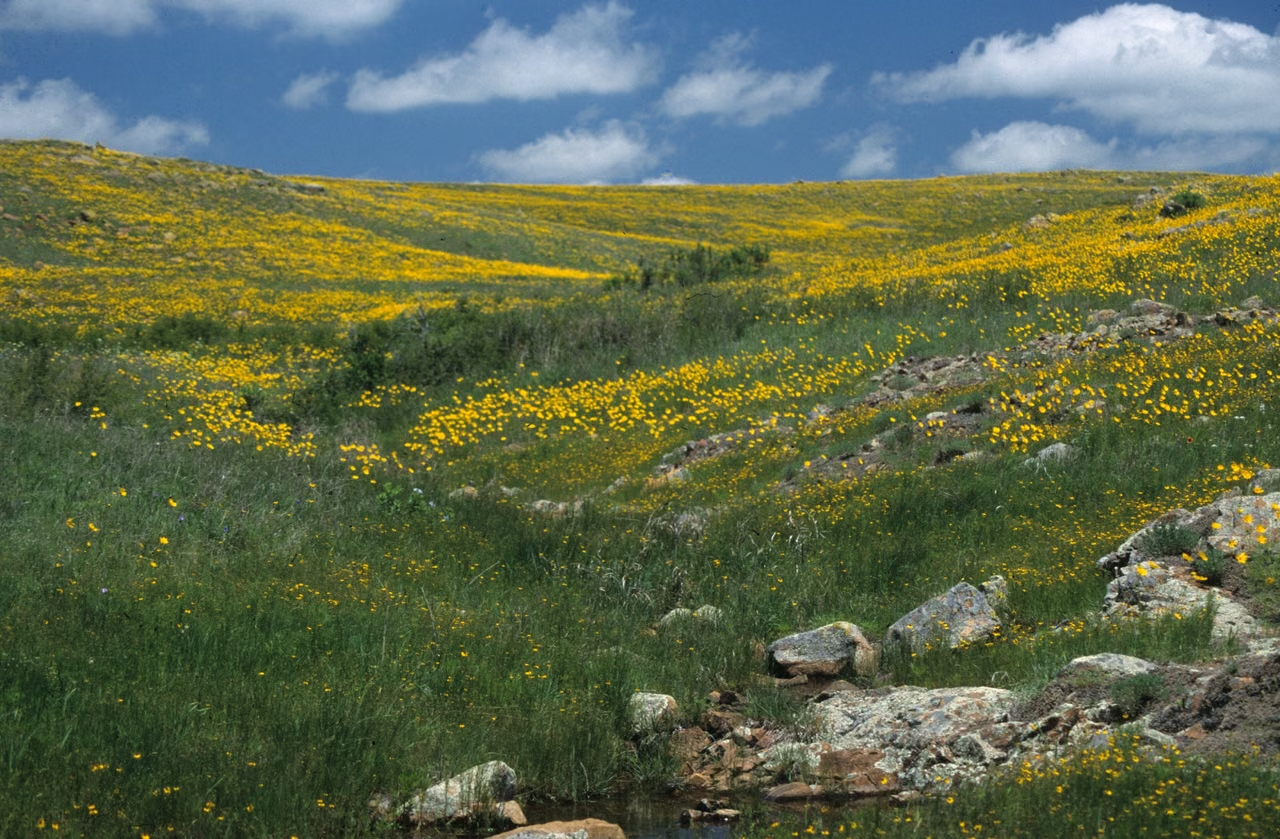
Wichita Mountains Wildlife Refuge · Spring wildflowers
Ancient rock in the southwestern mountains.
Granite peaks rise abruptly from the plains in the Wichita Mountains. The refuge preserves a meeting of grassland, rocky slopes and woodland, as well as a history of bison restoration: the animals were reintroduced here in 1907.
Low-lying hills and lakes, along with various flowers, create another Oklahoma. It reminds people that the state's natural landscape is more diverse than a flat horizon on the highway.
Tulsa · Different Perspectives of a City
Look up at the buildings. Return to the street.
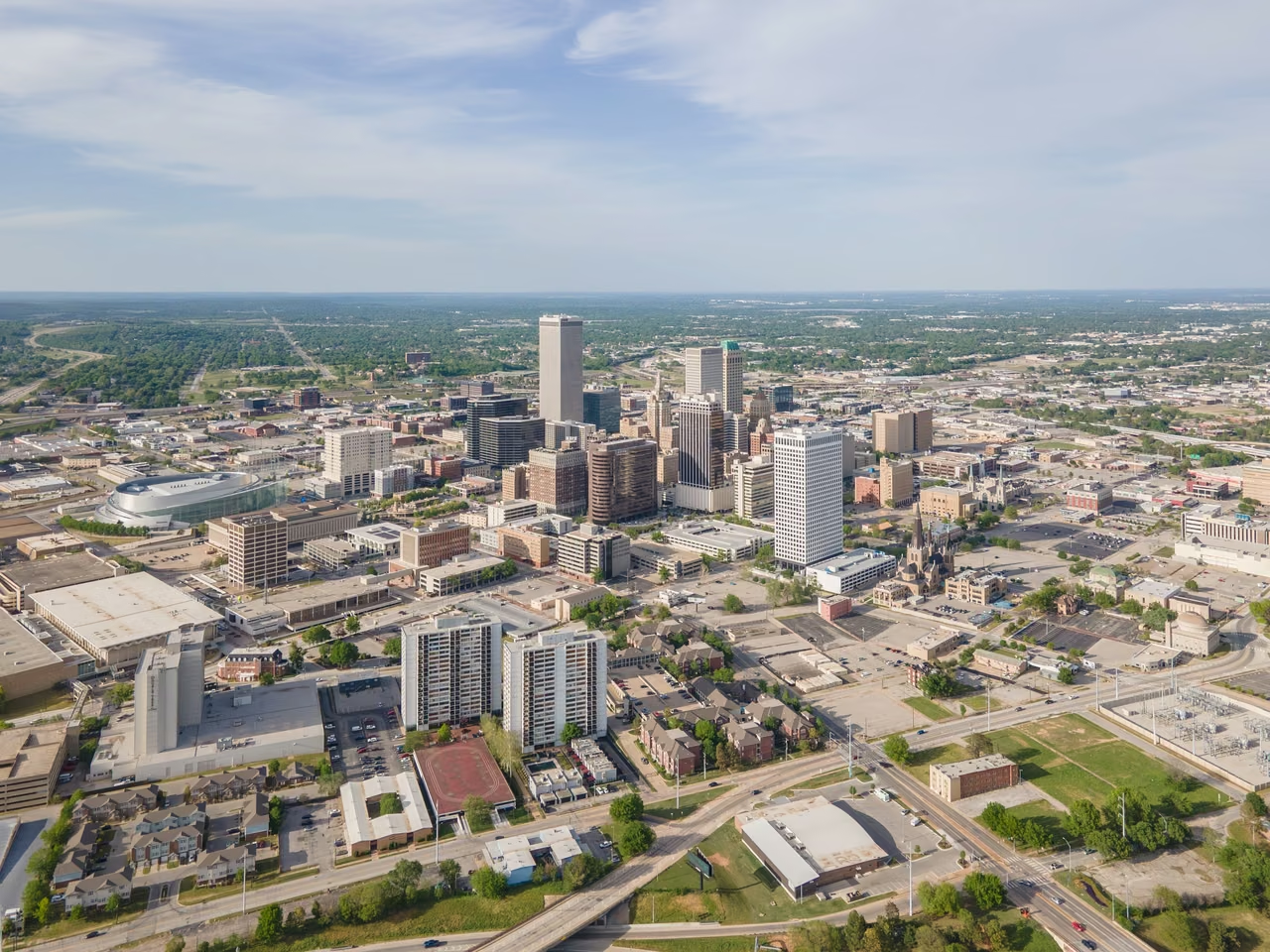
Tulsa City Center · City Aerial Shot
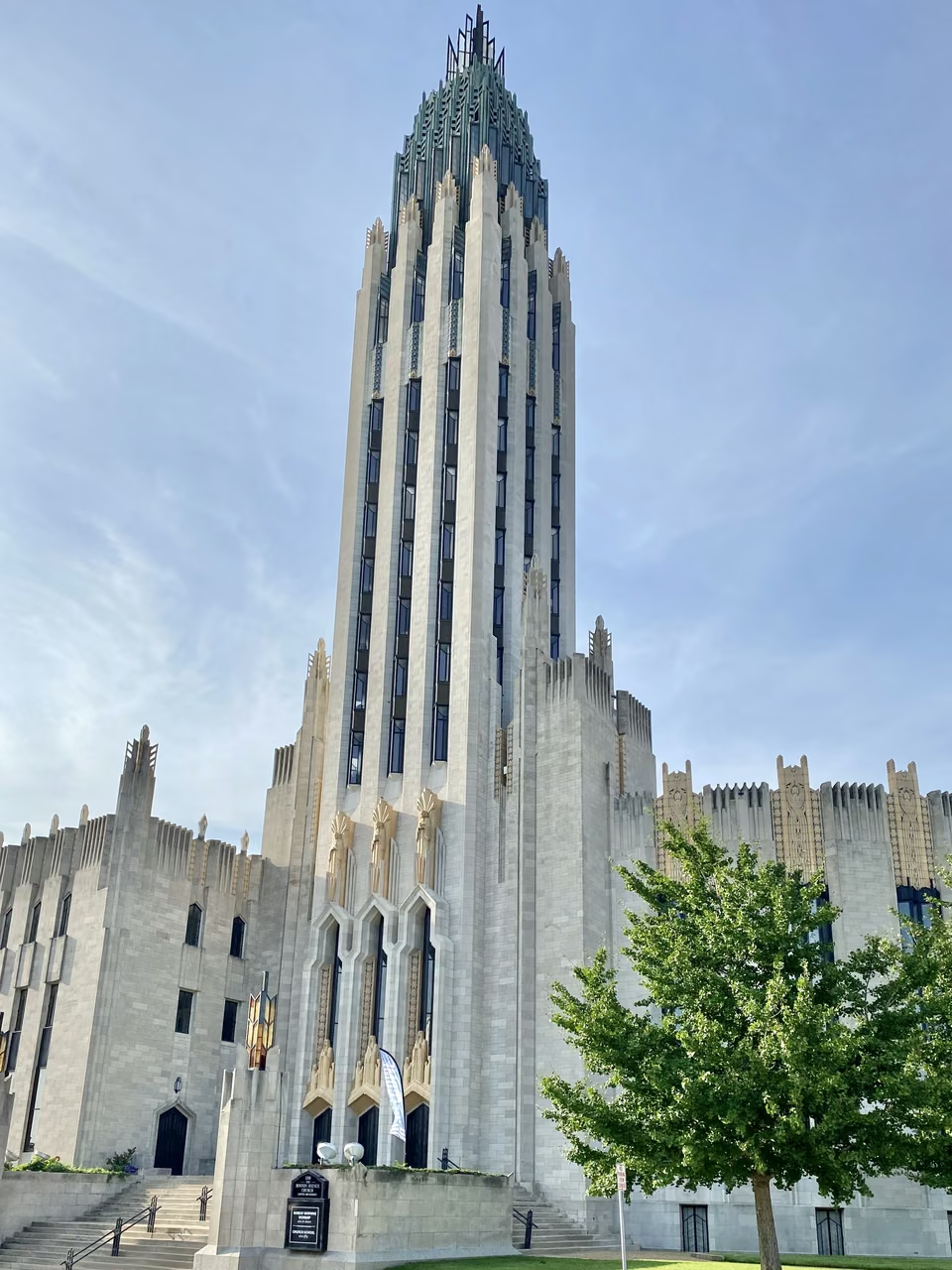
Boston Avenue United Methodist Church · Art Deco architecture
The oil era left its mark on the skyline.
Early 20th-century oil development spurred growth in Tulsa. Office buildings, financial institutions, hotels, and public structures expanded, transforming the city into a regional commercial hub.
Completed in 1929, Boston Avenue Church has a distinctive Art Deco silhouette. Its geometric lines, tower and details record Tulsa’s vision of modern architecture in that period.
When recognizing architecture, one should also observe how it is utilized by the community. Churches, office buildings, and stores each serve specific functions, preserving more than just their facades.
Greenwood
Prosperity, destruction, and memory in one city.
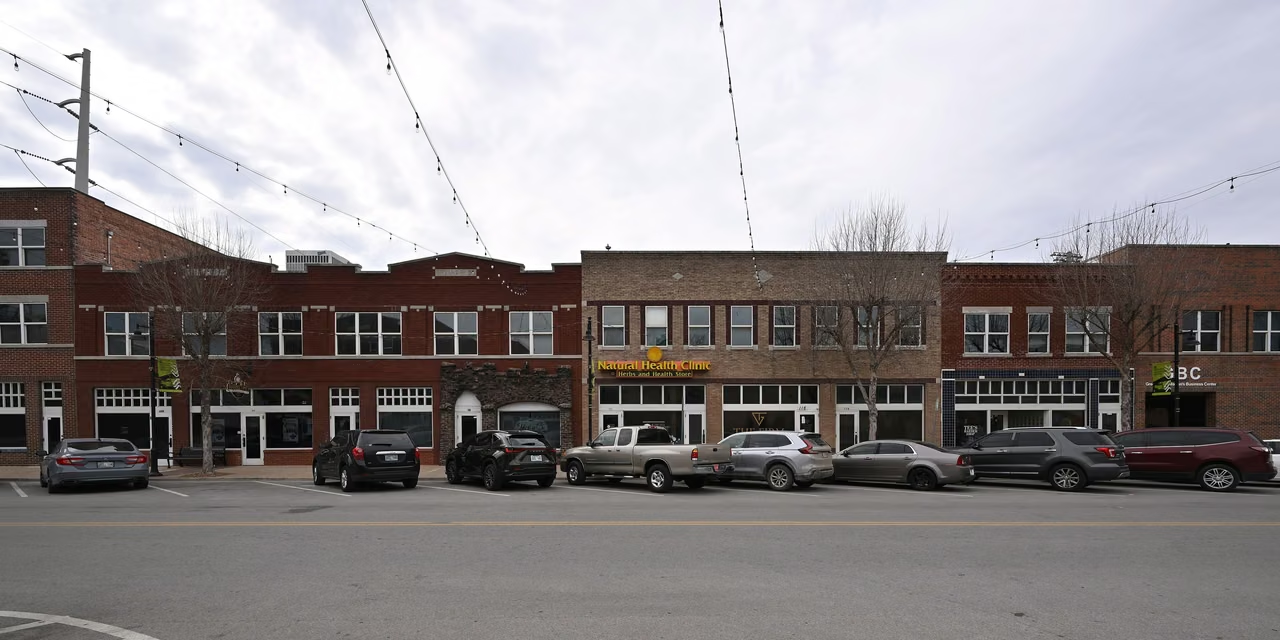
Greenwood Avenue · Current Street Commercial Buildings
Under racial segregation, Greenwood developed a thriving Black business community. Residents and business owners built its shops, professional services, schools, and cultural institutions together.
The race massacre of 1921 left severe damage to the community. When telling the story of "Black Wall Street," one should not only marvel at its prosperity but also not overlook the violence, loss, and the work later to preserve the memory.
Today's streets, historical markers, and archives continue to challenge us: how a city faces its past and how it understands the people who once lived here.
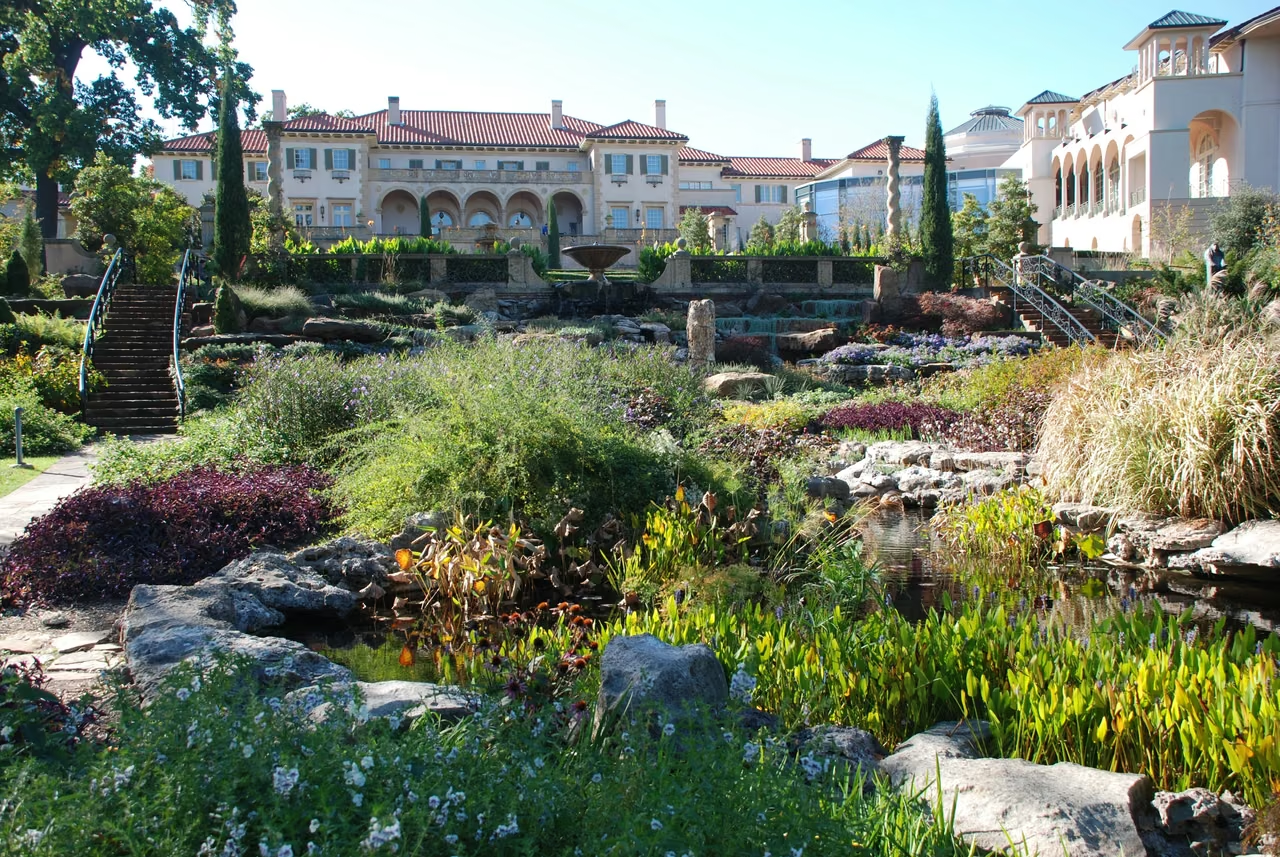
Philbrook Museum of Art · Gardens and courtyards
Tulsa · Gardens, Music, and Daily Life
A city needs places to slow down.
From watching to taking part.
Philbrook's gardens combine geometric axes, pools, slopes, and shade with plants suited to the local environment. The museum brings art, family activities, and outdoor space together.
The value of public culture lies not just in a single piece of art or a grand event. People are willing to return repeatedly for walks, learning, and gatherings, and in this way, places gradually become part of daily life.
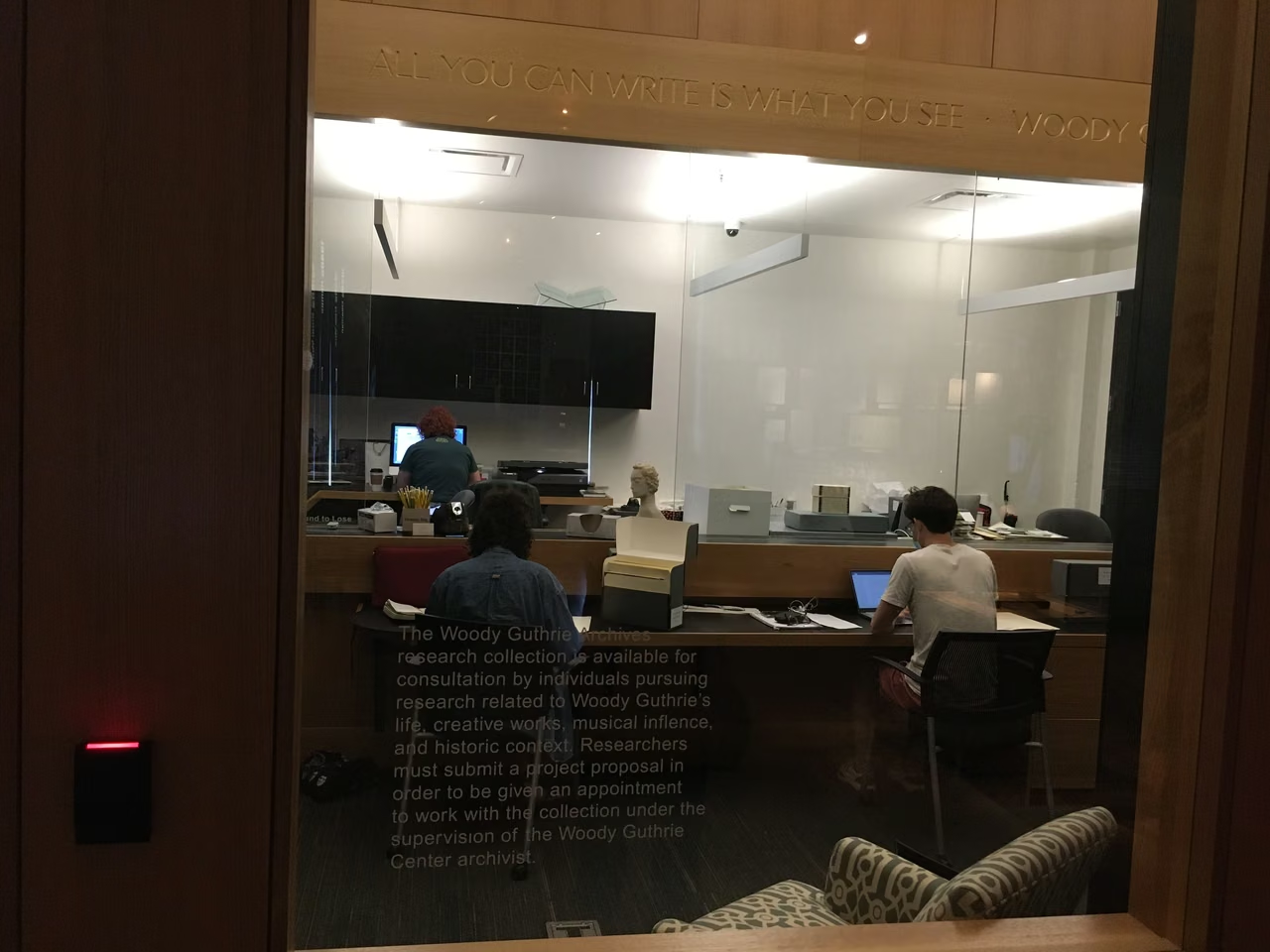
Woody Guthrie Center - Archival Research Work
Songs of ordinary lives.
Woody Guthrie’s music addresses work, migration and social conditions. The Woody Guthrie Center in Tulsa preserves documents and creative materials, and introduces these stories to new listeners through education and music programs.
Documents contain manuscripts, photos, and records that return songs to their time of creation. Music is not just a companion on a journey but also aids in understanding each other's lives.
Norman · Know the Sky
To see a storm is to ask how it forms.
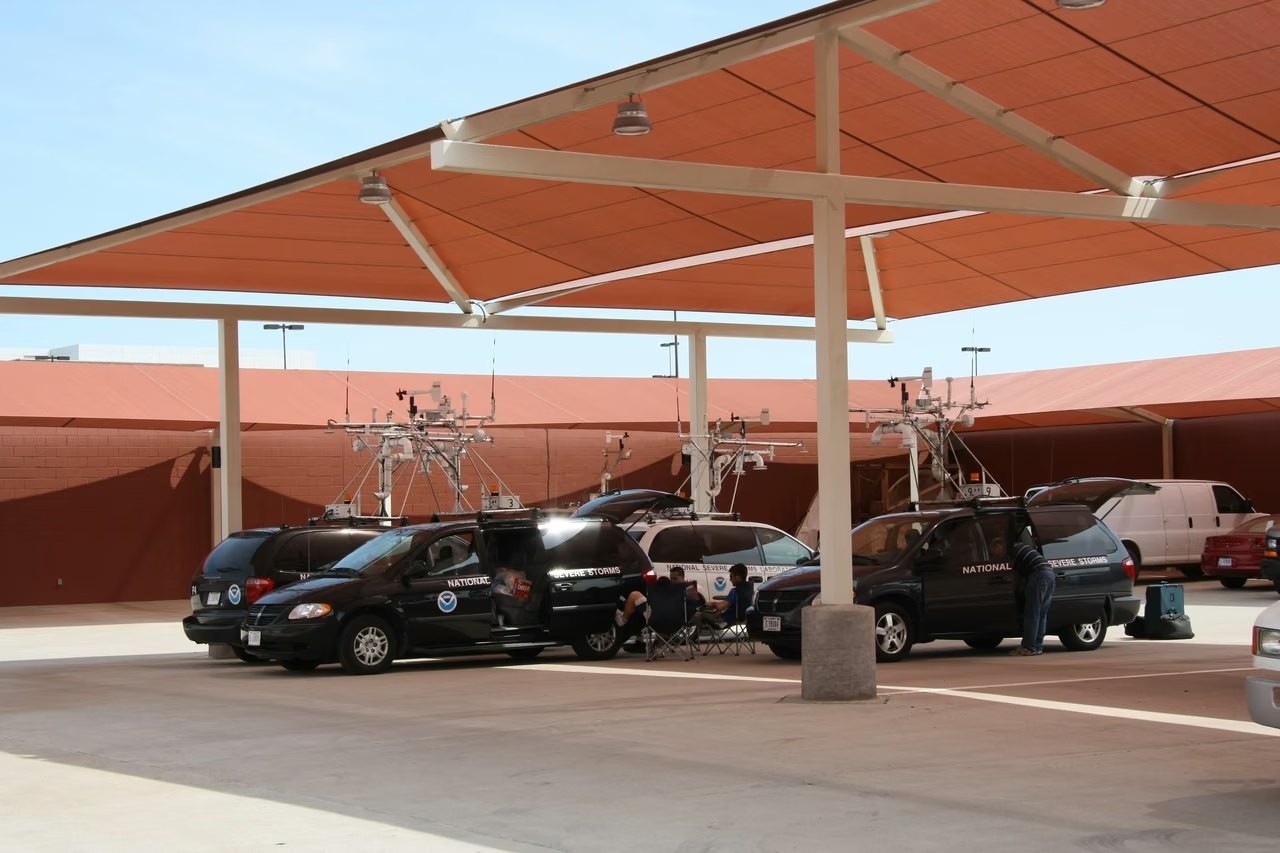
Norman National Weather Center · Storm Research Vehicle
Observation, teaching, and forecasting meet.
Norman, where Oklahoma University is located, is a significant location for weather research. The National Weather Center links the university, forecasting and research institutions. Students also get hands-on experience in this environment, interacting with observations and practical applications.
Radar, field measurements, computation, and forecasting each address different questions. Research requires sustained accumulation of data, while public warnings need to promptly and clearly disseminate information.
This job sector also illustrates that Oklahoma's industries and professions are not solely focused on resource extraction. Instrumentation, software, data, education, and public services also constitute the state's specialized capabilities.
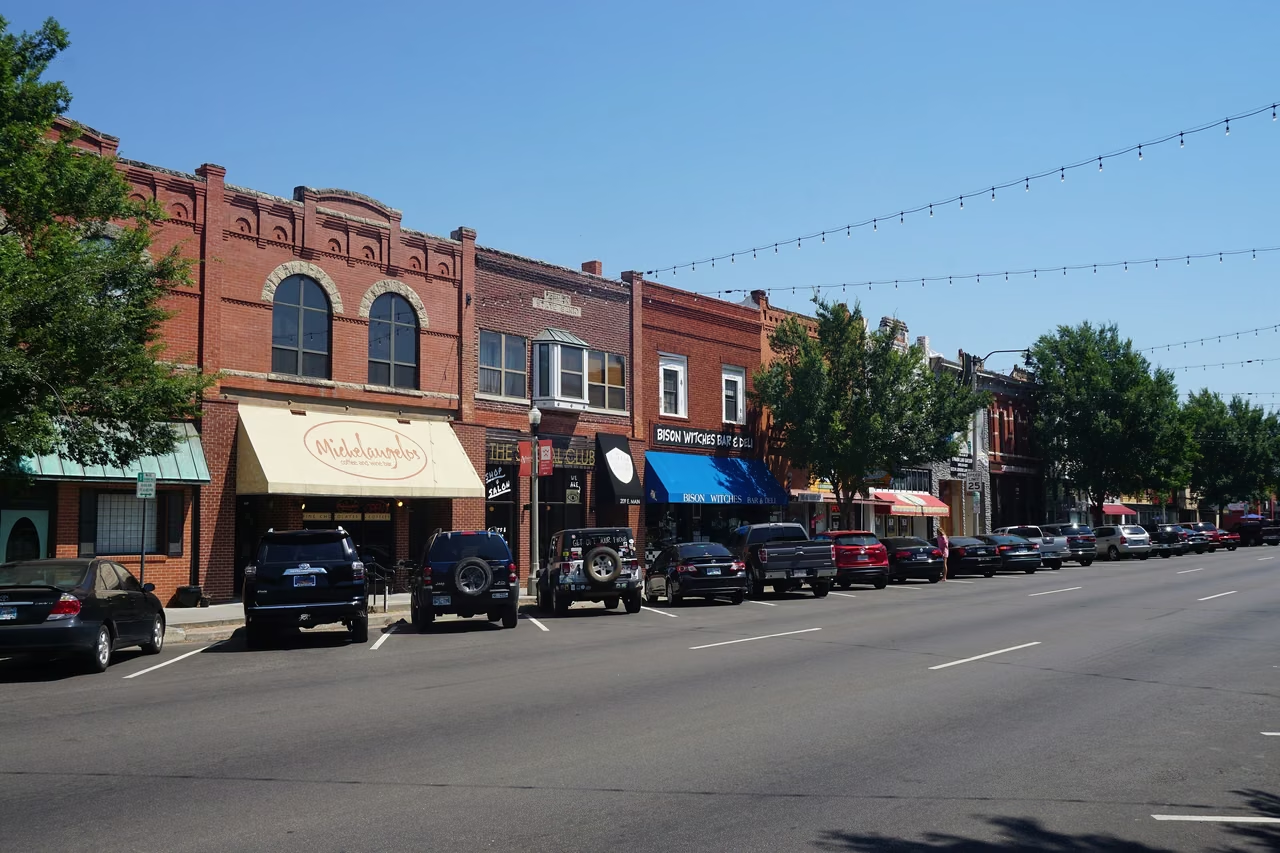
Norman · East Main Street View
Outside of research institutions, university towns still consist of restaurants, stores, residences, and community activities. Where professionals choose to live also considers these places they use every day.
From Farm to Table
Local flavors begin with local production.
Onion burger
El Reno’s fried onion burger is one of the road’s local flavors. Restaurants and festivals have made a simple dish part of the town’s identity, drawing visitors into its main street and community.
The appeal of food comes from skill, as well as from stable sourcing, sanitary management, and service. A place is often remembered first for a meal.
$10.741billionAgricultural cash receipts in 2025
Cattle and calves accounted for approximately $6.125 billion, hogs $1.530 billion, broilers $1.051 billion, and wheat $495 million. Livestock’s importance is clear in the product mix.
Sales revenue is not profit; factors such as feed, land, veterinary care, transportation, and price fluctuations affect operations. Processing, cold chain, maintenance, and food services then connect production further to urban consumption.
U.S. Department of Agriculture Economic Research Agency published on September 3, 2026, 2025 State-Level Estimates; original units were in thousands of dollars, converted to rounded numbers on this page.
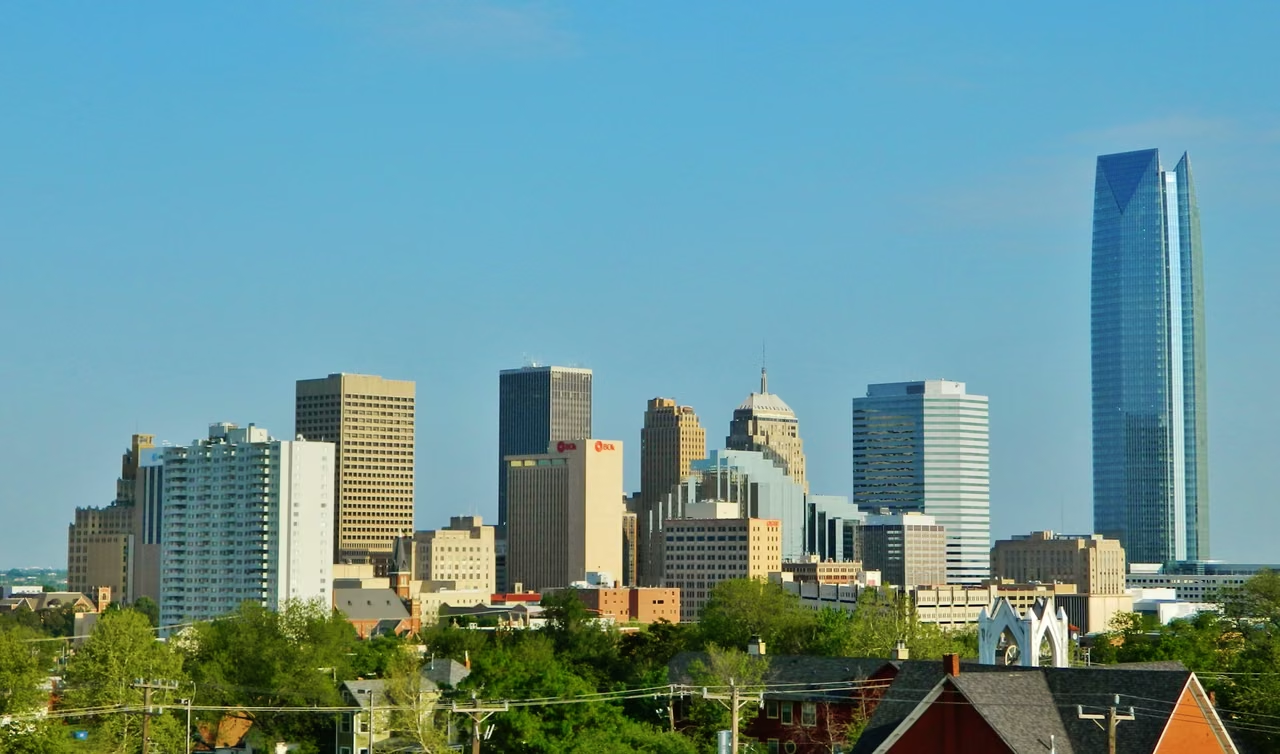
OKC · Central Cityscape
Contemporary Work · August 2026
Cities and small towns serve different areas.
Statewide nonfarm jobs, approximately 1,799,600, up about 1,700 from July; manufacturing accounted for about 139,000, down about 600 from July.
Overall job increases can occur simultaneously with decreases in a particular industry. State government, Tulsa, university town, and rural areas have differing demands, and businesses need to further understand customer distribution and local workforce conditions.
Bureau of Labor Statistics, September 18, 2026 release; August is a preliminary value, with seasonal adjustment.
Industries & establishments · 2023
The work that keeps communities running.
Healthcare, retail, accommodations and food services, support a wide range of urban and suburban areas. When observing business operations, it is important to keep an eye on the distance between densely populated areas and more distant rural regions.
The state recorded 96,402 employer establishments and 1,431,690 paid employees. A single company may operate several stores, offices, or factories, so establishments are not a count of registered companies.
Health care & social assistance229,612 people
Retail trade188,566 people
Accommodation & food services169,725 people
Manufacturing129,479 people
Administrative & support services126,691 people
U.S. Census Bureau, 2023 County Business Patterns. The series primarily covers private, nonfarm establishments with paid employees. Employment is measured for the pay period that includes March 12. The 2023 release was the latest in this series available when checked; it is not a measure of current monthly employment.
Oklahoma rose · State flower illustration
Rosa · Colors left behind on the road
A long road, with much to remember.
In 2004, the Oklahoma Rose became the state flower. The deep red flowers form different color memories with prairie, red grain silos, and city stone.
Understanding this state begins with a stretch of road, but one doesn’t have to stop at the road. Grassland conservation, contemporary indigenous living, urban history, and research along the way make the journey increasingly specific.
STATE.REPORT
An editorial feature by STATE.REPORT. Image creators and licenses are credited below.