STATE.REPORT
Coastal craft · Southern colorThe Palmetto State

South Carolina

A coil of grass. A careful stitch. Life and history, woven together.

From the Lowcountry coast to the Blue Ridge foothills
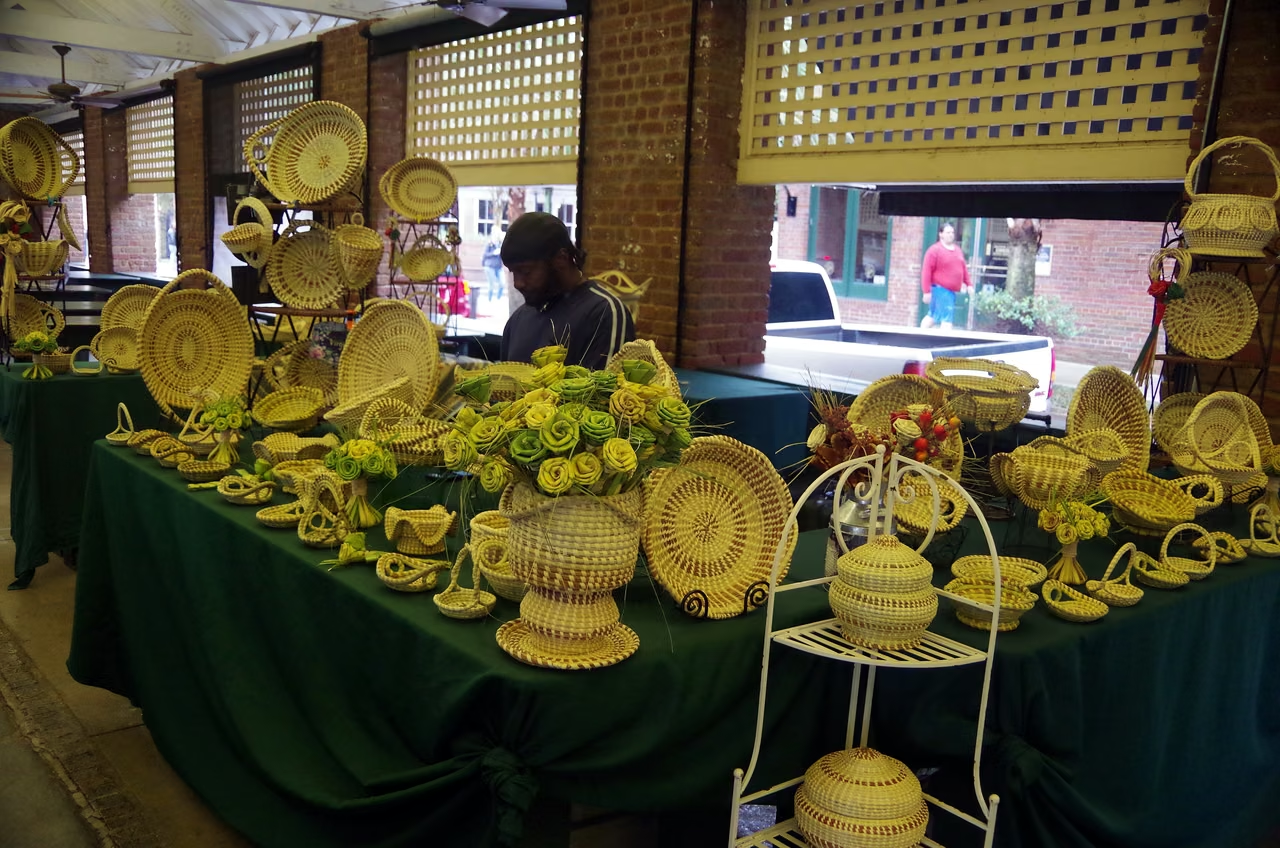
Charleston · Sweetgrass basketry
CraftLandCity

Between tides and rivers, the South takes many forms.

Begin with the hands that make it.

Sweetgrass baskets, appearing light and graceful, are actually formed through countless coilings and stitches. This technique, rooted in the low-lying regions' traditions, also ties into the family memories of the Gullah and Geechee communities.

South Carolina's richness requires a slow unfolding: the coastal swamps and islands, the alleys of Charleston, the universities and public institutions of Columbia, and the manufacturing areas around Greenville and Spartanburg. Life in different places cannot be summed up by a beach photo.

State capitalColumbia
Population · 2025 estimate5,570,274 people
Culture woven into a basket

More than a shape passed down.

Each material has its own qualities.

Lowcountry baskets use materials including sweetgrass, rushes, pine needles and palmetto leaves. Makers coil and stitch the plants into bases, sides and handles. The flexibility, color and thickness of each material become part of the finished work.

These objects were once closely tied to rice cultivation and household life. Today, they also appear in public collections, art exhibitions, and craft classes, serving both as usable objects and personal creations.
Skills shared through families and communities.

The ancestors of the Gullah and Geechee communities came from Africa and were forced to work in coastal plantations. They preserved and developed their language, cuisine, music, and crafts, forming a cultural tradition that continues to this day.

To understand this craft, one must see the specific makers and their labor. The acquisition of materials, the choice of land to live on, and intergenerational inheritance all affect how traditions continue, not just whether the items are aesthetically pleasing.

Low Country

The tide draws a new path each day.

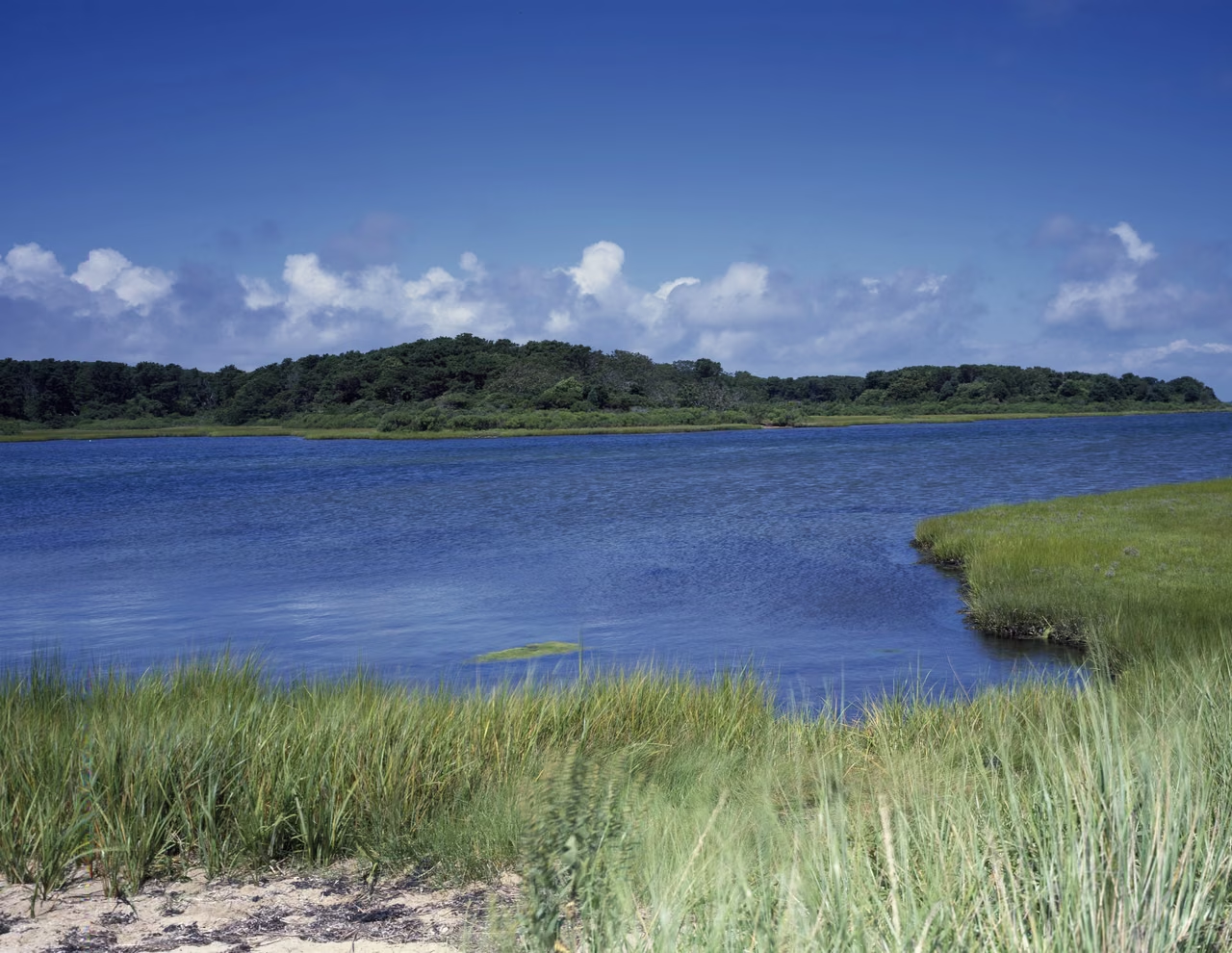
Near Beaufort · Salt marshes and tidal creeks

A coastal nursery beneath the grass.

During high tide, water enters the grasses and streams, and fish and shrimp feed on the food. Upon low tide, the mudflats are exposed again. Plant debris is part of the food web, and small marine creatures such as oysters, crabs, and many young marine animals seek food or shelter here.

Salt marshes can also reduce storm surges and trap sediments. The seemingly flat grasslands actually play important coastal roles.

Room between land and water.

Rainfall, salinity, topography, and tidal forces all impact life here. Coastal development, roads, and residential life coexist with wetland conservation; treating nature as a background line can easily overlook its connection to daily safety and fishing.

Island communities cultivate their culture within this environment. The land is both a place to live and a locus for kinship, labor, and memory.

Saint Helena · Education and Freedom

A classroom opens onto a wider world.

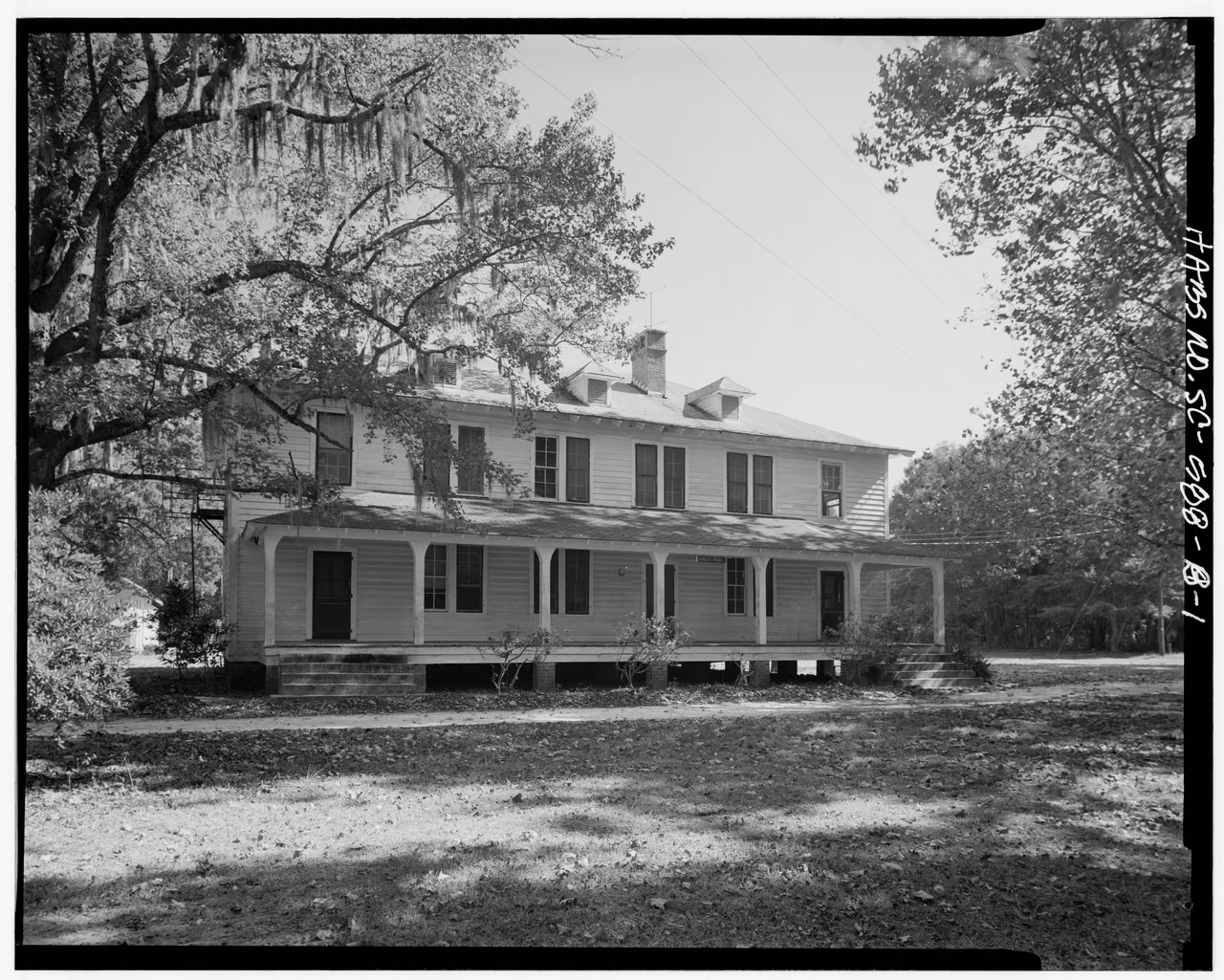
Penn School began educating newly freed people in 1862. Literacy, practical skills and community organization became part of rebuilding their lives.

Penn School historic district · Archival photograph of Benezet House
School

Early courses began in churches, followed by dedicated school buildings. Different eras of teaching content also reflected the community's expectations for educational opportunities and life skills.

Community

After the school closed, the organization shifted its focus to community service, offering programs in health, childcare, and youth activities. The meaning of education extends from the classroom to everyday life.

Gatherings

During the 1960s, Penn Center welcomed civil rights activists and provided a place for interracial exchange. It continues to preserve history and serve the community today.

Charleston · Streets and Stages

Beyond the pastel walls, a city’s own voice.

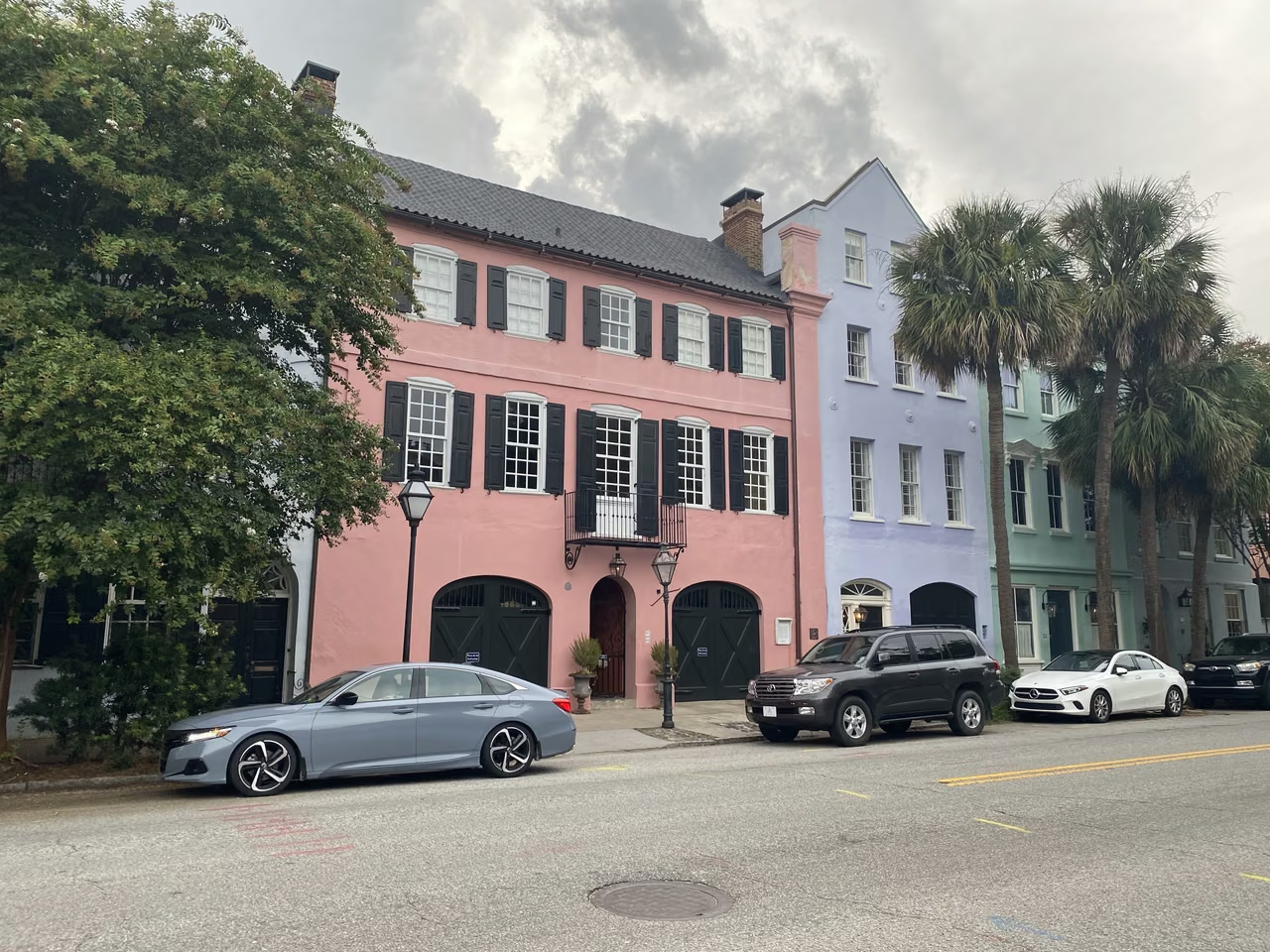
Charleston · Historic houses on Rainbow Row

Colorful facades, windows, and street plants define the familiar cityscape of Charleston. The historic district also serves as a living space: residences, stores, restaurants, and public facilities require ongoing maintenance between protection and daily use.

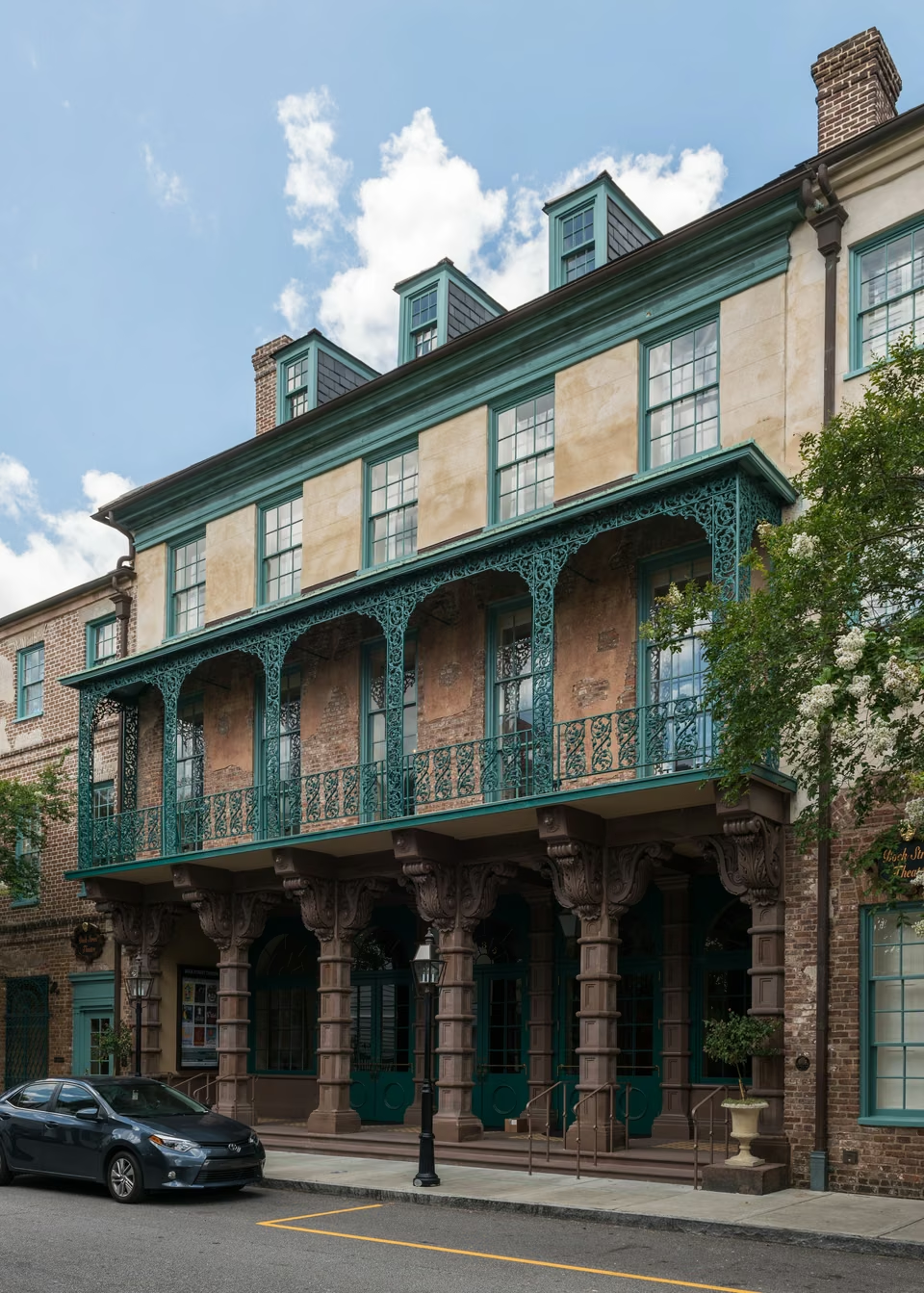
Charleston · The Dock Street Theatre

Old buildings welcome new audiences.

Dock Street Theatre has changed use and been rebuilt. Its restoration in the 1930s belongs to the history of city-led preservation and public works. The building seen today is not an untouched eighteenth-century theater.

The Spoleto Festival USA, which began in 1977, brings opera, theater, dance, and various music into the city. The theater, churches, and other performance spaces allow neighborhoods to present new rhythms at different times.

The allure of city culture also comes from rehearsals, technical stage work, organization, and daily maintenance. The audience sees just a few hours, but there is a lot of ongoing work behind the scenes.

At the table

Fresh from the sea and the fields.

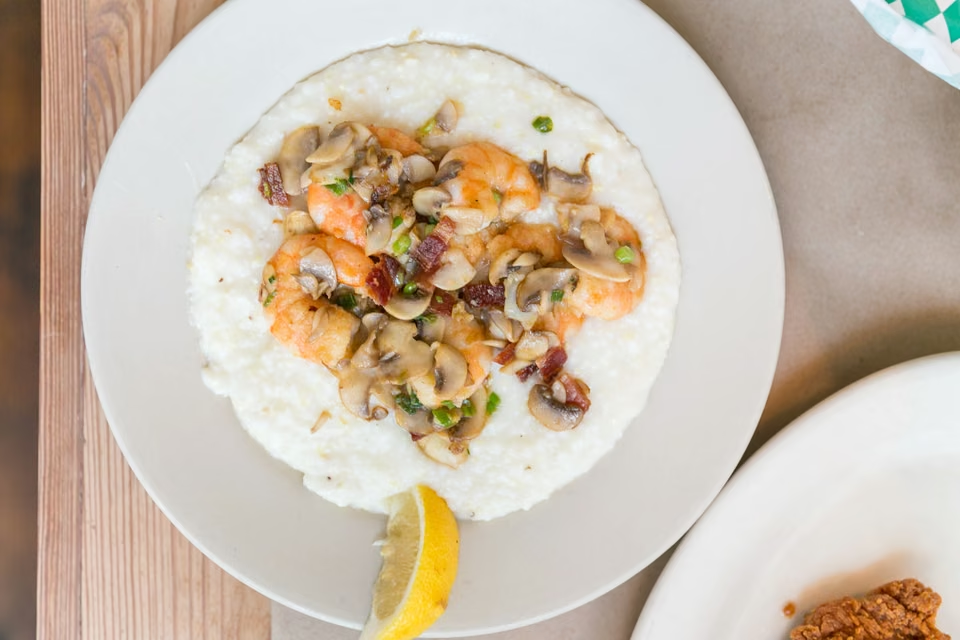
Shrimp and grits bring seafood and grain together on one plate. Once associated with coastal breakfasts, the dish now appears in many forms, from light to rich, with cheese, vegetables, and other additions.

Local food traditions extend beyond a single dish. Chicken bog, boiled peanuts, seafood boils and peach desserts also reveal differences among families, seasons and regions.

Recipes vary with family and chef. It's more worthwhile to listen to who is cooking, where the ingredients come from, and how this meal is shared in what context.

Shrimp and grits · A version with mushrooms, scallions, and bacon
Congaree · River and forest

Look into the canopy. Follow the river.

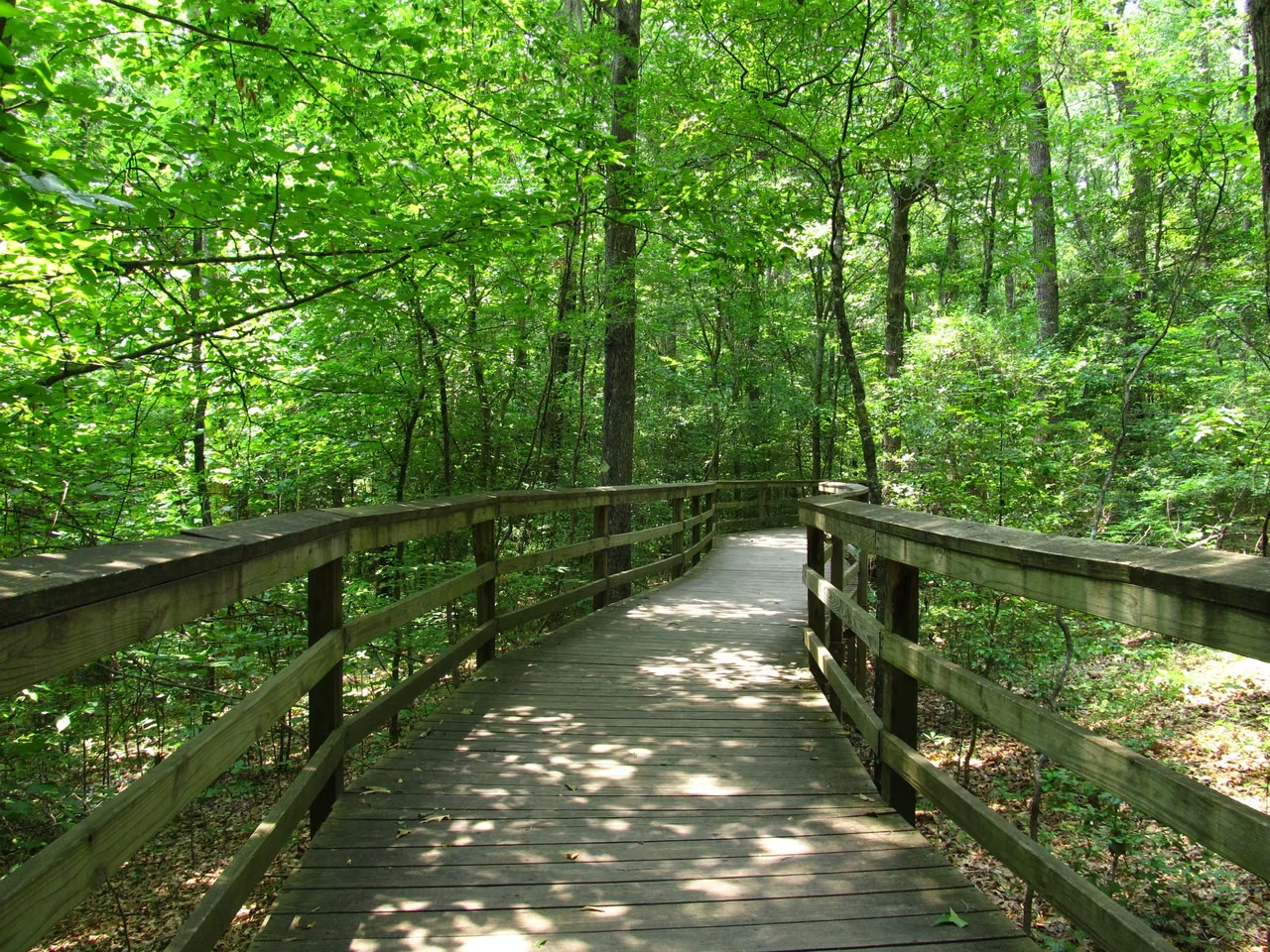
Congaree National Park · Trail through the woods

Congaree preserves a remarkable old-growth southern floodplain forest. River water carries nutrients and sediment, while periodic flooding helps sustain the ecosystem. This is a changing environment, not a static swamp scene.

This land also has a long human history. Indigenous peoples lived here, agriculture thrived, and wood harvesting occurred before conservation efforts stepped in. Conservationists in the 20th century pushed for protected areas, ultimately providing space for tall trees to grow.

Walking along the boardwalk allows one to shift their gaze from single trees to the whole: water levels, fallen logs, saplings, and soil all contribute to the forest. Nature's beauty isn't just about how tall the trees are; it's about how these relationships continue.

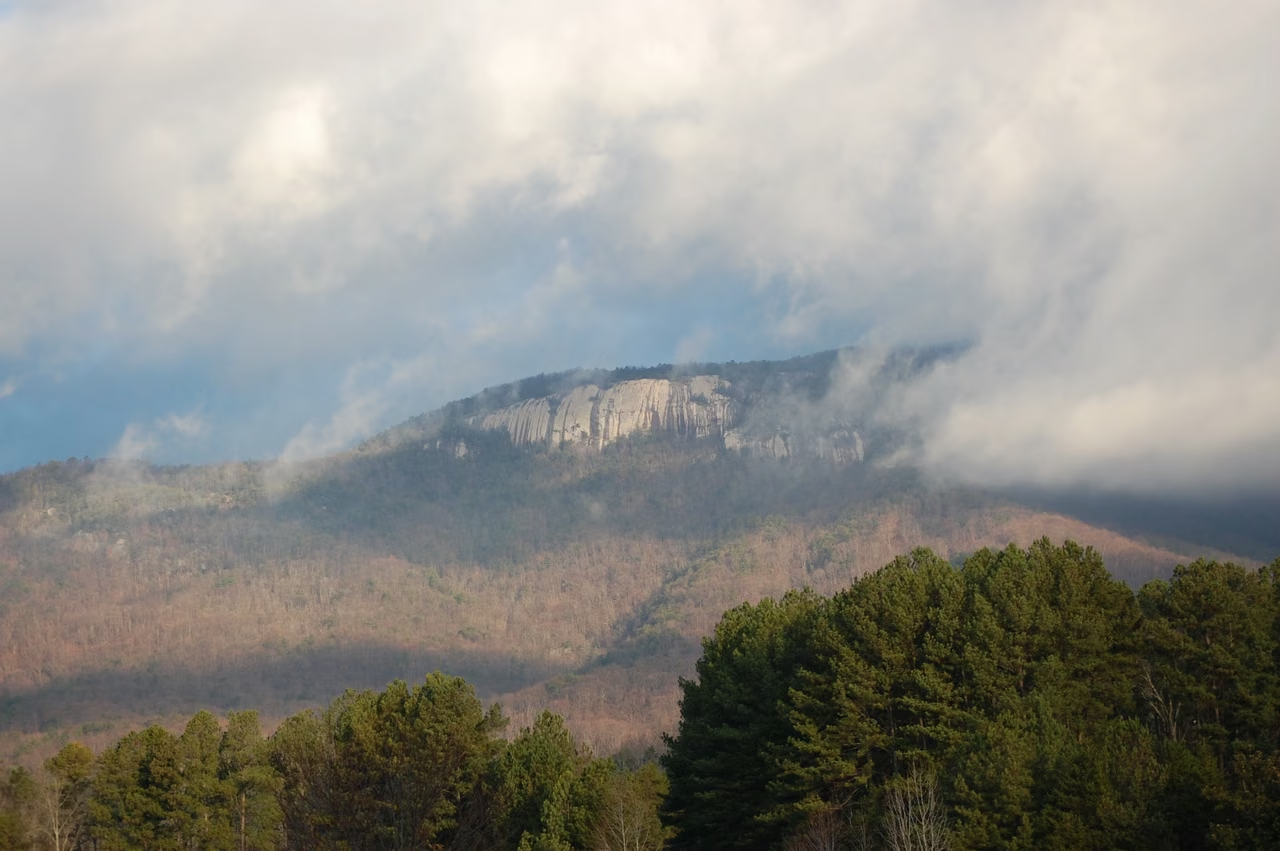
The rocky cliffs and forests of Table Rock and Blue Ridge Mountains.
West/Northwest - From Mountainous areas into Cities

Beyond the coast, the foothills open out.

Table Rock State Park lies in the Blue Ridge Mountains. Lakes, forests, and cliffs offer a setting quite unlike the Lowcountry coast. Trails lead into the mountains, making distance and elevation tangible.

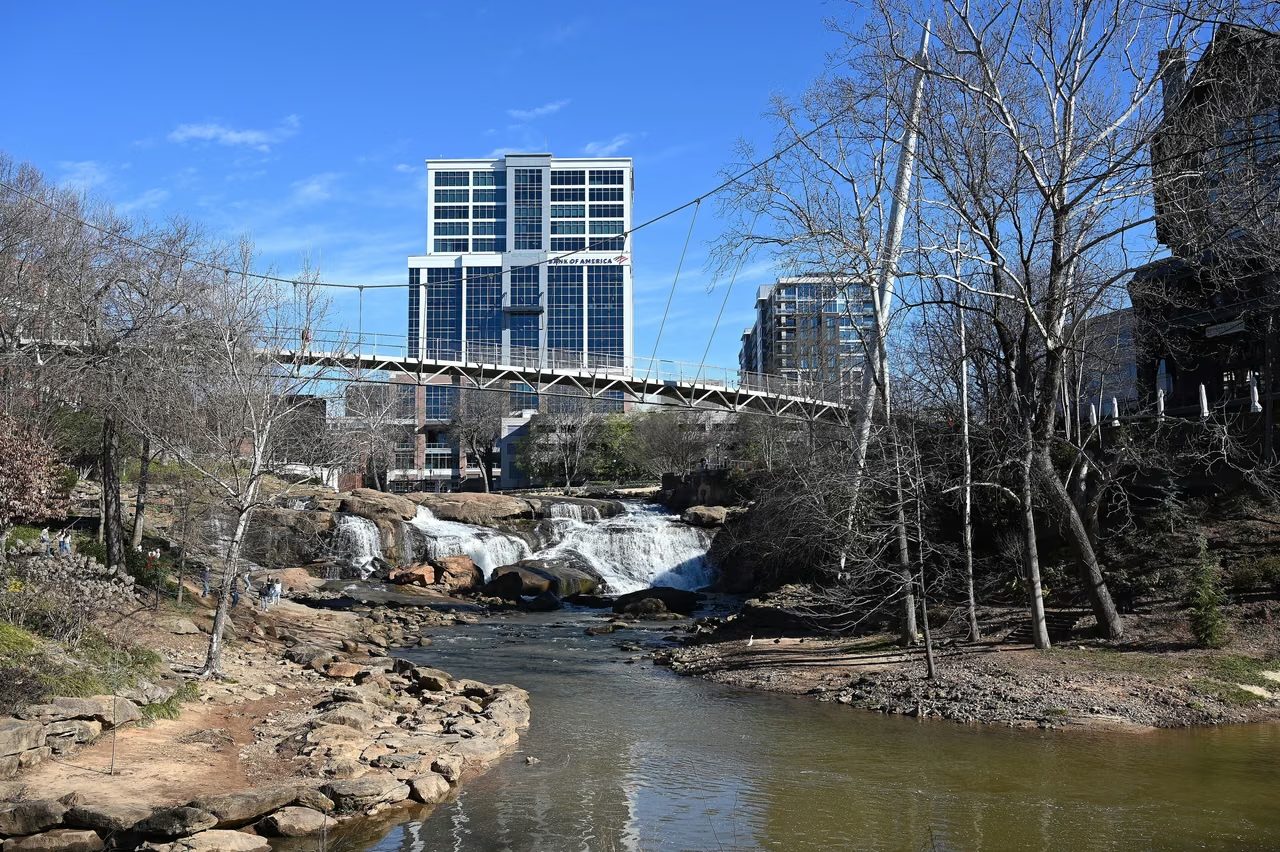
Greenville · Falls Park and Liberty Bridge

Bringing the river back to the center of town.

Greenville's Falls Park shows how public space can change a city's relationship with its downtown. Falls once hidden by a road were revealed again, with a pedestrian bridge and gardens linking the riverbanks.

Industrial history, pedestrian districts, dining options, and cultural activities coexist. The revitalization of the city on the mountain slopes is not just about adding buildings but also making it easier for residents to reach the waterfront and spend time in the city center.

Industry today · Full year 2025

From foothill factories to world ports.

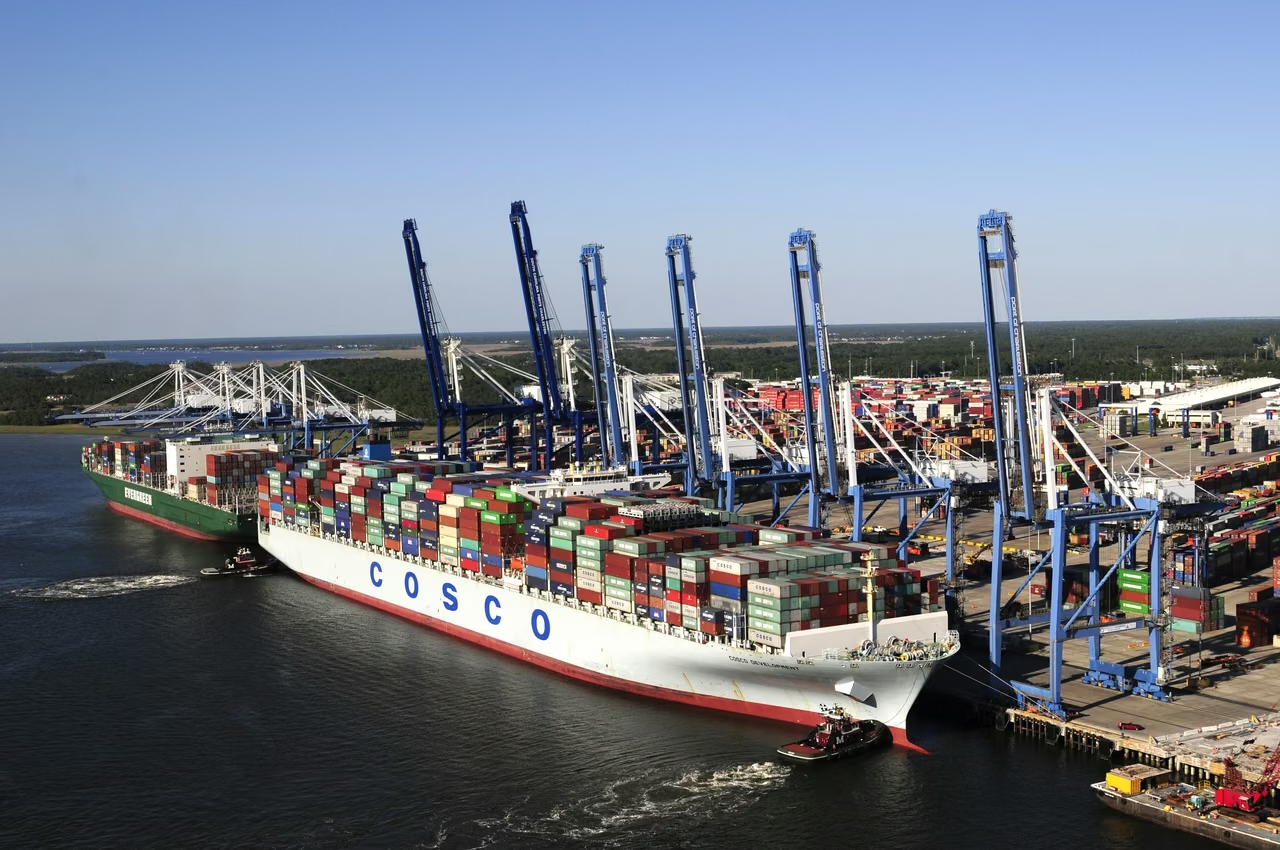
Port of Charleston · Container operations at Wando Welch Terminal
$38.5billionStatewide merchandise exports in 2025

In March 2026, the state government reported that annual exports had risen 1.5% from the previous year to their highest value in seven years. Leading categories included vehicles and parts, aircraft and parts, and machinery and parts.

Behind the numbers are large manufacturers, as well as suppliers of parts, equipment maintenance, packaging, transportation, and professional services. Export figures represent the scale of goods moving across borders, but not all of the added value created by these companies in their local area.

South Carolina state government and Department of Commerce: 2025 export report, released March 2, 2026.

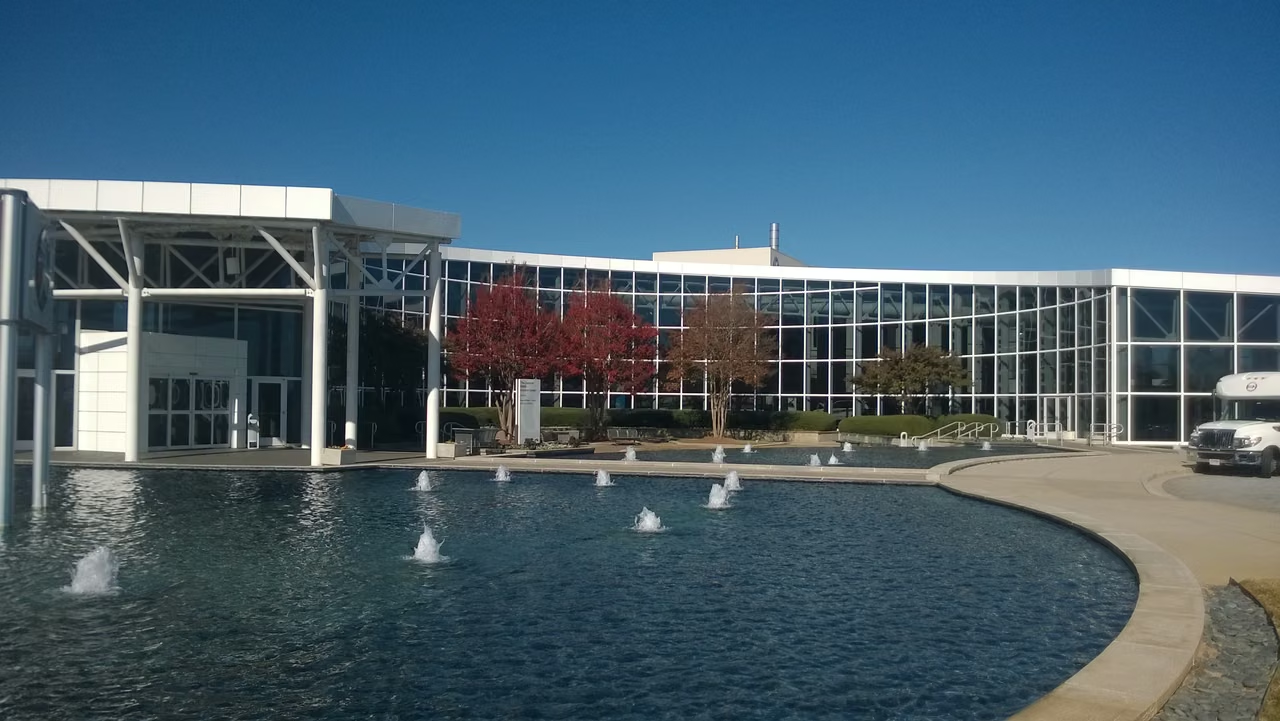
Spartanburg · BMW exhibition center

One factory, many kinds of work.

In March 2026, BMW reported that its South Carolina plant had exported nearly 200,000 vehicles in 2025, worth approximately $9 billion. Most traveled through the Port of Charleston and other East Coast ports, with some exports moving by rail.

Local ties in the automotive industry include supply of components, quality management, warehousing, and logistics. For service companies, the production rhythm, technical standards, and delivery requirements of the client's manufacturing process carry more practical significance than the reputation of a single major manufacturer.

BMW Group, March 5, 2026 export announcement. This is data from a corporate disclosure and does not add up to the total state export figures.

2,426,300Non-Agricultural Jobs August

Increase by approximately 10,800 from July.

266,000August Manufacturing Jobs

Increase by approximately 1,200 over July.

Bureau of Labor Statistics, September 18, 2026 release; seasonally adjusted, August is the preliminary value. A job position does not equal the number of companies, and a monthly change does not represent the operational situation of each industry.

Columbia · South Carolina State Capitol Complex
The state capital and everyday work

Beyond major industries, reliable daily services.

Columbia, the state capital, brings together public institutions, education and city services. Charleston combines port activity, tourism and a resident market, while Greenville connects manufacturing with the Piedmont's urban communities. Location decisions depend on customers, workers and transport.

Healthcare, retail, dining, and professional services support daily life. Seasonal demand for coastal areas differs from year-round services that cater to residents, requiring different staffing and facility arrangements.

Industries & establishments · 2023

The work that keeps communities running.

Healthcare and social assistance, manufacturing, retail and accommodations and eating places form the foundation of employment in different regions. After looking at the full-state distribution, further analysis is needed to look at urban and industry sectors.

The state recorded 122,958 employer establishments and 2,067,143 paid employees. A single company may operate several stores, offices, or factories, so establishments are not a count of registered companies.

Administrative & support services303,812 people

Retail trade269,094 people

Health care & social assistance267,286 people

Manufacturing257,989 people

Accommodation & food services245,905 people

U.S. Census Bureau, 2023 County Business Patterns. The series primarily covers private, nonfarm establishments with paid employees. Employment is measured for the pay period that includes March 12. The 2023 release was the latest in this series available when checked; it is not a measure of current monthly employment.

Tax classification comes before the calculation.

South Carolina requires LLCs taxed as corporations to pay company reporting and license fees. LLCs not taxed as corporations are not subject to the same reporting and license fee requirements. One should not assume a "limited liability company" structure requires a specific maintenance arrangement.

Business premises, industry permits, employment, and tax filings must still be handled separately. Initial company reports with the state tax department, annual filings, and local business permits must be addressed individually for different matters.

Based on current South Carolina Department of Revenue corporate filing instructions, checked in September 2026. Company searches remain within this website.

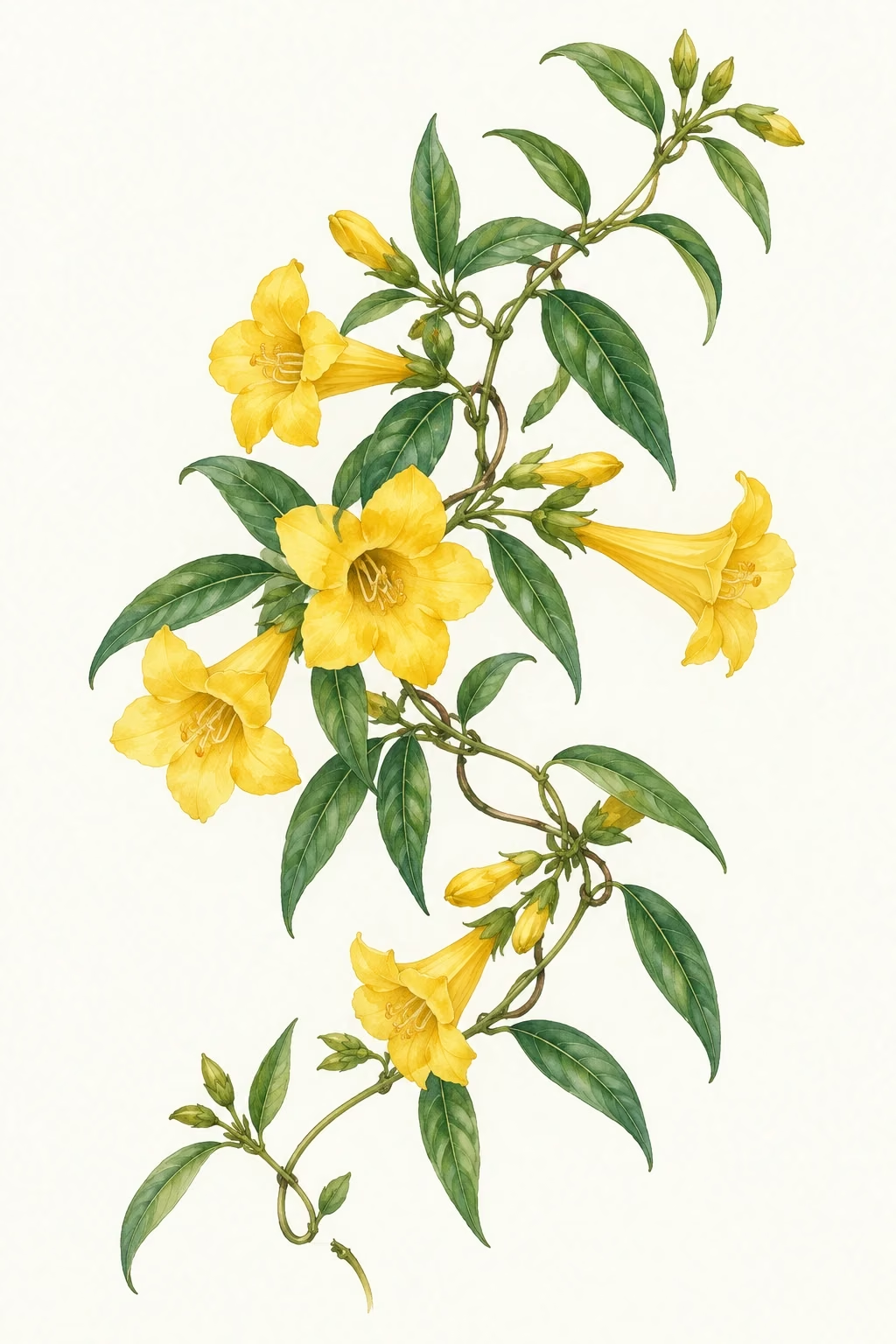
State flower · Yellow jessamine
Yellow jessamine · State flower illustration

A golden thread of spring among the branches.

Carolina jessamine became the state flower in 1924. An evergreen climbing vine with small yellow tubular flowers, it adds another color to South Carolina’s palette alongside sweetgrass gold, marsh green, and indigo.

Coastlines and mountains, crafts and factories, old neighborhoods and new lifestyles coexist. Each new place deserves a moment to slow down.

STATE.REPORT

An editorial feature by STATE.REPORT. Image creators and licenses are credited below.

Sources & further reading

Population estimates ↗

U.S. Census Bureau: state population estimates for July 1, 2025.

Sweetgrass weaving and its continuity

South Carolina State Library: A Basket of Lowcountry Grass, Materials, and African Cultural Heritage.

Learn Sweetgrass Weaving

University of South Carolina: coiled basketmaking and teaching across generations.

Gullah and Geechee Cultures

National Park Service: Protecting the language, art, cuisine, and culture of coastal communities.

The life in salt marshes.

South Carolina Department of Natural Resources: Tides, Plants, Fish, Shrimp, and Coastal Ecosystems.

Penn School and its community

Penn Center: education, civil rights and community service since 1862.

Indigo and local memory

University of South Carolina: The Production of Natural Dyes and Its Complex History.

Congaree’s forest

National Park Service: Flood plains and old-growth hardwood forests.

People in the forest

National Park Service: The Human History of Congaree and Conservation

Table Rock's mountain landscape

South Carolina State Parks: Blue Ridge Mountains, lakes, and forest trails.

Greenville's River Walk

Greenville City Government: Updates on Falls Park and Public Spaces.

Dock Street Theatre

National Park Service: Historical buildings and twentieth-century restoration.

Spoleto Festival USA

Spoleto Festival USA: Theater, music, and city culture since 1977.

Shrimp and grits

The official tourism institution of South Carolina: The Lowcountry's culinary tradition and different approaches.

Dining Table

South Carolina’s official tourism organization: chicken bog, boiled peanuts, and seafood dishes.

State Flower and Plant Symbols ↗

South Carolina Legislature: the Carolina jessamine and its history as the state flower.

Image credits & licenses

Verify your email

We will email you a six-digit code to sign in.

By continuing, you agree to the Terms and acknowledge the Privacy Policy.

Search history

Your searches from the last 30 days. Viewing this list does not use searches. Full company reports are not saved here.