
Over the course of different epochs, these environments left deposits that gradually formed rock layers. Clues from fossils and rocks allow researchers to reconstruct the world far before today's grasslands.
Above ground. Beneath the surface.
Time written into the land.
South Dakota
Follow the rock and the river into the life of the prairie.
A wide horizon from afar. Up close, every layer tells a story.
The Missouri River crosses South Dakota, connecting prairies, towns, and regions with different ways of life. Farms and urban services shape the east; the Black Hills and Badlands bring ridges, cliffs, and geological contrasts to the west.
The story continues underground. Caves hold delicate calcite formations, and experiments in a former gold mine investigate the universe. Universities collect paintings and instruments; cities return waterfalls and quarries to public life. A wide horizon need never be a monotonous one.
State capitalPierre
Population · 2025 estimate935,094 people
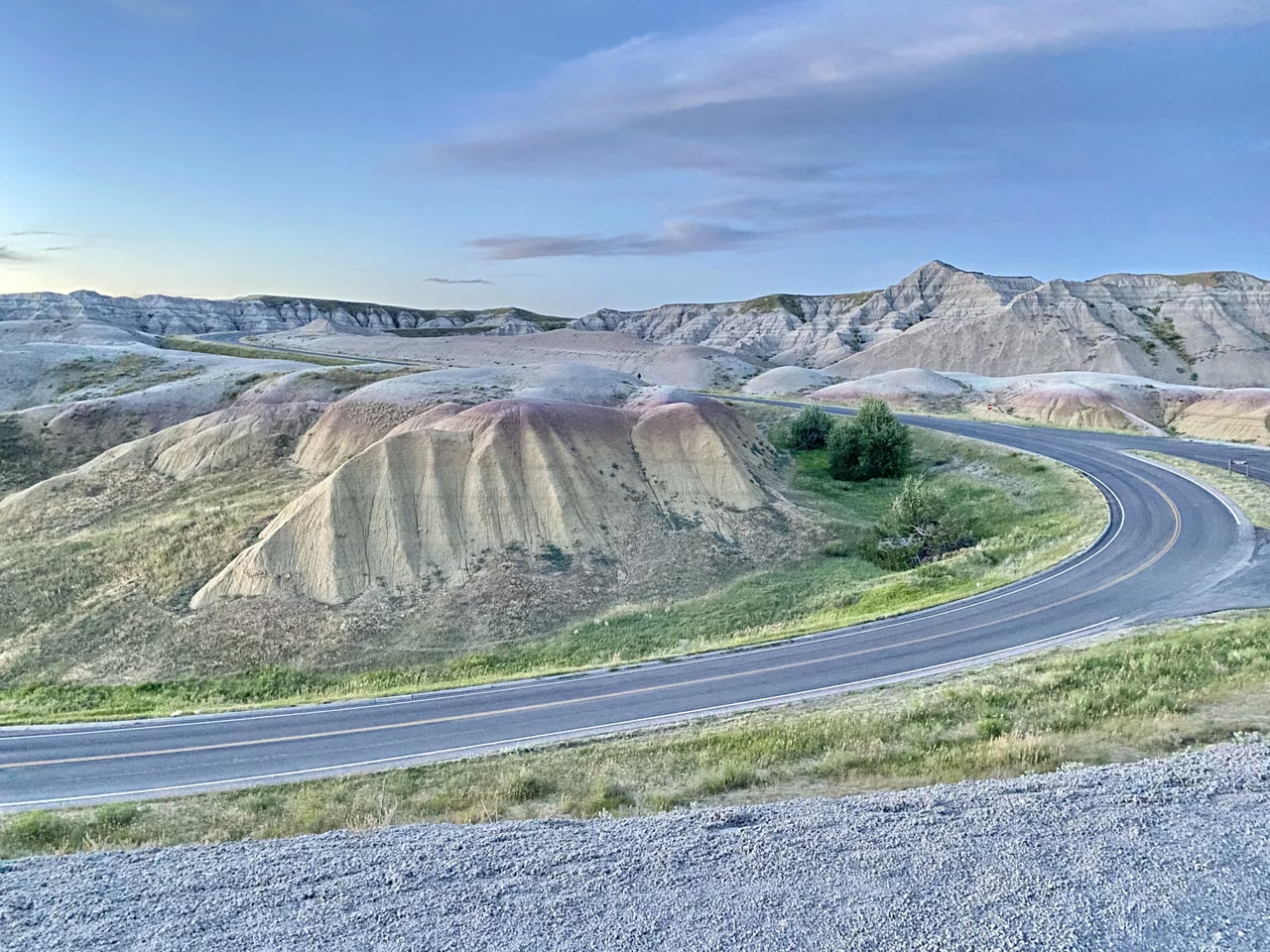
Beneath the colors, a long geological history.
The bright colors in the yellow hills are related to the ancient soil and minerals within them. The different colored bands record environmental changes, not for scenic arrangements.
Continuous runoff and weathering continually erode the rock, forming valleys, pinnacles, and isolated hills. The contours before us are still changing, with small furrows left after a rainstorm being part of this process.
The Badlands also hold a long human history. Lakota communities, early settlements, homesteads, and later land uses all belong to its story. A natural landscape is not necessarily an uninhabited one.
Look down.Wind Cave
In the dark, patterns finer than carving.
Light reveals thin calcite fins intersecting like a lattice on the cave walls. This boxwork is especially abundant in Wind Cave and is one of its defining features.
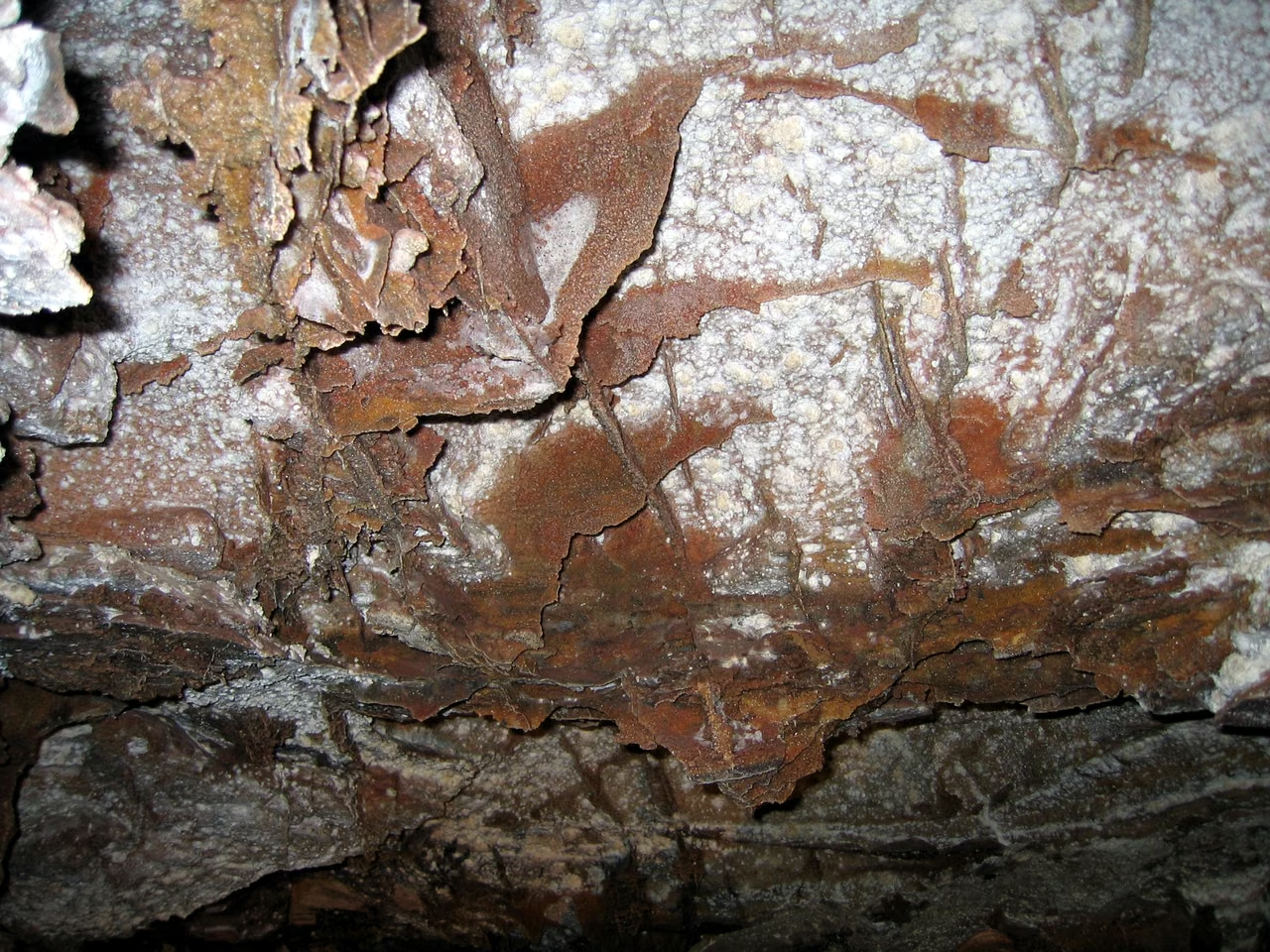
The formation process of these structures differs from ordinary dripstone deposition. Researchers believe that minerals within rock fractures have different resistance to weathering compared to the surrounding rock layers, resulting in the current grid-like structures. There are still many questions to be studied regarding the complex history of the caves.
Wind Cave also has cultural significance. Lakota oral traditions have long described the breathing entrance and linked it with human origins, bison, and the spiritual world. Nineteenth-century explorers were not the first people to know this place.
Once a search for gold. Now a search for cosmic answers.
4,850feet below ground, research level
Rock shields the experiments from cosmic rays, creating a quieter setting for precise measurements.
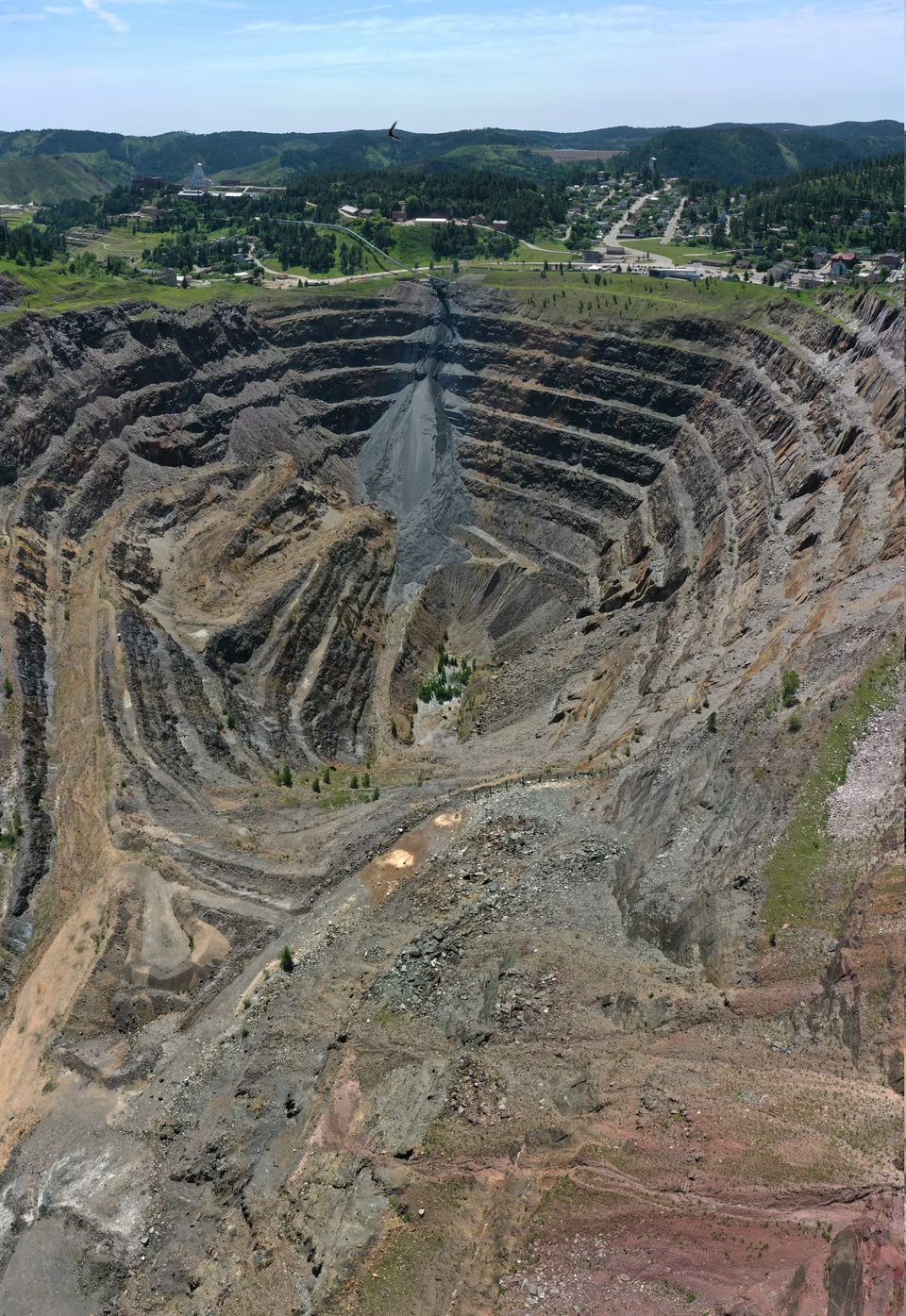
The Sanford Underground Research Facility is located on the original Homestake Gold Mine. Deep rock layers reduce interference from cosmic rays, allowing scientists to search for dark matter and research extremely weak signals like neutrinos.
Subterranean facilities also support microorganisms, geothermal energy, and engineering and technological research. The spaces and infrastructure left by mining continue to serve new purposes.
Such work requires scientists as well as ventilation, transportation, mechanical, electrical, and safety maintenance. A small town's connection with international research is realized through numerous detailed daily collaborations.
A wider view, with room for wildlife.
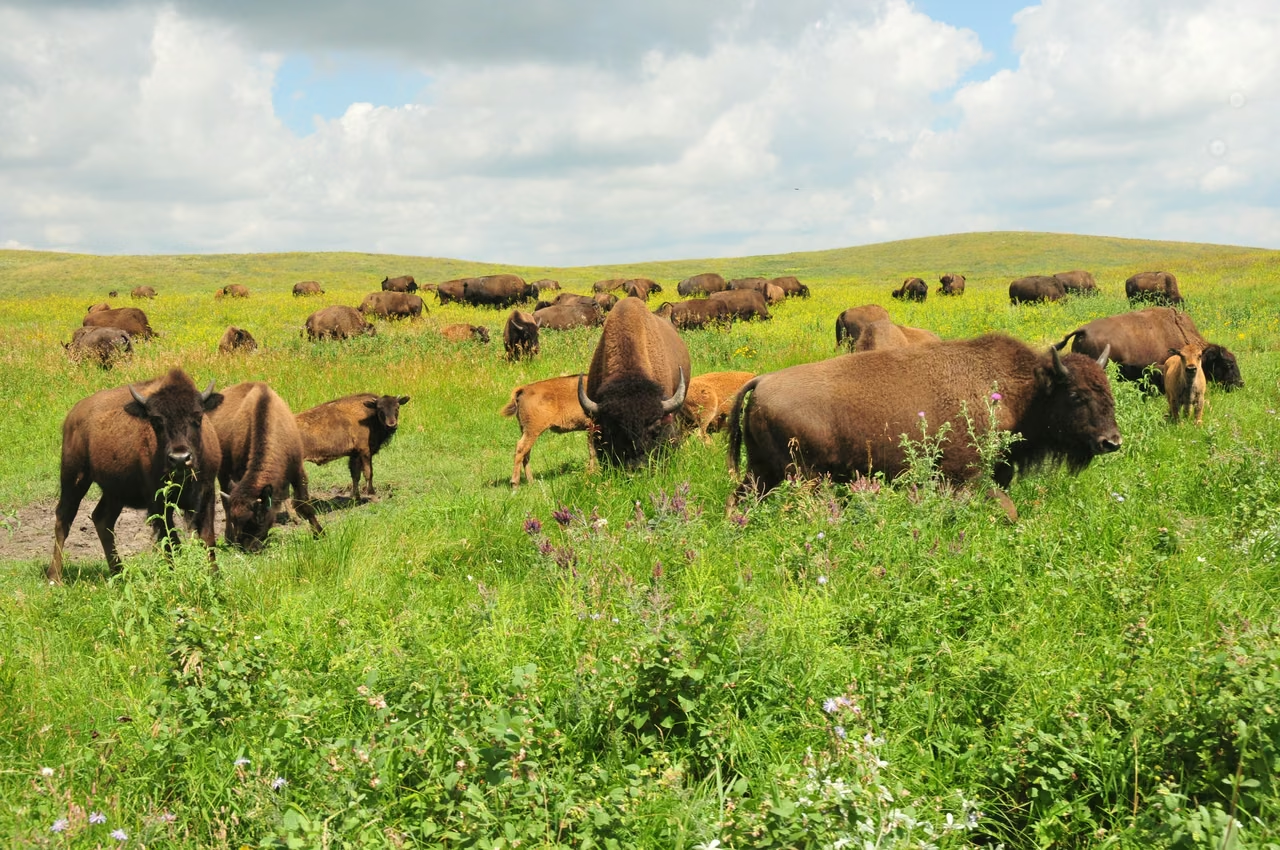
Pasture is not void. Interactions between plants, soil, precipitation, and grazing animals influence the state of the habitat, and subtle changes on the ground can determine its condition. Bison in protected areas remind us of the connection between large animals and the North American prairie.
Pastures, croplands, and protected areas serve different purposes. Seeing continuous grasslands, one must also understand who manages the land, how it is managed, and how water and seasons affect the local life.
One field connects many kinds of work.
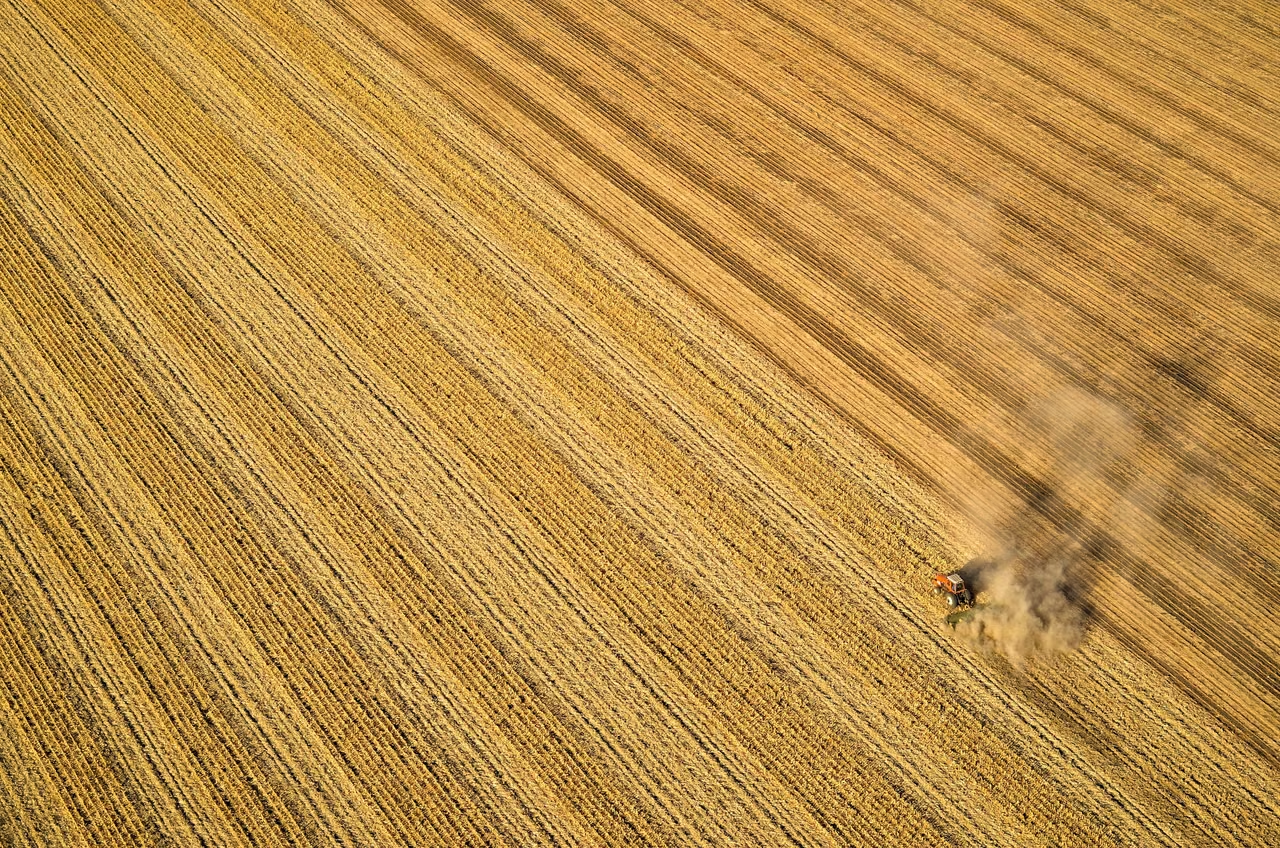
Before the harvest.
Agriculture involves seeds, machinery, soil management, and weather judgment; ranching entails pastures, feed, and animal care. Agriculture is not confined to harvest times.
Farm technology, equipment maintenance, and transportation services keep rural areas connected to nearby towns. For local businesses, distances and job times are often very specific.
After the harvest.
Storing, processing, selling, and logistics of grain connect farms to larger markets. Factors such as product prices, transportation conditions, and seasonal arrangements can influence the actual choices of operators.
Seeing farmland area does not directly infer corporate profits. One needs to understand the specific products, costs, harvests, and customer arrangements to fully comprehend the business performance.
A city named for its falls.
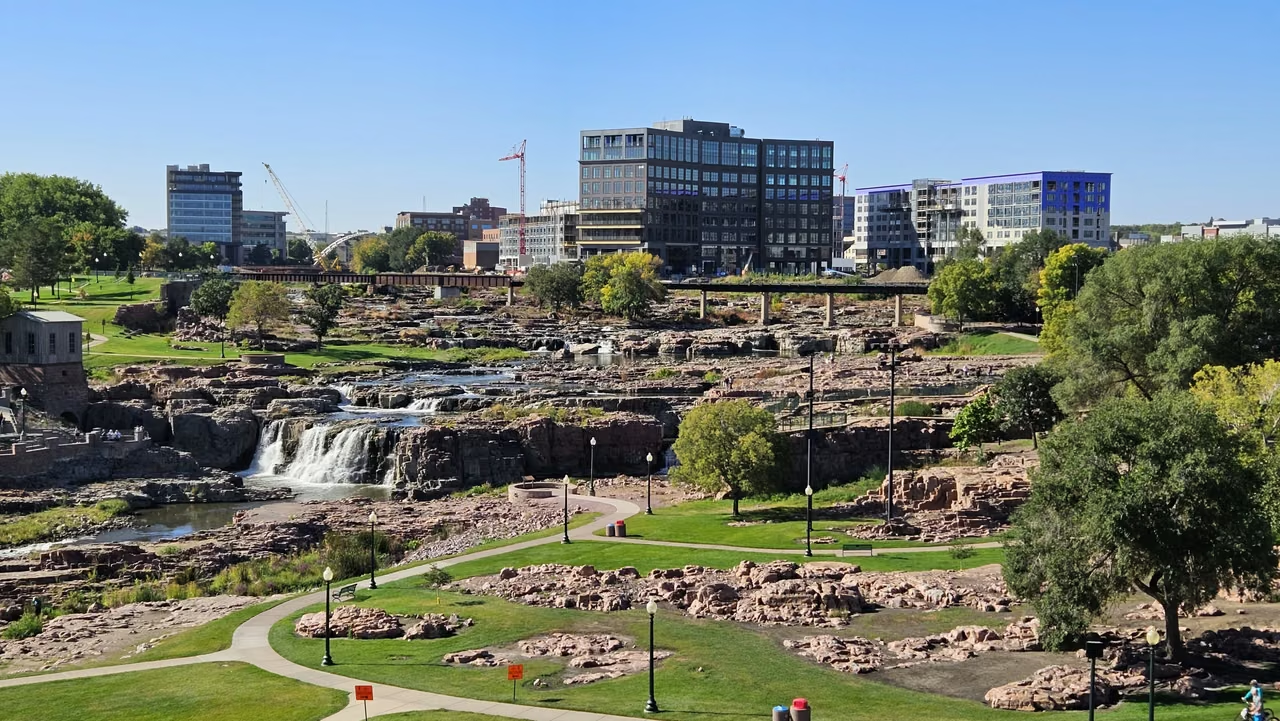
Water flows over pink quartzite, bringing geology into the heart of the city.
The Big Sioux River’s falls expose hard Sioux Quartzite. The river and glacial changes shaped the landscape and influenced the city’s early development. Today, the park brings residents and visitors close to the water in the heart of the city.
In July 2026, the city government announced a $15,000,000 grant for improving an old quarry site adjacent to the Falls Park. The project focuses on recreation, historical exhibits, and community ties; it is a project in progress and not to be considered a fully developed attraction.
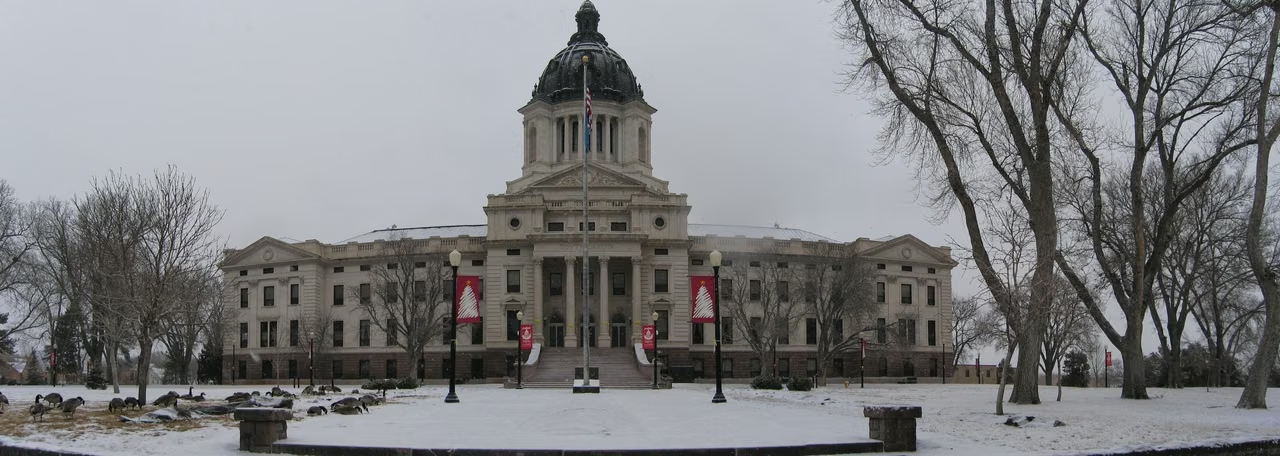
Pierre: a center of public affairs.
This state capital operates on a smaller scale than a major city, with public institutions and local services woven into daily life. The Missouri River also helps explain the city's relationship with the surrounding region.
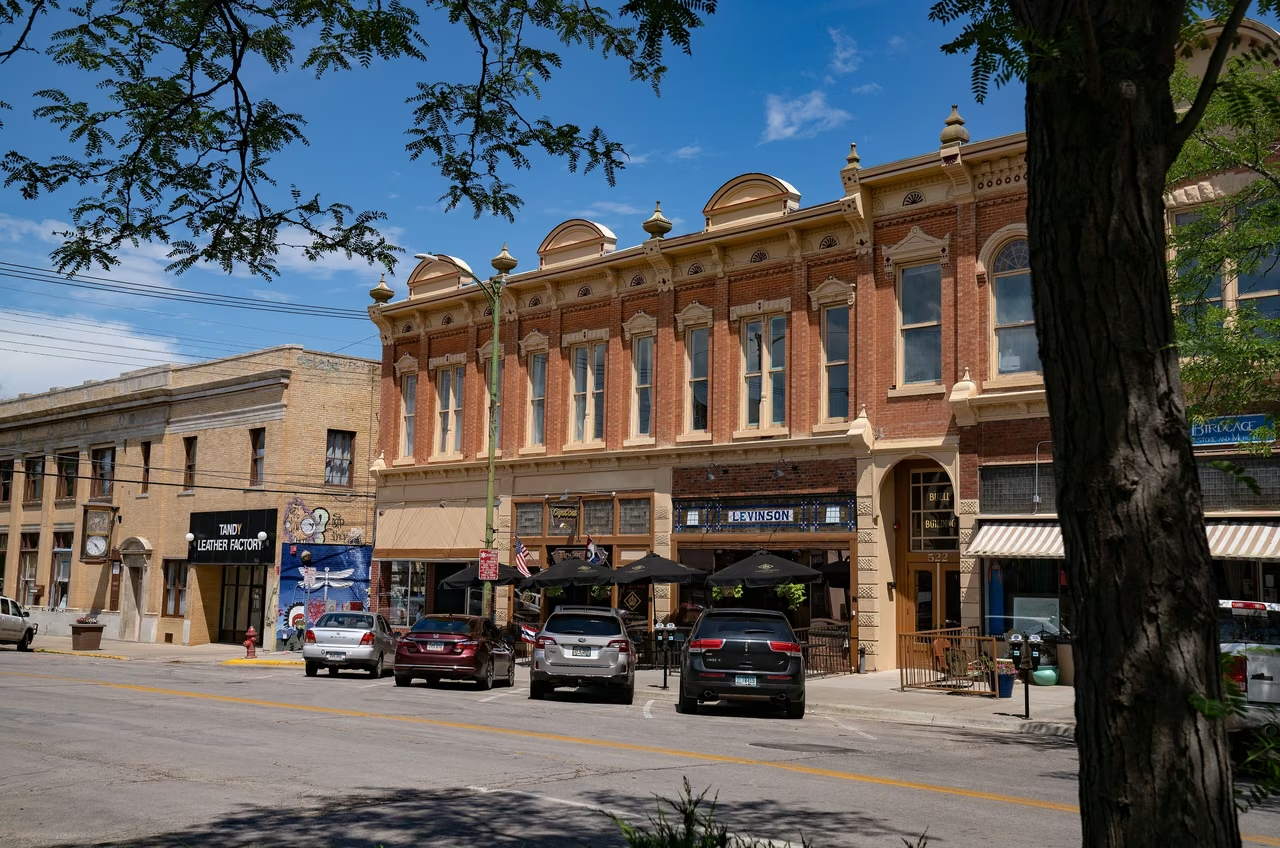
Rapid City: gateway to the Black Hills.
Residents’ needs and visitor demand meet here. Trips into the Black Hills support lodging, dining and transport, while city life also depends on year-round healthcare, retail and professional services.
A rich cultural life on the prairie.
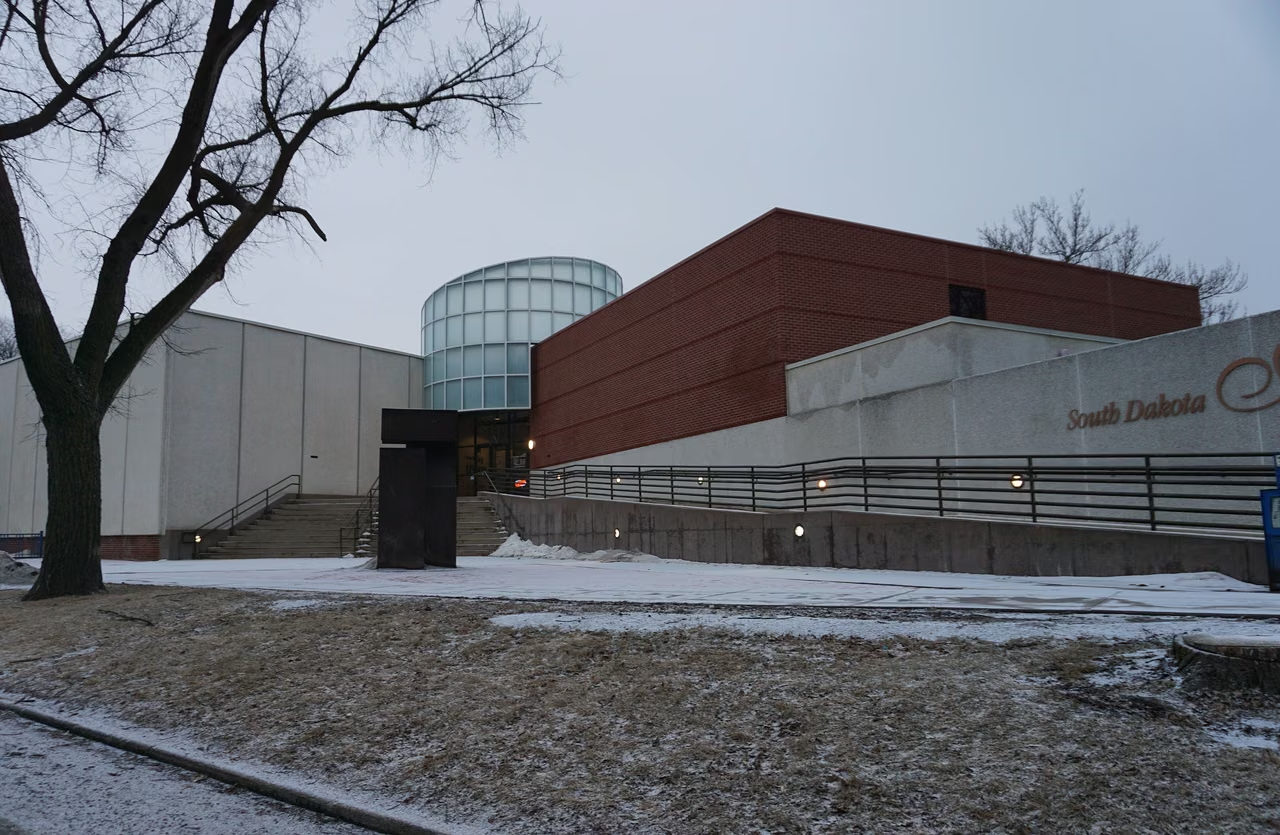
Painting the emotions of everyday life.
Harvey Dunn's prairie paintings not only depict terrain but also capture emotions of labor, family, and early prairie life. The South Dakota Art Museum preserves his works, bringing local experiences into public collections.
Art is not confined to the past. Oscar Howe's work and teaching advanced contemporary Indigenous art. Lectures and youth programs at the University of South Dakota continue to encourage new expression.
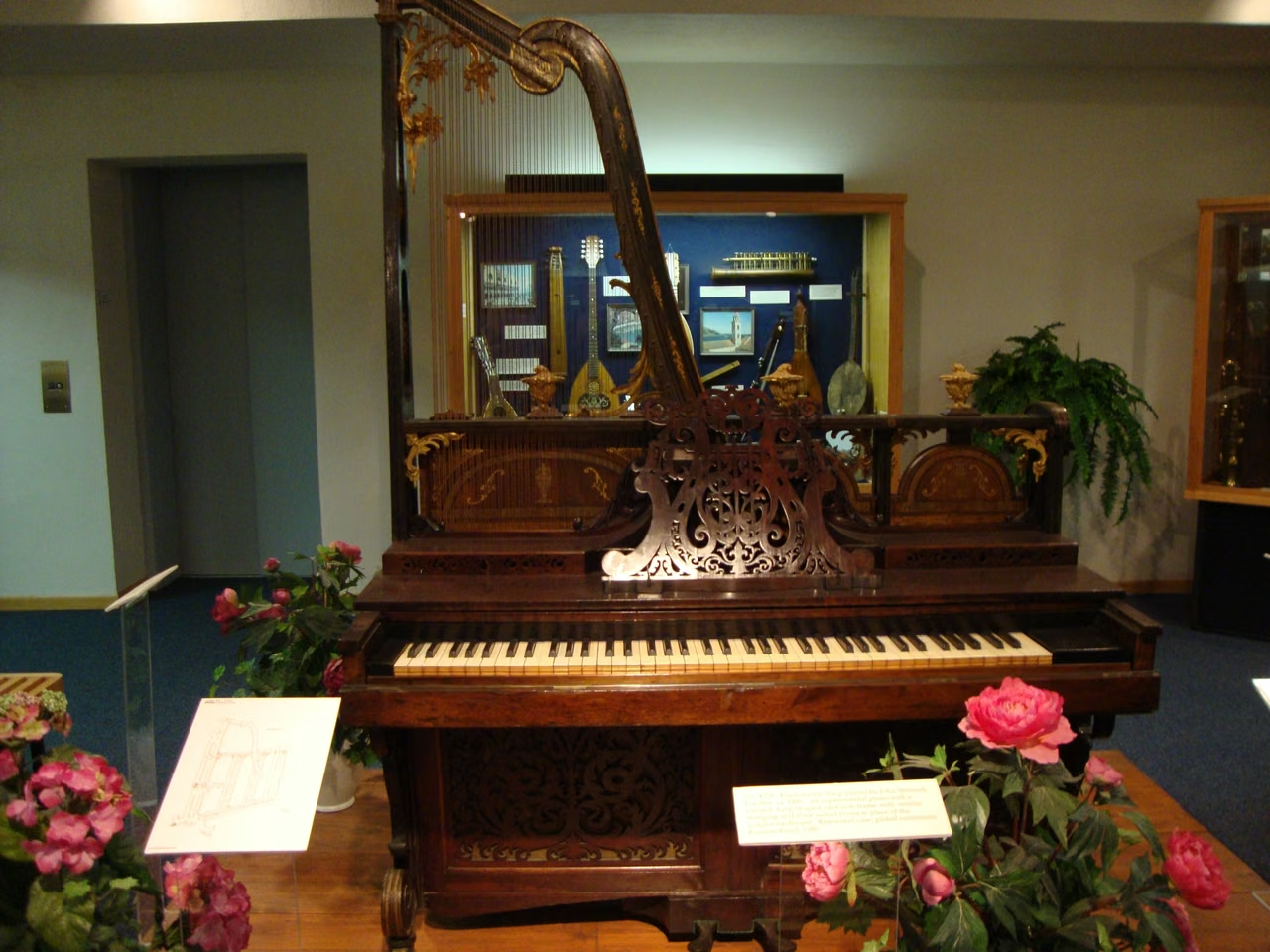
Keeping voices alive.
The National Music Museum was established in 1973 on the University of South Dakota campus. Instruments from different cultures and periods reveal music history through their materials, construction and use.
From making techniques to playing traditions, one instrument connects the knowledge of craftspeople and musicians. University collections also provide ongoing resources for classes, research, and public activities.
Beyond the sculptures, another history of the hills.
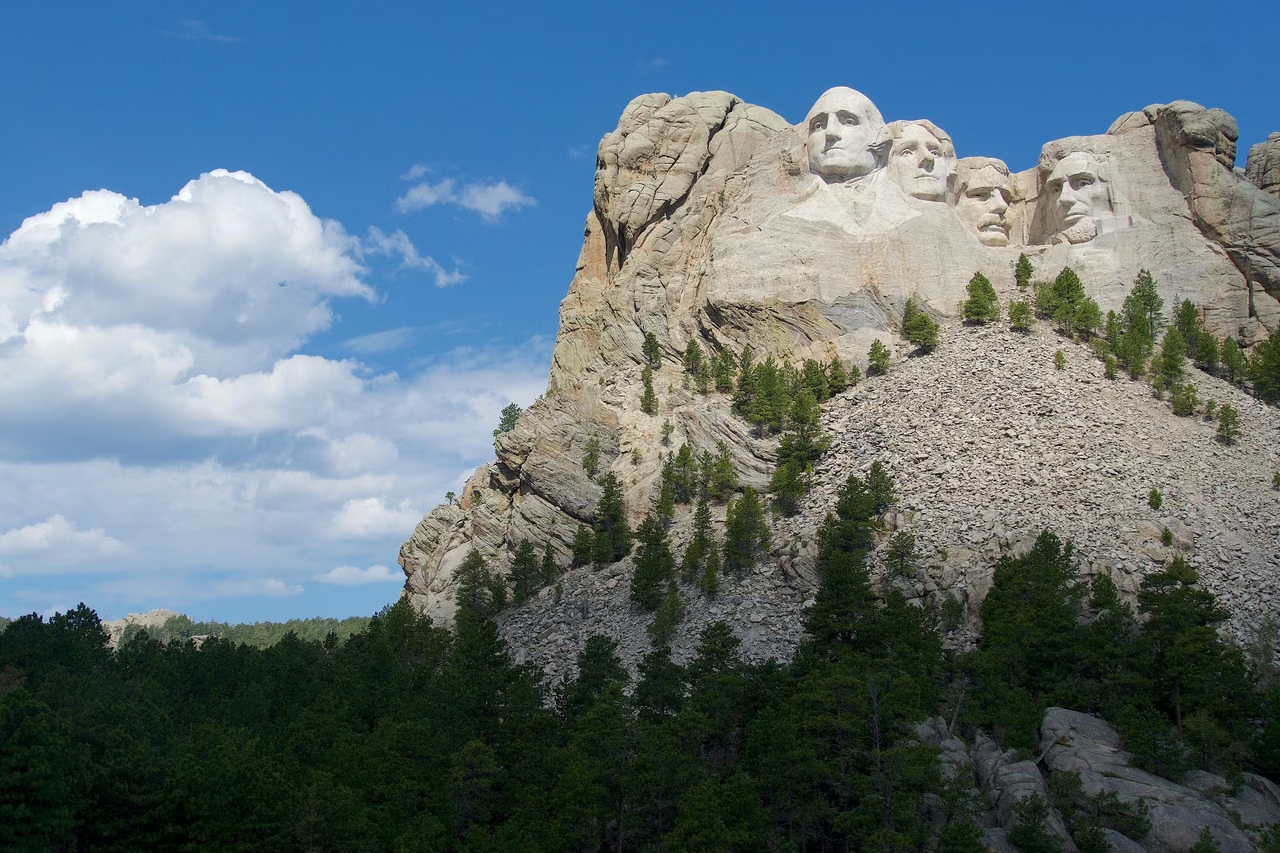
Mount Rushmore is famous for its large presidential statues. The creation process involved artistic conception, measurement, blasting, and precise sculpting. It also reflected the connection between monumental landscapes and tourism in the development of the 20th century.
The Black Hills hold profound cultural significance for the Lakota and other Indigenous peoples. The 1868 treaty, subsequent encroachment over gold, and conflict are essential context. Understanding this landmark means making room for different communities' memories of the same mountains.
Familiar flavors brought to the prairie.
What do distant visitors need?
$5.16billion
Visitor spending in 2025, up 1.1% year over year.
The research released by the state tourism department in January 2026 shows that tourist spending covers meals, accommodations, transportation, retail, and leisure activities. It reflects various forms of consumption throughout a trip and cannot be directly equated with income from a city or a particular business.
Food service accounted for about 23% of visitor spending and lodging for about 20%. Businesses must also distinguish day visits from overnight stays, peak from quiet seasons, and visitors' needs from those of residents.
The South Dakota Tourism Department's "2025 Visitor Economy Impact Report" was released in January 2026. Expenditures are estimates, and numbers are rounded.
Year-round work across different industries.
Statewide nonfarm employment was approximately 470,200 in August 2026, down about 1,100 from July. Manufacturing employed approximately 44,100, up about 100. State totals and individual industries can move in different directions; one figure cannot describe the whole picture.
Bureau of Labor Statistics, September 18, 2026 release; August is a preliminary value, with seasonal adjustment.
Industries & establishments · 2023
The work that keeps communities running.
Healthcare and social assistance, retail and repair services, manufacturing, and accommodation and food services each connect residents with markets from different regions. Tourism sites are just a part of this, just as year-round services are equally important.
The state recorded 29,106 employer establishments and 383,805 paid employees. A single company may operate several stores, offices, or factories, so establishments are not a count of registered companies.
U.S. Census Bureau, 2023 County Business Patterns. The series primarily covers private, nonfarm establishments with paid employees. Employment is measured for the pay period that includes March 12. The 2023 release was the latest in this series available when checked; it is not a measure of current monthly employment.
Annual reporting alongside business operations.
South Dakota limited liability companies need to schedule annual reports. The current fee for paper forms listed for limited liability companies in the state department is $70; separate submissions must be verified and old fee information cannot be reused.
Reports include information on the business address, registered agent, and other applicable details; entities holding agricultural land also face corresponding issues. Registration maintenance, actual business permits, and tax arrangements should be handled separately based on the specific business.
Based on current South Dakota Secretary of State annual report forms, checked in September 2026. Company searches remain within this website.
A small flower as the land awakens.
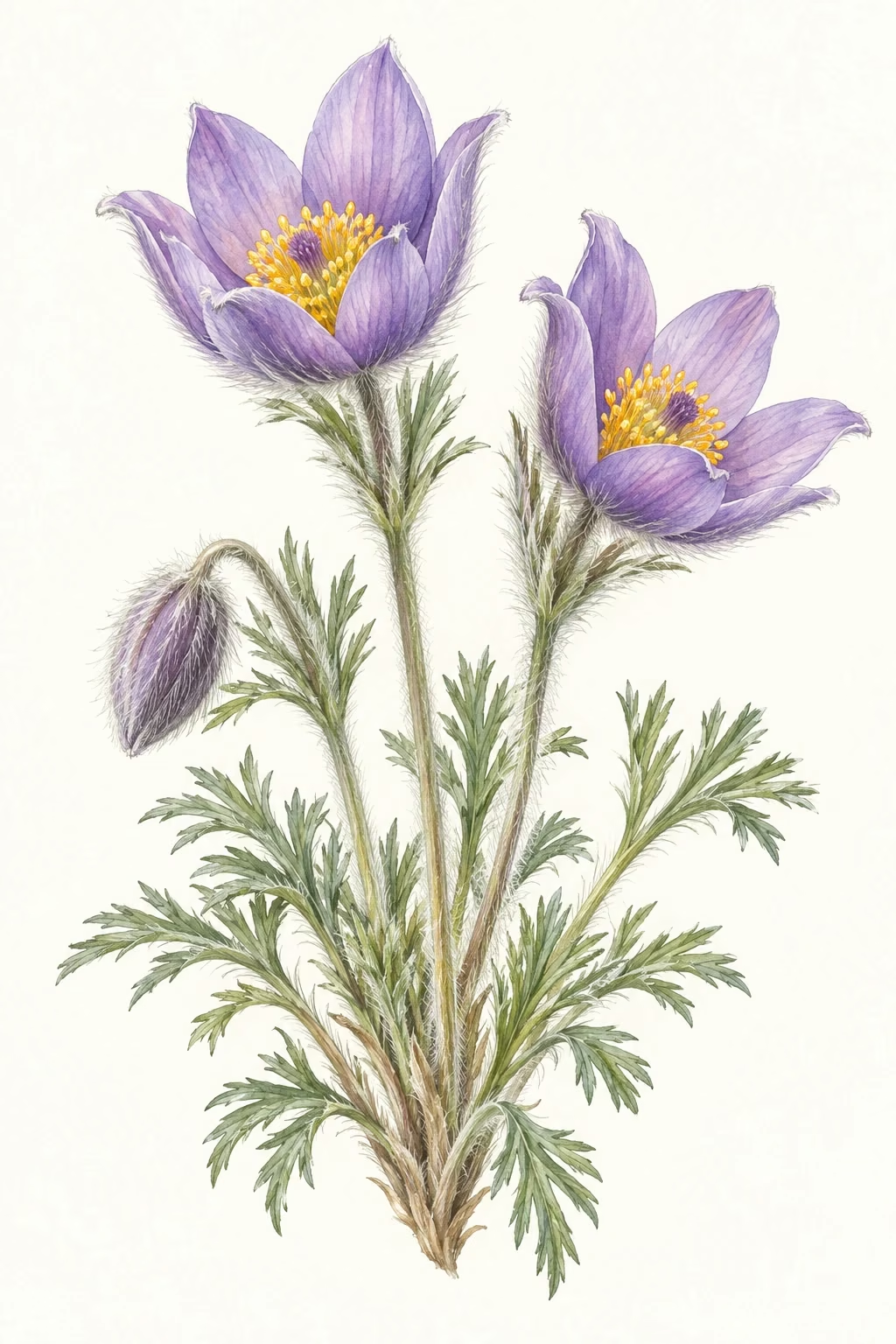
Early spring pasqueflowers provide food for some of the first active pollinators. These low-growing flowers have a distinct place in the prairie’s changing seasons.
From the long history of rock to a single season of bloom, South Dakota invites changes of scale. People live, create, and explore within these landscapes, adding stories of their own.
STATE.REPORT
An editorial feature by STATE.REPORT. Image creators and licenses are credited below.
Sources & further reading
Population estimates ↗
U.S. Census Bureau: state population estimates for July 1, 2025.
How the badlands formed
National Park Service: Sedimentation, paleosols, and erosion.
Human history on this land.
National Park Service: Indigenous Peoples, Land Grants, and Land Changes.
Wind Cave's calcite boxwork
National Park Service: Special geological structures within caves.
Wind Cave and Indigenous memory
National Park Service: Lakota Oral Traditions and Cavern Exploration.
Science in Mines
Sanford Underground Research Facility: Physics, biology, and engineering research.
Mount Rushmore's cultural landscape
National Park Service: The carving's history and the Indigenous cultural significance of the Black Hills.
Sioux Falls' falls
Sioux Falls City Government: River, Quartzite, and City History.
The new plan for quarries.
Sioux Falls City Government: Park Improvements Funding and Planning announced in 2026.
Harvey Dunn’s paintings
South Dakota State University: prairie paintings and the art museum’s collections.
Oscar Howe’s art education ↗
University of South Dakota: contemporary Indigenous art and a commemorative lecture series.
Youth Art Classroom
University of South Dakota: Summer arts courses for 2026.
World of Instruments
National Music Museum: Collections, research, and university education.
South Dakota food traditions ↗
South Dakota’s official tourism organization: chislic, kuchen, and local food traditions.
Wildflowers
South Dakota State University Extension: Pasqueflowers and early spring pollinators.
Image credits & licenses
Dillon Pass, Yellow Mounds Overlook, Badlands National Park, Wall, SD.jpg · w_lemay · CC BY-SA 2.0。
Falls Park and Downtown 09-17-23.jpg · Maxpower2727 · CC BY-SA 4.0。
South Dakota Capitol panorama.jpg · Runner1928 · CC BY-SA 3.0。
Downtown Rapid City South Dakota Street.jpg · Tony Webster · CC BY-SA 2.0。
Mount Rushmore as the clouds roll in.jpg · Jntman5621 · CC BY-SA 4.0。
Cave Boxwork-Wind Cave-3.JPG · National Park Service of the United States of America · Public domain。
Bison on Ordway Prairie 2 (12938647293).jpg · USFWS Mountain-Prairie · Public domain。
Aerial view of the Homestake Mine, Lead, SD 2022-07-10.jpg · Schwerdf · CC BY 4.0。
South Dakota State University February 2015 3 (South Dakota Art Museum).jpg · Michael Barera · CC BY-SA 4.0。
National Music Museum, Vermillion, South DakotaNational Music Museum, Vermillion, South Dakota (4839089778).jpg · David Becker · CC BY 2.0。
South Dakota Farm Corn Harvest Aerial 5.jpg · Carl Young · CC BY-SA 4.0。