STATE.REPORT
One state’s sounds and landscapes

Tennessee

Mountains. Rivers. And music.

From the streets of Memphis to the stages of Nashville, then eastward to a quieter pace in the mountains.

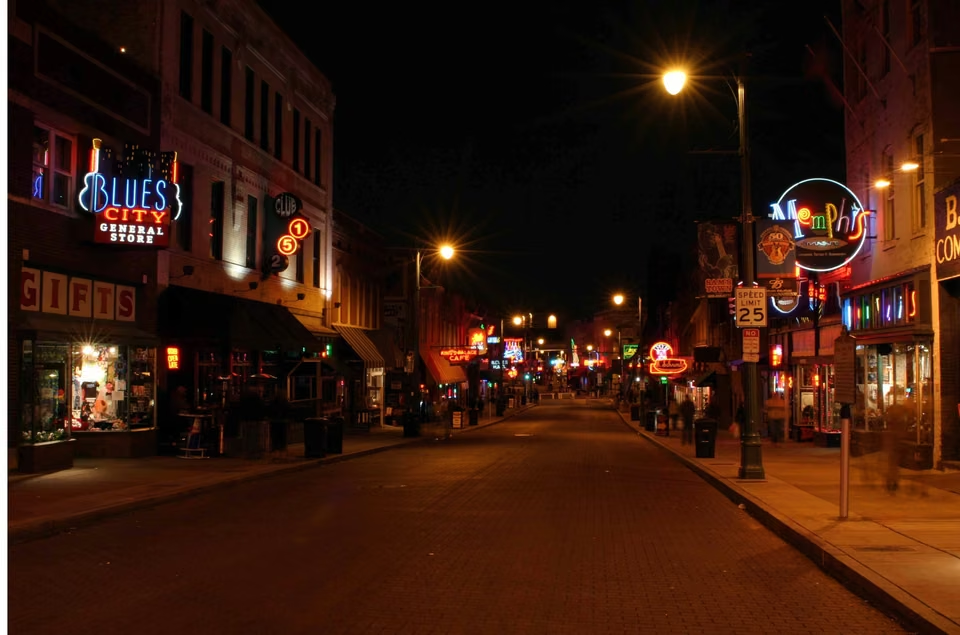
Beale Street, Memphis · Music and neighborhood life after dark
Cities / Music / Rivers / MountainsTennessee feature
State capitalNashville
Population · 2025 estimate7,315,076 people

Traveling east or west also means moving between cultures and rhythms of life.

First movement · The river city

Memphis beyond the neon.

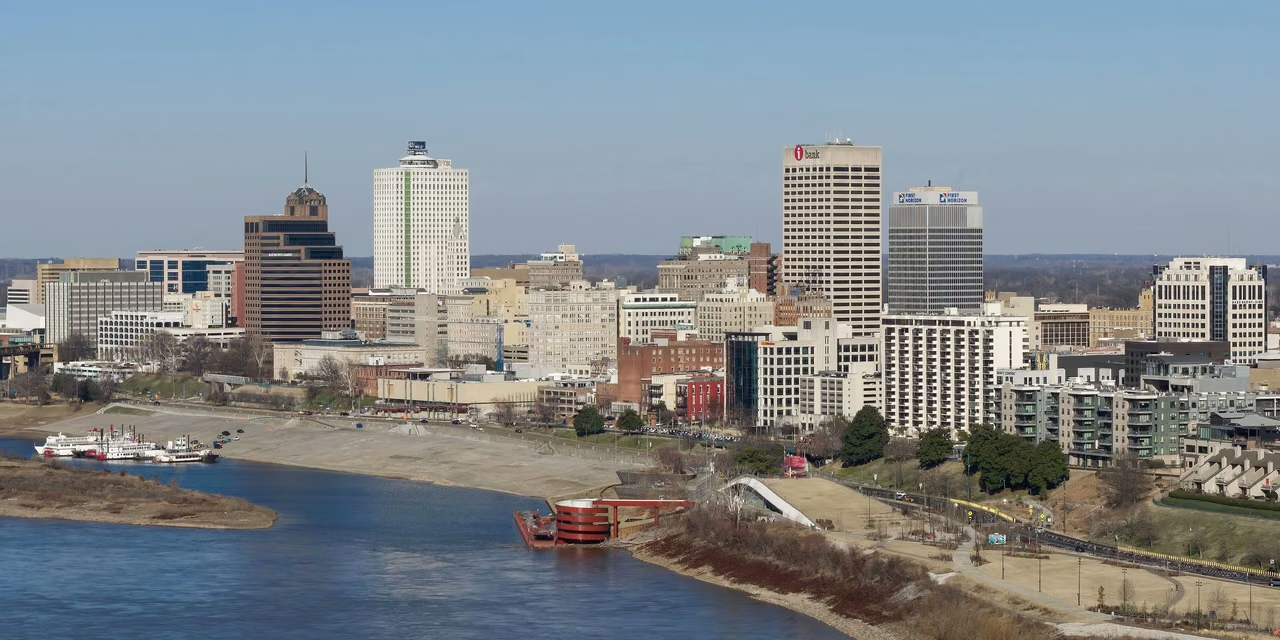
Memphis skyline · A city on the Mississippi

The river brings people and goods together. The streets bring their voices together.

Beale Street’s music grew from everyday life.

Beale Street holds an important place in American blues history. Performance, commerce, and African American community life gave the street a cultural influence far beyond its buildings.

The blues helped shape many later musical traditions. Listening to a style means hearing how people gave voice to everyday experience. Today's performances and visits draw on these rich, often complex local histories.
Beyond the river port, logistics and local work.

On the Mississippi River, Memphis connects a wider region through transport, warehousing, and urban services. Moving goods takes space, vehicles, loading facilities, and coordinated labor; residents also depend on healthcare, shops, and neighborhood services.

Visitor-oriented nightlife and business distribution networks may share a city, but serve different customers, schedules, and ways of working. One image of a city cannot represent its entire economy.

A place to pause

Beyond one room, the echoes of an era.

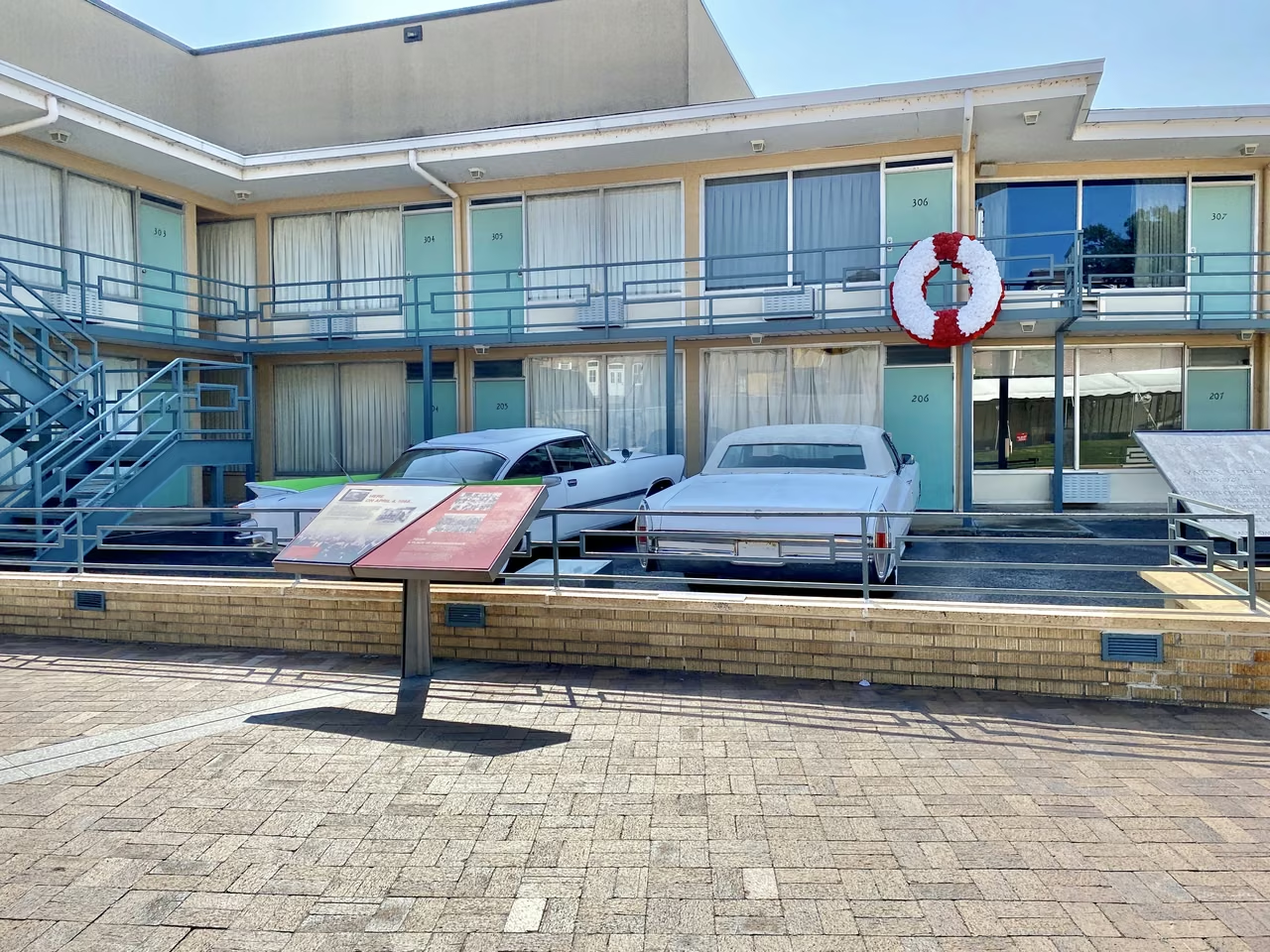
Lorraine Motel · National Civil Rights Museum

Lorraine Motel, Memphis · Historic site of the National Civil Rights Museum

April 4, 1968

Martin Luther King was assassinated there. That year, he came to Memphis to support a sanitation workers' strike. The museum today centers on this historical building to tell the story of the American civil rights movement and its lasting impact.

During the era of segregation, the Lorraine was one of the hotels where African American travelers could stay, and it also hosted many musicians. Performances, accommodations, and community history intersected here.

This memory is not divorced from the image of the Music City. To understand Memphis, one must see experiences of creativity, labor, and the pursuit of equality alongside the sounds on the streets, not just as background noise.

Second Segment · Step onto the Stage

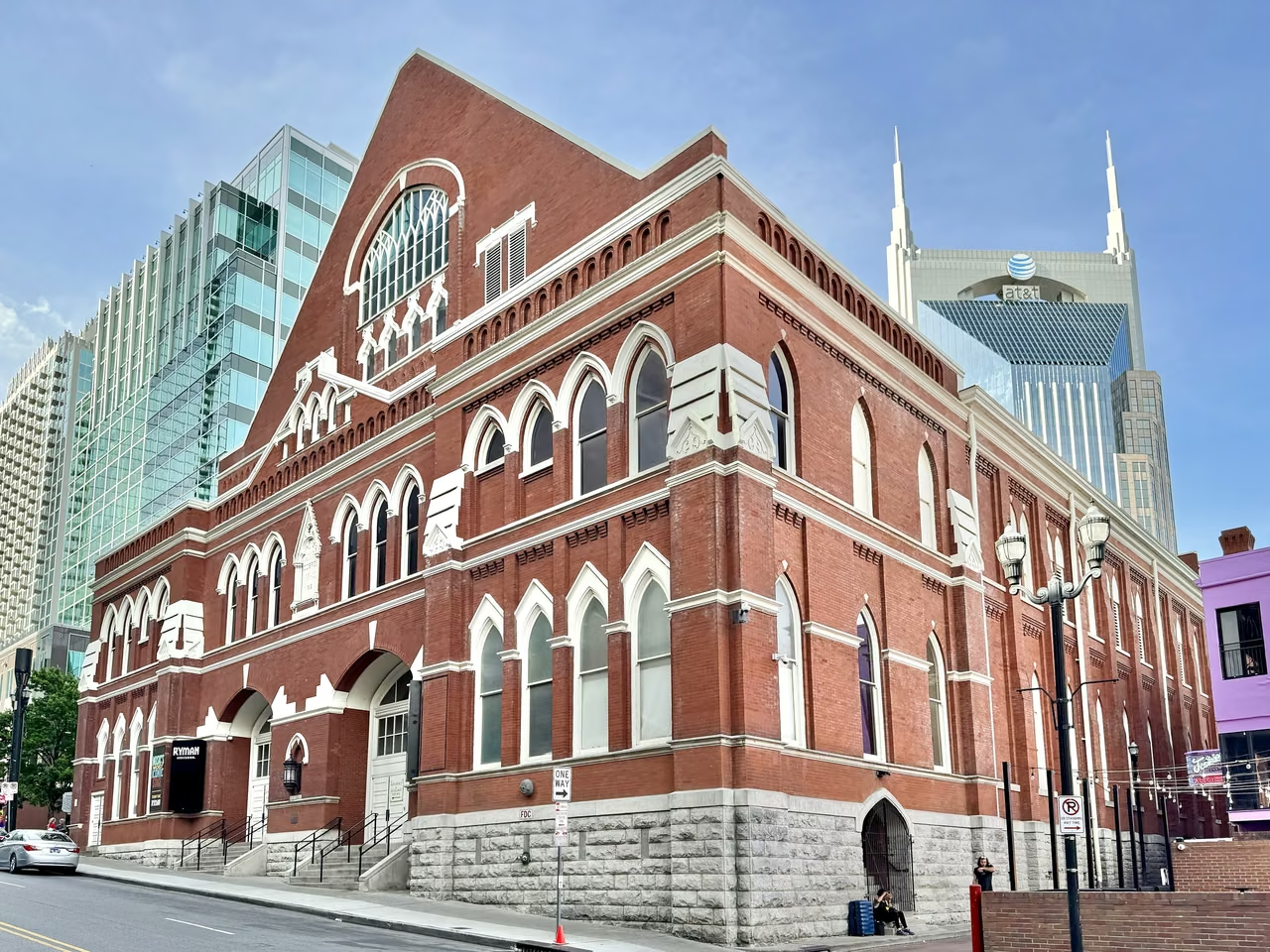
An auditorium that carried sound far beyond its walls.

Nashville Ryman Auditorium · A Historical Venue Connecting Broadcast and Live Performance
Ryman Auditorium

The building came first. Audiences keep the legend alive.

Originally built as a place for religious gatherings, the Ryman Auditorium later accommodated various performances and public events. From 1943 to 1974, the Grand Ole Opry, a long-running country music radio show, held its performances here, expanding the reach of music through both the stage and radio.

A radio program, a performance venue, and a musical genre each have their own history. The Ryman's story embraces country music and a much broader performance tradition, sustained by generations of musicians, staff, and audiences.

For a city, a performance means the stage, sound and light, ticketing, traffic, and hospitality. What the audience sees is the front, but much of the work in the city happens before the show starts and after it ends.

RehearsalCurtain upMeetingResonance
The Other Side of Nashville

Beyond the music, a park for the public.

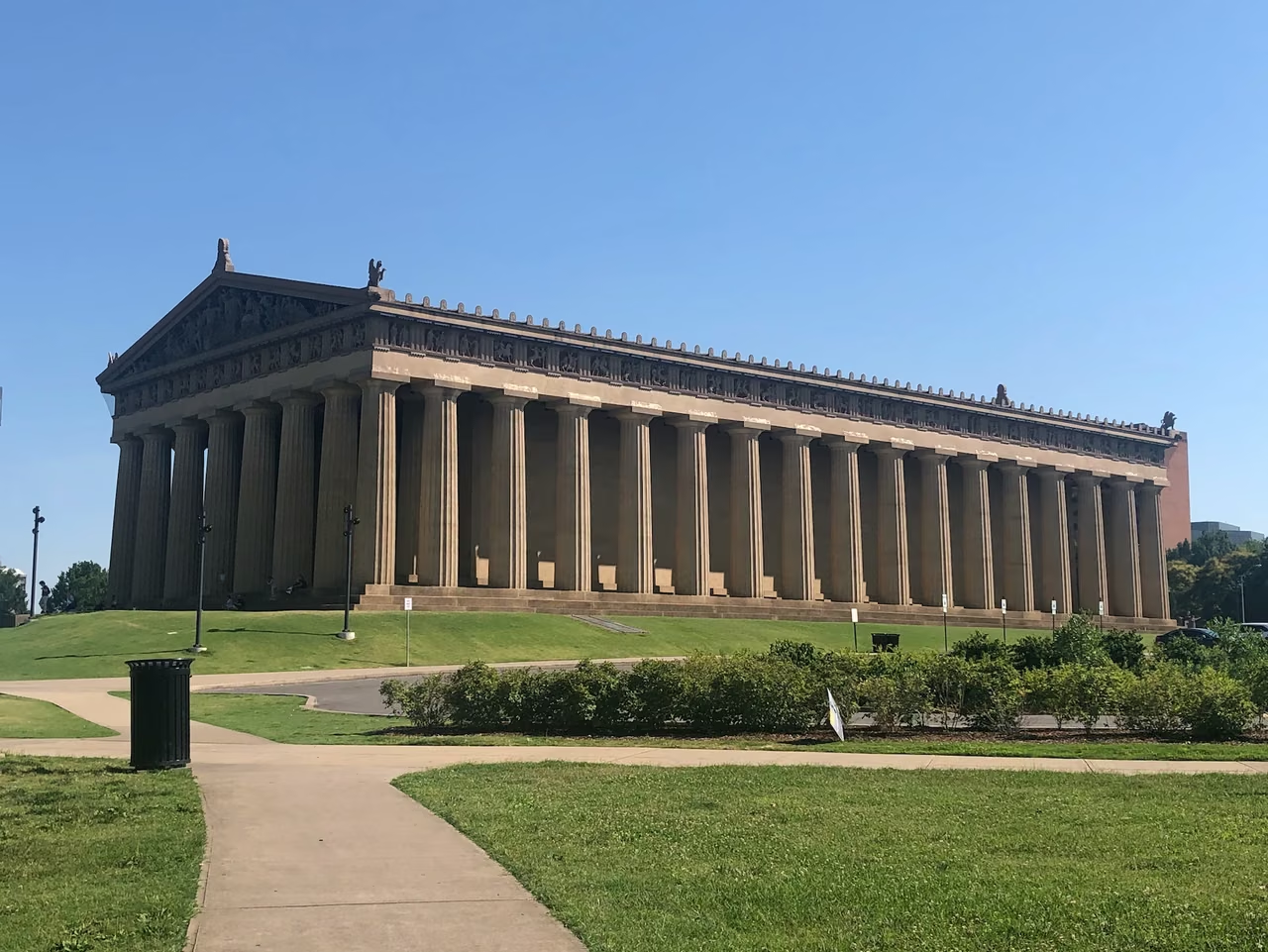
Nashville's Parthenon replica · Centennial Park

The Parthenon replica in Centennial Park originated at the 1897 Tennessee Centennial Exposition. After the exposition, a desire to retain the building and grounds helped shape the park's development.

The original temporary structure was rebuilt in more durable materials during the 1920s and 1930s. Today, it is a place for architecture and art, as well as a public setting used by city residents.

Such a place makes Nashville more than just a string of performance addresses. The parks, education, art, and everyday community all contribute to the city's appearance.

The work behind the stage

An audience arrives. Many businesses respond.

$32.5billion

Direct visitor spending in 2025. Tennessee tourism department, released August 2026.

The Tennessee tourism department announced that direct visitor spending reached $32.5 billion by 2025. This range encompasses various forms of spending during a trip, not limited to concerts, a specific city, or a single tourist attraction.

Music activities, city stays, and mountain adventures offer different purposes of visit. Peak demand before and after large events differs from daily resident consumption; suppliers need to understand specific dates, stay times, and delivery schedules.

Tourist spending is not corporate profit either. Each sector like accommodations, dining, transportation, and activities has its own costs and operational conditions, and one cannot directly convert a statewide increase in consumption growth into a specific company's operational results.

Connect the events calendar with actual operations.

On-site services need to focus on the connection between setup, staging, rehearsals, the main performance, and dismantling. Services like medical care, repair, and retail, on the other hand, rely on long-term demand. Both types of work are important, but they cannot be managed with the same customer flow logic.

Third Segment · Streets Slow Down

Everyday life in a city-center square.

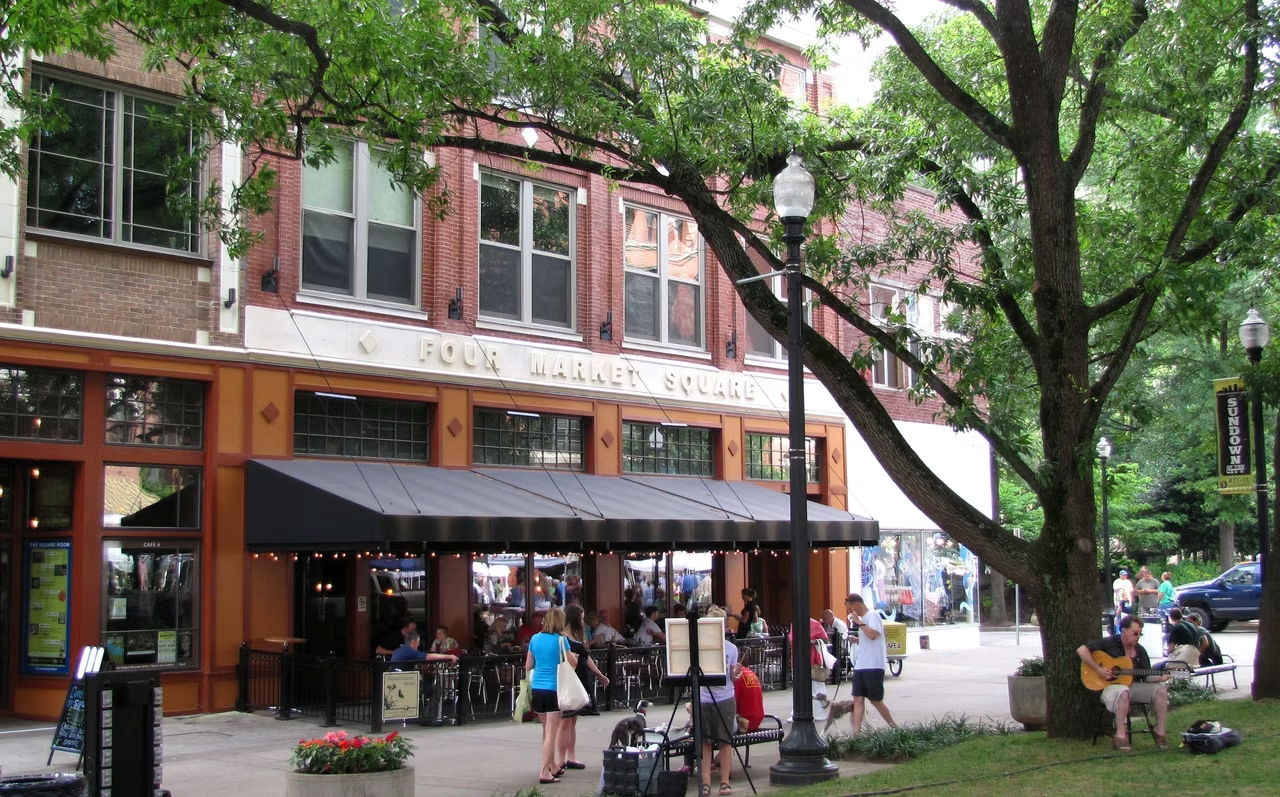
Knoxville Market Square · Streets, stores, and public life.

Knoxville’s public market story begins in 1854

The Market Square initially served as a venue for agricultural trade, but later accommodated commercial, residential, performance, and public activities. Its history illustrates that a city center can evolve while maintaining public interaction.

Universities, healthcare, commerce, and services are also part of today's Knoxville. The city's walkable experience in the downtown area and its connection to the surrounding areas make it both welcoming to visitors and a place for long-term residents.

From the riverfront neighborhoods of Memphis to the auditoriums of Nashville, and to the squares here, Tennessee's cities do not need to be interpreted as having the same style. Each retains the places where encounters, work, and expression happen.

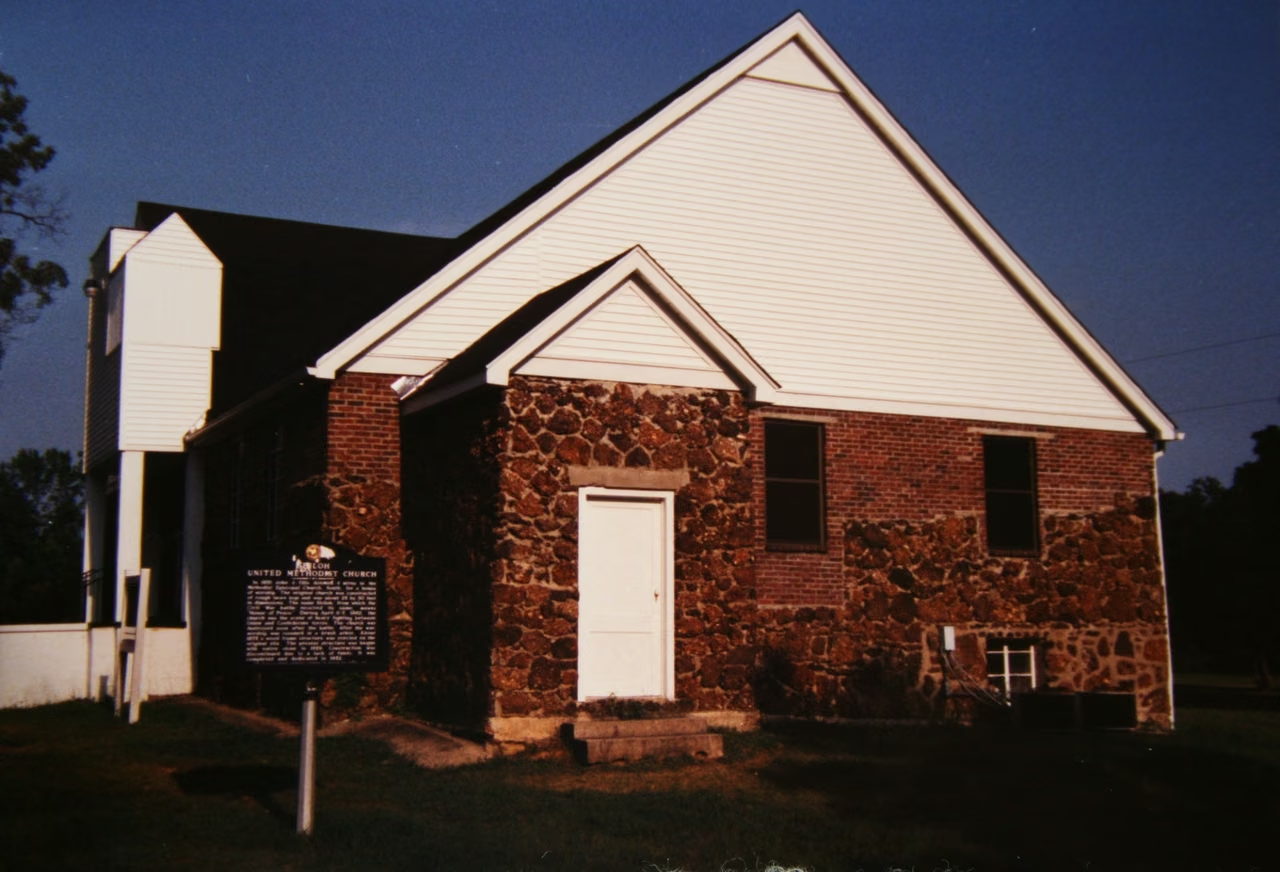
Shiloh United Methodist Church · The brick building completed in 1949
Another segment of memory by the river.

A quiet building recalls a time of war.

The Battle of Shiloh took its name from a local church. The brick building pictured here was completed in 1949, the third church on this site. It is distinct from the reconstructed log church completed in 2001.

Battlefield preservation links terrain, location, and events. Coming to such a place requires distinguishing preserved remnants, later memorials, and reconstructed structures, which participate in the telling of history in different ways.

Coda: Walk towards the mountains in the east.

Mountain after mountain. A quieter rhythm.

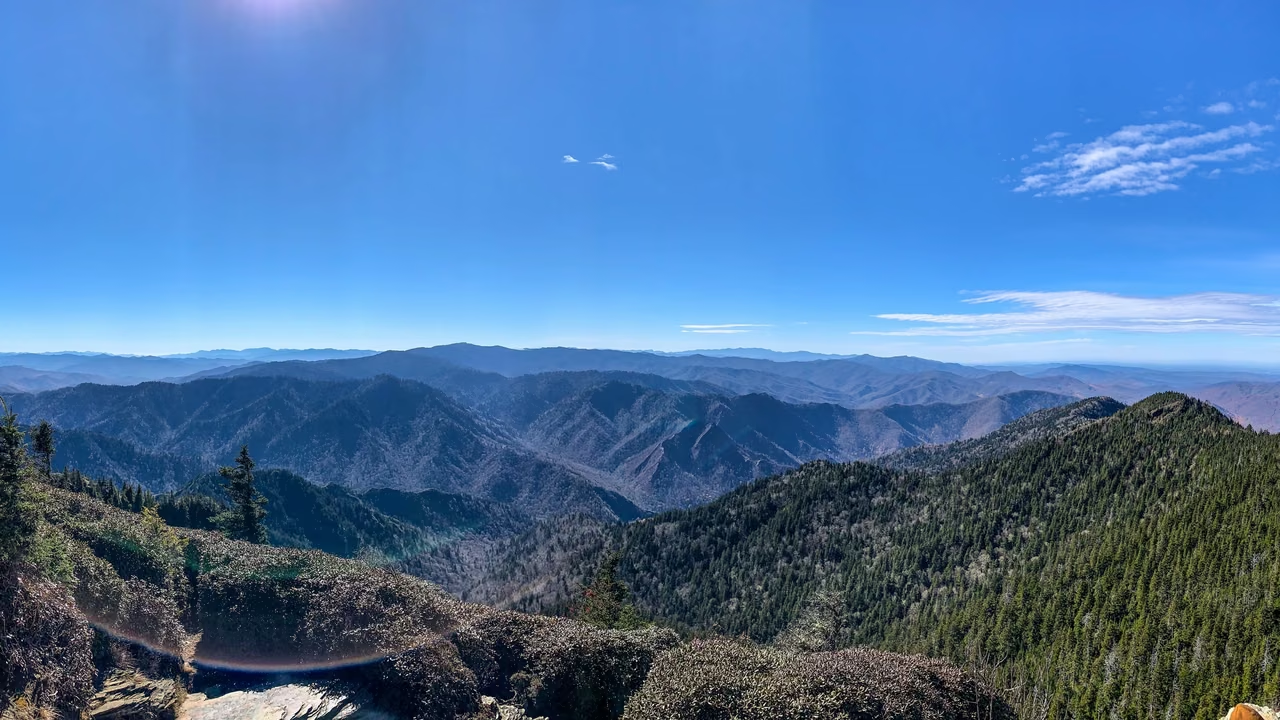
The Great Smoky Mountains from Mount Le Conte · Ridge beyond ridge

Blue ridges from afar. Up close, streams, fallen leaves, and small, intricate lives.

The forests and streams of Great Smoky Mountains provide habitat for various amphibians. Many lungless salamanders live in moist environments, hiding under stones, logs, and leaf litter, and also frequent the edges of streams.

These animals are part of the food chain in the forest. Decomposition of leaves, invertebrates, and predators interact, seemingly insignificant activities in understory life are also part of the functioning of the entire mountain ecosystem.

Traveling through scenic mountains is but a moment. Protecting forests also requires attention to water, habitat space, and long-term changes. Tennessee's beauty can be the chorus of shared joy on a stage or a quiet path in the woods.

A Purple Afterglow

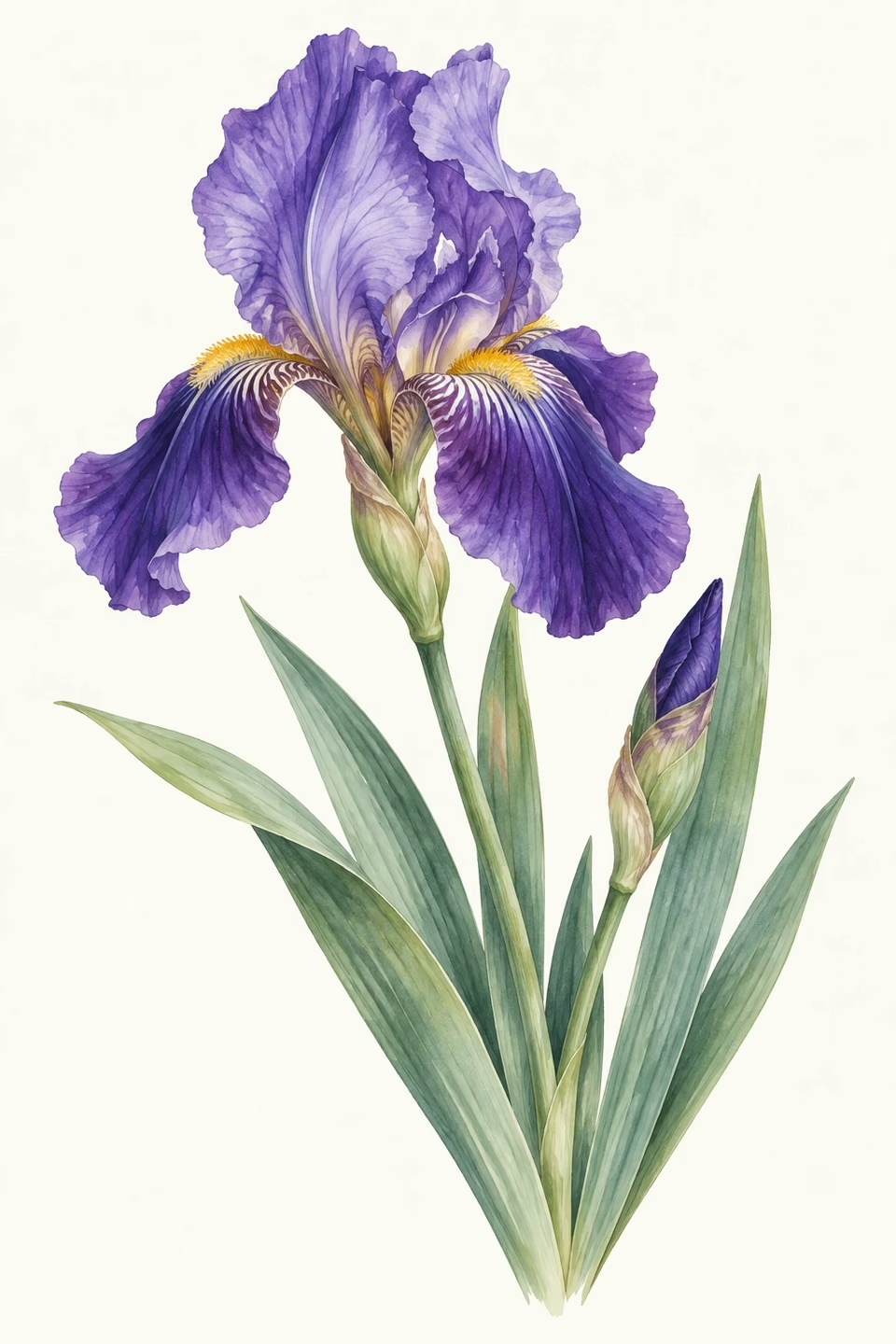
Iris

Tennessee's state cultivated flower

Purple iris · Tennessee Flower Art Illustration

The iris is Tennessee's official state cultivated flower, alongside separate wildflower symbols. That designation is distinct from the natural vegetation of a particular mountain landscape.

The unfolding petals and sword-shaped leaves give this state symbol a clear outline. It leaves a quiet and bright finish to a topic of music, streets, and forests.

Outside the Stage: Tennessee

A fuller picture of local work.

Industries & establishments · 2023

The work that keeps communities running.

Beyond music and travel, healthcare, manufacturing, retail, transportation, and professional services support urban and regional economies. Employment data provide additional insights into daily work that are not captured by visitor consumption statistics.

The state recorded 150,129 employer establishments and 2,971,417 paid employees. A single company may operate several stores, offices, or factories, so establishments are not a count of registered companies.

Health care & social assistance455,877 people

Manufacturing357,878 people

Retail trade349,855 people

Accommodation & food services321,203 people

Administrative & support services292,794 people

U.S. Census Bureau, 2023 County Business Patterns. The series primarily covers private, nonfarm establishments with paid employees. Employment is measured for the pay period that includes March 12. The 2023 release was the latest in this series available when checked; it is not a measure of current monthly employment.

STATE.REPORT

An editorial feature by STATE.REPORT. Image creators and licenses are credited below.

Sources & further reading

Population estimates ↗

U.S. Census Bureau: state population estimates for July 1, 2025.

The history of Ryman Auditorium

Ryman Auditorium: Religious gatherings, performances, and country music broadcasting.

The Grand Ole Opry’s years at the Ryman ↗

Ryman Auditorium: Performance history from 1943 to 1974.

Beale Street Historic District

National Park Service: Blues music and the neighborhood's historical significance.

Lorraine Motel and the National Civil Rights Museum

National Civil Rights Museum: The building, its community, and the history of Martin Luther King Jr.

Nashville's Parthenon

Nashville City government: The 1897 World's Fair and City Culture.

Centennial Park

Nashville City Government: Parks and Rebuilding of Structures.

Knoxville Market Square ↗

Knoxville's government: Started in 1854, the public market.

Shiloh battlefield and church history

National Park Service: The 1949 church and historic places on the battlefield.

The amphibians in Great Smoky Mountains.

National Park Service: Stream, leaf litter, and salamander habitat.

The state symbol of Tennessee

Tennessee state government: The iris as the state cultivated flower, alongside separate wildflower symbols.

Image credits & licenses

Verify your email

We will email you a six-digit code to sign in.

By continuing, you agree to the Terms and acknowledge the Privacy Policy.

Search history

Your searches from the last 30 days. Viewing this list does not use searches. Full company reports are not saved here.