The railroad brought people.
Railways carried the gorge's coal and timber to outside markets and drew workers, shops, schools, and families along their routes. Towns such as Thurmond grew with transport and industrial demand.

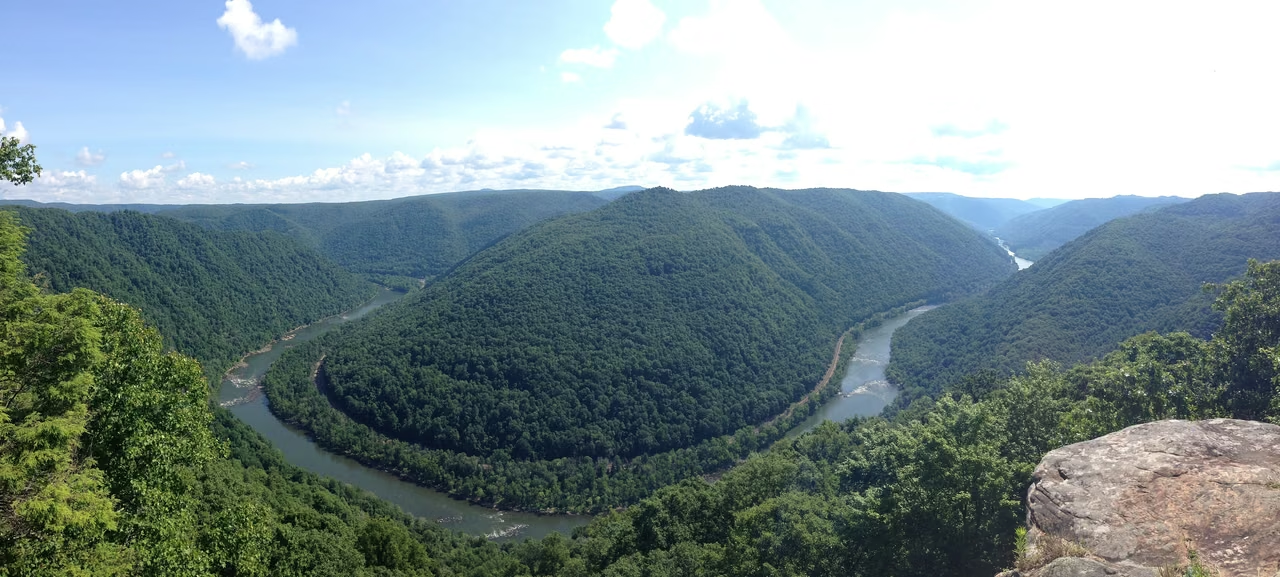
The mountains have a voice.
Follow the gorge through the mountains’ past and present.
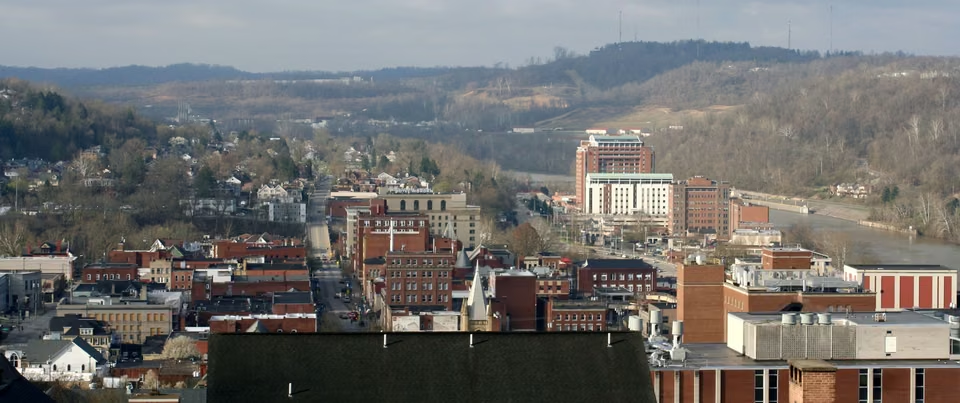
West Virginia's towns are often accompanied by river valleys, railroads, and mountain roads. Charleston sprawls along the Kanawha River, while Morgantown connects with universities, healthcare, and research. Huntington faces the Ohio River. The narrow eastern region has its own pace, distinct from the southern gorges.
Coal and wood once profoundly shaped this mountain landscape, and schools, hospitals, factories, and public institutions also sustain today's daily life. Outdoor activities bring more people into the canyon, but this story also belongs to those who have long lived, worked, and created here.
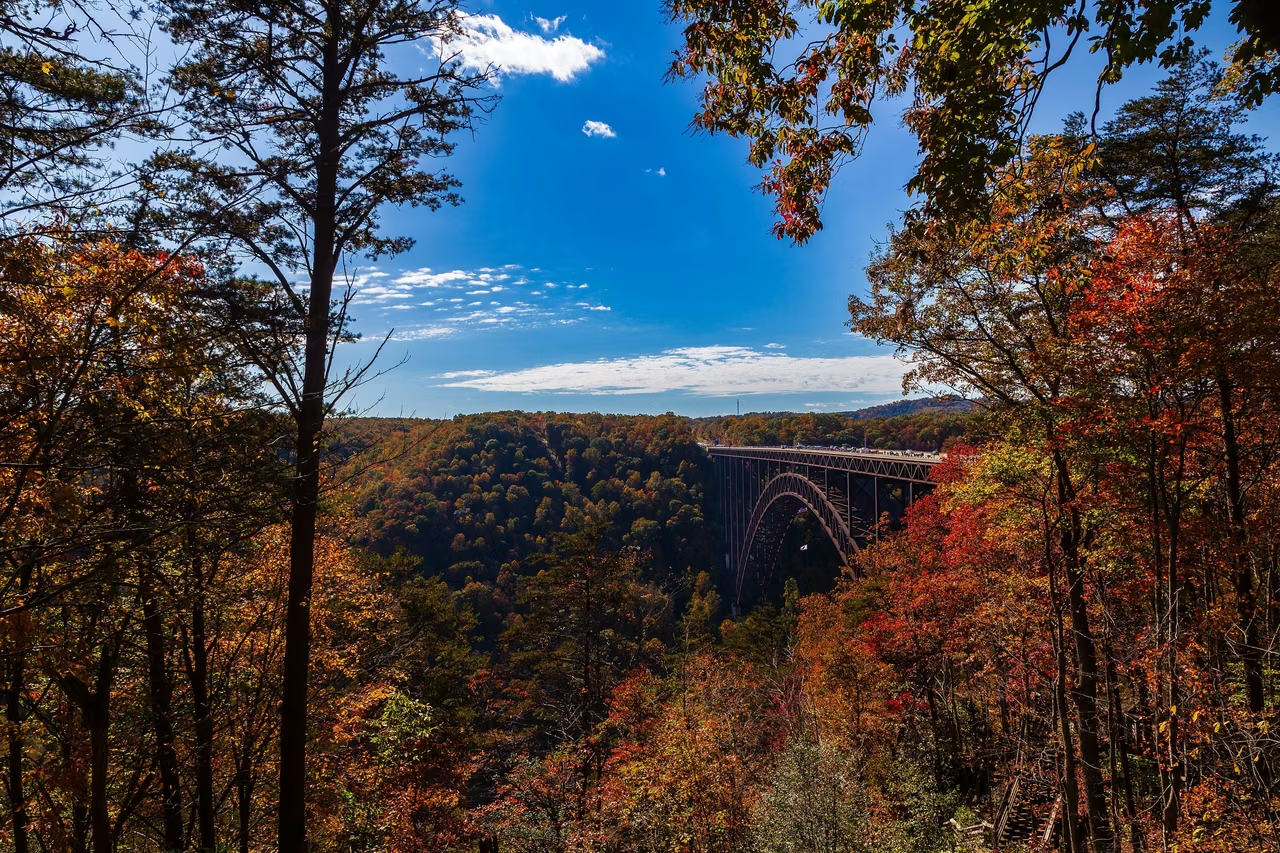
A deep gorge can make opposite banks look close while forcing a long drive along mountain roads. The bridge transformed that journey and became a landmark where engineering and mountain scenery meet.
Looking at the river, one can shift their gaze from the bridge to the shore: railways and remnants of old industries coexist with today's recreational activities. Natural landscapes and production histories leave their distinct layers in the same valley.
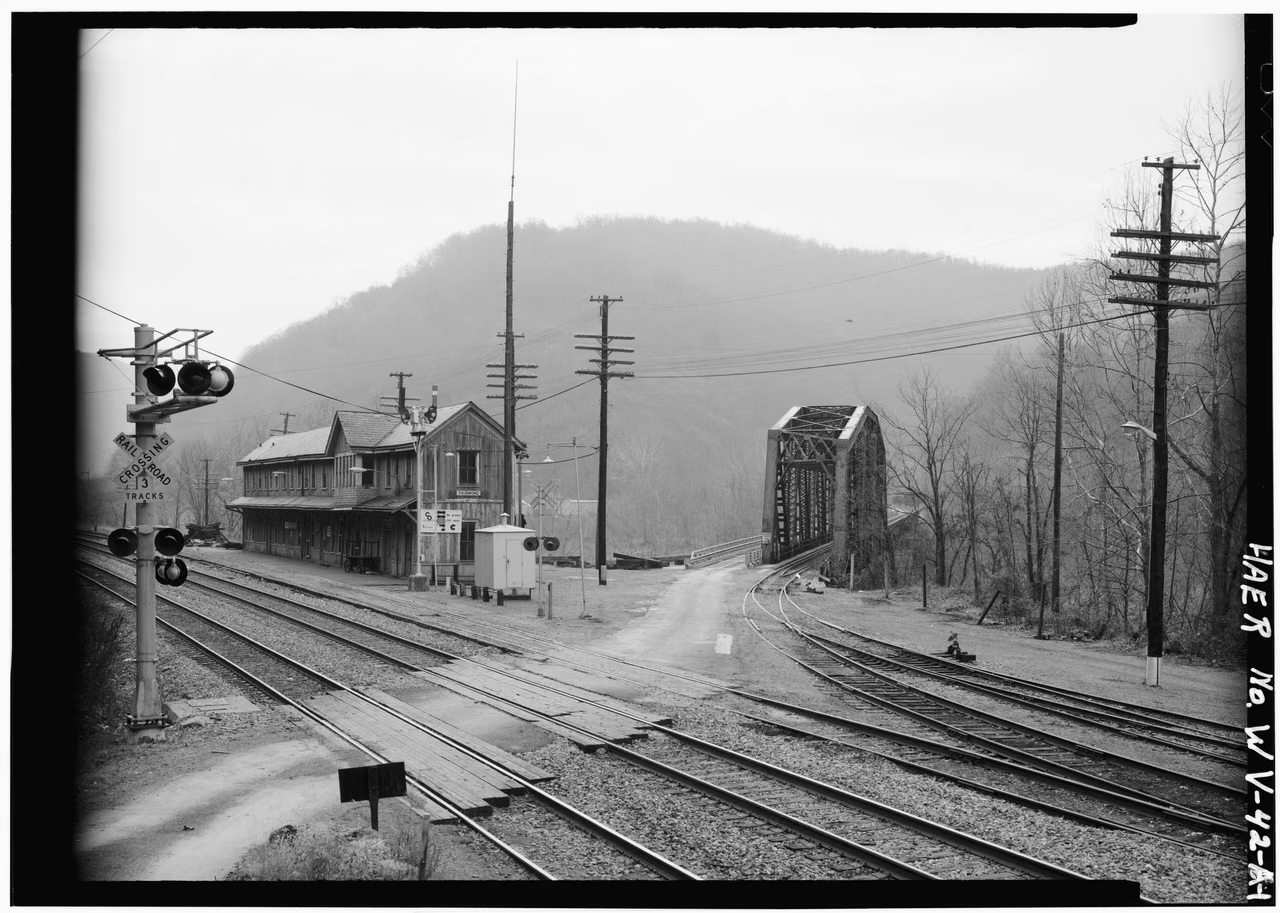
Railways carried the gorge's coal and timber to outside markets and drew workers, shops, schools, and families along their routes. Towns such as Thurmond grew with transport and industrial demand.
The expansion of mining and logging brought opportunities but also dangers, labor conflicts, and environmental changes. Oral memories of immigrants and locals brought the industrial history back to specific people and daily life.
National parks preserve more than forests. Abandoned train stations, mining facilities, and remnants of communities help people understand how industrial growth and decline have shaped towns, and remind us of the residents and way of life that remain.
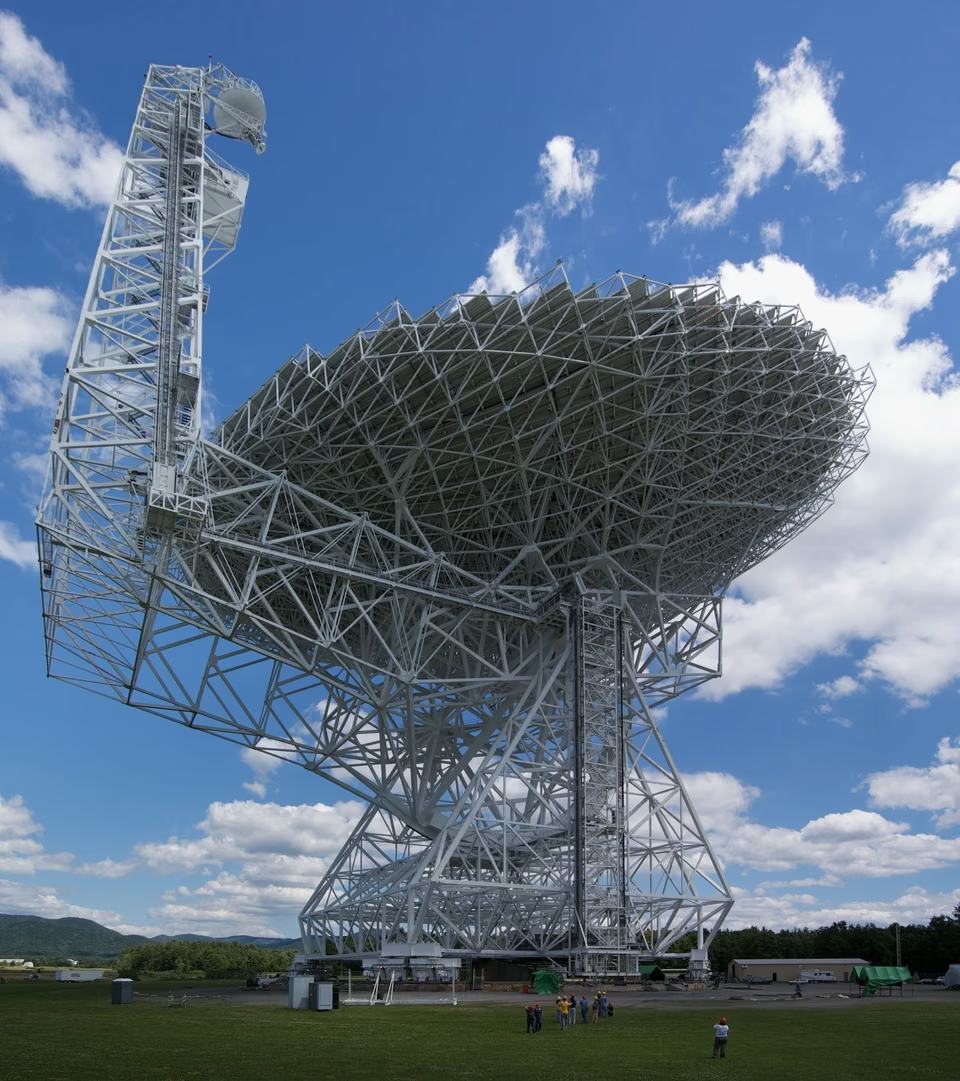
Radio astronomy detects faint radio signals from space. Green Bank's mountain setting and radio protection rules make observation possible. Behind the telescope is a team working with receivers, engineering laboratories, and fabrication facilities.
Quiet here mainly means reduced radio interference, not an absence of sound or a statewide ban on electronics. Rules differ between observation, visitor, and office areas; equipment use follows the requirements of each zone.
Research facilities link the mountainous region to international scientific networks. Student education, equipment development, and data analysis also keep this typically remote area continuously involved in the production of new knowledge.
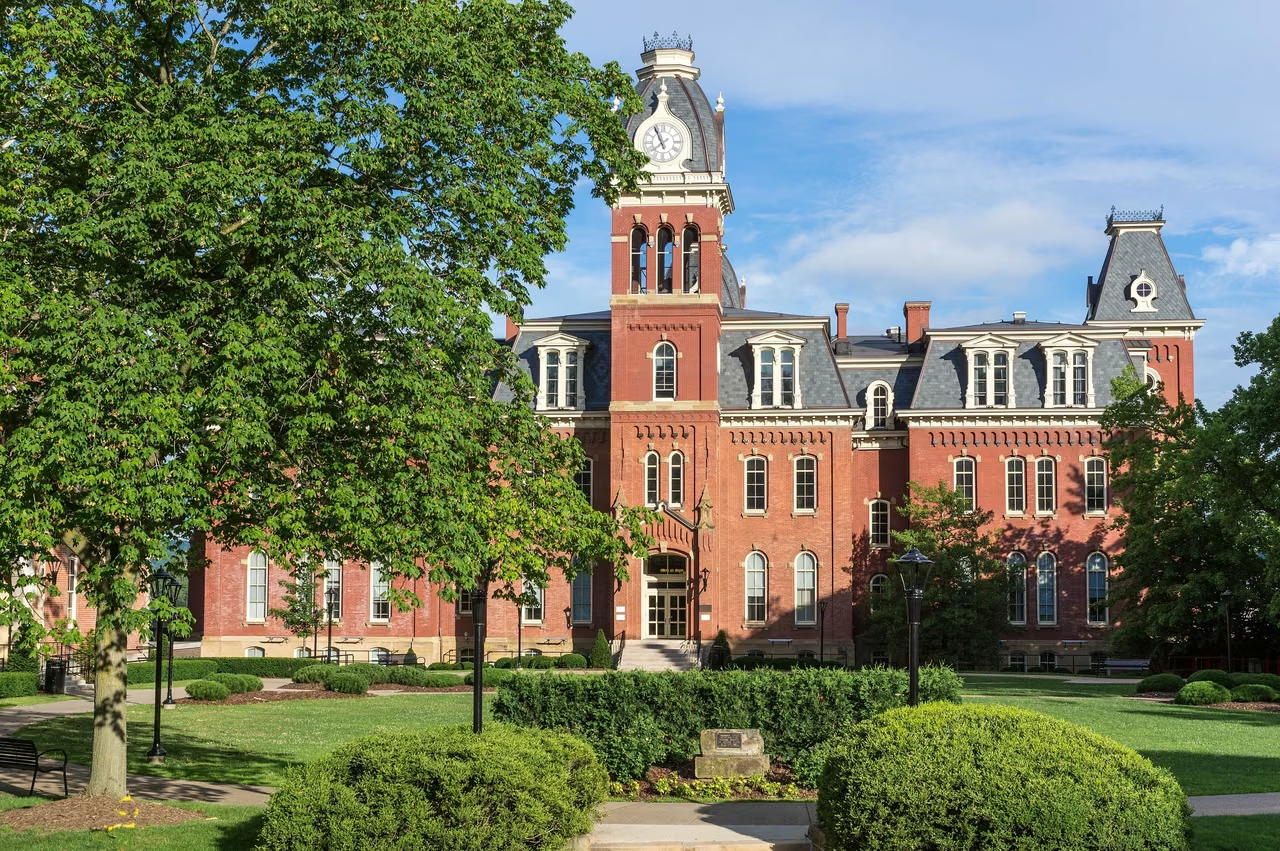
West Virginia University research and development spending, fiscal year 2025.
The Office of University Research releases fiscal year data; however, these figures cannot be directly equated to commercial income.
University research requires equipment, computing, experimental space, and specialized personnel, and involves procurement, maintenance, and technical collaboration. Annual activities from the campus and healthcare system differ from operations that rely solely on peak tourist seasons.
Research funding explains the scale of research activities; whether projects turn into corporate orders depends on actual demand, procurement arrangements, and partnership conditions. For universities and professional institutions, reliable delivery and professional capability are more important than broad market imaginings.
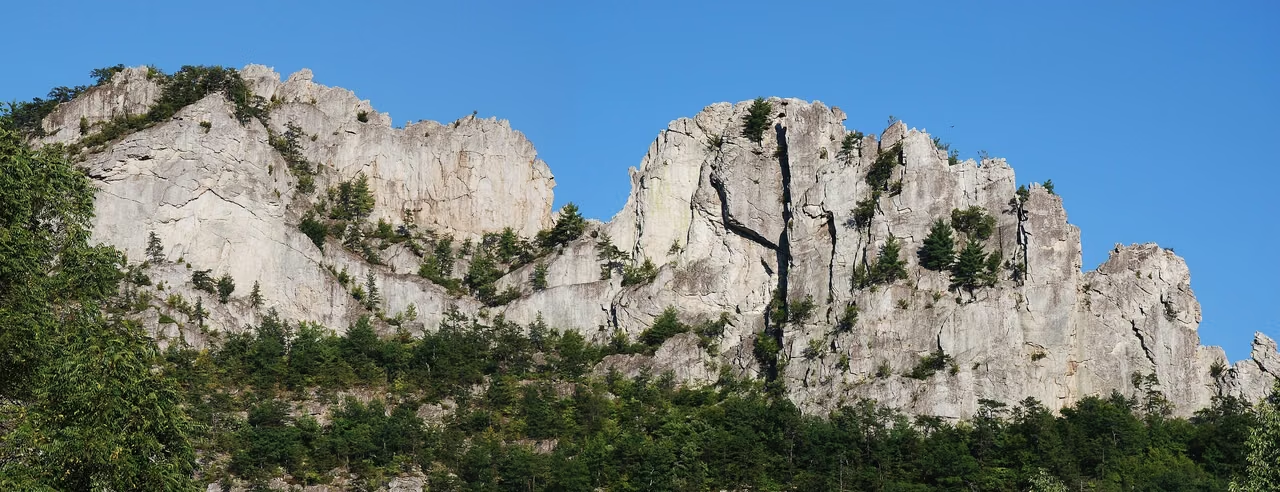
The striking ridge of Seneca Rocks draws the eye. Differences in scale between valley, cliff, and vegetation give walkers and climbers different experiences of the mountains.
Outdoor operations are also divided into specific roles: guides, equipment, accommodation, and catering, each addressing different needs. Conditions of the route, season, and mode of arrival will directly impact the schedule for the day.
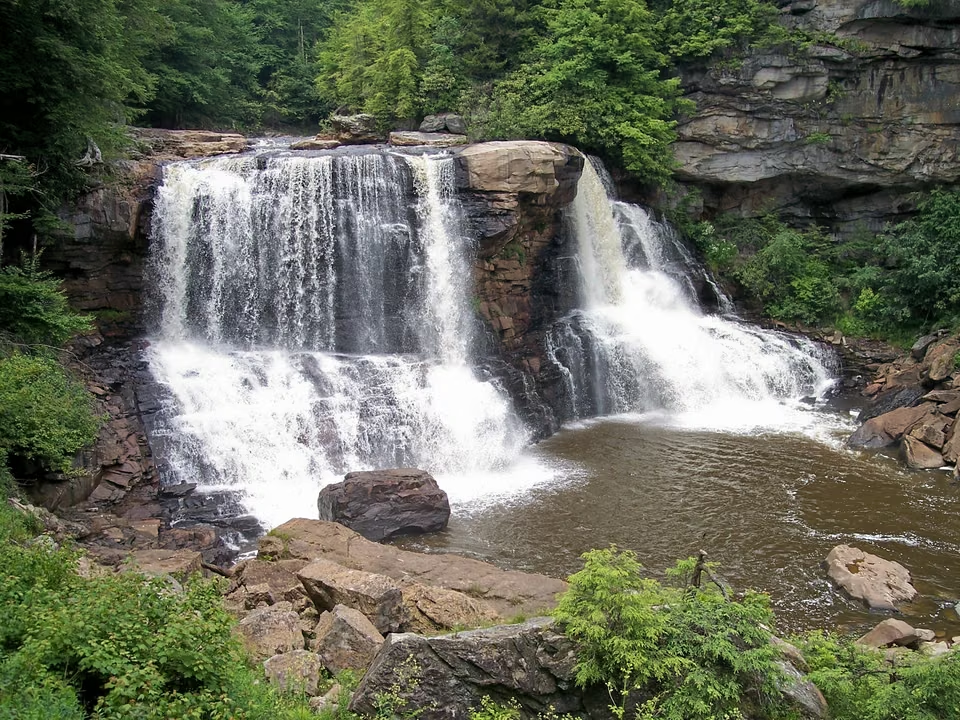
Blackwater Falls gets its amber color from tannins in forest vegetation. State park information identifies fallen hemlock and red spruce needles as sources of the compounds that color the water.
The water, rock, and evergreen forest come together to create the scenery. Observe a stream, and you are also observing the forest and land upstream.
From one live performance into many everyday lives.
The "Mountain Stage" produced by West Virginia Public Broadcasting connects listeners with musicians since 1983. Its repertoire does not limit itself to any one mountain genre and provides a platform for new works and performers from diverse backgrounds.
A performance includes the composer's creation, as well as work on sound, recording, venue, and dissemination. The value of a cultural activity lies both on stage, in the long-standing audience, professional experience, and local collaborations.

Pepperoni rolls enclose the meat in bread dough and bake it into a portable meal. A Fairmont historical marker connects the food with Italian immigrant and coal miner Giuseppe Argiro, who created it in 1927.
From the food one eats during work to common items in a bakery, one flavor can carry memories of migration and labor. Different doughs, fillings, and methods used by various stores also keep familiar foods with their own styles.
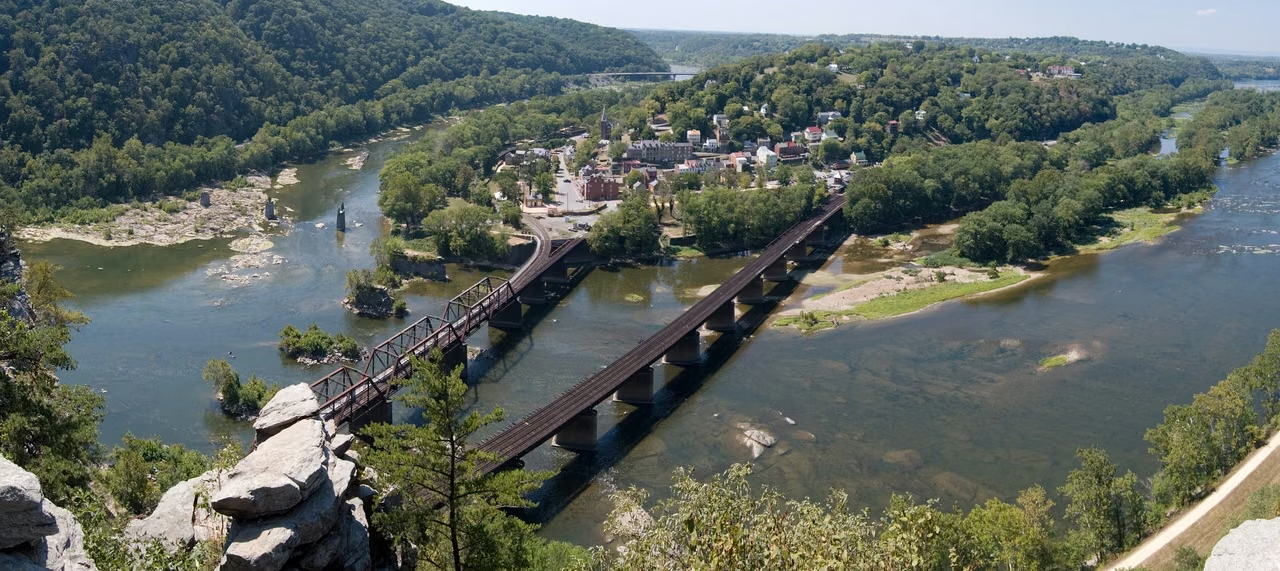
John Brown's raid brought Harpers Ferry to national attention. The building later known as John Brown's Fort became a place to explore slavery, resistance, and the years leading to the Civil War.
Storer College offered Black students opportunities for education and professional development. Beyond teaching, the campus fostered community, trained teachers, and sustained public life.
Saved buildings and terrain allow for the observation of stories related to industry, waterways, warfare, and education. The town's scenery is enriched by these specific historical elements.
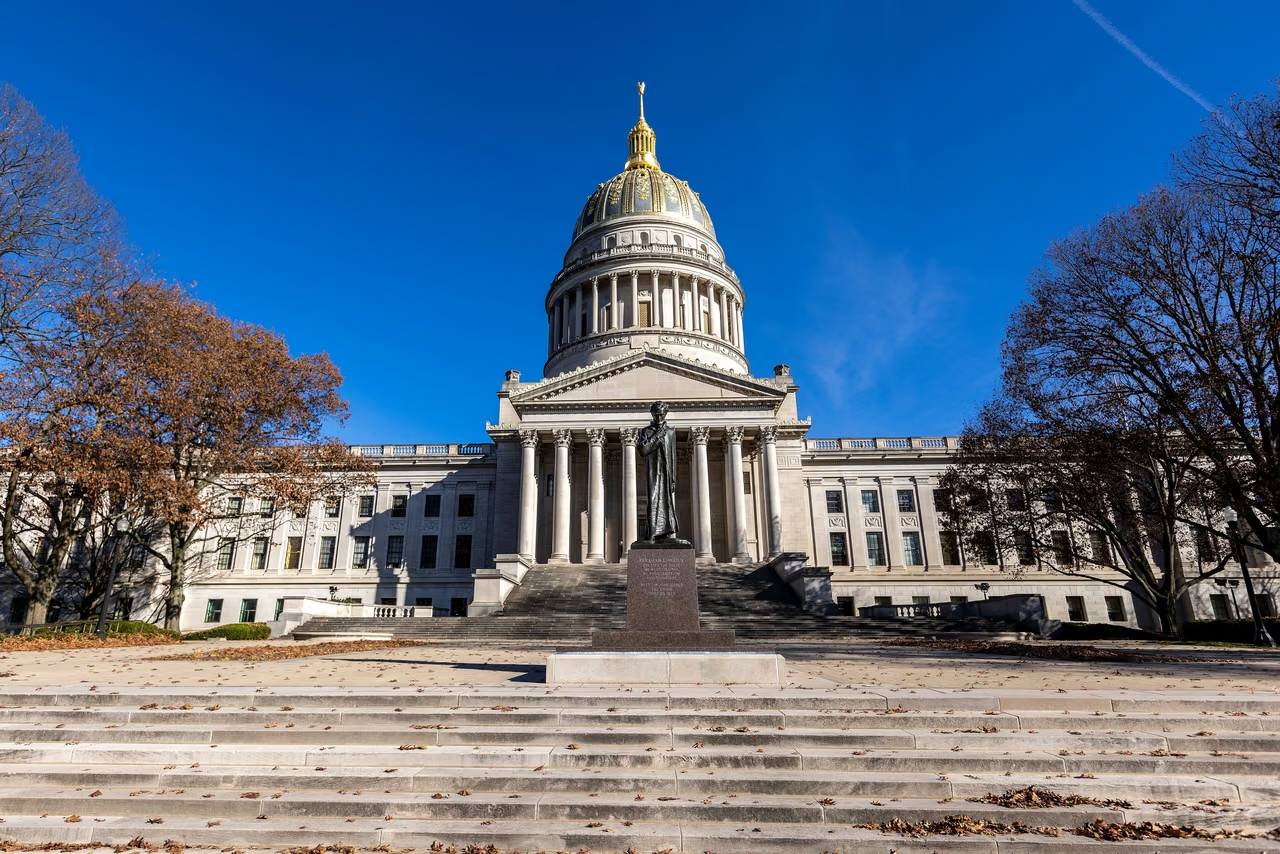
Government institutions, professional services, and cultural activities sustain everyday demand along the Kanawha River. Beyond the state government, neighborhood businesses and residential life are also part of the capital's story.
Universities, research, and medical facilities keep cities connected to the state and the wider region. Semesters, sports events, and academic activities also influence lodging, dining, and transportation needs at different times.
This Ohio River city connects transportation, universities, and regional services. Understanding its businesses means considering the river corridor and surrounding communities as well as individual downtown blocks.
2025 goods exports
Canada accounts for approximately 44%The US Trade Representative's office reported that West Virginia exported approximately $2 billion worth of goods to Canada in 2025. Manufacturing and resource-related businesses need to consider production, transportation, concentration of customers, and cross-border deliveries.
Export volume reflects the scale of goods trade but does not represent the operational performance of individual companies. Services directed at industrial customers also require consideration of the location of the factories, equipment needs, and supply relationships; whereas those directed at residents depend more on the scope of actual services and sustained demand.
US Trade Representative Office, 2025 State Goods Export Data; amounts shown to the accuracy published.
In August 2026, the statewide unemployment rate was 4.0%, with non-agricultural jobs decreasing by approximately 1,200 from July. Employment totals and industry distribution need to be considered together: healthcare, retail, manufacturing, construction, and accommodations and food services meet different demands.
Bureau of Labor Statistics, September 18, 2026. Data; August figures are seasonally adjusted and represent preliminary values.
The scope of local work is broader than that of a single resource industry. It includes fields such as healthcare and social assistance, retail, manufacturing, and professional services, connecting different cities, communities, and clients.
The state recorded 35,839 employer establishments and 551,240 paid employees. A single company may operate several stores, offices, or factories, so establishments are not a count of registered companies.
U.S. Census Bureau, 2023 County Business Patterns. The series primarily covers private, nonfarm establishments with paid employees. Employment is measured for the pay period that includes March 12. The 2023 release was the latest in this series available when checked; it is not a measure of current monthly employment.
Rules effective in July 2026 allow eligible entities to opt for biennial reporting. They must have filed all required annual reports on time for five consecutive calendar years and be in good standing when they make the election. The longer reporting interval does not apply automatically to every business.
The annual reporting fee is $25, and the two-year reporting fee is $50. The specific reporting cycles must be determined based on the applicable conditions and procedures for the business. The new arrangement does not exempt any unpaid reports or fees from the previous period. Separate arrangements are required for the establishment, maintenance of reports, and the permit for the actual location.
West Virginia Code §59-1-2A, checked in September 2026. Company searches are available on this site.
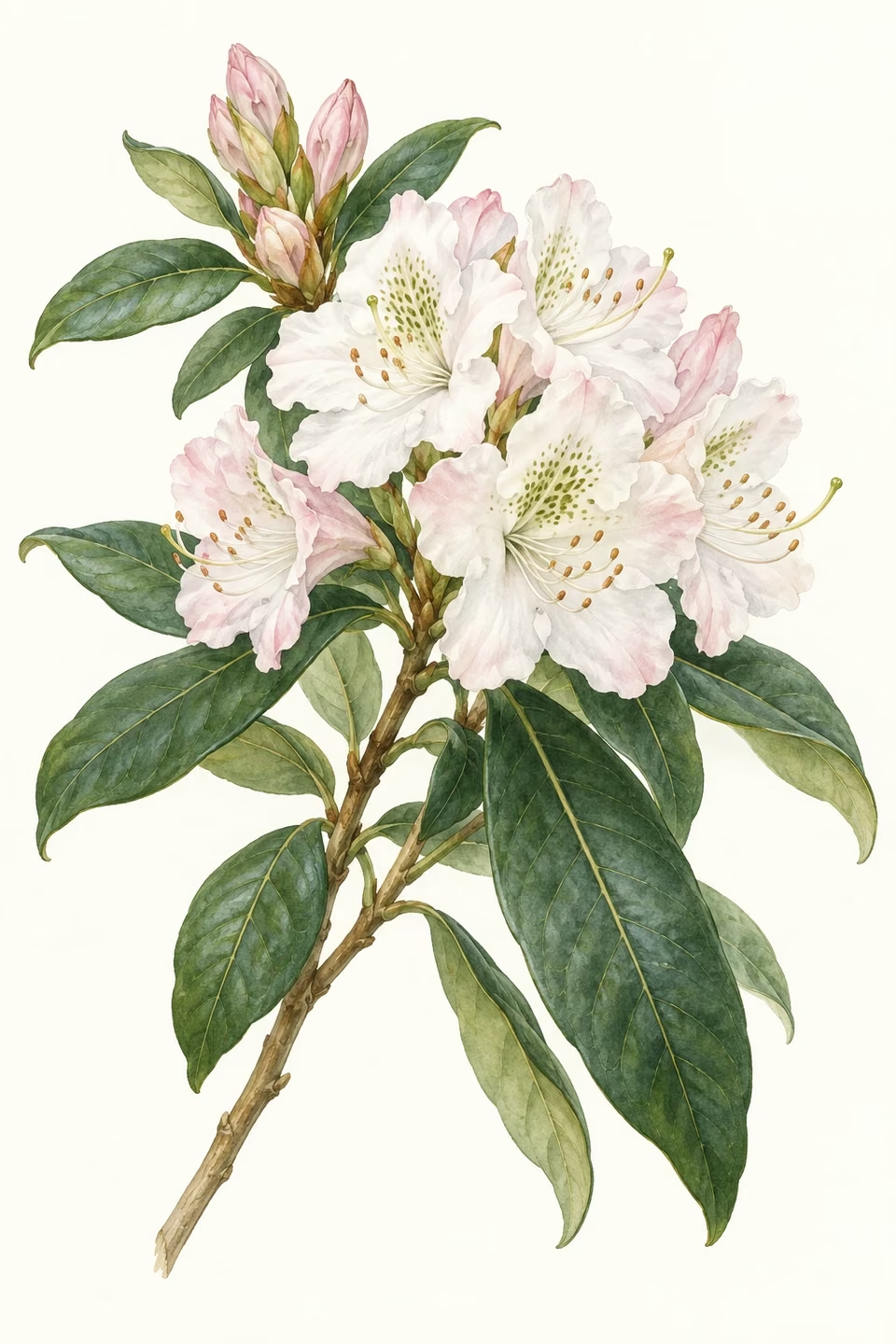
Clusters of white or pale pink flowers bloom between evergreen leaves. The large-leaved rhododendron is native to the local forests, thriving in acidic soil, and is also commonly found along stream banks and in moist forest areas.
It became the state flower in 1903 following a vote by public-school students. Its thick green leaves and delicate petals give the Mountain State a softer, equally distinctive emblem.
An editorial feature by STATE.REPORT. Image creators and licenses are credited below.
U.S. Census Bureau: state population estimates for July 1, 2025.
National Park Service: Indigenous populations, railroads, coal mining, and logging communities.
National Science Foundation: Radio telescopes, engineering and educational facilities.
Green Bank Observatory: Observational Environmental Protection and Equipment Requirements for Different Zones.
West Virginia University: Annual Research Funding and Service Provision.
West Virginia State Parks: Forests, tannins, and amber-colored waters.
West Virginia Public Broadcasting: Live music, program, and performance traditions.
William G. Pomeroy Foundation: A food history marker in Fairmont.
National Park Service: The events of 1859 and the relocation of the memorial building.
National Park Service: Post-War Education, Black Community, and Campus Life.
West Virginia State Legislature: Information on the state flower, state bird, and state flag.
West Virginia Environmental Protection Department: Characteristics of native evergreen rhododendron.
Grandview Overlook, New River.jpg · Aparkswv · CC BY-SA 4.0。
The West Virginia State Capitol building - Image03.jpg · Daniel G Rego · CC BY-SA 4.0。
Woodburn Hall WVU (9300119056).jpg · Tom Long from Oak Island, USA · CC BY-SA 2.0。
Green Bank Telescope, 2008.png · Geremia at English Wikipedia · Public domain。
2010-09-02-Harpers-Ferry-From-Maryland-Heights-Panorama-Crop.jpg · Mark Fickett · CC BY 3.0。
New River Bridge (New River Gorge National Park) - Flickr - aparlette.jpg · Andrew Parlette from Elkridge,MD, US · CC BY 2.0。
Blackwater Falls.jpg · Tim Kiser ( w:User:Malepheasant ) · CC BY-SA 2.5。
Seneca Rocks - front 1.jpg · Jarek Tuszyński · CC BY 3.0。
PepperoniRoll.jpg · Marcnelsonjr at English Wikipedia · Public domain。
Morgantown, West Virginia (2023).jpg · WeaponizingArchitecture · CC BY-SA 4.0。