
STATE.REPORT

Wisconsin

Design and everyday life beside the lake
Milwaukee Art Museum and pedestrian bridge · Night view, 2024
From a sheltering roof
A block of cheese.
Everyday life,
beautifully shaped.
State capitalMadison
Population · 2025 estimate5,972,787 people

Architecture / Land / Dairy / Public life

Milwaukee · An architectural experiment on the lake

Opening wings connect city and lake.

The Milwaukee Art Museum's expansion was completed in 2001. Santiago Calatrava brought a sense of sailing, lake breezes, and movement to the building: white structures open outward, the entrance hall faces Lake Michigan, and a pedestrian bridge connects the museum to the city.

The most prominent "wings" are actually movable shades, unfolding to a width of 217 feet, or approximately 66 meters. They were not designed solely for viewing from afar; light, structure, and the path of pedestrians all contribute to the experience of entering the museum.

Advanced structural design also relies on handcrafting. The building extensively uses concrete, and many shapes require specially made wooden molds. The seemingly light silhouette by the lake is actually the result of meticulous coordination between materials, calculations, and construction.

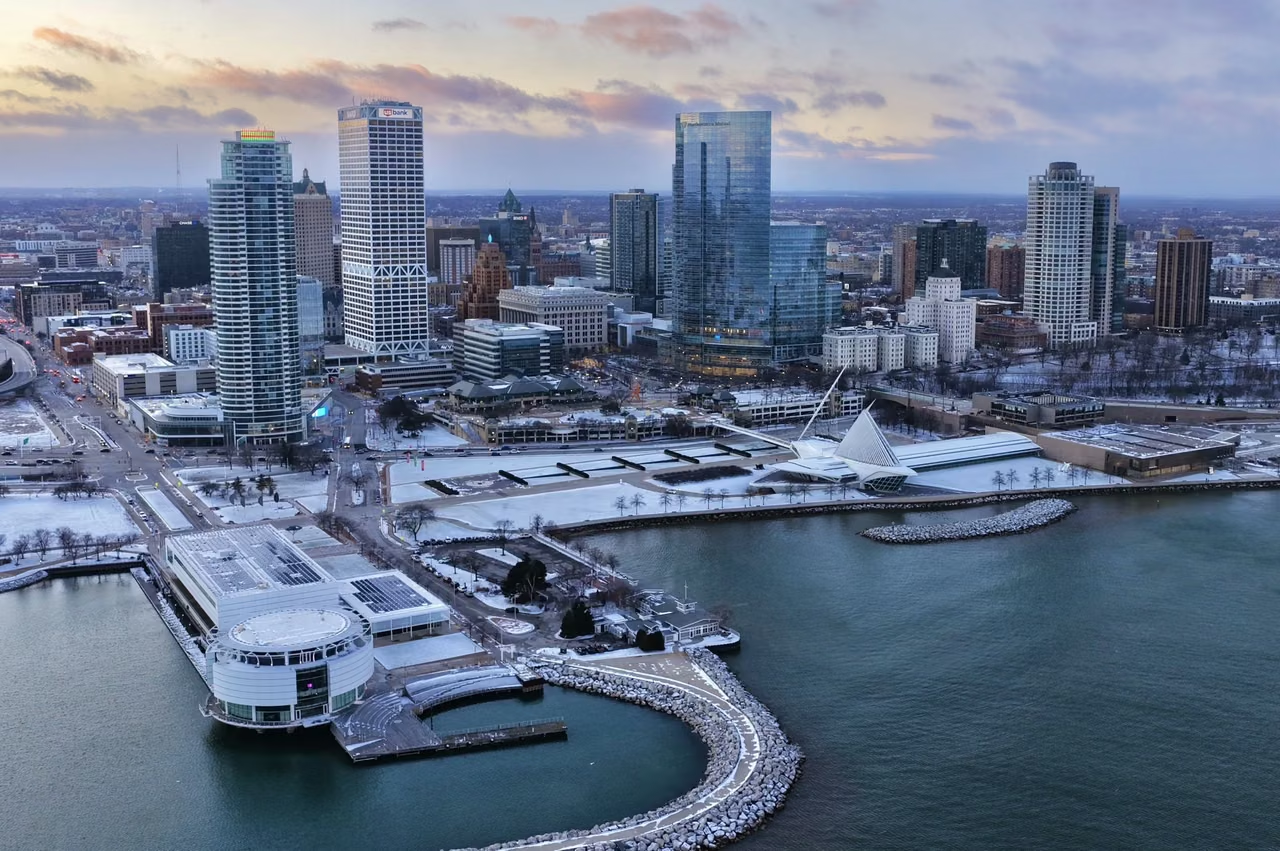
Milwaukee skyline · 2025

From the lakeshore, back into the city.

The art museum is a door to Milwaukee's life, which extends far beyond a single landmark. The waterfront, office district, residential neighborhoods, and various service areas all have their own rhythms. To understand the city's commercial landscape, one must view cultural appeal alongside the everyday needs of its residents.

Cheese State · A Complete Industrial Chain

Cheese, made with precision and patience.

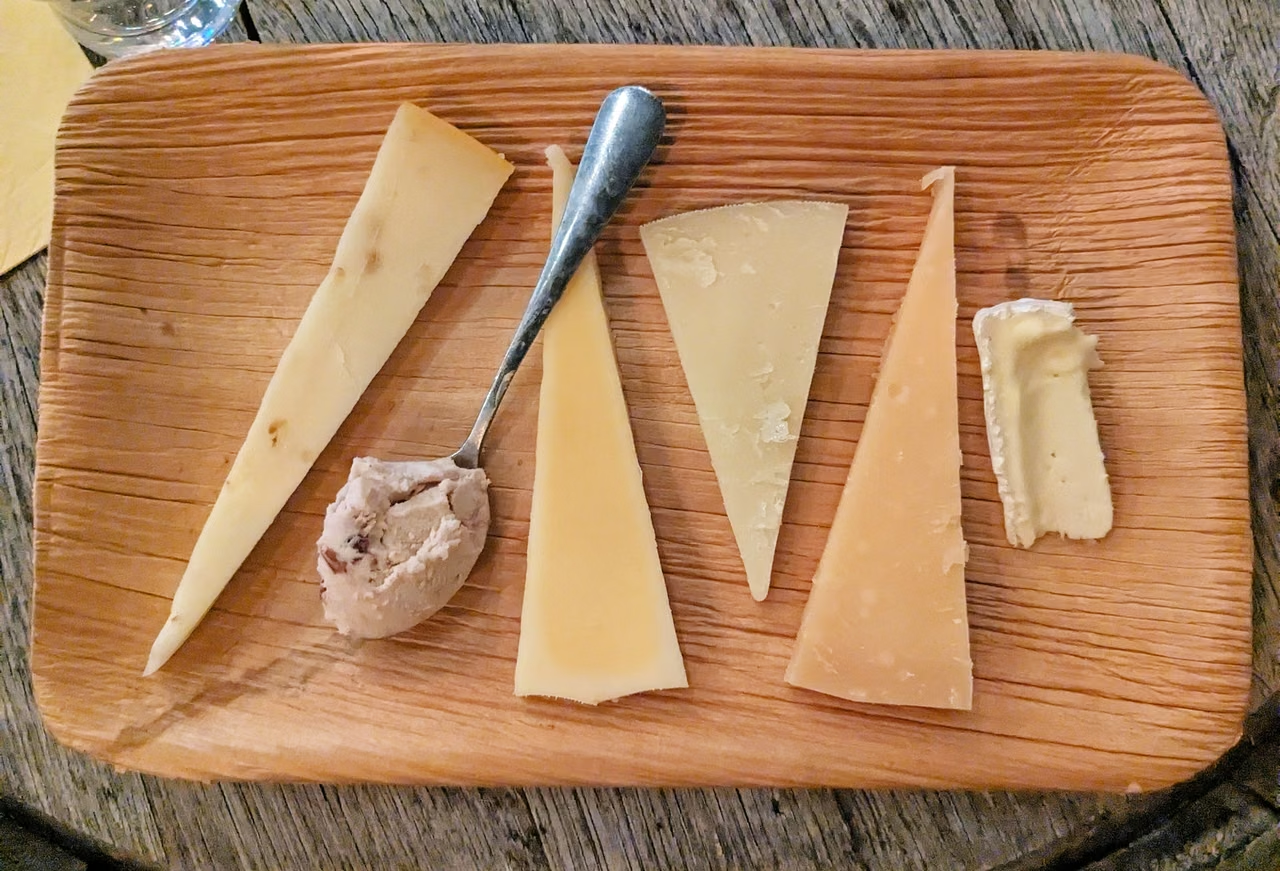
Farm cheese tasting event - Includes products from places like Wisconsin.
3.64billion lb

Statewide cheese production in 2025

25%

One quarter of the US cheese production.

From farm to table.

The 2025 data released by the Wisconsin Agriculture Department shows that the state produced approximately 3.64 billion pounds of cheese, with 1.03 billion pounds being specialty cheese. The total production figures reflect the scale of production, while different manufacturing methods and varieties highlight the differences among producers.

Feed, veterinary care, milking equipment, transportation, and processing are all parts of the dairy industry. Fresh milk needs to be collected on time, factories need stable quality, and finished products need to enter a cold chain, wholesale, and retail. It is agriculture, and also a business supported by mutual support of equipment, technology, and services.
Transformation

Wisconsin was not always a dairy state.

Early immigrant farms once grew wheat as a major cash crop. Later, soil depletion, pests, and competition from more western regions pushed farmers to seek alternative directions. Conditions suitable for feed crops, combined with the cheese-making expertise brought by the immigrants, spurred the growth of the dairy industry.

Collaboration

Consistent quality needs shared methods.

The university's agricultural research, farmer courses, and professional organizations gradually became involved. Cheese production required a steady supply of milk, which also made the connection between farms and processors tighter; the formation of local industries involved both technological changes and changes in working methods.

Production Materials: Wisconsin Agriculture, Trade and Consumer Protection Department, Updated Agricultural Statistics May 11, 2026. Weights are in physical units, not sales revenue; specialty cheese is included in the total cheese amount.

Madison - Let Knowledge Out of the Classroom

A university’s reach should extend beyond its walls.

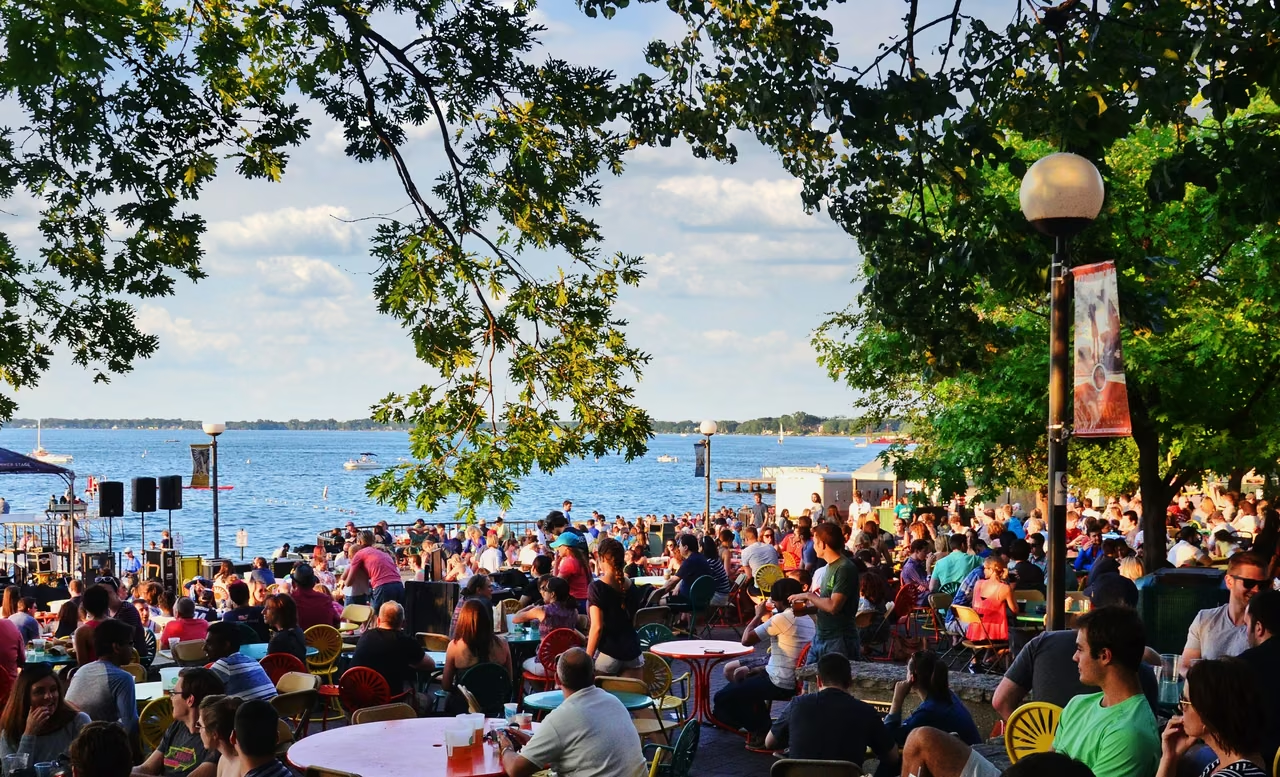
Madison · Memorial Union Terrace on the University of Wisconsin–Madison lakefront
1890

Making differences in milk measurable.

In 1890, Stephen Babcock published his milkfat test. It provided a clearer way to assess milk quality, which had previously been difficult to compare. University research reached farms and factories, influencing product quality and transactions between producers.

He and his colleagues chose not to patent the method, making it available to those who needed it. The university also shared knowledge through farmers’ institutes, taking learning into communities across the state. This history shows the Wisconsin Idea at work in everyday life.

Madison is simultaneously the state capital and university city. Research, public service, healthcare, and daily life blend here. The campus is not an isolated sight; streets, housing, and small businesses around it also facilitate the flow of knowledge and talent.

Architectural Notes

A house on the brow of a hill.

Taliesin · Spring Green, nearby.

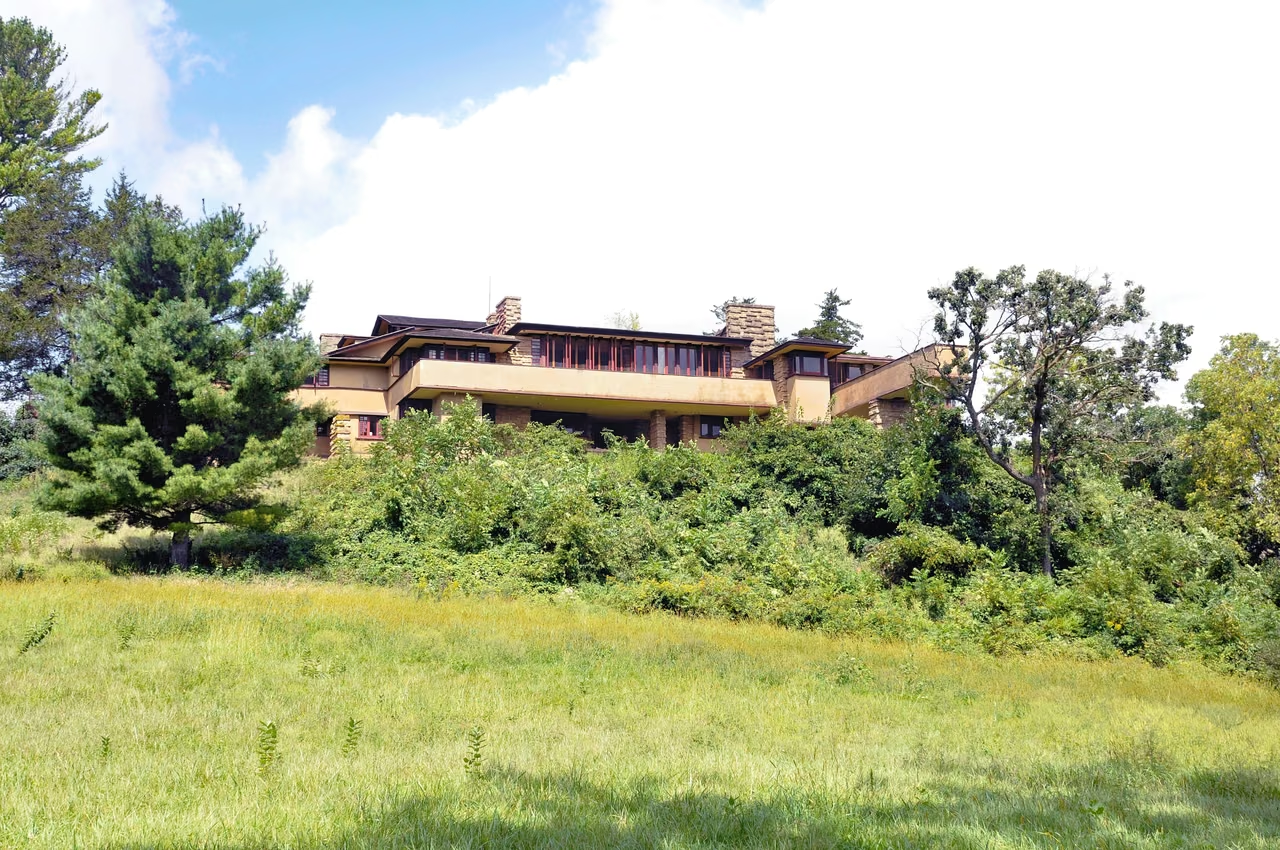
Taliesin · Wright's residence and studio

Wright began construction of Taliesin in 1911, integrating living, working, and surrounding land into a single concept. The building used local limestone and sand from the Wisconsin River, keeping the material connected to the valley.

This is not a one-off, static piece. The reconstruction after the disaster, along with continually adjusted rooms and gardens, keeps the building open to different stages of thought. What is seen today needs to be understood alongside these changes.

Founded in 1932, the apprentice fellowship emphasized learning through practice. Drawing, art, making, and communal life were closely connected. Taliesin was both a residence and a continuing experiment in architectural education.

Manufacturing, food and professional services

A good product still needs a way to reach its market.

Wisconsin's economic characteristics can be seen in the connection between dairy equipment, processing technologies, and mechanical products. Farms and factories are not two separate economic systems unrelated to each other: businesses need to be familiar with specific operations for maintenance, inspection, packaging, and transportation.

3.0573million

Statewide nonfarm jobs, August 2026

3.2%

Seasonally adjusted unemployment rate, same month

The Bureau of Labor Statistics reported on September 18 that nonfarm jobs increased by 11,800 from the previous month. Month-over-month changes reflect the overall state labor market, and should not be directly interpreted as the difficulty of hiring in any particular industry; manufacturing firms still need to consider specialized trades, shifts, and the location of the factory.

Before starting a business, establish whether it will involve processing, wholesale, food service, or professional services. Registration establishes the legal entity; food processing facilities, premises, employees, and product sales each bring their own operating requirements. Prepare for these according to the work the business will actually do.

The competitiveness of businesses within the state often lies in their ability to consistently deliver: whether supplies are consistently available, products are produced to specifications, and whether issues with equipment are promptly maintained. Building long-term relationships with suppliers and customers is often closer to daily operations than merely comparing the cost of setting up a company.

Industries & establishments · 2023

The work that keeps communities running.

The annual establishment data provides insight into the scale of industries such as manufacturing, healthcare, and retail. Cheese factories, mechanical factories, and professional service businesses have different staffing and space requirements, and these can be further explored in conjunction with the city they are located in.

The state recorded 144,774 employer establishments and 2,642,958 paid employees. A single company may operate several stores, offices, or factories, so establishments are not a count of registered companies.

Manufacturing479,846 people

Health care & social assistance410,656 people

Retail trade312,489 people

Accommodation & food services243,238 people

Administrative & support services170,012 people

U.S. Census Bureau, 2023 County Business Patterns. The series primarily covers private, nonfarm establishments with paid employees. Employment is measured for the pay period that includes March 12. The 2023 release was the latest in this series available when checked; it is not a measure of current monthly employment.

Employment source: U.S. Bureau of Labor Statistics state employment report, September 18, 2026; preliminary, seasonally adjusted August figures. Jobs and unemployment rates come from different surveys and should not be subtracted from one another.

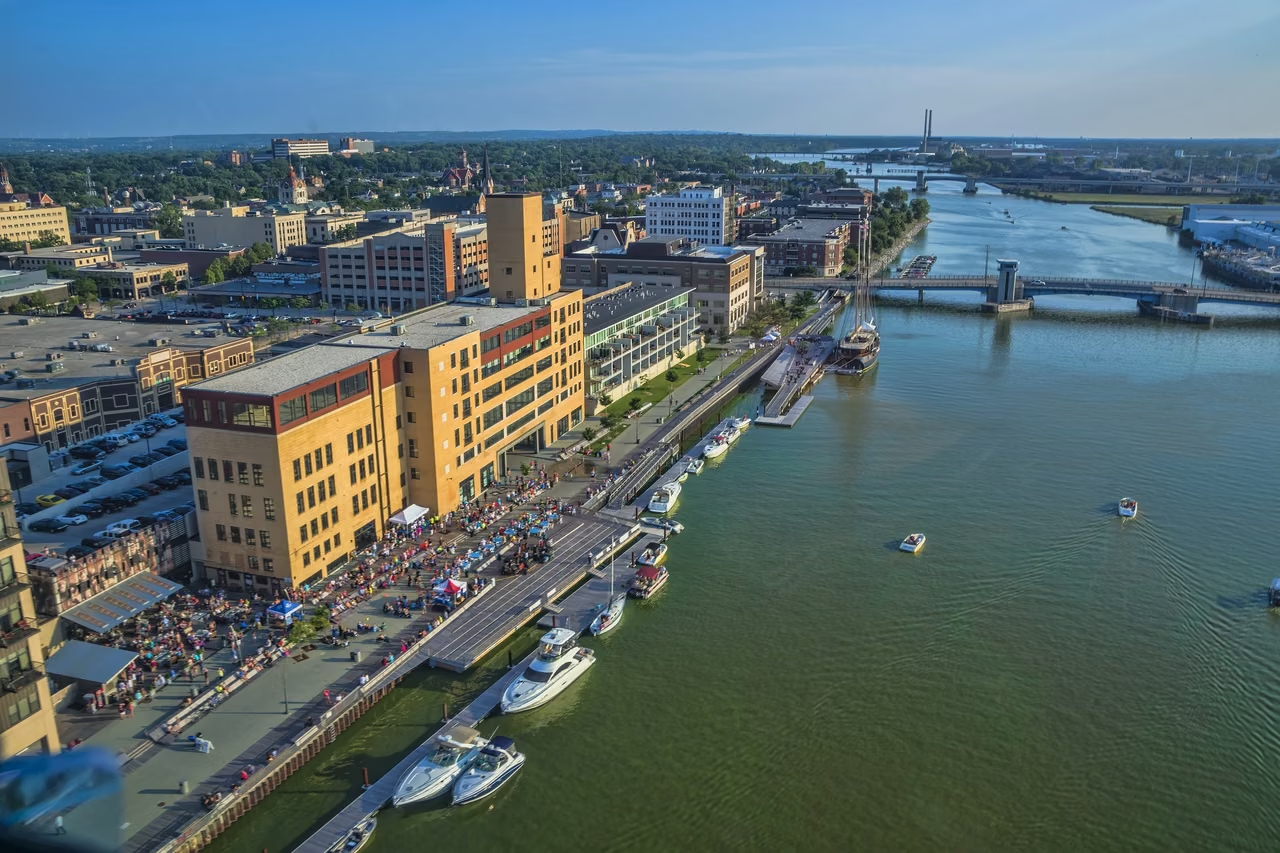
Green Bay returns its waterfront to walkers.

Fox Cities: A Lifestyle in Riverfront City Living

Green Bay · A city walkway along the Fox River

The riverfront path brings walking, resting, and gathering to the water's edge. People come here not just to complete a purchase; looking at the river, walking, and lingering are aspects of urban public life in themselves.

Public spaces and commerce are not the same thing, but they do impact each other. Alongside dining, activities, and everyday services, understanding the actual visitation times and usage patterns of the community is important, not just the waterfront views.

Field notes · Rock and running water

Lines drawn slowly by ice and water.

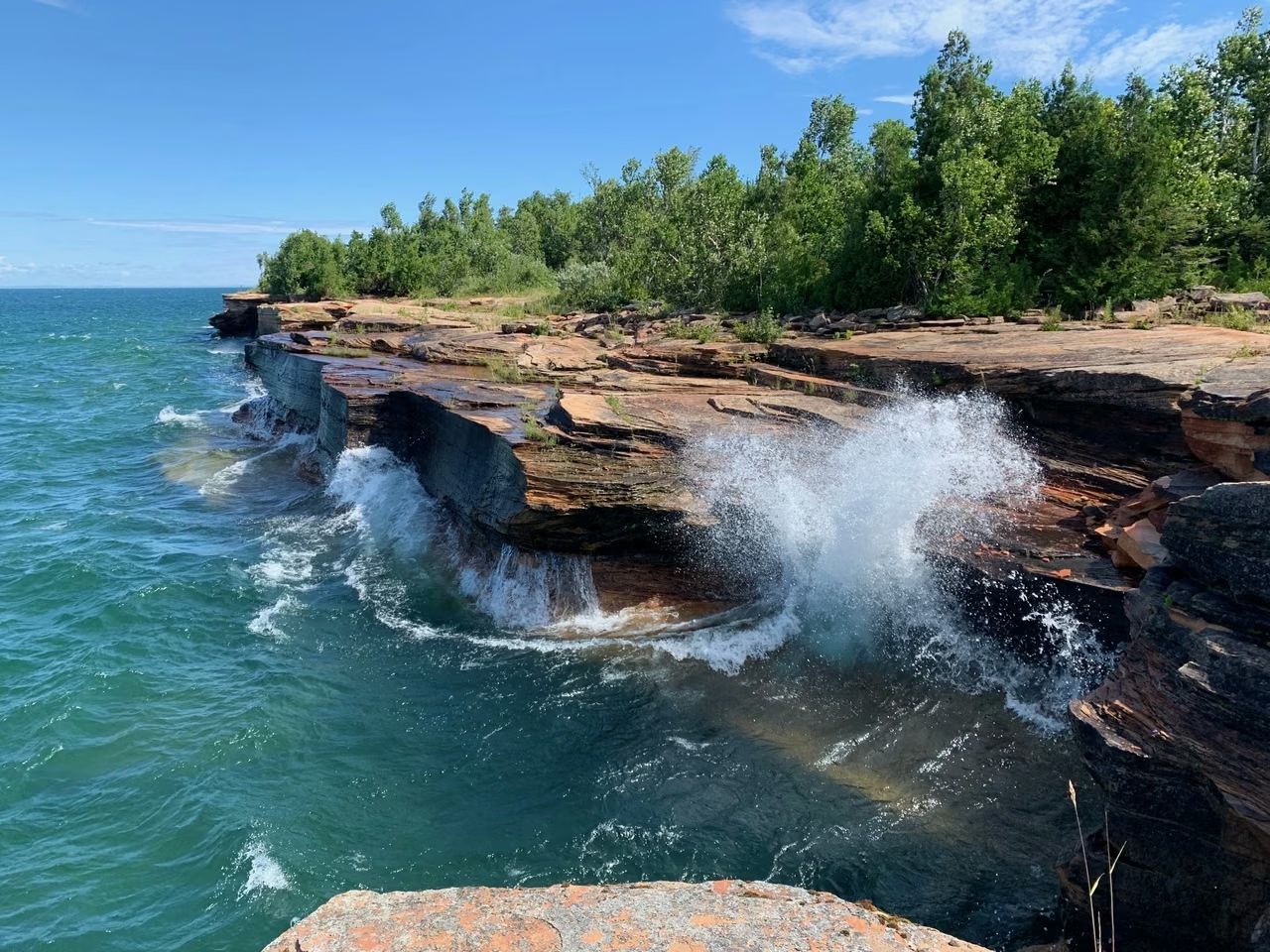
Apostle Islands · Waves and sandstone along Devils Island

Sandstone shores carved by lake water

The sandstone of the Apostle Islands comes from ancient deposits. Glaciers shaped the terrain, and waves and freeze-thaw continued to erode the rock, creating arches, caves, and sinuous shorelines. The shapes before us are not complete sculptures; erosion continues.

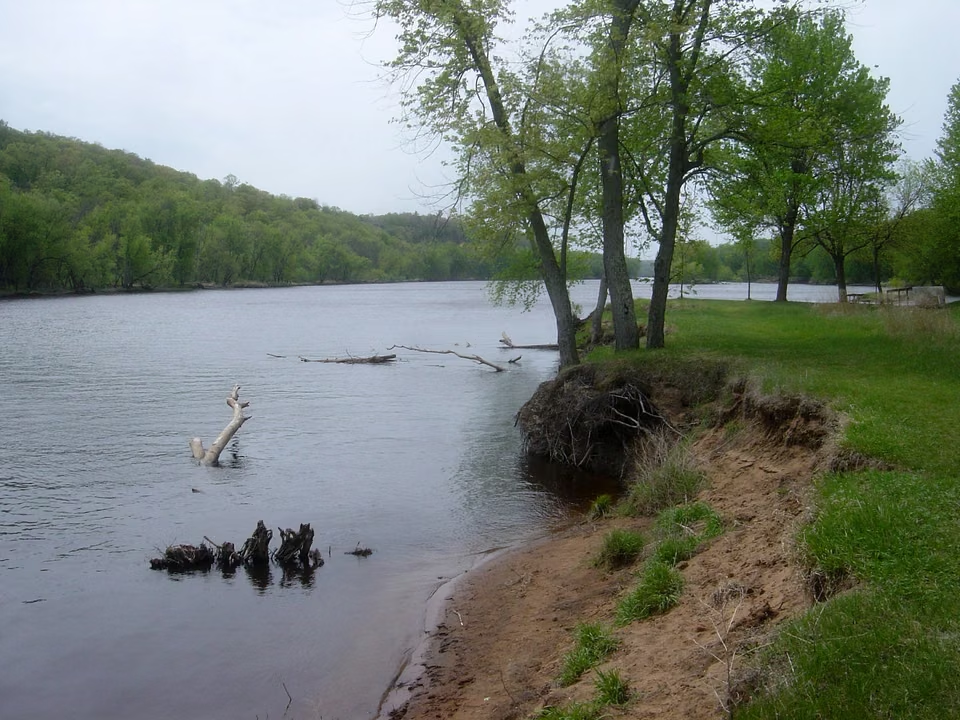
Near Osceola · St Croix River

A river preserves a history of movement.

The St. Croix River once connected the activities and trade of the indigenous peoples, and later underwent changes such as timber transport. To understand the river views, one needs to see the connection between the Dakotas, Ojibwe, and the land.

Glaciated land and hills the ice did not cover.

Much of Wisconsin retains the imprint of continental glaciers. Along the Ice Age Trail, moraines, lake basins, and erratic boulders reveal that history. In the southwest, the Driftless Area offers a different landscape of valleys and hills. Together, these landforms show a state far more varied than an image of flat farmland suggests.

Flower Arrangements

A small violet with a place in the state’s memory.

In 1909, children voted for violets. Not particularly large in size, it commonly appears in forests, grasslands, and along roadsides, yet it was chosen by many to represent their home state.

The American robin, dairy cows, and cheese also connect Wisconsin's symbols with the seasons, farming, and local work. These emblems belong to everyday life as well as official identity.

Wood violet · State flower illustration
STATE.REPORT

An editorial feature by STATE.REPORT. Image creators and licenses are credited below.

Sources & further reading

Population estimates ↗

U.S. Census Bureau: state population estimates for July 1, 2025.

How Dairy Became a Local Tradition

Wisconsin Historical Society: From wheat farming to dairy production, and cooperation between universities and producers.

A test that became shared knowledge

University of Wisconsin: 1890 Method for Milk Fat Testing and Knowledge Sharing.

Milwaukee Art Museum Building

Milwaukee Art Museum: The 2001 expansion, movable sunshade, and lakefront design.

The history of Taliesin.

Taliesin Preservation Institute: Architecture, local materials, and apprentice education.

The terrain left by glaciers.

National Park Service: Ice Age Footpaths and Terrain Studies.

The sandstone of the Apostle Islands

National Park Service: Formation of rock layers and impact of glacial activity.

Cave of the Lakes ↗

National Park Service: Wave, Freeze-Thaw, and Sandstone Caverns.

The history of Saint Croix River.

National Park Service: River transportation, Native American history, and trade history.

Green Bay Shoreline Public Space

Green Bay: Features a downtown area and Fox River Trail.

State's Natural Symbol

State government: origin of the violet, robin and state symbols.

Image credits & licenses

Verify your email

We will email you a six-digit code to sign in.

By continuing, you agree to the Terms and acknowledge the Privacy Policy.

Search history

Your searches from the last 30 days. Viewing this list does not use searches. Full company reports are not saved here.