STATE.REPORT
Wyoming · A fieldbook of the landBelow the surface / Among living things
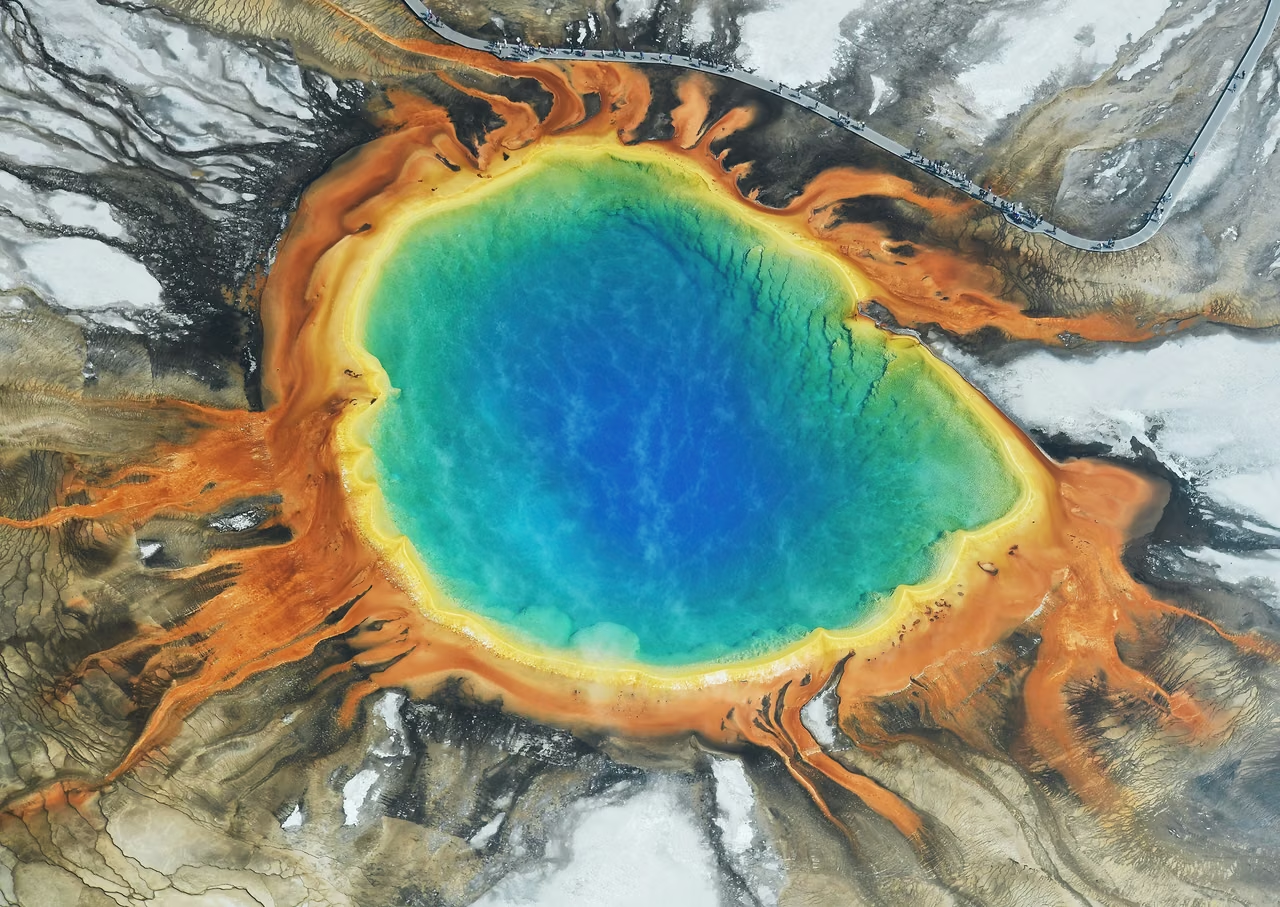
Yellowstone National Park · Grand Prismatic Spring from above
The West has many colors.

Wyoming

Within the wide-open West, discover life in the details.

Open the fieldbook
Yellowstone · Heat beneath the surface

A ring of color. A world of life.

The blue of the hot springs is not just the color of minerals: sunlight entering deep and clear water creates a vivid blue visual. Different temperature zones along the edge support various thermophile microorganisms, forming bands of orange, yellow, and brown.

Hot springs, geysers, and mud pots have different underground channels and moisture conditions. Yellowstone shows the Earth is still active and allows scientific research into life in extreme environments. Protecting these features requires keeping people on designated trails and leaving fragile surfaces to nature.

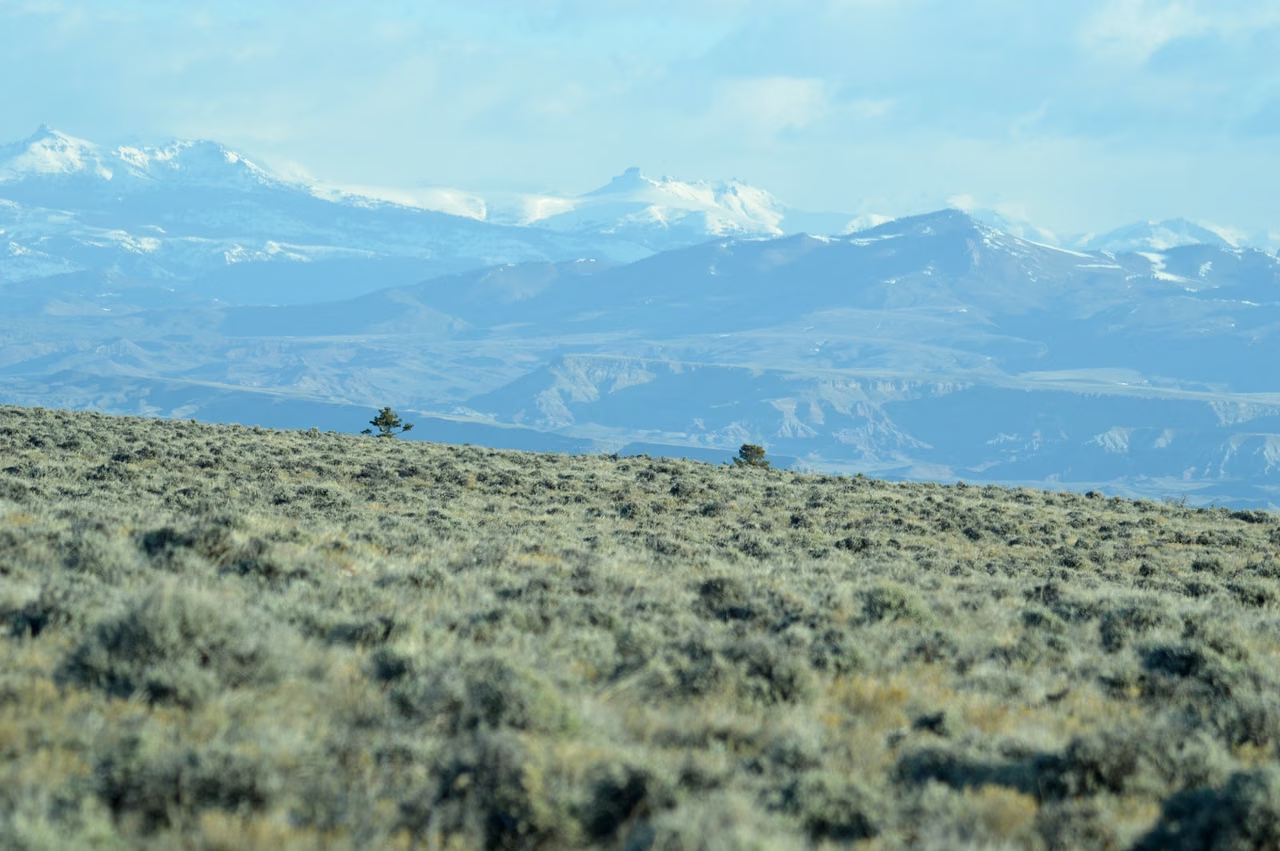
Beyond Yellowstone, Wyoming opens into broad basins, grasslands, mountains, and towns. Cheyenne, the capital in the southeast, university-centered Laramie, energy-producing districts, and the tourism towns of the northwest each have their own rhythms of life and work.

State capitalCheyenne
Population · 2025 estimate588,753 people
Grand Teton · Water and homes beneath the mountains

Close to the peaks, life is demanding.

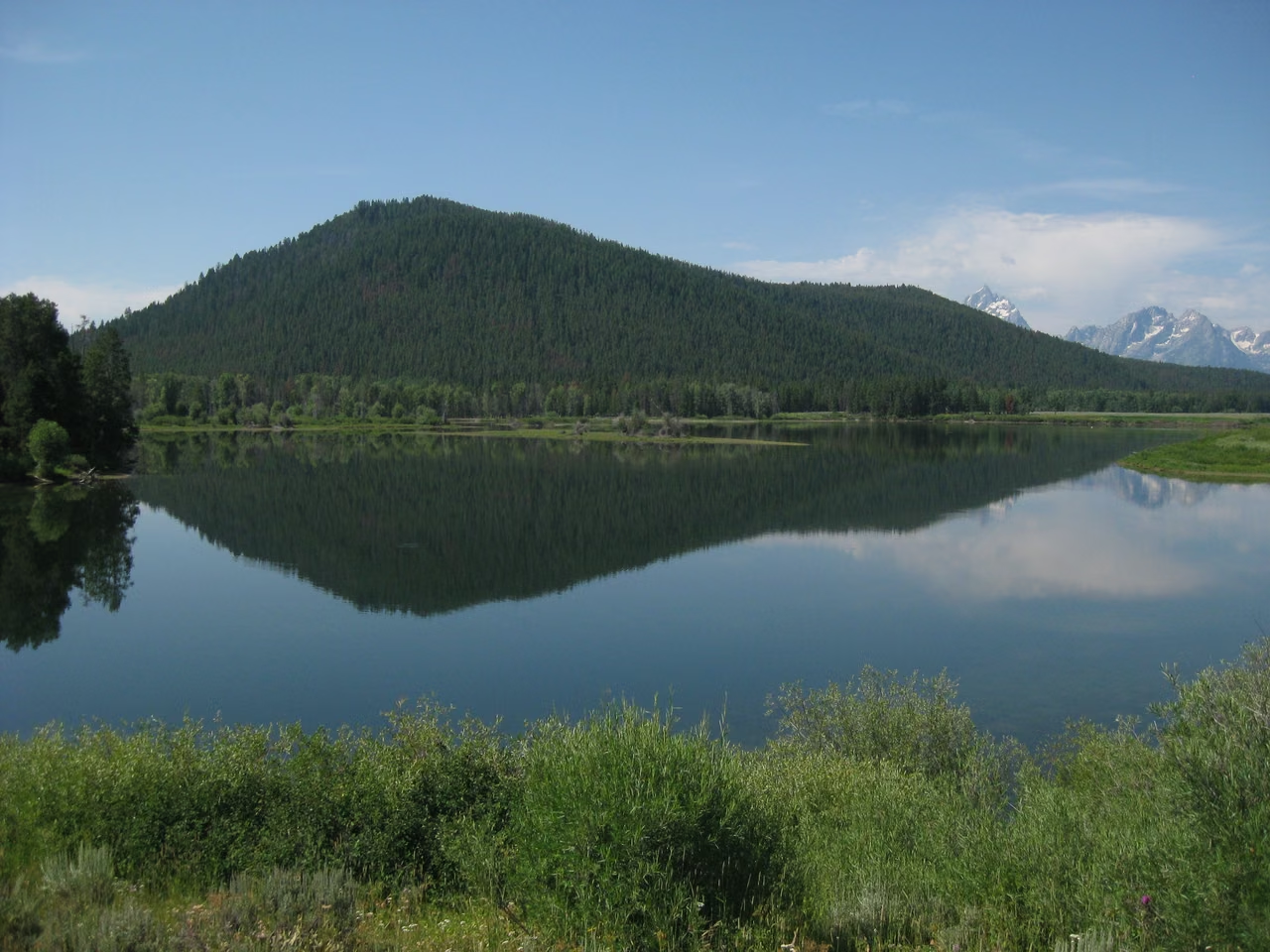
Grand Teton National Park · View of the Snake River Valley from Signal Mountain

Rivers shape the land.

The Snake River winds through the valley, with the water source, soil, and shelter conditions influencing settlement locations. The remaining farmhouses and grain bins record how people arranged production between the short growing season and the harsh winters.
Scenery has a working history.

The buildings of the Mormon settlement area are not just a backdrop for mountain photographs. Irrigation, farming, family, and community cooperation once sustained a complete community. National Park lands also preserve these traces of life.

Wildlife · Leave space for movement.

Open country is not always easy country.

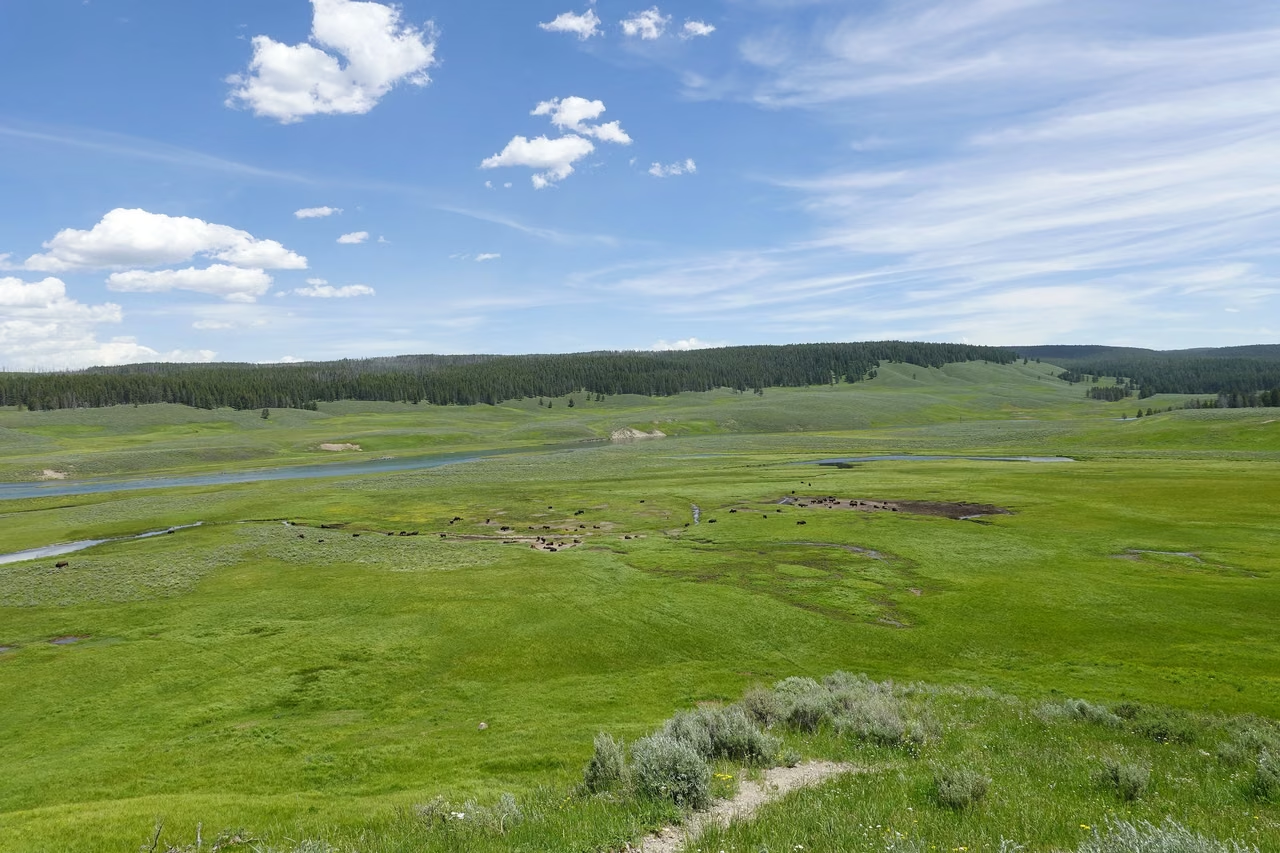
Yellowstone Hayden Valley · Bison

One animal reveals a whole habitat.

Bison and pronghorn animate Wyoming's open country, but they need more than isolated protected areas. Seasonal feeding, shelter from snow, and breeding may require movement between different places.

Roads, fences, and development activities can sever this connection. Even seemingly empty terrain may be dotted with impassable boundaries for animals; thus, conservation efforts often need to span land ownership and management boundaries.

Migration is not a line drawn on a map.

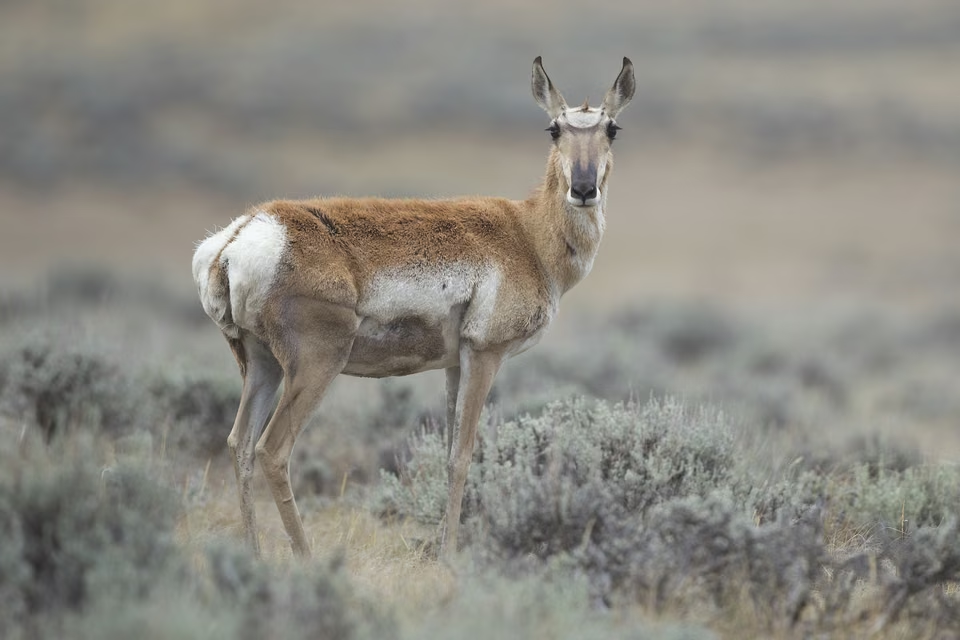
A 2025 study from the University of Wyoming found that fences and roads restrict pronghorn access to suitable habitat during the winter. Working together with landowners and management agencies, researchers adjusted the fences to ensure connectivity at specific locations.

This job involves wildlife management, ranching, traffic safety, and land use. Keeping corridors relies on long-term observation and actual coordination.

Wyoming: Female Pronghorns on the Prairies
Wind River: Today's Native American Homeland

The land’s story, told by its people.

Wind River Reservation · Front Country Wilderness

The Wind River Reservation is home to the Eastern Shoshone and Northern Arapaho tribes. Treaties, land changes, and migration form its historical background, while families, schools, public institutions, and cultural practices continue in the present.

Recognizing local culture should start with reading introductions from within the tribes and respecting how different communities express themselves. Tradition does not mean living in a certain era; today's education, language preservation, and land management are also part of Wyoming.

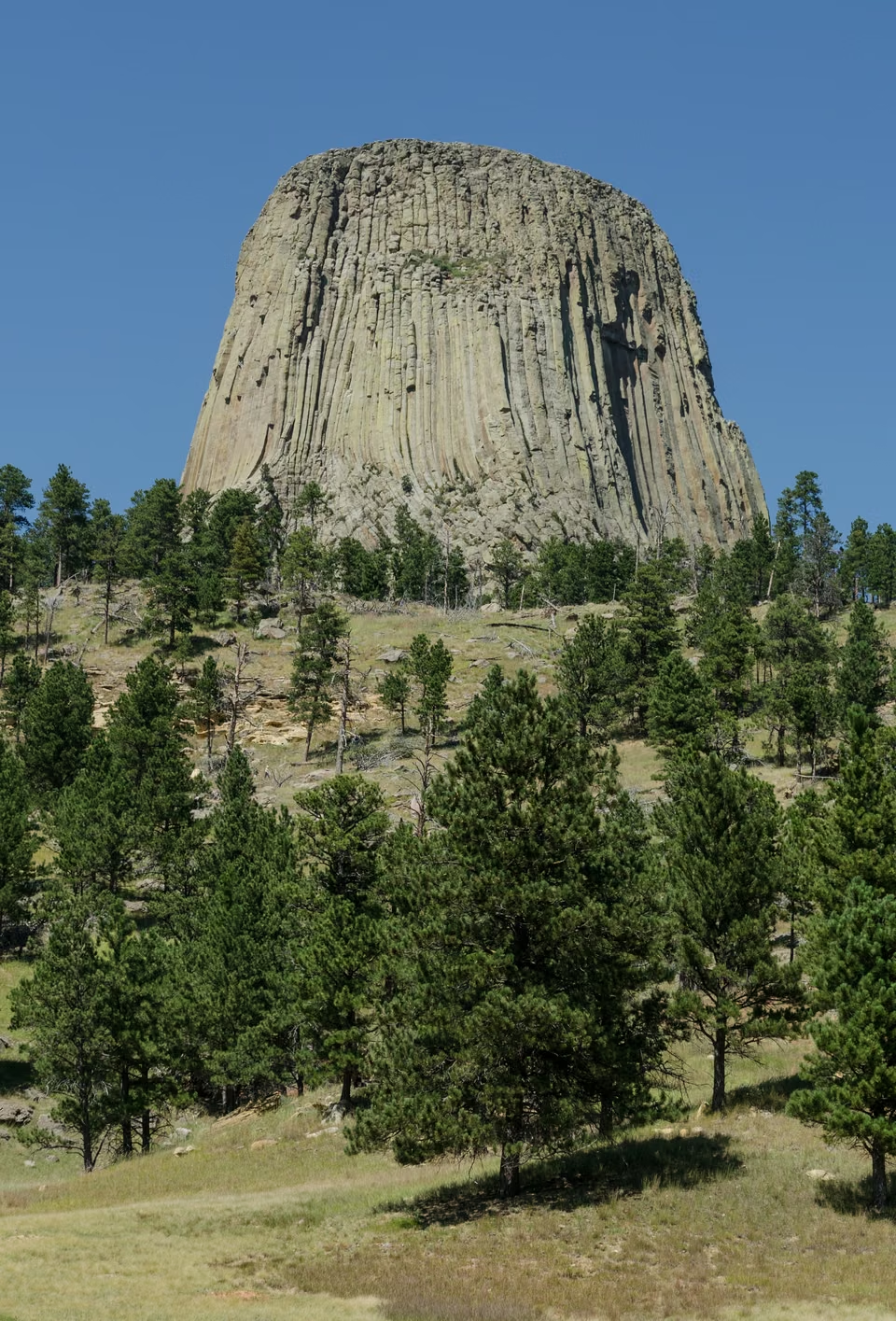
Northeastern Wyoming · Devils Tower National Monument
The tower · More than one name

One mountain can hold different meanings.

The prominent rock tower holds different names and stories in various tribal traditions, "Bear House" being one of them. It is both a striking geological feature and a place connected to rituals, memories, and spiritual life.

The National Park Service works with tribes, climbers, and visitors to explain these different perspectives. Understanding cultural connections and viewing rock formations are equally important here.

Tourist photos often present landmarks as isolated objects, whereas local history places them back into the relationship between people and land.

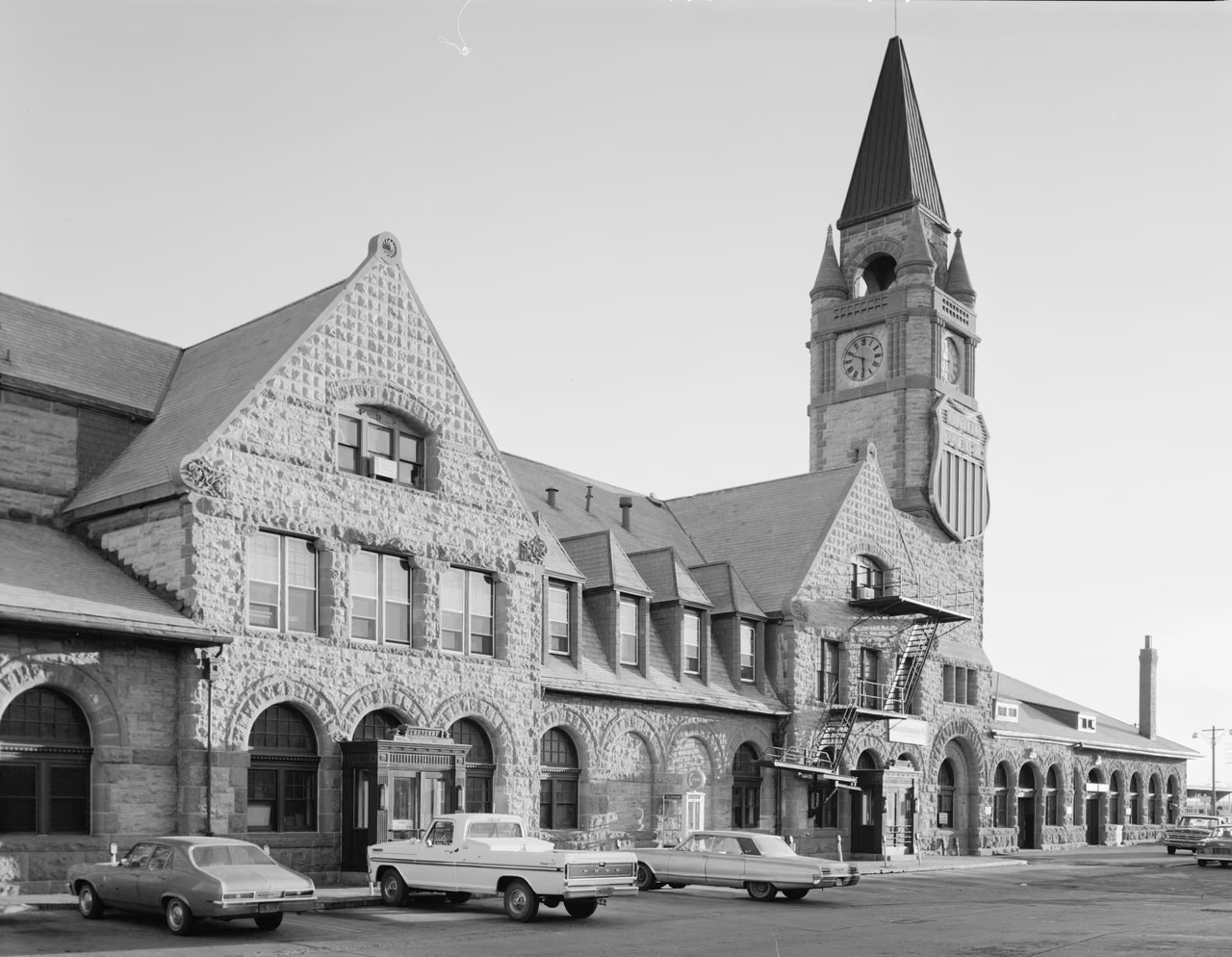
Cheyenne · Railroad City

A station becomes a center of its own.

Cheyenne Union Pacific Railroad Station · Historical Building Record

Railways connect inland cities to larger transportation networks. Stations, warehouses, repair shops, and passenger services transform transportation hubs into centers of daily life and commerce. The historic station in Cheyenne preserves the city's growth.

To understand Wyoming's location, one still needs to consider distances between roads, railroads, and cities. For companies requiring on-site services or regular deliveries, routes, seasons, and vehicle schedules are more practically significant than straight-line distances.

1869Women's suffrage was written into territory laws.
The Equality State · Another strand of public life

The West’s history is written on ballots, too.

Wyoming Territory passed a women's suffrage bill in 1869. The following year, women began to gain new positions in local public life. This history served as an important background for the "Equality State" title.

A law does not mean that all groups are instantly in the same situation. Linking voting rights, public office, and the experiences of different groups together helps to understand how rights gradually enter real life.

Laramie and Cody · Places of learning

Research on campus. New perspectives in the museum.

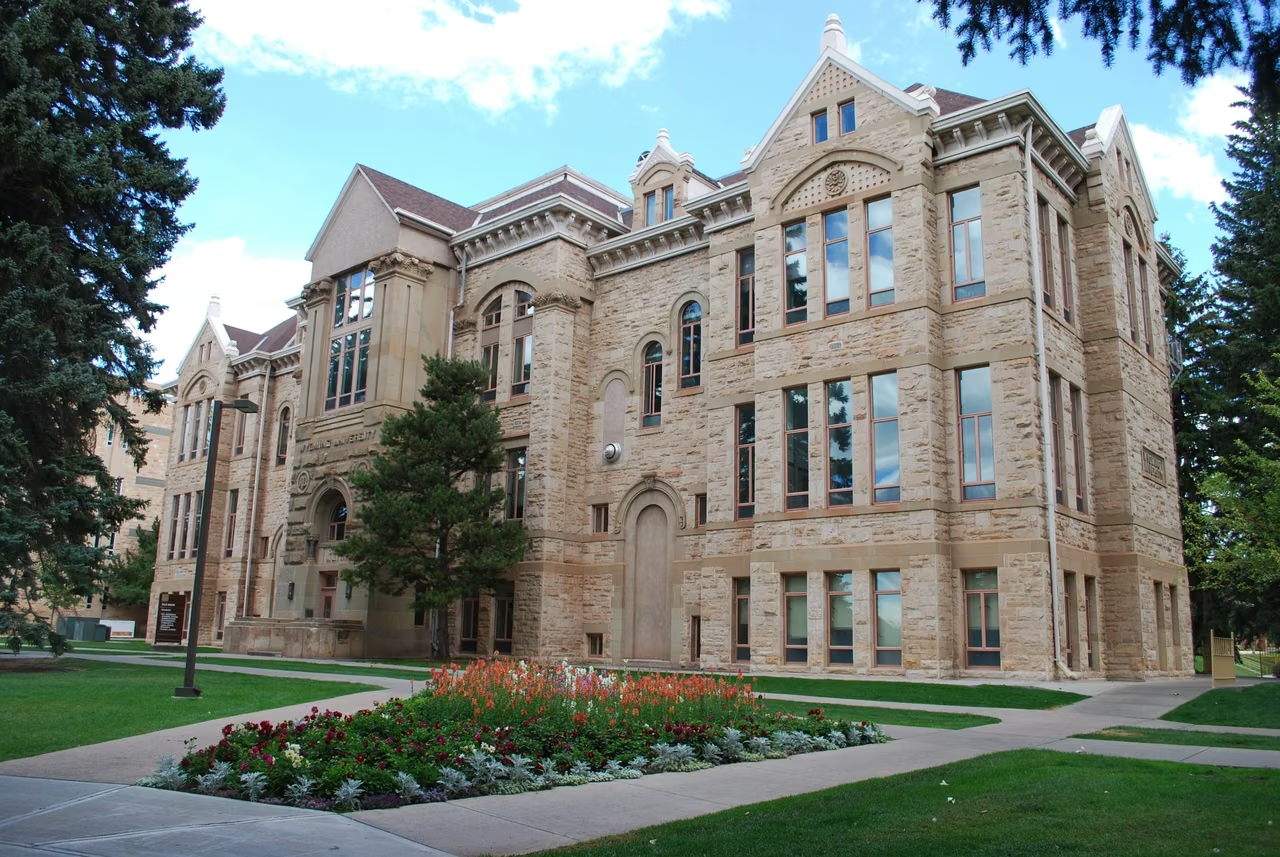
Laramie · Old Main, University of Wyoming

Laramie: research returns to the land.

The university's research connects with mountains, agriculture, energy, and wildlife. Laboratory and fieldwork bring local questions into wider scientific discussions. The campus also sustains year-round demand for housing, dining, and cultural activities.

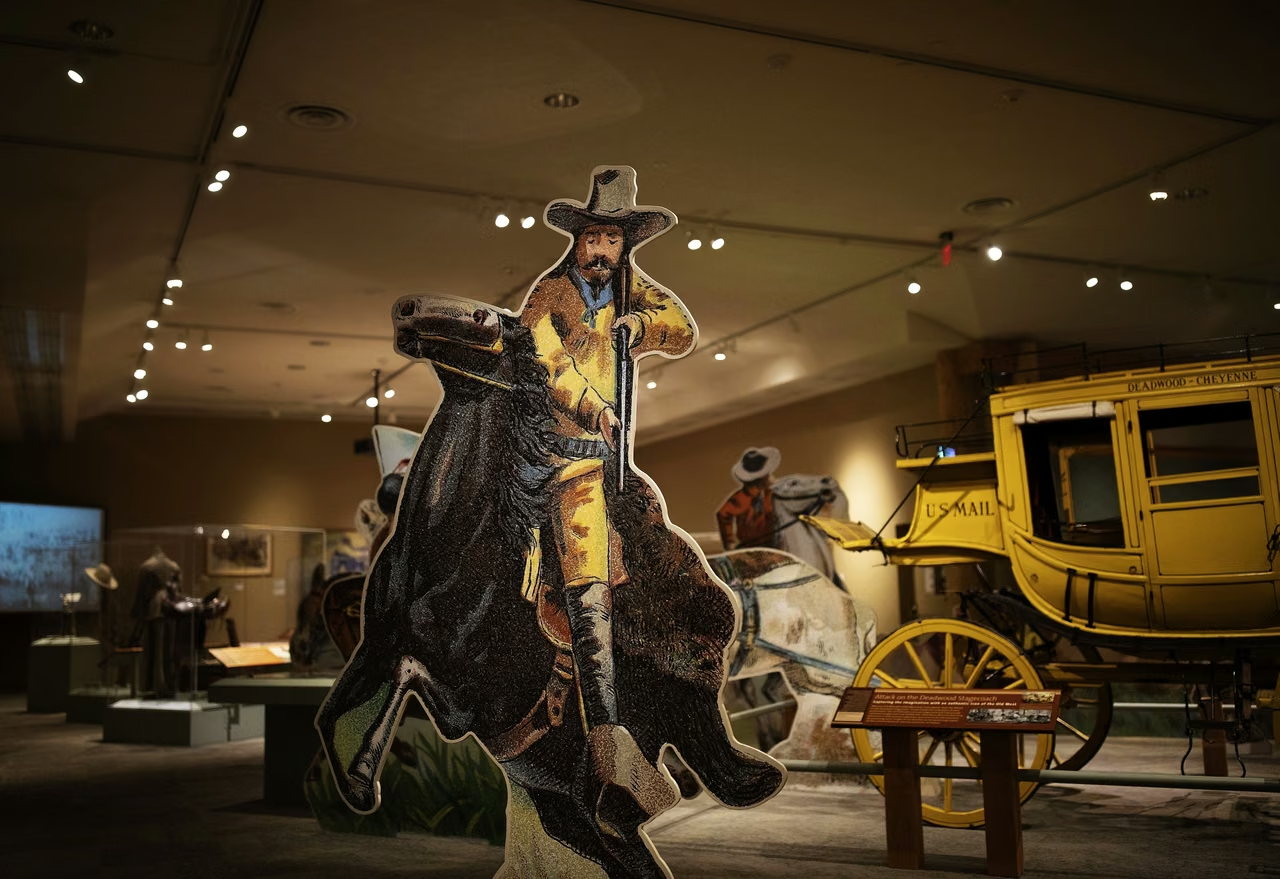
Cody · Buffalo Bill Center of the West

Cody: reconsidering the West.

The Western Center houses museums on natural history, art, Plains Native American, Buffalo Bill, and gun history. Together, these collections allow one to see the "West" as both the physical land and the ever-shaping image that is portrayed, painted, and told.

Production and Life · Another Side of the Countryside

Underground resources support work above ground.

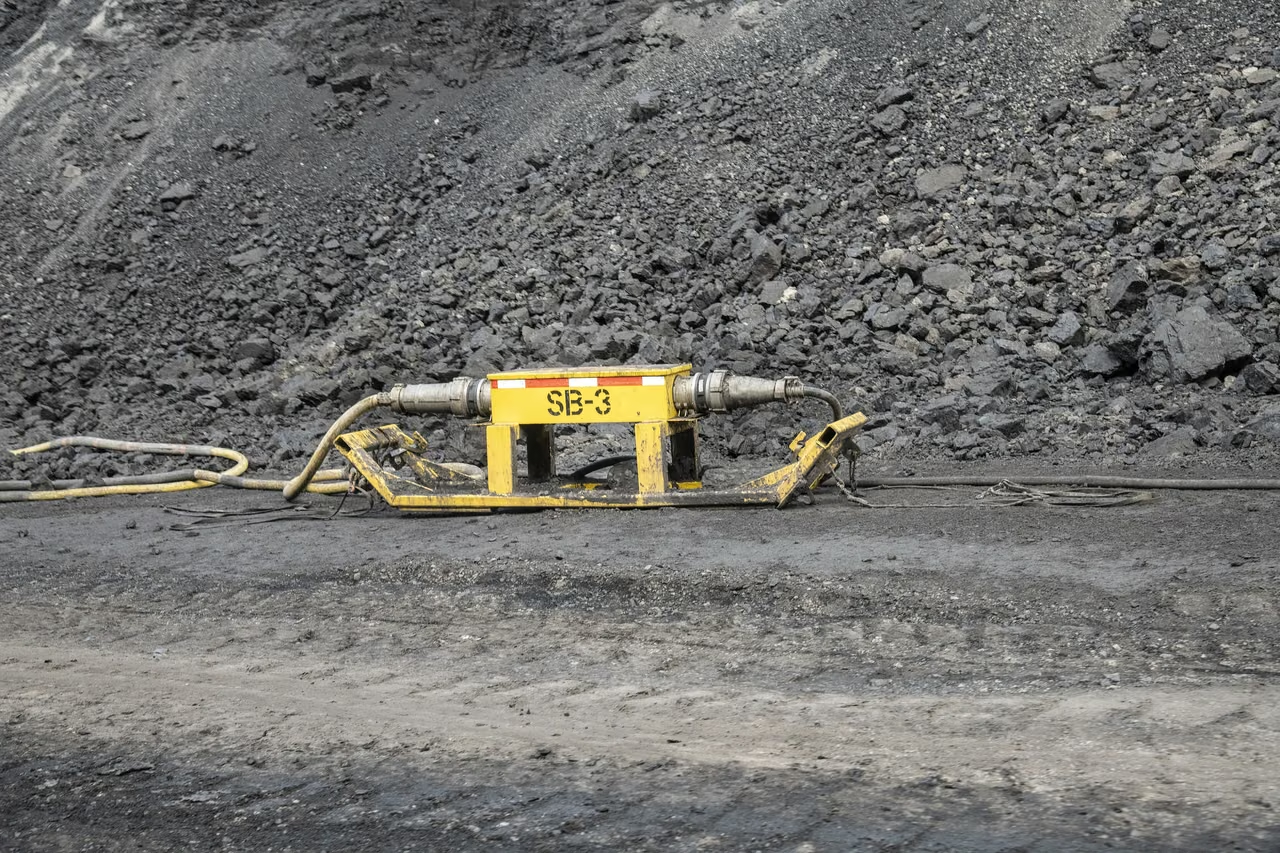
Wyoming coal mine · Production facilities and operations

Understanding Wyoming involves mining and energy development. Mines require not just extraction but also transportation, mechanical maintenance, engineering, and environmental management. Changes in project health can ripple through employment and service needs in nearby towns.

These activities coexist with tourism, ranching, and conservation. Needs for land, water, and infrastructure vary by place and cannot be represented by one industry for the entire state. Not all enterprises registered in the state should be viewed as local producers.

2025 · Direct Travel Expenditure$5billionGrowth of 2.8% year-over-year.

Visitor demand has a place and a season.

State tourism estimates put direct travel spending in 2025 at about $5 billion, supporting roughly 33,920 jobs. Accommodation, food service, transport, and recreation benefit, though income varies considerably by county and season.

Tourism-oriented businesses need to simultaneously allocate capacity during peak seasons and costs during off-peak seasons. Factors such as employee housing, equipment maintenance, and weather changes will affect actual operations; a total annual budget cannot replace a monthly cash flow plan.

Preliminary 2025 estimates prepared by Dean Runyan Associates for the Wyoming Office of Tourism and released in March 2026; subject to revision.

Industries & establishments · 2023

The work that keeps communities running.

Beyond tourism, healthcare, retail, construction, and professional services keep the daily routines of the resident community afloat. Establishments data helps distinguish local jobs from mere company registrations.

The state recorded 23,865 employer establishments and 212,203 paid employees. A single company may operate several stores, offices, or factories, so establishments are not a count of registered companies.

Health care & social assistance33,962 people

Retail trade32,123 people

Accommodation & food services28,884 people

Construction18,196 people

Professional & technical services13,331 people

U.S. Census Bureau, 2023 County Business Patterns. The series primarily covers private, nonfarm establishments with paid employees. Employment is measured for the pay period that includes March 12. The 2023 release was the latest in this series available when checked; it is not a measure of current monthly employment.

Annual maintenance depends on in-state assets.

The annual report license tax for businesses is typically $60, or the product of the amount of assets located in Wyoming by 0.0002, whichever is greater. For instance, if the state-recognized assets are $200 thousand, the calculated value is $40, still subject to the minimum $60; for $1 million, it is $200.

This is a yearly maintenance cost, not the full cost of the business. Separate handling is required for registered agent, federal filings, and state registration and tax matters. When choosing a location to form the business, it is important to first clarify ownership, operational location, and long-term maintenance arrangements.

Wyoming Secretary of State annual report guidance, checked in September 2026. Company searches are available on this site.

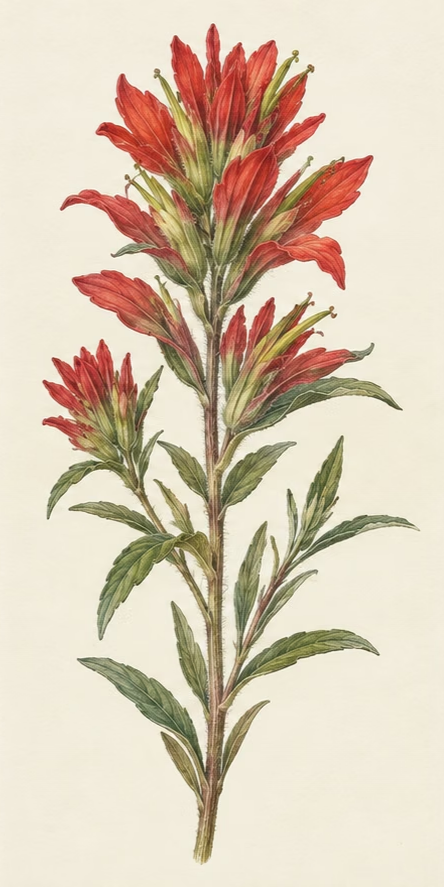
State flower · Indian paintbrush

A touch of red on the sage-green plain.

The slender leaves grow upward, the bright bracts like ink on brush. Wyoming designated this plant as the state flower in 1917, its bright colors becoming a part of the mountainous imagery.

It is part of the local memory along with bison, mountains, and the history of the state. In such vast landscapes, there are also such small and distinct lives; from the mountains far away to the plants at one's feet, the plain becomes more layered.

Indian paintbrush · State flower illustration
STATE.REPORT

An editorial feature by STATE.REPORT. Image creators and licenses are credited below.

Sources & further reading

Population estimates ↗

U.S. Census Bureau: state population estimates for July 1, 2025.

The color of the hot springs.

National Park Service: The hot springs, clear waters, and thermophilic microorganisms at Yellowstone.

Hydrothermal features

National Park Service: Hot springs, geysers, and underground hot water channels.

The history of settlement in front of the mountains.

National Park Service: Farmhouses, irrigation, and communities in the Grand Teton region.

Pronghorn migration corridors ↗

University of Wyoming: A 2025 research overview on fences, roads, and winter habitat.

Wildlife crossing over roads ↗

Wyoming Migration Initiative: Migration and connectivity along highways.

The Eastern Shoshone homeland

Eastern Shoshone Tribe: History, land, and connections to the Wind River region.

The formation of Wind River Reservations.

Wyoming State Historical Society: Treaties and the Eastern Shoshone and Northern Arapaho communities.

The tower's cultural significance

National Park Service: A Spiritual Connection with Tribes and Bear Lodge Tower.

The history of Equality State.

Wyoming State Government: Women's Right to Vote and Public Life in 1869.

Cody's Five Museums

Buffalo Bill Center of the West: Nature, art, Plains Indigenous peoples, and western history.

2025 Travel Economy ↗

Wyoming Tourism: March 2026 State and County Travel Impact Estimate.

State Flower and Historical Data

Wyoming State Archives: State Flower, State Symbol, and Historical Records.

Image credits & licenses

Verify your email

We will email you a six-digit code to sign in.

By continuing, you agree to the Terms and acknowledge the Privacy Policy.

Search history

Your searches from the last 30 days. Viewing this list does not use searches. Full company reports are not saved here.