Honolulu
The state capital and Pacific connections
State government, aviation, tourism and professional services converge on Oahu. Its urban market should be distinguished from the customer bases and transport conditions of the other islands.

Across the ocean, each island has a life of its own.
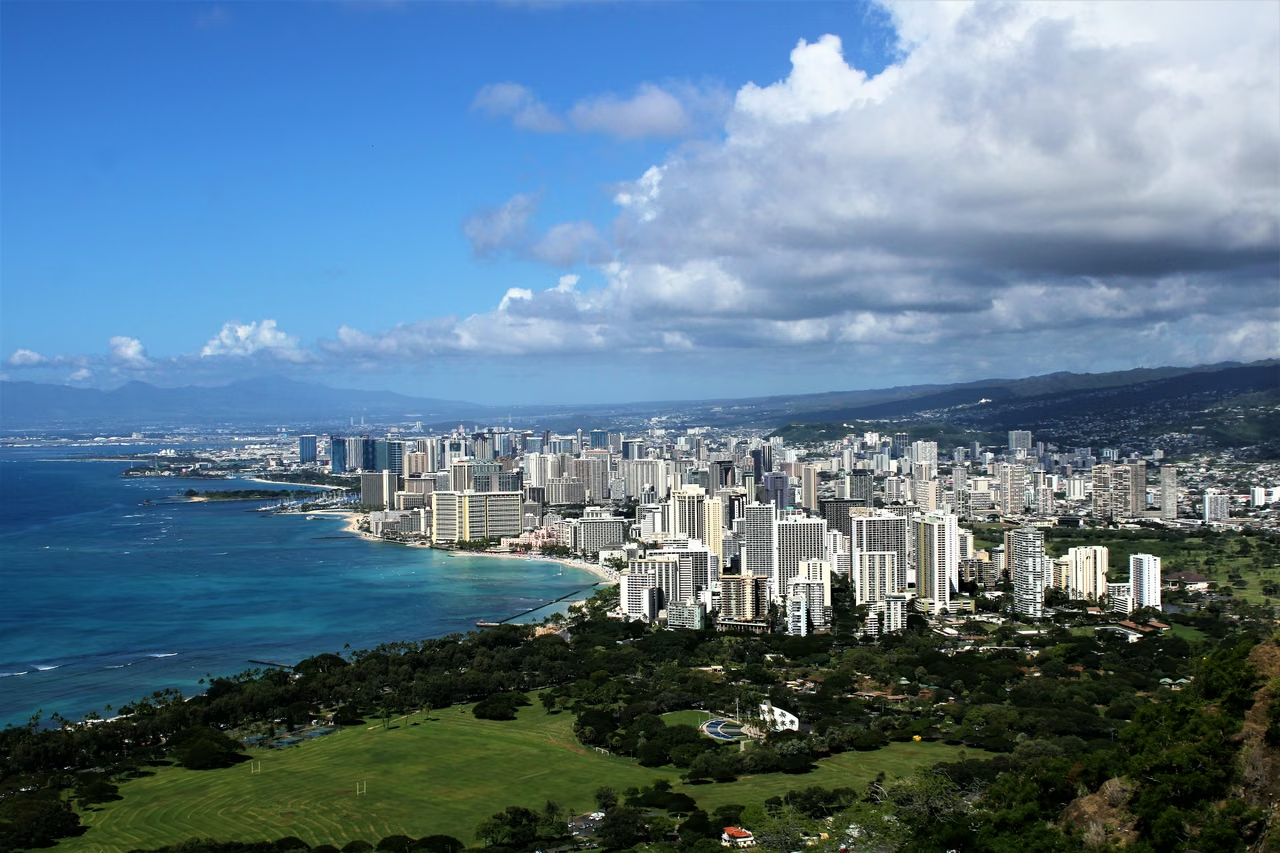
Each Hawaiian island has its own distinct face. Oahu gathers administrative, aviation, and urban services, while the Big Island's volcanoes and rainforests create a unique environment. Maui's communities and tourist areas have their own daily lives. People and supplies cross the sea, and local cultures and natural conditions always influence life and business on the islands.
State government, aviation, tourism and professional services converge on Oahu. Its urban market should be distinguished from the customer bases and transport conditions of the other islands.
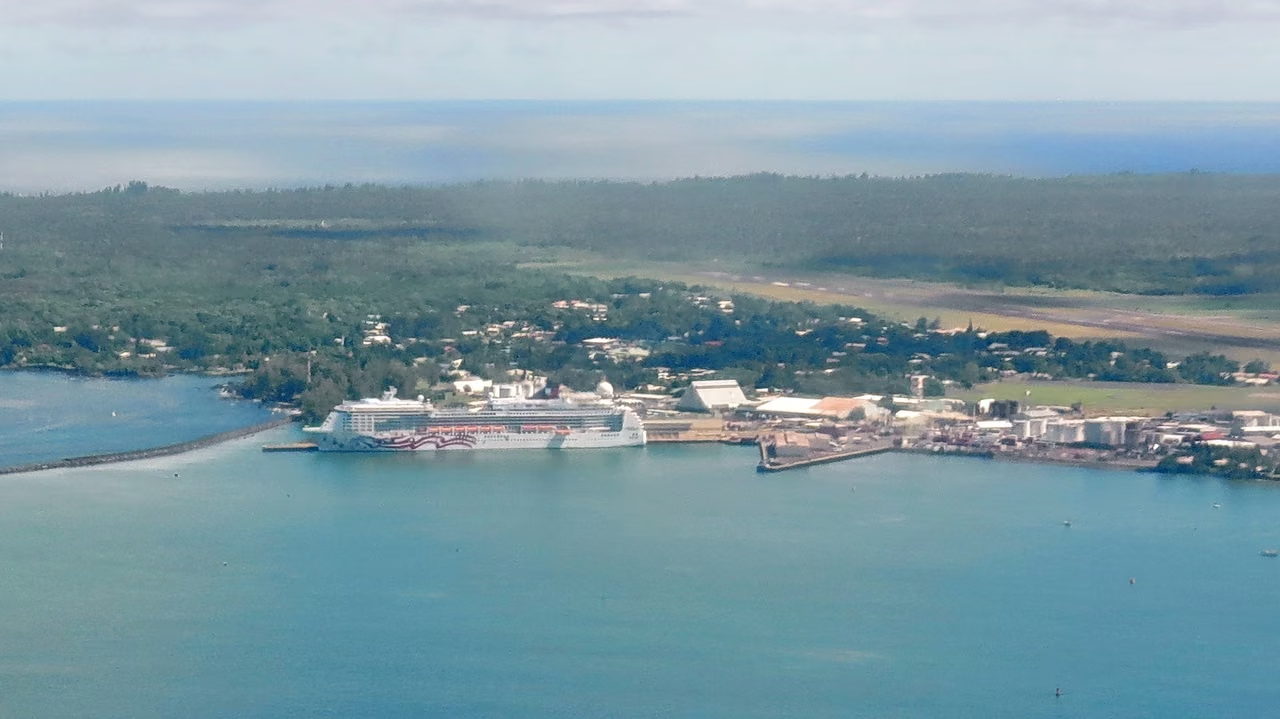
Eastern communities on the Big Island of Hawaii, their education and surrounding natural environment shape needs. The business plan must consider rainfall and distance within the island.
The rainfall on the windward and leeward slopes of the island is different. Hilo's way of life needs to be understood within the context of the mountainous areas, coast, and communities of the eastern part of the Big Island.
Airports, ports, and commercial facilities handle distribution within the island, and separate observations are needed for tourism demands and community needs.
Passengers will arrive at the vacation area, and residents also need stores, freight, healthcare, and other daily services. Different locations on the island perform different types of work, and one cannot fully understand an entire island based solely on beach accommodations.
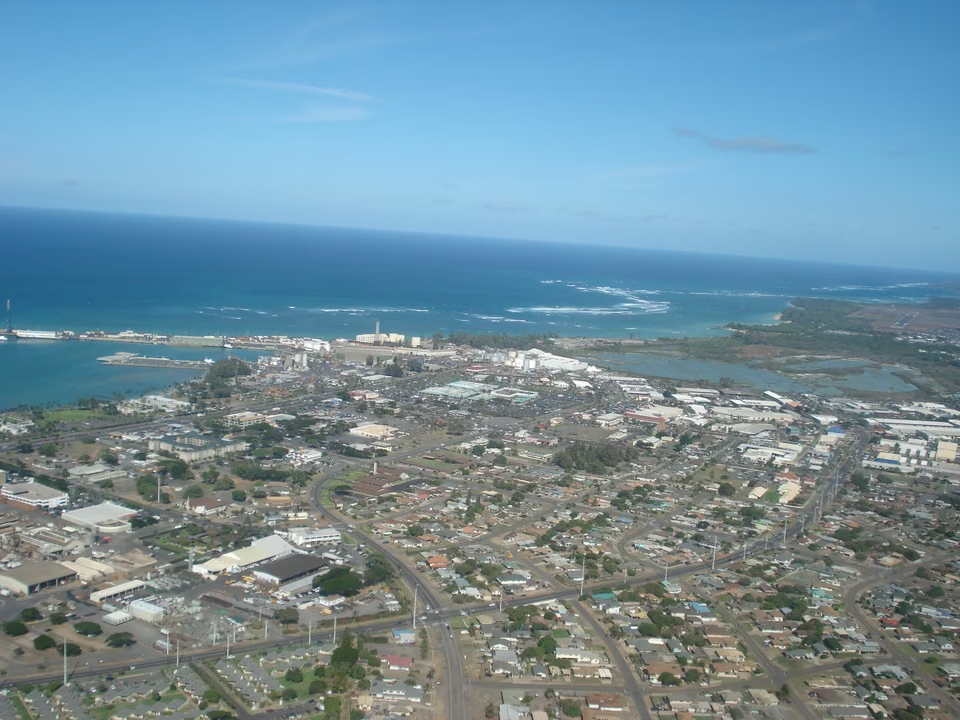
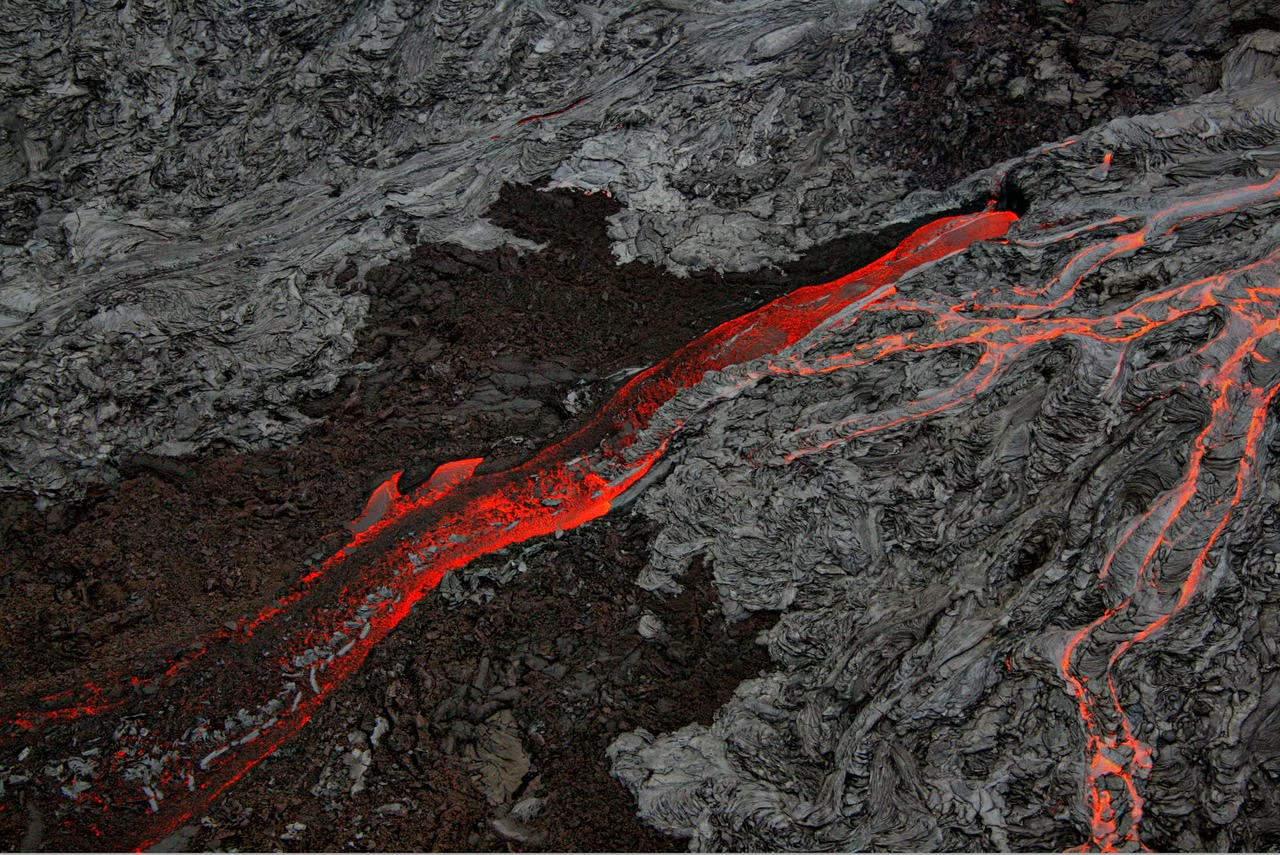
There are no roads connecting the islands. The terrain, elevation, and rainfall create significant environmental differences within the islands. The coastline before us is where one begins to understand this place, not its entirety.
Early accounts of life at Kalaupapa describe resources drawn from streams, forests, farmland and coastal waters. Traditional land divisions connected these different places.
Northeast trade winds bring moist air from the sea to the islands. The air rises along the windward side, forming clouds and precipitation; the leeward side typically has clearer, drier conditions. Higher elevation also leads to a drop in temperature, so coastal weather does not represent conditions at higher altitudes. Temperature and rainfall differences in Hawaii can occur over short distances of geography.
The National Weather Service broadly distinguishes a summer season from May to October and a winter season from October to April. Winter is more exposed to other weather systems, but island, aspect, and elevation still matter. The entire state cannot be described as having the same tropical sunshine year-round.
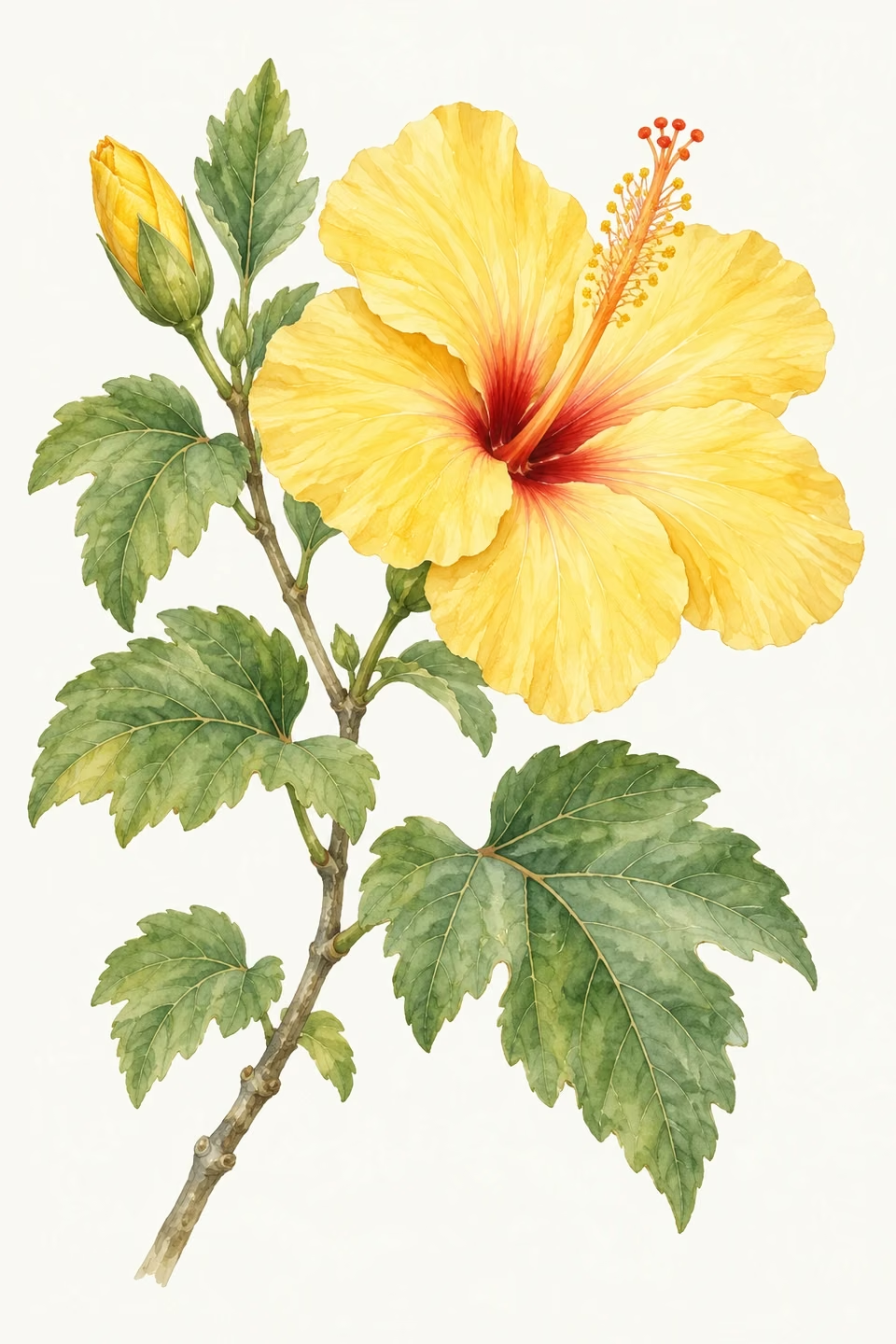
The yellow Hawaiian hibiscus is Hawaii's state flower. This watercolor of its blossoms and leaves gives the islands' smaller natural details a place alongside coastlines and volcanoes.
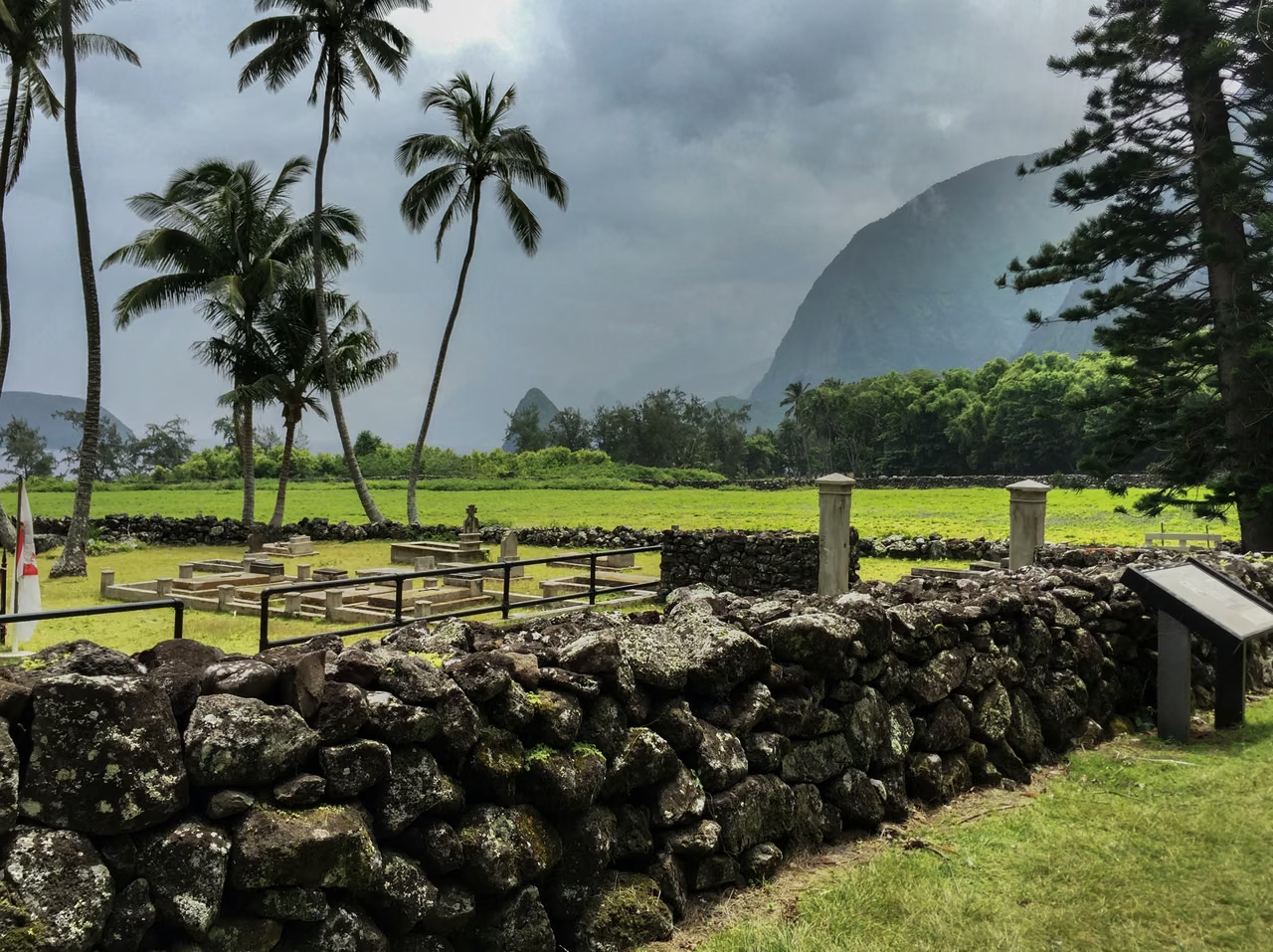
Kalaupapa’s history includes people forced to leave their families because they had Hansen’s disease. In isolation, they built homes, networks of care and a community. As treatment improved and compulsory isolation ended, some former patients chose to remain: this place had become their home.
Therefore, introducing this peninsula cannot only be about cliffs, coastlines, and tranquil villages. The architecture and landscapes preserve the community's experiences of harm while also documenting how they supported each other. Understanding these experiences is part of understanding the local cultural heritage.
Polynesian navigators combined observations of stars, ocean currents, birds, and marine life to undertake long-distance voyages. This knowledge required continuous practice and transmission, not relying on any single navigation technique alone.
Today, the indigenous people of Hawaii continue to preserve this navigational knowledge. Recognizing the islands allows for two perspectives: the sea separates the land, but it also connects people through sailing. Beyond modern ports and airports, there is this longer oceanic culture.
Tourism update · Preliminary July 2026 figures. Hawaii Department of Business, Economic Development and Tourism.
Preliminary figures from Hawaii’s Department of Business, Economic Development and Tourism show 883,248 visitor arrivals in July, up 1.1% from a year earlier. Visitor spending reached $1.99 billion, an increase of 1.7%. Spending is measured at current prices, without adjustment for price changes.
Average stays, however, fell from 8.83 days a year earlier to 7.59 days. For lodging, dining and activity businesses, arrivals, length of stay and spending describe different aspects of demand. More visitors do not automatically bring more business to every establishment.
The figures alone cannot replace the management of each island. To judge specific needs, one must return to the source, itinerary, and actual operating locations, distinguishing tourist spending from residents' daily expenses.
The data was released on August 27, 2026. Above is the July 2026 preliminary statistics compared to July 2025.
Coffee, tropical crops, and food processing connect local farms with consumers. Products are not only grown and processed but also require packaging, storage, and maritime transportation. Both the local characteristics and logistics conditions impact the business.
Ports and island air services keep people and goods moving between islands. Services like storage, distribution, maintenance, and living support are closely linked, and restocking times can depend on the next ship or flight.
This set of annual data serves to supplement the industry structure. The latest annual data released by the U.S. Census Bureau currently is for 2023, and the 2024 data has not yet been determined for its release date. For recent changes, please see the monthly data above. The scope and timing of the two sets of statistics differ.
In the state, there are 97,559 paid employees in the accommodation and food sectors, accounting for 18.8% of the total number. Healthcare, retail, and transportation also explain how the island economy continues to serve residents' daily lives.
Not as a percentage of tourist spending, nor as a percentage of the state's economic output.
Together, these figures cover 520,043 paid employees. They are statewide statistics, not a measure of demand on a particular island or in an individual coastal neighborhood.
The 2023 statistics mainly cover private nonfarm establishments with paid employees, excluding businesses without employees and most government agencies. Employment refers to the pay period that includes March 12. An establishment may be a shop, factory or office; it is not the same as a registered company.
An editorial feature by STATE.REPORT. Image creators and licenses are credited below.
Population figures on this page are estimates for July 1, 2025. Population change is measured against the 2020 estimates base from the same series.
Sources for the historic places, cultural background and geography discussed here. See alsoNational Park Service resources for this state。
State flower names and an index of original references. The flower on this page is presented as an illustration.
National Park Service: Traditional land zoning and resource utilization.
National Weather Service: Easterly winds, terrain, rainfall, and seasonal variations.
National Park Service: Mandatory isolation, treatment improvement, and enhancement of residents' lifestyle.
National Park Service: Polynesian navigation knowledge and its transmission.
Hawaii’s volcanic landforms · Brocken Inaglory · CC BY-SA 3.0.
Honolulu · Farragutful · CC BY-SA 4.0.
Hilo Bay · Robert Linsdell from St. Andrews, Canada · CC BY 2.0.
Kahului · ideatrendz · CC BY-SA 2.0.
Kalaupapa historic site · Lisa Sasser from Amherst, NH, USA · CC BY 2.0.