Finding a foothold
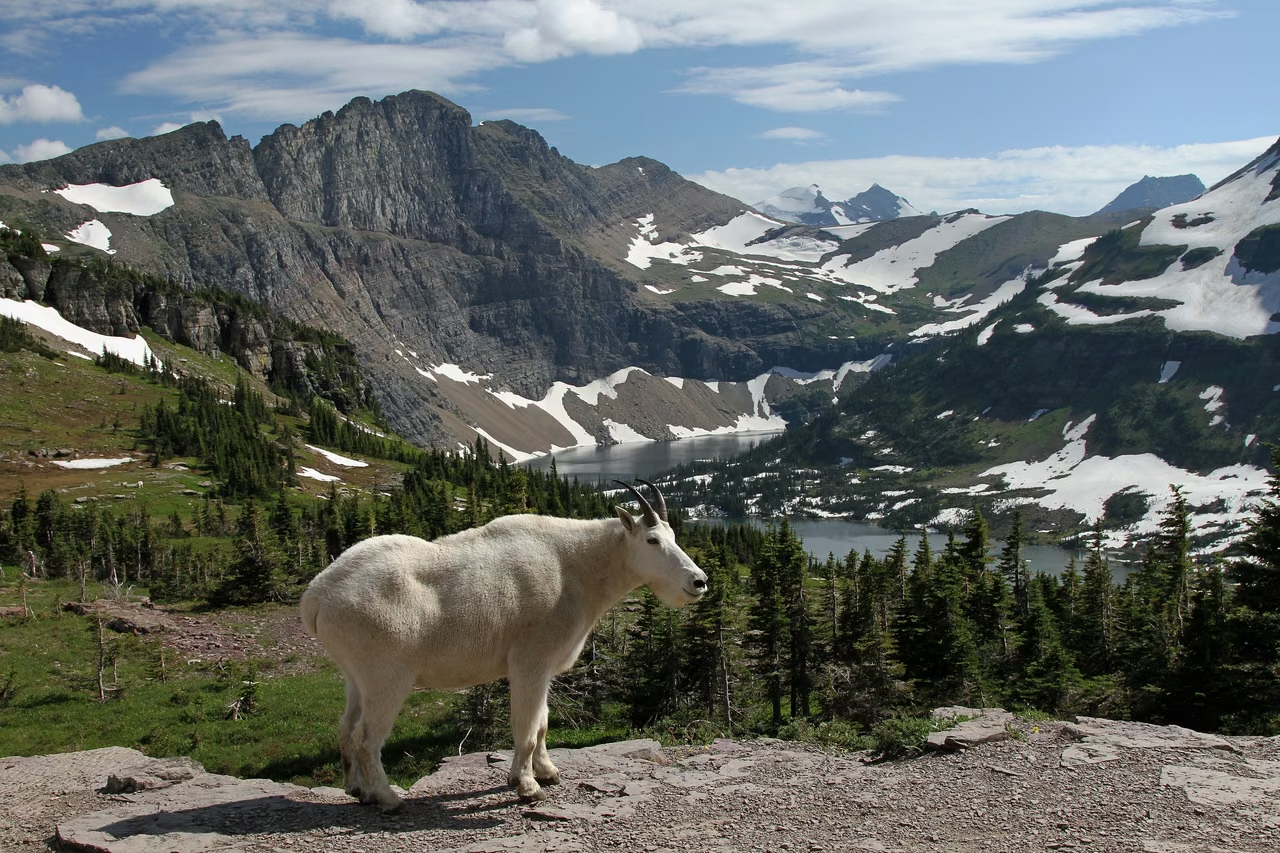
A mountain goat's cloven hooves can spread, while soft, resilient inner pads grip rock. Strong forequarters and secure footing make steep slopes usable habitat.

Beyond the mountains, the horizon opens.
From western valleys to eastern plains, distance, season, and land shape daily life.
A mountain goat’s hooves, food, and habitat offer a closer look at life high above the valleys.
A mountain goat's cloven hooves can spread, while soft, resilient inner pads grip rock. Strong forequarters and secure footing make steep slopes usable habitat.
In summer, alpine plants and sedges provide a richer food supply. In winter, steep slopes with little snow, or where snow slides away easily, expose plants to eat. Rugged terrain shapes foraging and offers protection from predators.
Mountain goats also use woods and valleys for shelter from extreme heat, cold, and wind. Sightings on one visit cannot reveal population trends; researchers need long-term monitoring.
The mountains of Glacier National Park have long connections with Blackfeet, Salish, Pend d’Oreille and Kootenai communities. Valleys, plains and routes across the mountains belong to this history, and those relationships continue today.
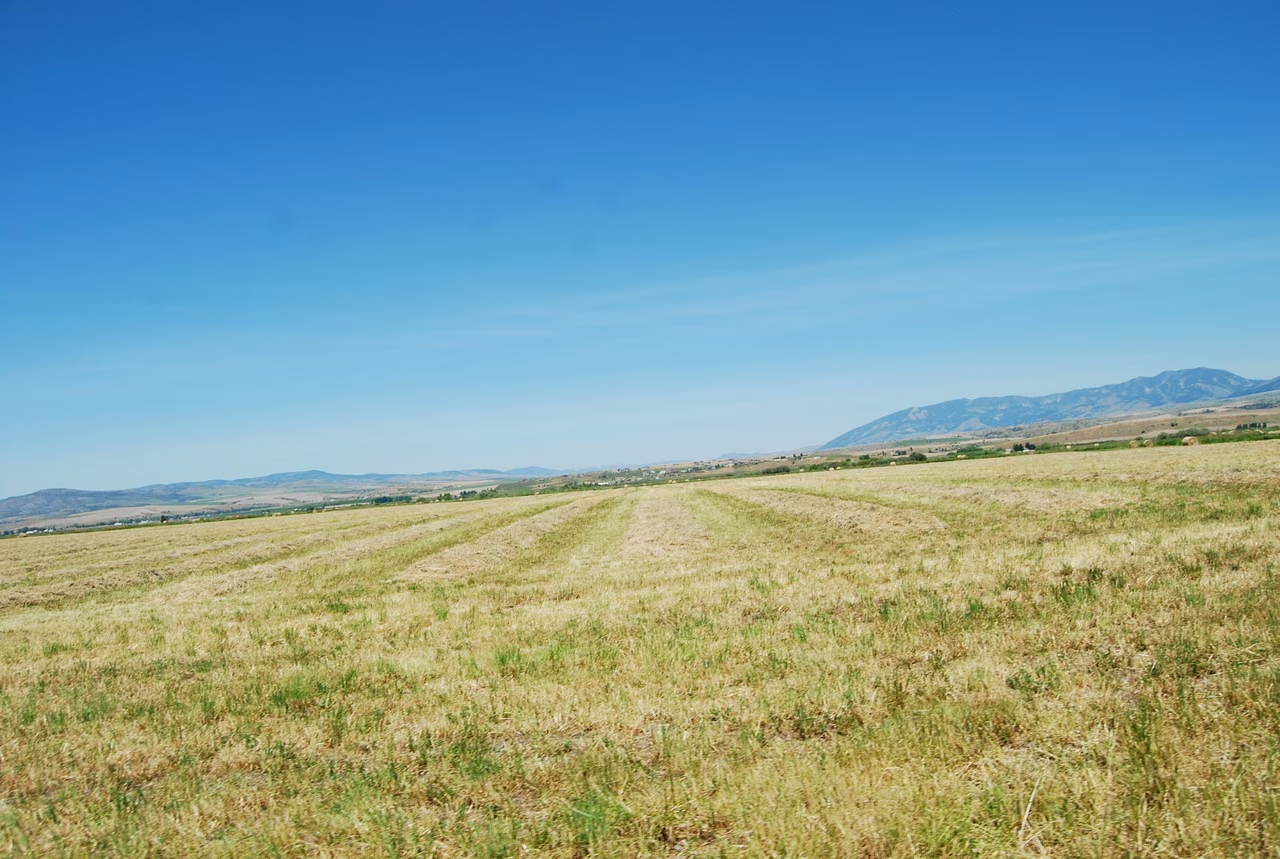
Wide expanses are not blank. Fields, pastures, roads, and towns give the land seen by the eye its daily life.
Montana's mountains, valleys, and plains create distinct living environments. Agriculture, ranching, resource activities, and urban services rely on land, water, transportation, and surrounding communities, respectively.
Openness does not mean a lack of connection. Roads link the farms, warehouses, and cities, and goods and services need to move between these locations. As distances increase, arrangements for transportation and on-site delivery often become more important.
In the same state, a small city near a mountain entrance for tourism is likely to have different customer sources compared to a city that serves the vast interior. Understanding a place involves knowing what it connects to, rather than just its area on a map.
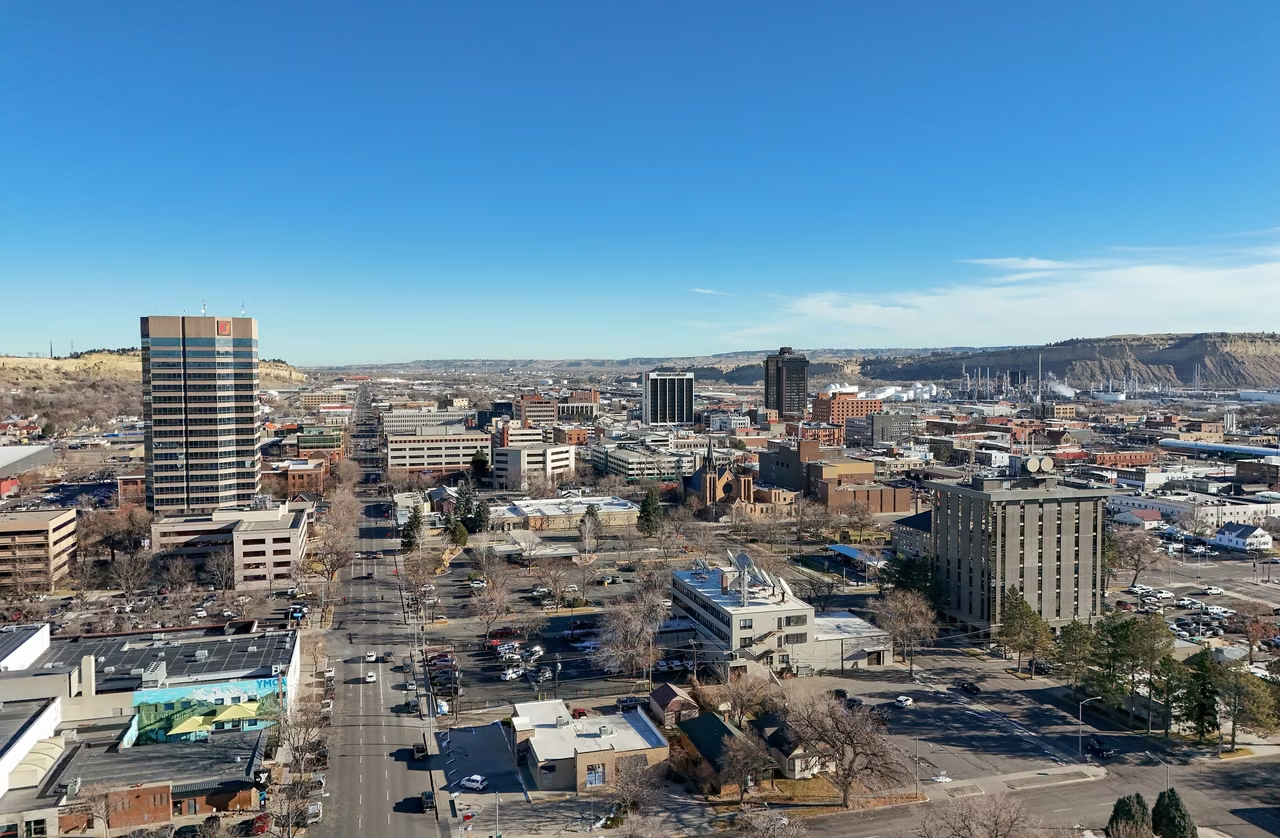
Billings faces east and surrounding regions of Montana, providing services in healthcare, commerce, and transportation. Connections between the city and roads, railways, and the broader region are important clues to understanding the local economy.
Maintenance, wholesale distribution, and professional services may face clients outside the city. When assessing the market, a service radius, visit frequency, and delivery capability are more helpful than looking at the city's permanent resident population alone.
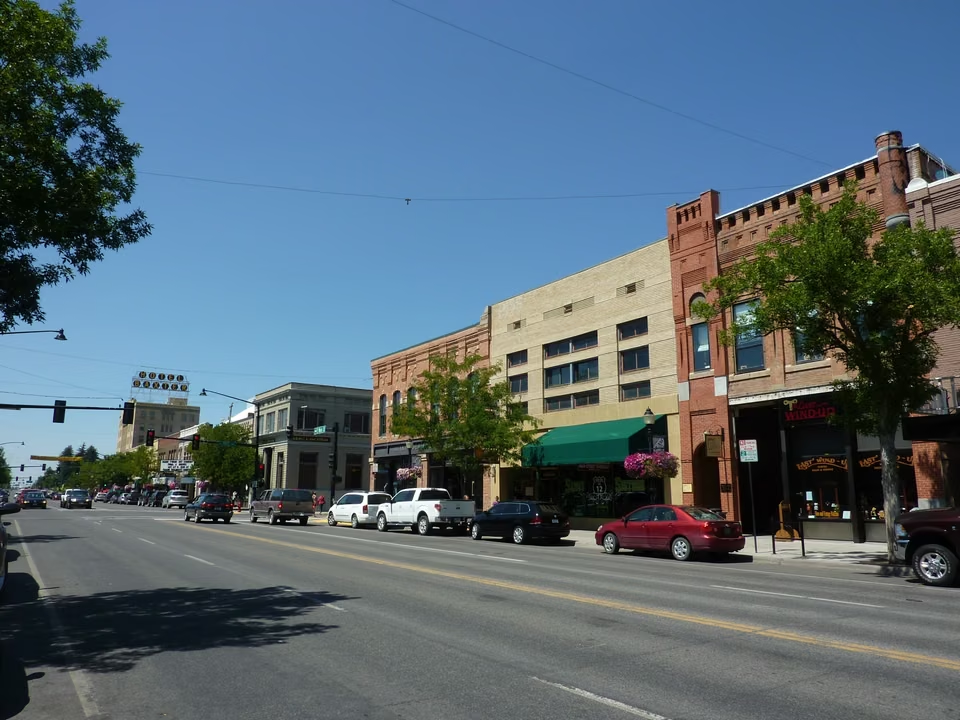
Montana State University, research activities, and mountain recreational activities make Bozeman simultaneously look like a college town and a destination for outdoor activities. Students, researchers, residents, and visitors coexist in the same city with different needs.
University research involves personnel, equipment, and long-term projects, while local businesses also need to respond to housing, daily services, and seasonal activities. One cannot directly use a city's appeal to tourists as the sole condition for all businesses.
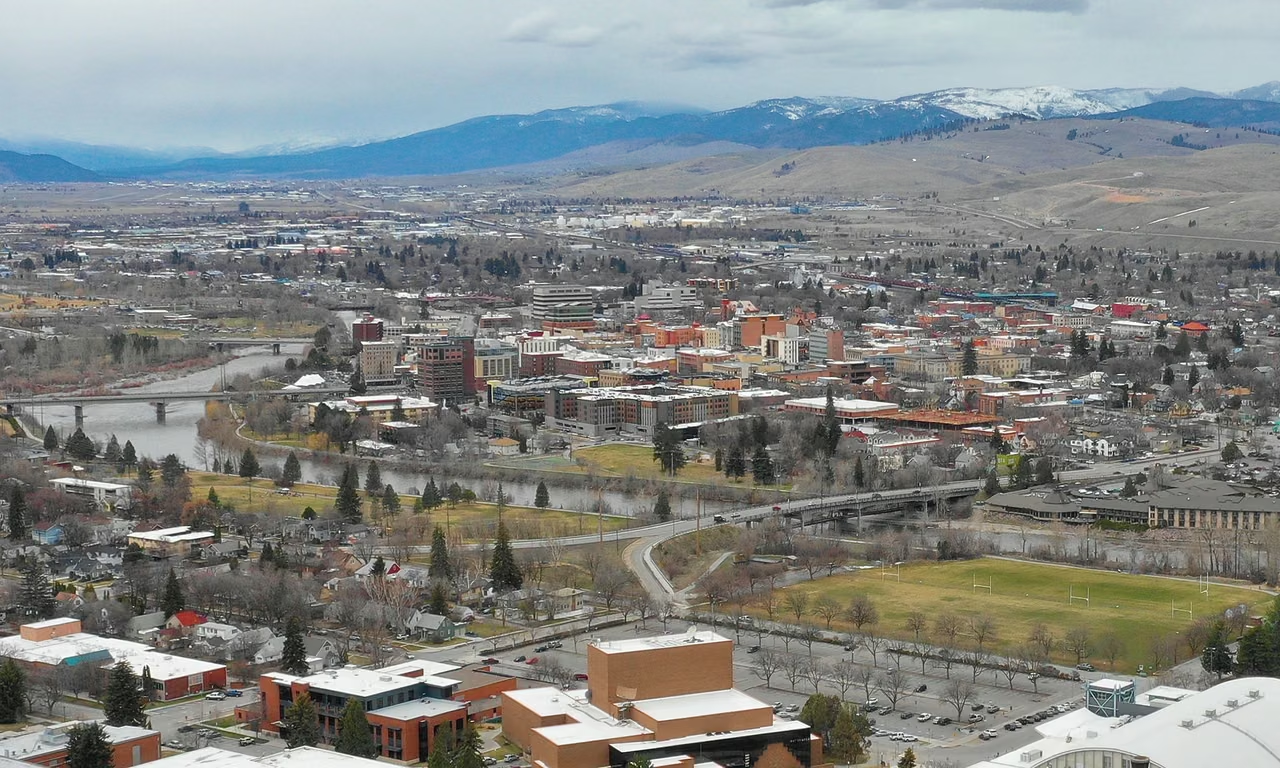
The University of Montana, river-valley transport links, and community culture shape Missoula. Education, healthcare, retail, and professional services connect residents with the surrounding region.
River and suburban hills enter the daily life of the city, outdoor activities are not just for travelers. Cultural facilities, community businesses, and university life make the pace different from small towns that are mainly visited for scenic spots.
Understand a year’s visitors through the seasons they arrive in.
Approximately this share of annual nonresident travel spending in 2025 occurred in the third quarter.
A June 2026 report from the University of Montana's Institute for Tourism and Recreation Research estimated nonresident travel spending at $5.64 billion in 2025. Summer remained dominant, with the third quarter accounting for more than half of annual spending.
For lodging, dining, guiding and outdoor services, an annual total is only a starting point. Businesses must also manage concentrated arrivals, staffing, supplies and the quieter season. Earning the same annual revenue in a few busy months requires a different operation from earning it steadily throughout the year.
The report measures travel spending by people who live outside Montana. It is neither tourism business profit nor a complete account of residents’ leisure spending. Visitor patterns in individual towns and along different routes require separate consideration.
Estimated annual travel expenditures:$5.64 billion
Whether traveling through, staying for a single day, or for multiple nights, different dining, transportation, and activity needs are formed. Nearby establishments may cater to different types of guests.
Healthcare, maintenance, retail, and business services rely on sustained demand from the surrounding community. Business locations and service areas need to match the actual customer distribution.
University of Montana, Institute for Tourism and Recreation Research: Estimates of 2025 nonresident visitation, spending, and economic contributions, June 2026.
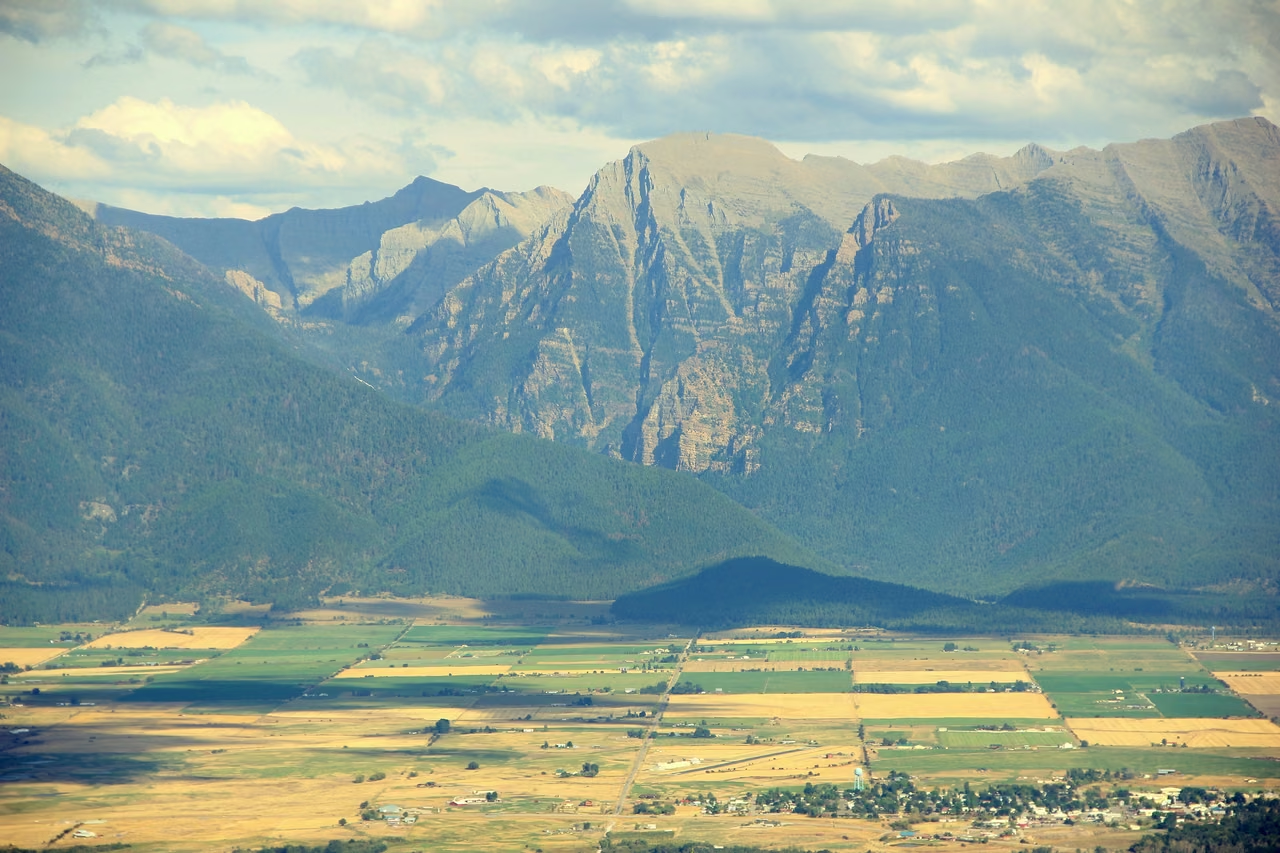
The Bison Range on the Flathead Reservation has been fully managed by the Confederated Salish and Kootenai Tribes since 2022. Its history brings together bison conservation, Indigenous homelands and changes in federal management.
Restoration of management authority is not just a change in the name of the management agency; it also re-establishes the long-standing connection between tribes and bison, land and natural resources at the heart of conservation efforts. Today's visitors see mountains and grasslands, but they also step into a continuing chapter of the place's history.
Conservation work requires attention to animals, vegetation, and land use. This natural environment is not an empty canvas unrelated to humans. Who possesses knowledge, makes decisions, and maintains habitats are all part of understanding the landscape.
From the perspective of a visitor to that of a manager, the scenery presents another layer of meaning: how is the grassland maintained, how are wildlife observed, and how is conservation experience passed on to the next generation. These specific works keep the relationship between people and land in constant flux.
Early war memorials primarily focused from the perspective of the American army. The experiences of the Lakota and Cheyenne, among others, were more often passed down through family and oral traditions. Only by bringing together these different memories can we understand it more comprehensively.
In 1991, Congress changed the name of the memorial and required the construction of a Native American memorial. The space completed in 2003 responds to the sacrifices made by multiple tribes during battles, as well as their experiences in maintaining traditional lifestyles.
Today, being here, one sees not just a battle but also how society rethinks the objects of remembrance. Monuments, narratives, and landscapes together make it a question that can be discussed about how the past is told.
Name change approved, Native American Memorial site authorized.
A new memorial space has been completed, and more history is being included in the telling.
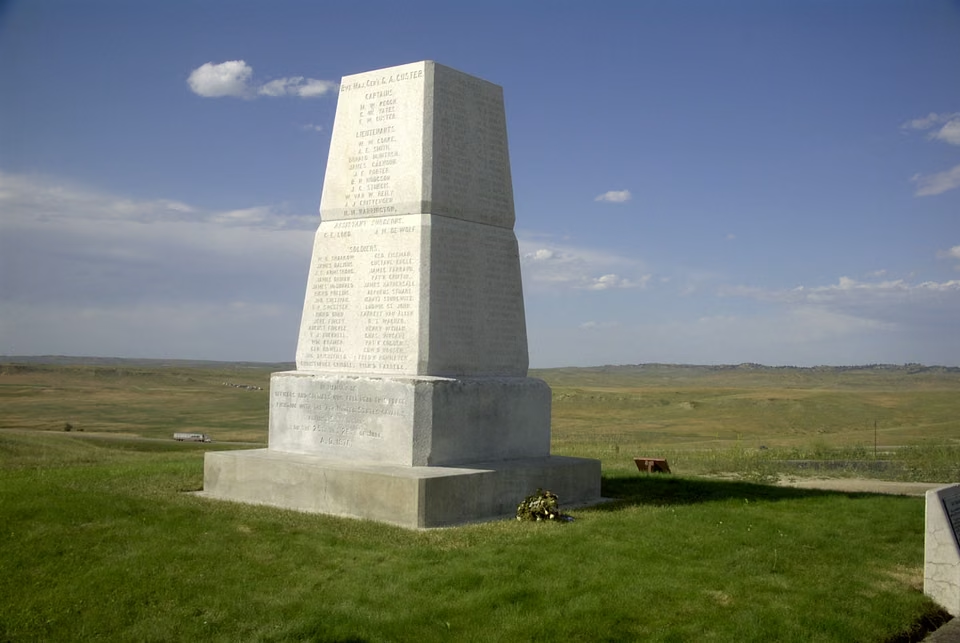
The monument in the photo represents an early form of memorials. The later additions of Native American memorials make the historical narrative more complete.

Bitterroot · State Flower of Montana
Beyond tourism and natural resources, industries such as healthcare, retail, accommodation and food services, and construction keep the urban and surrounding communities running. These jobs form the actual lifeline network of the locations depicted on the map.
The state recorded 42,566 employer establishments and 409,312 paid employees. A single company may operate several stores, offices, or factories, so establishments are not a count of registered companies.
U.S. Census Bureau, 2023 County Business Patterns. The series primarily covers private, nonfarm establishments with paid employees. Employment is measured for the pay period that includes March 12. The 2023 release was the latest in this series available when checked; it is not a measure of current monthly employment.
An editorial feature by STATE.REPORT. Image creators and licenses are credited below.
U.S. Census Bureau: state population estimates for July 1, 2025.
National Park Service: Alpine Ecosystems, Climbing Adaptations, and Long-term Monitoring.
National Park Service: Historical connections of the Blackfeet, Salish, Pend d'Oreille, Kootenai, and other peoples.
Confederated Salish and Kootenai Tribes: Bison, land, and management of the refuge.
National Park Service: A Perspective on Changing Views and Multicultural History.
National Park Service: Local flora and historical records.
Montana's Public Education Department: Plant Adaptation and Indigenous Cultures.
University Research Management Office: Activities of Research and Annual Expense Data.
Mountain Goat at Hidden Lake.jpg · Robert M. Russell · CC BY-SA 4.0。
Billings, Montana skyline in 2024.jpg · Quintin Soloviev · CC BY 4.0。
Main St, Bozeman, Montana (1).JPG · Chris06 · CC BY-SA 3.0。
Missoula, Montana.jpg · Quintin Soloviev · CC BY 4.0。
Little Bighorn memorial obelisk.jpg · Durwood Brandon · Public domain。
Belgrade Montana.jpg · Nicolás Boullosa from Barcelona, Spain · CC BY 2.0。
Mission Mountain range viewed from the NBR.JPG · Henry Mulligan · CC BY-SA 3.0。